Review of White Cat by Holly Black

SFFaudio Review

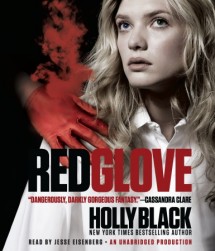
LISTENING LIBRARY - White Cat by Holly BlackWhite Cat: The Curse Workers, Book One
By Holly Black; Read by Jesse Eisenberg
1 |MP3| – Approx. 6 Hours 41 Minutes [UNABRIDGED]
Publisher: Listening Library
Published: May 11, 2010
ISBN: 9780307711816
Themes: / Fantasy / Urban Fantasy / Con men / Curses / Magic /

I wake up barefoot, standing on cold slate tiles. Looking dizzily down. I suck in a breath of icy air.

Above me are stars. Below me, the bronze statue of Colonel Wallingford makes me realize I’m seeing the quad from the peak of Smythe Hall, my dorm.

I have no memory of climbing the stairs up to the roof. I don’t even know how to get where I am, which is a problem since I’m going to have to get down, ideally in a way that doesn’t involve dying.

[…]

I’d dreamed of a white cat. It leaned over me, inhaling sharply, as if it was going to suck the breath from my lungs, but then it bit out my tongue instead. There was no pain, only a sense of overwhelming, suffocating panic. In the dream, my tongue was a wriggling red thing, mouse-sized and wet, that the cat carried in her mouth. I wanted it back. I sprang up out of the bed and grabbed for her, but she was too lean and too quick. I chased her. The next thing I knew, I was teetering on a slate roof.

A siren wails in the distance, drawing closer. My cheeks hurt from smiling.

Eventually a fireman climbs a ladder to get me down. They put a blanket around me, but by then my teeth are chattering so hard that I can’t answer any of their questions. It’s like the cat bit out my tongue after all.

Born into a family of curse workers, Cassell doesn’t have the magical powers to be a “worker.” Curses come in all shapes and sizes from transforming victims into something else down to emotionally influencing people. All that is needed is the touch of a finger. This makes gloves much more than a fashion accessory since they are a necessary item of protection.

Curse work is illegal so curse workers are all either part of the powerful crime families, con workers, or exist with their secret on the edges of society. Cassell’s family owes allegiance to a powerful crime family and working cons is as normal as breathing. In fact, working the con is the thing that makes up for not being a worker and Cassell eyes the world from this vantage point, which makes him a solitary figure with few friends.

Cassell has a dark secret, a problem with sleepwalking, and a family who specializes in running cons. He also lost the love of his life, Lila, long ago. However, he put that all behind him and is concentrating on life in boarding school and building a normal life, along with keeping book on the side. (Hey, a guy has to have a little spending money, right?) So when a white cat begins following him everywhere, terrifying dreams bring Lila back into his waking thoughts, and those dark secrets begin surfacing again, Cassell begins to suspect that he is a pawn in a complicated con game.

Can he out-con the pros and solve his problems? Well, of course he can or what would be the point of reading the book? The fascination is with watching Cassell have to admit that he needs help from others, seeing his longing for family ties even as he fears that he may have been betrayed by them,

Holly Black has a fully realized alternate world where the presence of curse working and magic define much more than Cassell’s personal problems. There is a slight but interesting subplot about an organization that is working for “worker’s rights.” The government has begun pushing a testing program, urging workers to come forward and be identified. Family loyalty along with the inner workings of crime families are also interesting embellishments to the plot. The magical abilities described are fascinating, as is the concept of “blow back” which besets anyone who works a curse. Nothing is done with impunity so you’d better be darned sure you want to curse someone because you will suffer some sort of severe reaction in turn.

Perhaps the most interesting aspect of the book is that Cassell is an unreliable narrator. What is more, he knows he is an unreliable narrator as he is afraid that he is too influenced by dreams or that his memory has been worked. Everyone around him is fairly unreliable as well since Cassell is never sure when someone is working a con or being natural. Although some major plot twists are fairly well telegraphed ahead of time, this hardly matters because we are so concerned with the fact that Cassell may be working a con we don’t see or that he is being conned himself.

The story is narrated by Jesse Eisenberg, who is probably best known for portraying the awkward college student in Zombieland or the equally awkward Mark Zuckerberg in Social Network. His trademark delivery works perfectly as the story is told by Cassell who is equally as awkward as either of those movie characters. Furthermore, Eisenberg alters his voice slightly but effectively to portray different characters: a fortune teller, Cassell’s mother, his roommate Sam, and the crime boss all get slightly different intonations which perfectly convey character. I would have liked the book anyway as a straight read, but with Eisenberg’s narration I bought it hook, line, and sinker. Just like an average mark, in fact.

It is called urban fantasy but didn’t really feel that way to me. It is fantasy because of the curse working element but other than that there are precious few fantastic elements. Likewise, it is labeled YA, but aside from the age of the narrator and some elements like having to attend classes, it didn’t feel like something written for younger readers.

I thoroughly enjoyed this book. What can I say? I like con stories. I like the universe Holly Black created. Jesse Eisenberg’s narration pulled me into the story so I stayed there long enough to care about a boarding school student with an interesting set of problems. I also liked the fact that the story arc was concluded in this book except for one element which obviously serves as a bridge to the second book of the series.

It’s just plain fun all round and moves at a fast, addictive pace. Recommended.

Posted by Julie D.

Review of The Broken Sword by Poul Anderson

SFFaudio Review

Fantasy Audiobook - The Broken Sword by Poul AndersonThe Broken Sword
By Poul Anderson; Read by Bronson Pinchot
7 CDs – 8 Hours – [UNABRIDGED]
Publisher: Blackstone Audio
Published: 2011
ISBN: 9781441786876
Themes: / Fantasy / Vikings / Myth / Battle /

The Viking Age of England offers fertile ground for storytelling. It was a time of strong men, beautiful fair-haired women, and bloody raids for plunder. Christianity was the new religion on the block, striving to make inroads on the old pagan beliefs—and often at the point of a sword. Gods were said to mingle with men and the world lay poised on the edge of Ragnarok, a final battle and fiery conflagration that would end the world.

Poul Anderson drew on the best of this wild and poetic age, stirred it up with myth and fantasy, and the result was his 1954 novel The Broken Sword. Its like has rarely been matched in the annals of fantasy literature.

I’ve read The Broken Sword previously and knew what a wonderful book it was, but TV and film actor Bronson Pinchot’s narration in this new Blackstone Audio, Inc. production added a new dimension to the novel. I had first heard Pinchot in a reading of Stephen King’s Eyes of the Dragon. While he was wonderful there he ups his game in The Broken Sword, reading with a spite and fury in his voice that perfectly matches the book’s unrelenting grimness and battle fury. Pinchot breathes life into beautiful maidens and proud warriors, deep-throated trolls, and ancient elven warrior-kings whose voices are like winds sighing through treeless leaves.

Oddly enough there is exactly one sound effect in the entire recording—an echo effect used to convey the cold, cruel laughter of Odin—and it’s on the final disc. It was cool but rather jarring, considering it’s on the last disc and there’s no precursor. But on to the tale.

In The Broken Sword the land of Faerie exists alongside the lands of men, invisible save to those with the witch sight. Faerie is a land of bright castles and achingly lovely elves, of the gods of Odin and Tyr, the giants of Jotunheim, black-eyed trolls, and other, fouler monsters.

Pride and ambition touches off the events of The Broken Sword. Orm the Strong is the fifth son of Ketil Asmundsson and thus low in the totem pole of inheritance. Rather than accept a smaller share of wealth Orm seeks his own fortune by going a–viking. On one of his raids he kills a husband and his sons, burning their hall to the ground. The man’s mother, a witch, escapes and swears revenge: She bestows a curse that Orm’s eldest son will be fostered beyond the world of men, while he in turn will foster a wolf that will one day rend him.

The elf-earl Imric travels to the lands of men and sets the witch’s curse in motion. Imric takes Orm’s unbaptized infant son Skafloc and replaces him with Valgard, a changeling, whom Imric himself has fathered by raping a captive troll woman. Valgard’s dark ancestry is evident when he bites his unknowing mother’s breast and grows restless and violent in Orm’s care. Skafloc, raised among the elves, is fair haired and fair of spirit, though equally mighty and otherwise a mirror image of his dark changeling “brother.”

After he discovers his true half troll, half-elf heritage, Valgard embarks on a mission of revenge, killing several members of his foster family. Aided with an army of trolls he then launches a war of annihilation on the elven lands of Alfheim. Skafloc and the elves are beaten back by the initial assaults and all seems lost. Only by going on a quest to reforge a powerful ancient weapon—the eponymous broken sword, a weapon of terrible demonic power that demands blood each time it is drawn and ultimately turns on its wielder—can Skafloc save Alfheim and avenge his family.

Though The Broken Sword seems largely forgotten these days it remains influential. The elf Imric for example reveals the clear stylistic (and thematic) influence The Broken Sword had on subsequent authors like Michael Moorcock. Moorcock (a big fan of the book, who once wrote thatThe Broken Sword “knocked The Lord of the Rings into a cocked hat”) based his Melniboneans heavily on Anderson’s elves. Imric is (largely) Elric of Melnibone, not only in similarity of name, but in appearance and even character. Anderson’s Elves are darker than those in The Lord of the Rings (though I would point out that Tolkien’s elves closely resembled Anderson’s in his source material; see the prideful warrior Feanor from The Silmarillion). They are haughty, prideful, shun the sunlight, and if not malicious are certainly mischievous. These traits have their roots in Norse myth, which both Tolkien and Anderson drew upon.

Everything about the book is wonderfully northern. Characters mingle soaring verse with common speech in conversation. Anderson weaves old northern vocabulary into the tale, evocative words like “Fetch,” “Fey,” and “Weird” (the latter is a fate from which no man escapes), which lend The Broken Sword a hard northern ethos to match its flavor. In this pagan hierarchy the Norns are higher than the towering Jotuns or even the Aesir. Even the gods will die in the fires of Ragnarok at their appointed time. That grimness bleeds through into The Broken Sword as its protagonists are slowly crushed beneath the merciless wheel of fate.

“Throw not your life away for a lost love,” pleaded Mananaan. “You are young yet.”

“All men are born fey,” said Skafloc, and there the matter stood.

This is hard stuff and an unforgiving outlook on life, though not incompatible with that other somewhat famous work that debuted in 1954—Tolkien’s Fellowship of the Ring. No matter what Moorcock—he of the tin ear when it comes to Tolkien analysis—may tell you.

The writing in The Broken Sword is top-notch, really and truly great stuff. A small sample of dialogue uttered by the troll-woman Gora:

“The world is flesh dissolving off a dead skull,” mumbled the troll-woman. She clanked her chain and lay back, shuddering. “Birth is but the breeding of maggots in the crumbling flesh. Already the skull’s teeth leer forth and black crows have left its eye sockets empty. Soon a barren window will blow through its bare white bones.”

One final, important note about the Blackstone recording: The text is Anderson’s original from the 1954 version of the book, which Anderson updated in 1971 for republication in the Ballantine Adult Fantasy line. This is not immediately apparent from the description on the Blackstone website. I’ve only read the 1971 version, so for those who haven’t had the chance to experience The Broken Sword in its earliest and rawest incarnation you now have another chance.

Posted by Brian Murphy

2010 Mark Time and Ogle Award winners and honorable mentions

SFFaudio News

The Mark Time AwardThe 14th annual Mark Time Awards and Ogle Awards, presented at Convergence 2011, June 30th, in Bloomington, MN, are from “a wider range of countries than ever before.” Both awards are juried. The Mark Time Award is for distinguished achievement in Science Fiction audio theater production. The Ogle Award is presented for Fantasy and Horror audio theater production. The awards presentation will take place at Convergence 2011, June 30th, 2011 in Bloomington, MN. Six of the eight producers are scheduled to be in attendance as well as three of the five judges.

Mark Time Award:

GOLD
The Truth: Moon Graffiti
Written & Produced by Jonathan Mitchell
New York, NY

SILVER
The Cleansed, Pilot Episode
FinalRune Productions
Written & Produced by Fred Greenhalgh
Alfred, ME

HONORABLE MENTIONS
1918
Aural Stage
Written by Richard Lovejoy
Producers, Matthew Boudreau, Samantha Mason
Buffalo, NY

Brad Lansky And The Anti-Starc
Protophonic
Written by J.D. Venne
Producer, Dieter Zimmermann
Cape Town, South Africa

Ogle Award:

GOLD
Whoever Wishes
Tekdiff
Written & Produced by Cayenne Chris Conroy
Minneapolis, MN

SILVER
We’re Alive, Chapter 17, “There Might Be Others”
Zombiepodcast
Written by Kc Wayland
Producers, Kc Wayland, Shane Salk
Orange, CA

HONORABLE MENTIONS
Soul Survivor
Sonic Society
Written & Produced by Jack. J. Ward
Bedford, Nova Scotia, Canada

The Witch Hunter Chronicles
Audio-epics
Written and Produced by Domien de Groot
Deurne, Belgium

Posted by Jesse Willis

Random House Audio: Three FREE audiobooks: Louis L’Amour, Holly Black, Marjorie Weinman Sharmat

SFFaudio Online Audio

Random House Audio has made three very different audiobooks available for FREE DOWNLOAD on their website. One’s a novel, and the other two are short stories. As all three are in the MP3 format and just single files (even the novel) I’m going to HuffDuff all three later today. I’ve already started listening to Louis L’Amour title, and I’ve got to tell you, the introductory material in which L’Amour himself tells stories from his own life, is ABSOLUTELY RIVETING – it’s amazing, amazing stuff.

LISTENING LIBRARY - White Cat by Holly BlackWhite Cat: The Curse Workers, Book One
By Holly Black; Read by Jesse Eisenberg
1 |MP3| – Approx. 6 Hours 41 Minutes [UNABRIDGED]
Publisher: Listening Library
Published: May 11, 2010
ISBN: 9780307711816
Cassel comes from a family of curse workers—people who have the power to change your emotions, your memories, your luck, by the slightest touch of their hands. And since curse work is illegal, they’re all criminals. Many become mobsters and con artists. But not Cassel. He hasn’t got magic, so he’s an outsider, the straight kid in a crooked family. You just have to ignore one small detail—he killed his best friend, Lila, three years ago. Cassel has carefully built up a façade of normalcy, blending into the crowd. But his façade starts to crumble when he finds himself sleepwalking, propelled into the night by terrifying dreams about a white cat that wants to tell him something. He’s noticing other disturbing things too, including the strange behavior of his two brothers. They are keeping secrets from him. As Cassel begins to suspect he’s part of a huge con game, he must unravel his past and his memories. To find out the truth, Cassel will have to outcon the conmen.

LISTENING LIBRARY - Nate The Great Goes UndercoverNate The Great Goes Undercover (From Nate the Great Collected Stories: Volume 1)
By Marjorie Weinman Sharmat; Read by John Lavelle
1 |MP3| – Approx. 14 Minutes [UNABRIDGED]
Publisher: Listening Library
Published: May 13, 2008
ISBN: 9780807216651
Nate the Great has his first night case! Somebody is raiding Oliver’s garbage can each night, but who? The list of suspects is long. Nate courageously encounters a skunk and a telephone pole, but not until he goes under cover of the garbage can lid does he narrow the suspects down to one.

RANDOM HOUSE AUDIO - Survival by Louis L'AmourSurvival
By Louis L’Amour; Read by Richard Crenna
1 |MP3| – Approx. 1 Hour 6 Minutes [UNABRIDGED]
Publisher: Random House Audio
Published: Nov 9, 1999
ISBN: 055345031X
This harrowing adventure of shipwreck and survival is L’Amour’s fictionalized account of the heroic true story of merchant seaman Tex Worden and his efforts to save the passengers of the doomed Raratonga. A unique look at the early life and times of one of our most cherished writers, Survival is the action-packed oral biography of a true American original, an audiocassette that no L’Amour fan will want to miss. Includes biographical notes read by L’Amour himself.

Posted by Jesse Willis
Review of Discord’s Apple by Carrie Vaughn

SFFaudio Review

BRILLIANCE AUDIO - Discord's Apple by Carrie VaughnDiscord’s Apple
By Carrie Vaughn; Read by Angela Dawe and Luke Daniels
8 CDs – Approx. 9 Hours 12 Minutes [UNABRIDGED]
Publisher: Brilliance Audio
Published: July 6, 2010
ISBN: 9781441876003
Sample |MP3|
Themes: / Fantasy / Magic / Gods / Family / Romance / Greek Mythology / Colorado / Terrorism / Arthurian Legend / Russia / Los Angeles / Immortality /

When Evie Walker goes home to spend time with her dying father, she discovers that his creaky old house in Hope’s Fort, Colorado, is not the only legacy she will inherit. Hidden behind the basement door is a secret and magical storeroom, a place where wondrous treasures from myth and legend are kept safe until they are needed again. Of course, this legacy is not without its costs: There are those who will give anything to find a way in. With the help of her father, a mysterious stranger named Alex, and some unexpected heroes, Evie must guard the storeroom against ancient and malicious forces, and protect both the past and the future even as the present unravels. Old heroes and notorious villains alike rise to fight on her side or to do their best to bring about her defeat. At stake is the fate of the world and the prevention of nothing less than the apocalypse.

Novels with alternating storylines, like Discord’s Apple, are probably easier to write than regular single plot novels. I’ve never come across one that defeated the main problem of such novels. It’s the problem of comparison. The present (alternate present) storyline in Discord’s Apple is far less compelling than those parts which are set during, and in the immediate years following, the Trojan War. By disc three it had become abundantly clear that the two storylines would meet up – and that the more interesting part of the book would be subsumed by the lesser. But, as the novel progressed MORE storylines were added and none of them were very promising. First there was The Eagle Eye Commandos story, the story of a set of G.I. Joe knock-offs that are, we are told, ‘the most popular comic book series in the USA.’ That storyline is told in a third person ominscient POV, as if were’ reading over Evie’s shoulder while she writes it on her laptop. That’s a big problem. I’ve seen scripts for comic books. They look nothing like what Evie writes for her artist collaborator – she’s writing standard prose, not a comics script, the artist would have to adapt what Evie wrote and dumping most of it. Then, just to confuse things just a little more, we get an out of nowhere historical Walker family storyline. It goes nowhere. Then, another short lived storyline will pop up for a chapter, then disappear, never to be heard from again. By disc five, these trends, along with many other warning signs, had cast a dread pall over my hopes for the novel’s conclusion.

It is never good when an author shows contempt for her story or for her readers. Carrie Vaughn is guilty of both of these authorial sins. As was pointed out in detail on Charlie Stross’ blog even the opening scene of Discord’s Apple is a mess. It is, of course, described (not shown) and features the destruction of “The Kremlin” by an Cessna full of kerosene:

He made a noise like a deflating balloon. “The Kremlin’s been bombed. Obliterated. A Cessna filled with drums of kerosene rammed it. They’re thinking it’s Mongolian rebels.”

She took a moment to register that he was talking about current events and not a plot point in their comic book. “Then our May storyline is out the window.”

The Eagle Eye Commandos couldn’t raid the building complex if it wasn’t there. She should have seen this one coming.

“Yeah. Unless we can put some kind of ‘how things might have been’ spin on it.”

Uh …. no. How could she have seen this coming? That whole passage should stop you in your tracks. Let me lay it out for you:

1. The biggest Cessna ever built carries no more than a dozen passengers and crew, the Cessna brand, moreover, is widely known to be a small aircraft manufacturer, with pretty much every single model ever built measuring far less than the 16 meters of their very largest passenger jet.

2. The Kremlin, meanwhile, is a massive fortress without one central structure. It measures a vast 68 acres and yet this plane full of drums of kerosene “obliterated” it. I would be very much surprised to learn that even the worlds biggest aircraft could completely destroy the Kremlin with any number of drums of Kerosene stuffed into it. Consider this, even with a maximum capacity of 27,276 liters the largest water bomber in the world, the Martin Mars, world only be able to drench four acres in a single pass. At that rate it would require no less than sixteen passes to completely cover the Kremlin with Kerosene – and that would assume that every pass had no overlaps.

3. Worse, why would “Mongolian rebels”, of all rebels, attack the Kremlin? That makes absolutely no sense at all. Russia and Mongolia have essentially been staunch allies for the last five hundred years. Russia never annexed Mongloia, doesn’t claim any part of it as a part of Russia, and didn’t even incorporate it into the Soviet Union. This is an absolutely monumental gaff – as backward as expecting the Palacio Nacional in Mexico City to be attacked by Quebec separatists.

And she should have ‘seen it coming’?

Other signs of contempt for the reader litter the novel. At one point the main character, a comic book writer, notes that the events that have just happened to her seemed unbelievably “overwrought” – after which she makes a point of filing them away for future use as a plot twist in her comic book series. She wants to add an unbelievable and overworked event to her own writing … what is a reader supposed to takeaway from that other than Vaughn is pissing on our shoes? Is she thumbing her nose at comics?

More stumbling blocks – as the “terrorism” in Russia continues we’re told that trainyards and shipyards are the targets. Yeah …. no …. that doesn’t sound like terrorism – it sounds like war. Terrorism is violence intended to foster terror. Blowing up a shipyard, attacking a citadel, derailing a train – that all is far more targeted than than strategic bombing of Europe in WWII. Carrie Vaughn seems blissfully ignorant of the meaning and import of the word “terrorism.”

But it doesn’t stop there! Vaughn has her central character, a rough analogue for herself, say that the Trojan Horse was the “car bomb” of its day. After hearing that I was figuratively shaking my head for about an hour.

That character, Evie Walker, then does some stunt driving while being chased by a herd of coyotes. In so doing she executes something she calls a “Hollywood turn.” … What I assume that Vaughn was actually referring to is, in fact, called either a Rockford or Moonshiner’s or J-Turn (and never a “Hollywood turn”).

Evie Walker also casually mentions that a drive through Los Angeles requires multiple stops and searches – adding hours to a commute. But it doesn’t end there, even the small town in Colorado, as depicted in Discord’s Apple, exist under a draconian police state. A drive through the city center means a warrant-less search of your vehicle and a questioning by police. There’s also food rationing. It isn’t explained, none of it. That’s shocking and interesting stuff and yet it has absolutely no follow up in the book whatsoever. Evie Walker doesn’t seem alarmed by it, finds it mildly annoying (and maybe even comforting), but she doesn’t mention it as being particularly shocking or even attempt to explain why it isn’t. What the fuck?

At first I thought maybe that my problems with Discord’s Apple were the same kinds of problems I had with Catherine Asaro’s Sunrise Alley |READ OUR REVIEW|. I thought that maybe Carrie Vaughn’s focus and interest just wasn’t on the stuff I care about: ideas, attention to detail, and the surprising (but logical) consequences to those ideas and details. But upon further consideration I don’t think that’s true. Vaughn’s writing technique for Discord’s Apple consisted of remixing her Sinon fan-fiction with events in her own life, filtered through a magical grab bag of other mythology and politics that she is only very dimly interested in. A few aspects of this novel could have worked had they been more focused and perhaps less slap-dashed together. Was she writing on a tight deadline? Couldn’t she do some revision? I don’t know.

The return of King Arthur (and Merlin) – ok why not? Sadly, this epic pair seem to be merely active mannequins in Discord’s Apple – their presence may have initially been to offer a possible rival love interest for the protagonist, but that doesn’t even come close to ripening. What about that artist penciler/inker partner on the comic book Evie Walker is writing? Oh him? Apparently he’s there solely to give Walker someone to talk to, setup the novel’s unpaid off premise. He just dries up and blows away.

What about that mysterious new dog, Queen Mab, that Evie’s father has? You know, the one with more emotion, knowledge and expression than all the rest of the characters in the novel? Oh that? It’s just what Vaughn would call her “Wash” techniques – something designed to manipulate the audience’s expectations. Consider me manipulated.

It is terrible.

The best part of the novel, the part that is actually alright – good even – the part that Vaughn wrote with passion and attention: That’s Sinon’s story. The rest, set in Evie’s time (or whenever else Vaughn went with the roving POV) is full of characters that are only minimally purposeful. Their goals are only strong enough to push them onto the stage, not strong enough to explain what they’re doing there or explain why they skulk-offstage when someone else is talking.

Or to put it another way – if this novel was a piece of clothing it would be a sweater. But unfortunately it’d be the kind of sweater that started out as a smart-looking and comfortable scarf and has now has been inexplicably knit-into an unwieldy sweater/dress/hat garment with a dozen fist sized holes in it. This sweater may be somewhat fashionable in some parts of the book store sweater store. Maybe it’ll be popular with the talented readers who don’t have time to think about what they’re reading. But for a Science Fiction reader, like me, who tries on a book sweater thinking it will be a garment with a particular purpose in mind, well he may find that every string of that sweater’s yarn wants to unravel. Or to put it in Carrie Vaughn style terms:

It’d be like the arrival of the president of the radical monarchist league (driving an Austin-Healey Bug Eyed Sprite with 17 liters of re-fried beans in the glove compartment) to an Outer Limits cast reunion party in Ruritania. Yep. It’s going to mess-up President Al Franken’s America in many magically unproductive ways! I should have seen it coming.

The shame of it is that Vaughn’s probably could write a lot better than Discord’s Apple. What works in the novel works well. Over on John Scalzi’s blog Vaughn wrote:

I have more ideas than I will ever be able to write in my lifetime. One of my solutions to this dilemma is to put as many ideas in a book as I can manage. The more disparate the better, because finding connections between seemingly unrelated ideas can make for great stories.

In a grad school Latin course, I translated bits of the Aeneid and fell in love with Sinon. He’s the Greek spy left behind to talk the Trojans into bringing the horse into the city. He’s brash, clever, and really awesome. So I committed a very long piece of fanfic telling what happened to Sinon after the war — he was kidnapped by a very pissed-off Apollo, made a slave, granted immortality so he’d be a slave forever, and. . .well. You’ll just have to read about it, because his story is the second part of Discord’s Apple, in which we learn that the Trojan War never really ended. (It all fits together, honest.)

At first, I didn’t know quite what to do with this very long piece of fanfic. I got to thinking about the nature of epic literature in general, and I decided that Sinon’s story needed to be part of Evie’s story. You see, “Evie returns home to discover an amazing heritage” is just an idea. But Evie and Sinon meeting each other, the chaotic events surrounding that meeting, and the fact that the goddess Hera still wants to get her hands on that apple – that’s a story.

Throw in King Arthur and my deep and irrational fondness for 1980′s GI Joe comics and what I ended up with was a novel about family, storytelling, history, and war and how they get tangled together.

This right here is the whole problem. Ideas are what stories should be about. But what Vaughn doesn’t realize is that not all ideas are gold. Not all ideas should include everything you think to include, not all of them fit together. A book about a comic book writer living in a Alternate Present USA police state? That sounds really cool. A book about King Arthur returning? That could be cool. A book about a woman who returns home to take care of her dying father only to discover that every magical artifact from history is in the basement? COOL! All together it is a mess.

Vaughn’s not short of ideas, not even short of good ideas. She’s short of a filter, an editor. Vaughn needs to have someone really critiquing the shit out of her ideas, really making the novel focused. Vaughn is a huge Sinon of Ithaca fan, and with the parts of this book set during and after the Trojan War she has made me one too. The market may not be clamoring for fiction rooted wholly in Greek Mythology, or for a book about a comic book writer living in an alternate USA, but I am. What I’m not clamoring for is a novel about all of those things in one.

The audio production itself is faultless. Discord’s Apple is a two narrator production with the vast majority of the reading is by Angela Dawe. Dawe performs everything except for the Bronze Age storyline which is delivered by Luke Daniels. Both Dawe’s and Daniels pronunciation and delivery are flawless.

Posted by Jesse Willis