Has it really been so long since we had a New Releases post? By the massive size of this one our last must have been a few light years back!
Audible Frontiers:
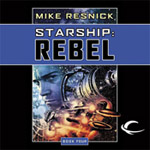 Starship: Rebel
By Mike Resnick; Read by Jonathan Davis
Audible Download – 8 Hours 45 Minutes [UNABRIDGED]
Publisher: Audible Frontiers
Published: December 16th 2008
The date is 1968 of the Galactic Era, almost three thousand years from now. The Republic, dominated by the human race, is in the midst of an all-out war with the Teroni Federation. Almost a year has passed since the events of Starship: Mercenary. Captain Wilson Cole now commands a fleet of almost fifty ships, and he has become the single greatest military force on the Inner Frontier. With one exception. The Republic still comes and goes as it pleases, taking what it wants, conscripting men, and extorting taxes, even though the Frontier worlds receive nothing in exchange. And, of course, the government still wants Wilson Cole and the starship Theodore Roosevelt. He has no interest in confronting such an overwhelming force, and constantly steers clear of them. Then an incident occurs that changes everything, and Cole declares war on the Republic. Outnumbered and always outgunned, his fleet is no match for the Republic’s millions of military vessels, even after he forges alliances with the warlords he previously hunted down. It’s a hopeless cause…but that’s just what Wilson Cole and the Teddy R. are best at.
The Ophiuchi Hotline
By John Varley; Read by Gabra Zackman
Audible Download – 7 Hours 55 Minutes [UNABRIDGED]
Publisher: Audible Frontiers
Published: September 2008
Coyote: A Novel of Interstellar Exploration
By Allen Steele; Read by Peter Ganim, Allen Steele, Therese Plummer
Audible Download – 17 hours and 36 minutes [UNABRIDGED]
Publisher: Audible Frontiers
Published: September 2008
Coyote Frontier: A Novel of Interstellar Exploration
By Allen Steele; Read by Peter Ganim, Allen Steele, Therese Plummer
Audible Download – 17 Hours [UNABRIDGED]
Publisher: Audible Frontiers
Published: September 2008
Coyote Rising: A Novel of Interstellar Revolution
By Allen Steele; Read by Peter Ganim, Allen Steele, Therese Plummer
Audible Download – 17 Hours 32 Minutes [UNABRIDGED]
Publisher: Audible Frontiers
Published: September 2008
Galaxy Blues
By Allen Steele; Read by Mark Vietor
Audible Download – 10 hours [UNABRIDGED]
Publisher: Audible Frontiers
Published: September 2008
After the Downfall
By Harry Turtledove; Read by Eric Michael Summerer
Audible Download – 17 Hours 55 Minutes [UNABRIDGED]
Publisher: Audible Frontiers
Published: September 2008
AudioBookCase:
The man with the foreboding voice takes on Stevenson’s most foreboding work…
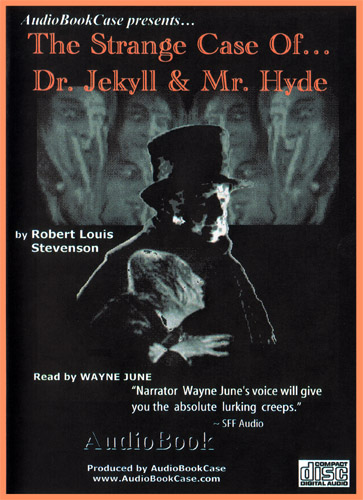
 The Strange Case Of Dr. Jekyll And Mr. Hyde
By Robert Louis Stevenson; Read by Wayne June
3 CDs – [UNABRIDGED?]
Publisher: AudioBookCase
Published: December 2008?
The Strange Case of Dr Jekyll and Mr. Hyde, (1886), has inspired analysis from a multiplicity of points-of-view, variously lauding it as a classic case study of good and evil, an examination of 19th century morals and psychological states, an inquiry into the essence of personality, personality disorder, and the nature of addiction. Of the work Stevenson himself said: “I send you herewith a Gothic gnome, interesting I think, and he came out of a deep mine, where he guards the fountain of tears.” And elsewhere: “Jekyll is a dreadful thing, I own, but the only thing I feel dreadful about is this damned old business of the war in the members. This time it came out; I hope it will stay in, in future.” Stevenson’s amiable style sets up an engaging personal rapport, sharing with the reader an enthusiasm and sense of wonder that remains today as rationale for the approbation of generations of admiring devotees worldwide.
Blackstone Audio:
Read by Michael Madsen, Sandra Oh, Edward Herrmann, and more (Blackstone commisioned this work done by the Hollywood Theater of the Ear)…
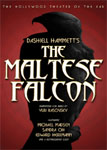 The Maltese Falcon
Based on the novel by Dashiell Hammett; Performed by a full cast
3 CDs or 1 MP3-CD – Approx. 3.1 Hours [AUDIO DRAMA]
Publisher: Blackstone Audio
Published: November 2008
ISBN: 9781433252495 (cd), 9781433252501 (mp3-cd)
The Maltese Falcon first appeared in the pages of Black Mask magazine in 1929. Almost immediately it was acknowledged as not only a great crime novel but an enduring masterpiece of American fiction. Sam Spade, its protagonist, is the archetypal tough, cynical P.I., “able,” as his creator explained, “to take care of himself in any situation, able to get the best of anybody he comes in contact with, whether criminal, innocent by-stander or client.” And what a client! – the irresistible and treacherous femme fatale Brigid O’Shaughnessy.
Believing the book’s vividly drawn characters and memorable dialogue cry out for theatrical treatment, Blackstone Audio commissioned this faithful dramatization by the award-winning Hollywood Theater of the Ear, in which a brilliant cast brings to life all the excitement and suspense of Hammett’s original in the playhouse of the mind.
The literary equivalent of taking deliriants in church…
The Three Stigmata of Palmer Eldritch
By Philip K. Dick; Read by Tom Weiner
6 CDs or 1 MP3-CD – 6.8 hours [UNABRIDGED]
Publisher: Blackstone Audio
Published: September 2008
Not too long from now, when exiles from a blistering Earth huddle miserably in Martian colonies, the only things that make life bearable are the drugs. Can-D “translates” those who take it into the bodies of Barbie-like dolls. Now there’s competition: a substance called Chew-Z, marketed under the slogan “God promises eternal life. We can deliver it.” The question is: What kind of eternity? And who—or what—is the deliverer?
Sounding rather comic, and mainstream…
The Ghost In Love
By Jonathan Carroll; Read by Ray Porter
8 CDs or 1 MP3-CD – 9.3 hours [UNABRIDGED]
Publisher: Blackstone Audio
Published: September 2008
Just after a man falls in the snow and hits his head on a stone curb, a ghost arrives to take his soul to the afterlife. But something strange occurs: the man doesn’t die. Flabbergasted, the ghost appeals to his boss for further direction and is instructed to stay with the man until the strange “problem” is worked out. But things get complicated when the ghost falls madly, deeply in love with the man’s girlfriend. Soon afterward, the man discovers he did not die when he was supposed to because, for the first time, human beings have decided to take back their fates from the gods.
Book 2 in Card’s SF version of the book of Mormon…
The Call Of Earth (Homecoming: Book 2)
By Orson Scott Card; Read by Stefan Rudnicki
9 CDs or 1 MP3-CD – 10.5 hours [UNABRIDGED]
Publisher: Blackstone Audio
Published: September 2008
For millennia, the planet Harmony has been protected by the Oversoul, an artificial intelligence programmed to prevent thoughts of war and conquest from threatening the fragile remnant of Earth’s peoples. But as the Oversoul’s systems have begun to fail, a great warrior has arisen to challenge its bans. Using forbidden technology, the ambitious and ruthless General Moozh has won control of an army and is aiming it at the city of Basilica.
This sounds bizarre, interesting, and rather Russian…
The Sacred Book Of The Werewolf
By Victor Pelevin; Read by Cassandra Campbell
10 CDs or 1 MP3-CD – 11.7 Hours [UNABRIDGED]
Publisher: Blackstone Audio
Published: September 2008
A. Huli, beautiful and curiously foxlike, has the appearance of a luscious fourteen-year-old girl, the mind of a sly Buddhist monk, and an endearing habit of name-dropping all the famous people she’s met over the past 2,000 years. She works as a classy prostitute in Moscow’s premier hotels, until one client goes inexplicably and fatally berserk at the sight of her and she has to leave in a hurry. Forced to advertise on the Internet, she comes to the attention of an intelligence officer who also happens to be a werewolf.
CBC Audio:
It is pricey at $54.95 CDN, but, it’s got never before heard content, and 7 full CDs of radio drama goodness!
 Canadia: 2056 (Season 2 Directors Cut)
7 CDs – RADIO DRAMA
Publisher: CBC Audio
Published: December 2008
Product ID: ERART00259
Volume 2 of this entertaining sci-fi comedy series, written by one of Canada’s best-loved comedy writers, Matt Watts. The United States has launched an armada to destroy an alien threat. Canada sends the nation’s only publicly-funded spacecraft, The Canadia – a ship with a single purpose – to plunge the Americans’ toilets. Includes episodes 11-24.
Full Cast Audio:
Book 3 in the Unicorn Chronicles series…
Dark Whispers: Unicorn Chronicles
By Bruce Coville; Multi-cast narration
10 CDs – Approx. 10.25 Hours [UNABRIDGED]
Publisher: Full Cast Audio
Published: September 2008
Listen to a sample |MP3|
As the unicorns of Luster prepare for an invasion led by their ancient enemy, Beloved, a troubling new clue to the dangers they face is discovered in an ancient scroll. As a result, the queen must send her granddaughter—the human girl Cara Dianna Hunter—to the Valley of the Centaurs, in quest of an ancient story that may hold the key to survival for all of Luster.
Graphic Audio:
Outlanders: Grailstone Gambit
By James Axler; Performed by a full cast
CDs – 6 hours [AUDIO DRAMA]
Publisher: GraphicAudio
Published: September 2008
Superman: The Never-Ending Battle
By Roger Stern; Performed by a full cast
CDs – 6 hours [AUDIO DRAMA]
Publisher: GraphicAudio
Published: September 2008
Recorded Books:
One of three Beart audibooks coming to Recorded Book’s new Sci-Fi imprint…
Undertow
By Elizabeth Bear; Read by Timothy Reynolds
9 CDs – 11.25 Hours [UNABRIDGED]
Publisher: Recorded Books
Published: September 2008
ISBN: 9781436119566
André Deschênes wants to escape his life as a hired assassin. He hopes to learn the art of conjuring, manipulating the odds of people’s lives. But a revolution is brewing in the city of Novo Haven, where an alien race is finally gaining ground, demanding they be treated as citizens. And before André moves on, he has a contract to fulfill.
For all your gaelic-nipponese needs look no farther than…
End Of The World Blues
By Jon Courtenay Grimwood; Read by James Yaegashi
12 CDs – 13.25 Hours [UNABRIDGED]
Publisher: Recorded Books
Published: September 2008
ISBN: 9781436147781
Iraqi war vet and part owner of an Irish pub in Tokyo, Kit Nouveau gave up on life a long time ago. But then his life is saved by a runaway, and Kit’s past might be the only thing that can save him from impending disaster.
The first in a series…
Greywalker
By Kat Richardson; Read by Mia Barron
10 CDs – 12.25 hours [UNABRIDGED]
Publisher: Recorded Books
Published: September 2008
ISBN: 9781436124492
Seattle P.I. Harper Blaine is viciously attacked and murdered—but after exactly two minutes, somehow she returns to life. Now she’s seeing strange things all around her—dark visions from the shadow world—and living a normal life may no longer be possible no matter how hard she tries.
From the author who is also a book critic…
Nova Swing
By M. John Harrison; Read by Jim Frangione
8 CDs – 9.5 hours [UNABRIDGED]
Publisher: Recorded Books
Published: September 2008
ISBN: 9781436124515
In this sci-fi noir, the physics-defying Saudade Event Site is a place to find strange landscapes and seemingly impossible physical phenomena—perfect for tourism. Into this environment comes Vic Serotonin, a “travel agent” whose newest client is a mysterious woman with a hidden agenda.
Asaro’s first audiobook for Recorded Books (several previous novels were published at Blackstone)…
The Ruby Dice
By Catherine Asaro; Read by Suzanne Toren
14 CDs – 17 hours [UNABRIDGED]
Publisher: Recorded Books
Published: September 2008
ISBN: 9781436135245
War between the Eubian Concord and the Skolians has devastated the galaxy before. Now another epic clash is brewing, and the leaders of both empires might be powerless to stop it. Further complicating matters, both men hide shocking secrets that could spell their doom.
Tantor Media:
Morgan does Fantasy! I’m there…
The Steel Remains
By Richard K. Morgan; Read by Simon Vance
13 CDs or 2 MP3-CDs – 16 Hours [UNABRIDGED]
Publisher: Tantor Media
Published: January 2009
EAN: 9781400109630 (cd), 9781400159635 (mp3-cd)
Epic fantasy is worked over in classic Richard K. Morgan style, producing this unique combination of noir themes and savage action involving characters you wouldn’t want to meet but will love to follow.
An older World Fantasy Award winning novel from Tantor Media…
Replay
By Ken Grimwood; Read by William Dufris
10 CDs or 1 MP3-CD – 12 Hours 30 Minutes UNABRIDGED
Publisher: Tantor Media
Published: November 2008
ISBN: 9781400110100 (cd), 9781400160105 (mp3-cd)
A time-travel classic in the tradition of Jack Finney’s Time and Again, Ken Grimwood’s acclaimed novel Replay asks the pro-vocative question: “What if you could live your life over again, knowing the mistakes you’d made before?”
You want alternate history? Bam!
The United States Of Atlantis (Book Two in the Atlantis Trilogy)
By Harry Turtledove; Read by Todd McLaren
13 CDs or 2 MP3-CDs – 16 hrs 30 min – Unabridged
Publisher: Tantor Media
Published: December 2008
ISBN: 9781400107834 (cd), 9781400157839 (mp3-cd)
In the second book of the Atlantis trilogy, New York Times bestselling author Harry
Turtledove continues to rewrite the history of the world with the existence of an
eighth continent: Atlantis.
I knew that dog was really a ghost…
Sherlock Holmes Was Wrong (Reopening the Case of the Hound of the Baskervilles)
By Pierre Bayard; Read by John Lee
4 CDs or 1 MP3-CD – Approx. 4 Hours [UNABRIDGED]
Publisher: Tantor Media
Published: December 2008
ISBN: 9781400109838 (cd), 9781400159833 (mp3-cd)
Eliminate the impossible, Sherlock Holmes said, and whatever is left must be the solution. But, as Pierre Bayard finds in this dazzling reinvestigation of The Hound of the Baskervilles, sometimes the master missed his mark. Using the last thoughts of the murder victim as his key, Bayard unravels the case, leading the reader to the astonishing conclusion that Holmes—and, in fact, Arthur Conan Doyle—got things all wrong: The killer is not at all who they said it was. Part intellectual entertainment, part love letter to crime novels, and part crime novel in itself, Sherlock Holmes Was Wrong turns one of our most beloved stories delightfully on its head. Examining the many facets of the case and illuminating the bizarre interstices between Doyle’s fiction and the real world, Bayard demonstrates a whole new way of reading mysteries: a kind of “detective criticism” that allows readers to outsmart not only the criminals in the stories we love but also the heroes—and sometimes even the writers.
These two novels will effect the masses who’ve played the videogame…
Mass Effect: Revelation (#1 in the Mass Effect Series)
By Drew Karpyshyn; Read by David Colacci
7 CDs or 1 MP3-CD – 9 Hours [UNABRIDGED]
Published: Tantor Media
Published: November 2008
ISBN: 9781400110056 (cds), 9781400160051 (mp3-cd)
From the New York Times bestselling author Drew Karpyshyn comes the thrilling first
official novel based on the BioWare video game Mass Effect.
Mass Effect – Ascension (#2 in the Mass Effect Series)
By Drew Karpyshyn; Read by David Colacci
8 CDs or 1 MP3-CD – Approx. 9 Hours 30 Minutes [UNABRIDGED]
Publisher: Tantor Media
Published: December 2008
ISBN: 9781400110049 (cd), 9781400160044 (mp3-cd)
It’s humankind versus a race of machines bent on harvesting organic life in this second official novel based on the BioWare video game.
Originally released by Durkin Hayes abridged, here’s the first unabridged version of this non-Dune Frank Herbert novel…
 The White Plague
By Frank Herbert; Read by Scott Brick
16 CDs or 2 MP3-CDs – 20 Hours 30 Minutes [UNABRIDGED]
Publisher: Tantor Media
Published: 12/08/2008
ISBN: 9781400105656 (cd), 9781400155651 (mp3-cd)
The White Plague, a marvelous and terrifyingly plausible blend of fiction and visionary theme, tells of one man who is pushed over the edge of sanity by the senseless murder of his family and who, reappearing several months later as the so-called Madman, unleashes a terrible plague upon the human race—one that zeros in, unerringly and fatally, on women.
Wer’re wild and wooly about this one…
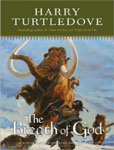 The Breath Of God
By Harry Turtledove; Read by William Dufris
12 CDs or 2 MP3-CDs – Approx. 15 Hours [UNABRIDGED]
Publisher: Tantor Media
Published: 12/23/2008
ISBN: 9781400107841 (cd), 9781400157846 (mp3-cd)
Harry Turtledove, New York Times bestselling author of Opening Atlantis, presents more adventure in a Bronze Age that never was in this sequel to Beyond the Gap.
New series… merc chick with sword? SOLD!
Magic Bites (#1 in the Kate Daniels series)
By Ilona Andrews; Read by Renée Raudman
8 CDs or 1 MP3-CD – 9 Hours [UNABRIDGED]
Publisher: Tantor Media
Published: December 2008
ISBN: 9781400110308 (cd), 9781400160303 (mp3-cd)
Mercenary Kate Daniels cleans up urban problems of a paranormal kind. But her latest prey, a pack of undead warriors, presents her greatest challenge.
A paperbook, now audiobook, from the pre-World Of Warcraft era. The first Warcraft audiobook…
Warcraft, Book One – Day Of The Dragon
By Richard A. Knaak; Read by Dick Hill
9 CDs or 1 MP3-CD – 11 Hours [UNABRIDGED]
Publisher: Tantor Media
Published: 01/01/2009
ISBN: 9781400109869 (cd), 9781400159864 (mp3-cd)
An original tale of magic, warfare, and heroism based on the bestselling, awardwinning
electronic game from Blizzard Entertainment.
40 hours? Seriously? 40 hours? Seriously?
Pandora’s Star
By Peter F. Hamilton; Read by John Lee
32 CDs or 4 MP3-CDs – 40 Hours [UNABRIDGED]
Published: Tantor Audio
Published: 11/17/2008
ISBN: 9781400107643 (cd), 9781400157648 (mp3-cd)
Set in the twenty-fourth century, this epic novel of a human-extraterrestrial war
engineered by an unknown omniscient being is by the bestselling author of The
Reality Dysfunction and Fallen Dragon.
Against The Tide Of Years (#2 in the Nantucket series)
By S.M. Stirling; Read by Todd McLaren
17 CDs or 2 MP3-CDs – 20 Hours 30 Minutes [UNABRIDGED]
Published: Tantor Media
Published: 11/17/2008
ISBN: 9781400106806 (cd), 9781400156801 (mp3-cd)
George R. R. Martin hailed S. M. Stirling’s bestselling novel Island in the Sea of Time as “an utterly engaging account of what happens when the isle of Nantucket is whisked back into the Bronze Age.” Now the adventure continues with Against the Tide of Years. Book two in the Island in the Sea of Time trilogy
On The Oceans Of Eternity (Book #3 in the Nantucket series)
By S.M. Stirling; Read by Todd McLaren
23 CDs or 3 MP3-Cds – 28 Hours [UNABRIDGED]
Publisher: Tantor Media
Published: January 2009
EAN: 9781400106813 (cd), 9781400156818 (mp3-cd)
Award-winning science fiction author Harry Turtledove hailed Island in the Sea of Time as “one of the best time travel/alternative history stories I’ve ever read,” and Jane Lindskold called Against the Tide of Years “another exciting and explosive tale.” Now the adventures of the Nantucket islanders lost in the time of the Bronze Age continues with On the Oceans of Eternity.
The Scourge of God: A Novel of the Change (#5 in the Emberverse series)
By S.M. Stirling; Read by Todd McLaren
15 CDs or 2 MP3-CDs – 18.5 Hours [UNABRIDGED]
Publisher: Tantor Media
Published: September 2008
EAN: 9781400106820 (cd), 9781400156825 (mp3-cd)
Rudi MacKenzie continues his trek across the land that was once the United States of America. His destination: Nantucket, where he hopes to learn the truth behind the Change that rendered technology across the globe inoperable. During his travels, Rudi forges ties with new allies in the continuing war against the Prophet, who teaches his followers that God has punished humanity by destroying technological civilization. And one fanatical officer in the Sword of the Prophet has been dispatched on a mission: to stop Rudi from reaching his destination by any means necessary.
Crusade (Destroyermen: Book 2)
By Taylor Anderson; Read by William Dufris
12 CDs or 2 MP3-CDs – 15 Hours [UNABRIDGED]
Published: Tantor Media
Published: November 2008
ISBN: 9781400108077 (cd), 9781400158072 (mp3-cd)
The second novel in the Destroyermen trilogy finds the crew of the USS Walker in
alliance with the peaceful Lemurians against the warlike Grik when another, more
familiar foe joins in the fray. Book two in the Destroyermen trilogy.
Kushiel’s Scion
By Jacqueline Carey; Read by Simon Vance
22 CDs or 3 MP3-CDs – 28 Hours 30 Minutes [UNABRIDGED]
Published: Tantor Media
Published: November 2008
ISBN: 9781400109524 (cd), 9781400159529 (mp3-cd)
National bestselling author Carey opens a new trilogy set in the same extraordinary
world as her extended New York Times bestseller, Kushiel’s Avatar.
Sunshine
By Robin McKinley; Read by Laural Merlington
13 CDs or 2 MP3-CDs – 16 Hours [UNABRIDGED]
Published: Tantor Media
Published: November 2008
ISBN: 9781400110087 (cd), 9781400160082 (mp3-cd)
In her first novel for adults. the Newbery Medalist and bestselling author pens an exciting, beautifully written, erotic addition to the popular vampire genre.
Embrace The Night
By Karen Chance; Read by Cynthia Holloway
13 CDs or 2 MP3-CDs – 16 Hours [UNABRIDGED]
Published: Tantor Media
Published: November 2008
ISBN: 9781400108190 (cd), 9781400158195 (mp3-cd)
In this third entry in the popular Cassandra Palmer series, Cassie is forced to travel back in time to retrieve an ancient book of spells—although doing so could spell disaster for the world.
Trading In Danger (#1 in the Vatta’s War Series)
By Elizabeth Moon; Read by Cynthia Holloway
11 CDs or 2 MP3-CDs – Approx. 14 Hours [UNABRIDGED]
EAN: 9781400108275 (cd), 9781400158270 (mp3-cd)
Publisher: Tantor Media
Published: November 2008
The first of the acclaimed Vatta’s War books, the exciting military science fiction series that features a swashbuckling spaceship-captain heroine who mixes commerce with combat.
Marque And Reprisal (#2 in the Vatta’s War Series)
By Elizabeth Moon; Read by Cynthia Holloway
11 CDs or 2 MP3-CDs – 13 Hours 30 Minutes [UNABRIDGED]
Publisher: Tantor Media
Published: November 2008
ISBN: 9781400108282 (cd), 9781400158287 (mp3-cd)
This action-packed sequel to Trading in Danger is the second installment in Nebula Award-winning author Moon’s military science fiction series featuring Kylara Vatta, who must save her family from ruin.
Valor’s Choice (Book One in the Confederation Series)
By Tanya Huff; Read by Marguerite Gavin
10 CDs or 1 MP3-CD – 12 Hours 30 Minutes [UNABRIDGED]
Publisher: Tantor Media
Published: November 2008
ISBN: 9781400109920 (cd), 9781400159925 (mp3-cd)
Listen to a sample MP3
In the distant future, humans and several other races have been granted membership in the Confederation—at a price. They must act as soldier/protectors of the far more civilized races who have long since turned away from war.
Posted by Jesse Willis

 The Amber Spyglass