
BBC World Service: Pontypool [the radio drama]

SFFaudio Online Audio

BBC World ServiceThe BBC World Service commissions an annual collection of new radio plays from around the world each year. They call it “Worldplay” and this year’s theme was “science.” Entries came in from the UK, Australia, New Zealand, Ireland, the USA and Canada. It was Canada’s entry that has drawn my ear. Not only because it is Science Fictional (and Horror-ish) but also because it happens to be related to a movie that I told you radio drama fans would probably dig. Here’s a CBC Edmonton review of the movie |MP3| (now on DVD). Perhaps this Pontypool radio drama would have been broadcast on CBC Radio One too, had not the CBC radio drama department been virtually mothballed. Luckily, the BBC and ABC Radio National seem interested in airing new Canadian radio drama even if CBC itself isn’t.

Now for a few caveats. As the Horror Squad blog points out this is not, strictly speaking, a new recording but rather a radio drama created by editing the movie’s dialogue and sound effects tracks. Ultimately, this does hurt the piece; it would have been better to have had these terrific actors in the studio to recreate their performances (as was done by the likes of Lux Radio Theatre). But to my ears this edit is good, if not the ideal. Here’s what Horror Squad said:

“This is actually not a new recording, but simply the original audio of the film re-cut as a play. If you haven’t seen the film, I’d highly recommend you do before giving it a complete listen. As fantastic as the audio side is, one of the best things about the film is Bruce McDonald’s [he’s the film’s director] ability to visually trap you within the confines of the radio station, which is something I fear this 40 minute shorter take on the material is without.”

I myself have a couple factoids about Pontypool the radio drama. I’ll throw out there. First, this AD has a different ending than does the film. Second, it’s substantially abridged. The movie runs 97 minutes, with dialogue running over the opening and closing credits; whereas the AD runs only 53 minutes. The AD’s end credits also, by the way, say that Pontypool, was directed by Gregory J. Sinclair as a production for CBC. This is news to me considering I haven’t heard it broadcast on CBC radio this year, or even announced for the fall. Sinclair, incidentally, is the producer of CBC Radio’s last standing radio drama series, Afghanada. Have a listen to Pontypool. It’s a very Canadian zombie story. I really liked it a lot!
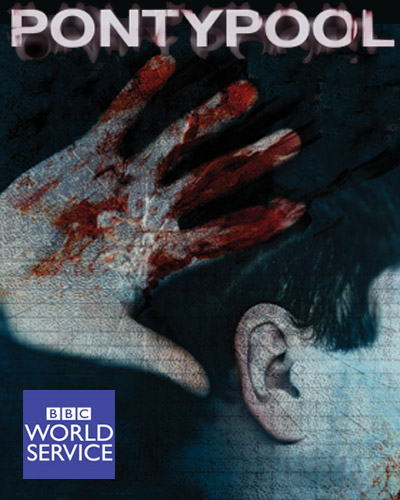
BBC World Service - Pontypool by Tony BurgessPontypool
By Tony Burgess; Performed by a full cast
Streaming Audio – Approx. 58 Minutes [RADIO DRAMA]
Broadcaster: BBC World Service / Worldplay
Broadcast: June 21, 2009
“Shock jock Grant Mazzy has, once again, been kicked-off the Big City airwaves and now the only job he can get is the early morning show at CLSY Radio in Pontypool Ontario, which broadcasts from the basement of the small town’s only church. What begins as another boring day of school bus cancellations, due to yet another massive snow storm, quickly turns deadly when reports start piling in of people developing strange speech patterns and evoking horrendous acts of violence start piling in. But there’s nothing coming in on the news wires. Is this really happening? Before long, Grant and the small staff at CLSY find themselves trapped in the radio station as they discover that this insane behaviour taking over the town is actually a deadly virus being spread through the English language itself. Do they stay on the air in the hopes of being rescued or, are they in fact providing the virus with its ultimate leap over the airwaves and into the world? Based on the novel Pontypool Changes Everything. Starring Stephen McHattie, Lisa Poole, Georgina Reilly, Rick Roberts, Hrant Alianak and Daniel Fathers .

This is also available in MP3 format via RadioArchive.cc along with more of the Worldplay dramas.

And, for australian listeners without torrent capability, via ABC Radio National |STREAMING|.

[via Monster Rally]

Posted by Jesse Willis

P.S. I think perhaps it’s time for CBC to sell the J. Michael Straczynski radio drama series that they produced and never aired, to a station that will actually broadcast it! Maybe BBC:WS?
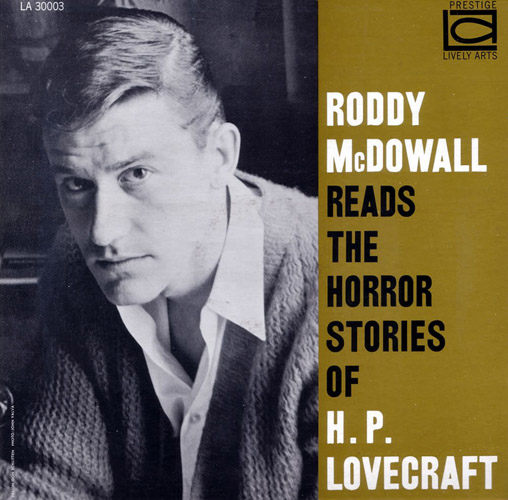
Roddy McDowall Reads The Horror Stories Of H.P. Lovecraft: The Outsider / The Hound

SFFaudio Online Audio

Sez the Zombie Astronaut on his latest blog post:

“I keep forgetting to post this damnable thing, but here’s the complete Roddy McDowall Lovecraft reading…”

Lively Arts - Roddy McDowall Read The Horror Stories Of H.P. Lovecraft - The Outsider and The HoundRoddy McDowall Reads The Horror Stories Of H.P. Lovecraft:
The Outsider / The Hound

By H.P. Lovecraft; Read by Roddy McDowall
1 LP – Approx. 42 Minutes [UNABRIDGED?]
Publisher: Lively Arts (Prestige Records)
Published: 1962? or 1963?
Product #: LA 30003
Includes: The Outsider |MP3| and The Hound |MP3|

[Thanks ZA!]

Posted by Jesse Willis

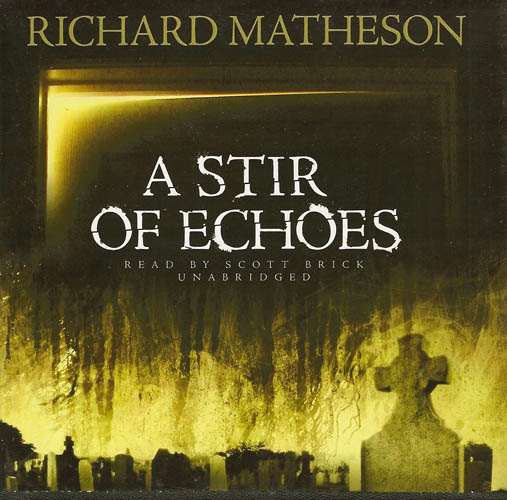
Review of A Stir of Echoes by Richard Matheson

SFFaudio Review

A Stir of Echoes by Scott BrickA Stir of Echoes
By Richard Matheson; Read by Scott Brick
6 CDs – 6.5 hours – [UNABRIDGED]
Publisher: Blackstone Audio
Published: 2009
ISBN: 9781433267451
Themes: / Horror / Ghosts / Suburbs /

I love a good ghost story, and this certainly is one. A Stir of Echoes was originally published in 1958, but there is very little in the novel that dates it. Either Richard Matheson has a knack for not mentioning things that will become dated, or our lives haven’t changed all that much since the 1950’s.

Tom Wallace and his wife live in the suburbs. At a party, Wallace agrees to be hypnotized, which inadvertently opens a door in his mind to psychic communications. He sees some future events and senses motives and desires of others, but most disturbing is the ghostly woman who keeps showing up in his house.

Like I Am Legend, this novel is very internal. It’s all about Wallace, what he’s thinking, what he’s feeling, and his perception of everyone else. For narrator Scott Brick, this novel presented an opportunity for a great dramatic reading, and he delivers. There’s no doubt how Wallace is feeling, and it’s not always the words that tell us. Brick’s performance is stirring, and his intensity grows as Wallace’s grip loosens. A thorougly entertaining production.

Blackstone Audio is building a very nice collection of Richard Matheson’s fiction. Jesse recently reviewed I Am Legend and Other Stories, and forthcoming is another collection: Nightmare at 20,000 Feet: Horror Stories by Richard Matheson.

Posted by Scott D. Danielson

19 Nocturne Boulevard: AUDIO DRAMA

SFFaudio Online Audio

19 Nocturne BoulevardJulie Hoverson from 19 Nocturne Boulevard, writes in to say:

“One of our episodes, The Outpost, just won the 2008 Mark Time award for best science fiction audio drama!!”

Congratulation Julie! 19 Nocturne Boulevard is a podcast audio drama anthology series. Among the episodes are several dramatized H.P. Lovecraft adaptations. These are Chillin’ (a modernization of Cool Air), Within the Walls of Eryx, and The Temple. Julie also hints of several more Lovecraftian pieces in the works.

And for those who like me, were wondering, here’s the hidden podcast feed for the show:

http://neohoodoo.libsyn.com/rss

Posted by Jesse Willis

China Mieville on H.P. Lovecraft’s The Horror Of Red Hook

SFFaudio Online Audio

A short video of city lover China Mieville talking about H.P. Lovecraft’s The Horror Of Red Hook (which is set in New York City). Lovecraft didn’t like living in NYC.

Lovecraft spelled out his inspiration for The Horror At Red Hook in a letter to Clark Ashton Smith:

“The idea that black magic exists in secret today, or that hellish antique rites still exist in obscurity, is one that I have used and shall use again. When you see my new tale The Horror at Red Hook, you will see what use I make of the idea in connexion with the gangs of young loafers & herds of evil-looking foreigners that one sees everywhere in New York.” -from H. P. Lovecraft, Selected Letters Vol. 2

Lovecraft’s wife, Sonia Greene, wrote of her husband’s xenophobia:

“Whenever we found ourselves in the racially mixed crowds which characterize New York, Howard would become livid with rage. He seemed almost to lose his mind.”
-From Lovecraft: A Look Behind the Cthulhu Mythos

And here is a reading of the story itself…

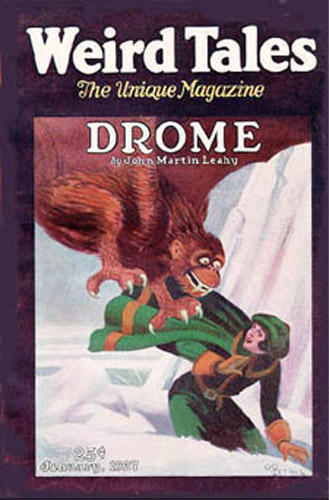
Weird Tales January 1927The Horror Of Red Hook
By H.P. Lovecraft; Read by April Sadowski
1 |MP3| – Approx. 45 Minutes [UNABRIDGED]
Podcaster: Broken Sea Audio Productions
Podcast: October 2008
Red Hook is a mysterious slum in New York City, full of gangs, crime, and just perhaps a terrible cult. Detective Malone had a case that had tendrils extending into Red Hook. It seems that one Robert Suydam, a corpulent and scruffy recluse, has been looking younger, more radiant and prosperous. What does that have to do with the recent spate of kidnappings? First published in the January 1927 issue of Weird Tales.

[via Monster Rally, Ominvoracious, Wikipedia and BSAP]

Posted by Jesse Willis

Review of The Strain by Guillermo del Toro and Chuck Hogan

SFFaudio Review

The Strain by Guillermo del Toro and Chuck HoganThe Strain
By Guillermo del Toro and Chuck Hogan; Read by Ron Perlman
Audible Download – 13 hours 36 mins [UNABRIDGED]
Publisher: Harper Audio
Published: 2009
Themes: / vampires / scientific thriller / horror / New York / mythology / medical mystery

Yes, it’s another book about vampires. But wait, don’t shrug it off just yet. Several things set The Strain apart from the glut of vampire novels flooding the market of late. First, it’s co-written by movie director Guillermo del Toro, whose past film successes include the vampire flick Blade II, the comic-book adaptation of Hellboy, and the mythological Pan’s Labyrinth. He’s also heading up the forthcoming film adaptation of J.R.R. Tolkien’s The Hobbit. Furthermore, The Strain takes a more sobering view of the undead, divorced from the romanticism weighing down the vampire genre.

The Strain begins when a plane lands at JFK airport with almost all its passengers struck dead. The Center for Disease Control calls in its chief investigator Ephraim Goodwether, newly divorced and newly sober, to look into the matter. Mysteries abound when the passengers’ bodies go missing from the morgue, the few survivors begin acting strangely, and a coffin-like trunk inexplicably vanishes from the plane’s cargo hold. Ephraim and his partner Nora, with whom he’s had some past romantic involvement, find unlikely aid in the guise of pawn shop owner Abraham Setrakian, an aged Holocaust survivor who carries an odd staff with a silver wolf’s-head handle. The old man explains that a centuries-old conflict between vampire tribes is about to burst forth onto the streets of New York.

And indeed it does. The narrative frequently shifts away from the main storyline to tell the stories of men and women infected with a strange virus, whose vector is a disgustingly pulsating capillary worm. Initial side effects resemble a mild flu and include sore throat and slight disorientation. But this is only the beginning. The sore throat, it turns out, heralds the growth of a new sinister organ, a long tendril-like apparatus under the tongue tipped with a deadly stinger, which in turn infects other humans. Other vampiric characteristics soon manifest, including the whitening of gums, an aversion to sunlight, and immunity to most forms of attack.

The premise is intriguing, especially since it presents a more scientific approach to the undead than most other vampire novels, except perhaps Richard Mathesen’s superior I Am Legend. Unfortunately, the actual story unfolds too slowly and spasmodically, and lacks evidence of any real structural forethought on the part of the authors. Del Toro originally pitched the idea as a TV show, and evidence of his screenwriting background can be found in the scene headings affixed to each section and in the many entertaining but ultimately superfluous vignettes of violence. The suspense sequences are spine-tingling and the action scenes hair-raising, but most of them do little to further the story.

The book’s shining gem is the character of Abraham Setrakian, whose harrowing escape from Nazis and forces even more sinister we learn throughout the book in flashback sequences. Del Toro’s interest in mythology and folklore take center stage, and provide the most compelling moments of the book.

It’s difficult to know how the division of labor fell between Guillermo del Toro and Chuck Hogan in writing The Strain, but my impression is that del Toro provided the concept and perhaps wrote some of the pivotal scenes, while Hogan did the heavy lifting of filling in the gaps and pulling the whole thing together. This should have been a good thing, since Chuck Hogan is an acclaimed best-selling author. However, writing good speculative fiction requires a certain sensitivity and perspective that I believe Hogan lacks, although this is only a guess on my part since I’ve read none of his other work. Del Toro has keener vision as a storyteller, at least as seen in his films, though these skills don’t necessarily translate to the written word. Since the cover bears both their names, both del Toro and Hogan must bear some blame for crafting a less-than-stellar novel.

The Strain is narrated by actor Ron Perlman, who incidentally also played a role in del Toro’s Blade II. Particularly in works of suspense and horror, a good voice actor can make the difference between scenes that leave you gripping the arms of your chair and scenes that make you laugh out loud by virtue of their inadvertent cheesiness. I’m pleased to report that Perlman’s voice work in The Strain had the former impact on me. His intonations are pitch-perfect, and he snarls out the vampiric growls and moans with enough force and feeling to chill the blood.

The Strain is the first in a trilogy of the same name, as can be seen in the novel’s grim and hurried ending. As Dante Hicks says of The Empire Strikes Back in Clerks, “it ends on such a downer.” That said, the ending brought significant changes to the lives of several pivotal characters who, despite the spotty storytelling, I’ve grown to care about, and I’ll probably read the sequel when it hits the audio airwaves next year.

Posted by Seth Wilson