News, Reviews, and Commentary on all forms of science fiction, fantasy, and horror audio. Audiobooks, audio drama, podcasts; we discuss all of it here. Mystery, crime, and noir audio are also fair game.
What I’ve done here is combine Anne Cheng‘s LibriVox narration of Edgar Allan Poe’s The Raven with the Gutenberg.org’s Gustave Doré illustrations for the 1884 Steadman edition of The Raven.
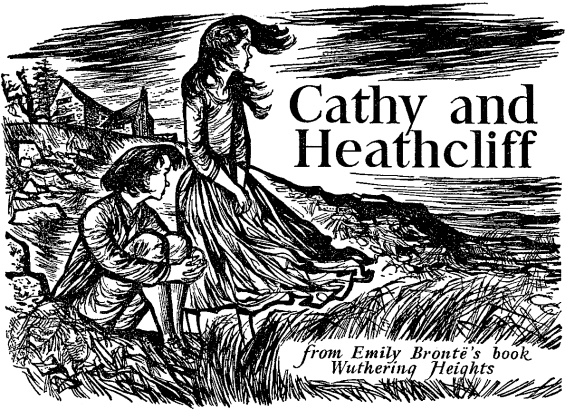
I’ve been looking for an excuse to begin reading Emily Brontë‘s Wuthering Heights!
Now I’ve got one.
This excerpt from the novel works well on it’s own, and makes up the bulk of chapters IV, V, and VI.
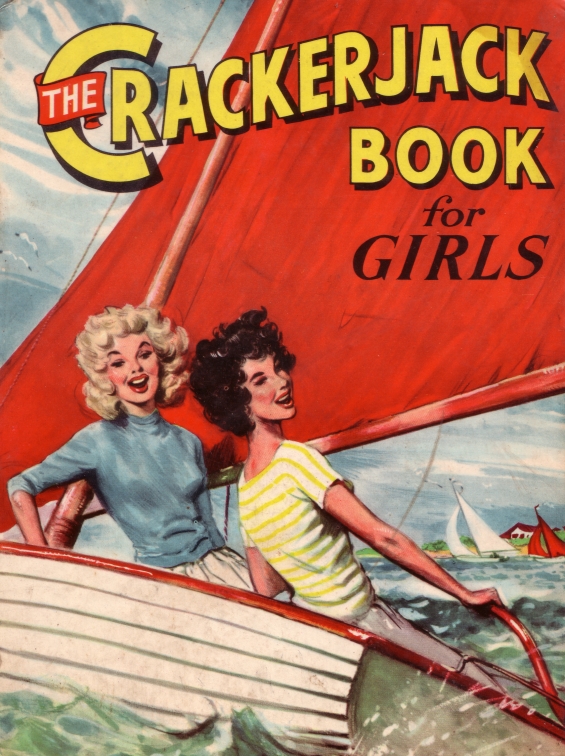
I found it in a great uncopyrighted (and undated) kid’s book from the mid 20th century called The Crackerjack Book For Girls!
I love these old collections, they combine terrific illustrations with a level of intelligence that’s hard to find in modern kid’s books.
What I’ve actually done here is taken the story’s text and images |PDF| and matched them up with the terrific solo narrated audiobook as performed by the talented Ruth Golding for LibriVox. Or to put it another way I abridged the public domain audiobook of Wuthering Heights to match the text as it appears in The Crackerjack Book For Girls. Here’s the |MP3|.
I should also point out that the complete audiobook of the novel is HERE).
Before you listen, read, or watch the video check out the introduction to Cathy And Heathcliff as it appeared in The Crackerjack Book For Girls:
Emily Brontë was one of three sisters – all if them writers – who lived in the first half of the nineteenth century. Their father was a clergyman and their home was Haworth Parsonage, a bleak, rather forbidding house with the gravestones if the churchyard on one side and the wild, desolate Yorkshire moors on the other.
Their lives were spent in this lonely little village if the West Riding, and the Yorkshire character and landscape colour all their writings. Emily, particularly, loved the windswept, moorland country which surrounded their home, and Wuthering Heights, her only novel, owes its sombre, fascinating atmosphere to the background if her life.
Of the three sisters, Charlotte, Emily and Anne, only the work of Charlotte gained recognition in the author’s lifetime; but now, a century later, we recognise the true genius if Emily. The beauty of her poetry, and the power and dramatic quality if her novel far excel anything written by her sisters (even Charlotte’s masterpiece, Jane Eyre).
Wuthering Heights relates the histories of two neighbouring Yorkshire families, the Lintons and the Earnshaws, through three generations; and the changes if fortune brought upon both of them by the chance action if Mr. Earnshaw, which is described in the excerpt from the book which follows. The strange little foundling boy grows up to be the principal actor in the drama. This is Heathcliff, a character drawn with a power and assurance which at once mark Emily Brontë as a great English writer.
(The story is told in the first person, and is taken up in turn by minor characters in the book. Here Nellie Dean, an old family servant, is telling the story.)
And here’s the afterword:
This incident marked the close of a chapter in Heathcliff’s life. The Cathy who came back to Wuthering Heights had changed beyond his recognition; her stay with the Lintons had turned her into an elegant young lady with fine clothes and manners. In bitter disappointment and despair, Heathcliff fled. Years later he returned, a grown man. Hatred and a desire for revenge had taken complete possession of him, and his one reason for living had become vengeance upon Hindley.
Described as: “A Powerful Novel of Intrigue and Action in the Not-So-Distant Future”
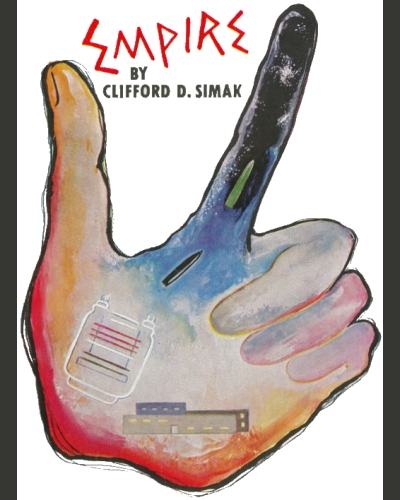
Empire
By Clifford D. Simak; Read by Kevin Green 21 Zipped MP3 Files or Podcast – Approx. 4 Hours 57 Minutes [UNABRIDGED]
Publisher: LibriVox.org
Published: January 27, 2012
|ETEXT| In a future time, the solar system is powered by one energy source, controlled by one huge organization, which has plans to use this control to dominate the planets. Unknown to them, a couple of maverick scientists accidentally develop a completely new form of energy supply and threaten the corporation’s monopoly. Naturally, the corporation can’t allow this to happen… A stunning story about the manipulation of pure energy, climaxing in interstellar conflict. First published in 1951 as Galaxy Science Fiction Novel 7.
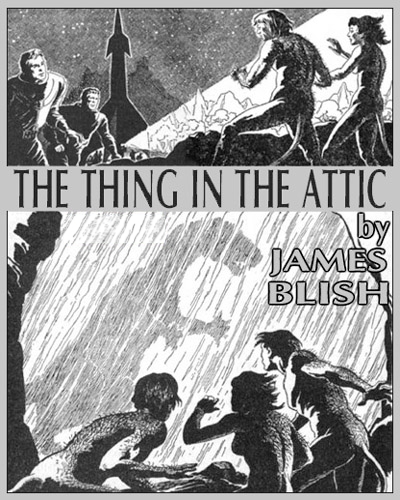
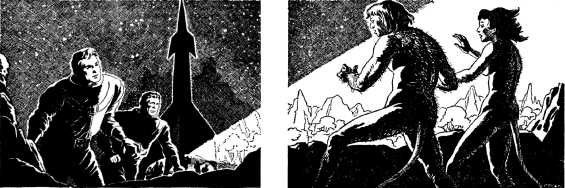
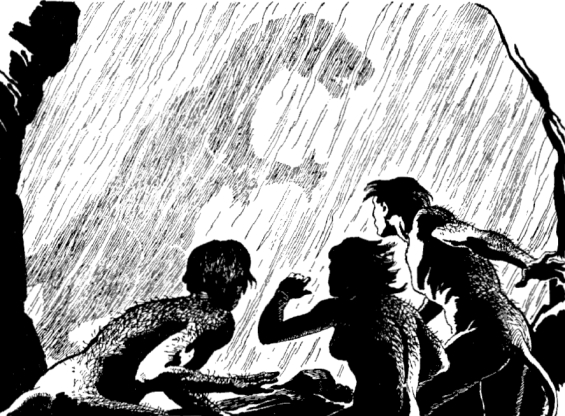
Previously available as a LibriVox audiobook, and now mysteriously not, Gregg Margarite’s narration of The Thing In The Attic is available from The Drama Pod! This is one of James Blish’s “Pantropy” tales and makes up one quarter of his fixup novel The Seedling Stars. Here’s a snippet from the Wikipedia entry on pantropy:
“Pantropy is a hypothetical process of space colonization in which rather than terraforming other planets or building space habitats suitable for human habitation, humans are modified (for example via genetic engineering) to be able to thrive in the existing environment.”
Other examples of pantropic fiction include Olaf Stapledon’s Last And First Men, Clifford D. Simak’s Desertion, Poul Anderson’s Call Me Joe and Frederick Pohl‘s Man Plus.
The Thing In The Attic
By James Blish; Read by Gregg Margarite
1 |MP3| – Approx. 83 Minutes [UNABRIDGED]
Podcaster: The Drama Pod
Podcast: January 8, 2012 Honath the Pursemaker is a heretic. He doesn’t believe the stories in the Book of Laws which claims giants created his tree-dwelling race. He makes his opinion known and is banished with his infidel friends to the floor of the jungle where dangers abound. Perhaps he’ll find some truth down there. First published in the July, 1954 edition of If: Worlds of Science Fiction magazine.
The SFFaudio Podcast #142 – Accessory Before The Fact by Algernon Blackwood, read by Gregg Margarite. This is a complete and unabridged reading of the short story (16 Minutes) followed by a discussion of it (by Jesse, Tamahome, and Gregg Margarite).
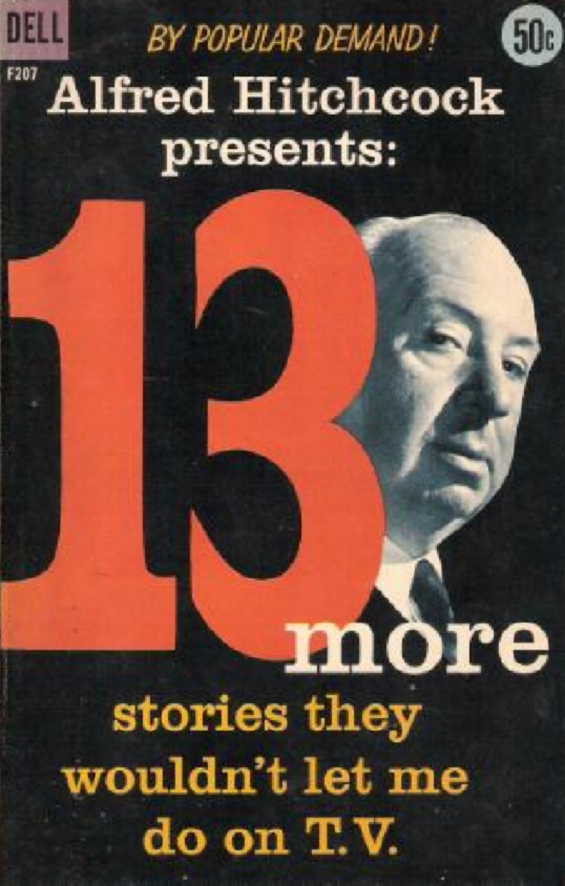
Talked about on today’s show: Accessory Before The Fact was published in 1911, Jesse doesn’t understand this story, Wilkie Collins, ethereal planes are the hook (rather than the detail), Gilligan and The Skipper vs. Laurel and Hardu vs. Harold and Kumar, “this is not a time-slip story”, “this is a precognative story”, paranoia, “spirtitualized”, Germanophobia, WWI, bigotry on display, L. Frank Baum’s racism, Teutonic invasion, how many characters are in this story (4 or 3)?, peeling away the layers, déjà vu, see/feel the future, quantum theory, is time a superimposition onto real reality?, slipstream, fantasy, should we dismiss this story?, Ten Minute Short Stories, adventure, Accessory Before The Fact is at the genesis of all this, an accountant on vacation, “what do you do when you have one of these events and you can’t prove it”?, The Moment Of Decision by Stanley Ellin, 13 More Stories They Wouldn’t Let Me Do On TV edited by Alfred Hitchcock, An Occurance At Owl Creek Bridge by Ambrose Bierce, time is an illusion, “time is a serious problem…”
Back in 2008 Listener (of the Free Listens blog) reviewed for us Steve Anderson’s 2006 reading of A Connecticut Yankee In King Arthur’s Court. That’s a freely available LibriVox audiobook. Shortly thereafter LibriVox published a second version and we’ve ignored it since then. No Longer!
John Greenman’s 2008 narration is 2 hours and 18 minutes shorter than Anderson’s and has an even better sound quality. As to whether he’s the better narrator try these two files on for size:
Steve Anderson’s 2006 |MP3|
John Greenman’s 2008 |MP3|
What do you think? Myself I can see merits for both. I like Anderson’s unaffected reading voice. Greenman’s narration has a certain folksy charm too. Sound quality is better with Greenman’s, but Anderson’s voice is just a little crisper with the words – that might make it easier to hear in a noisy environment. I can’t choose. Help!
Here’s the Greenman edition:
A Connecticut Yankee In King Arthur’s Court
By Mark Twain; Read by John Greenman
3 M4Bs, 44 Zipped MP3 Files or Podcast – Approx. 11 Hours 50 Minutes [UNABRIDGED]
Publisher: LibriVox.org
Published: May 03, 2008 A Connecticut Yankee in King Arthur’s Court is an 1889 novel by American humorist and writer Mark Twain. The work is a very early example of time travel in literature, anticipating by six years H. G. Wells’ The Time Machine of 1895 (however, unlike Wells, Twain does not give any real explanation of his protagonist’s traveling in time). Some early editions are entitled A Yankee At The Court Of King Arthur.







 Back in 2008 Listener (of the