The Music Of Erich Zann by H.P. Lovecraft

SFFaudio Online Audio

The Music Of Erich Zann is one of H.P. Lovecraft’s most popular short stories (it runs just 3,450 words).

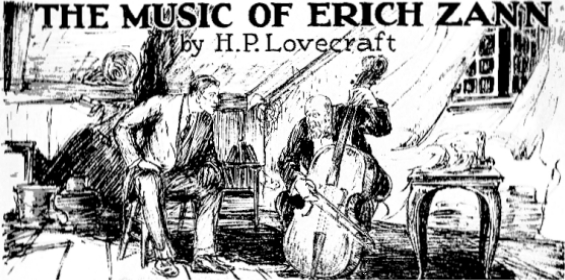
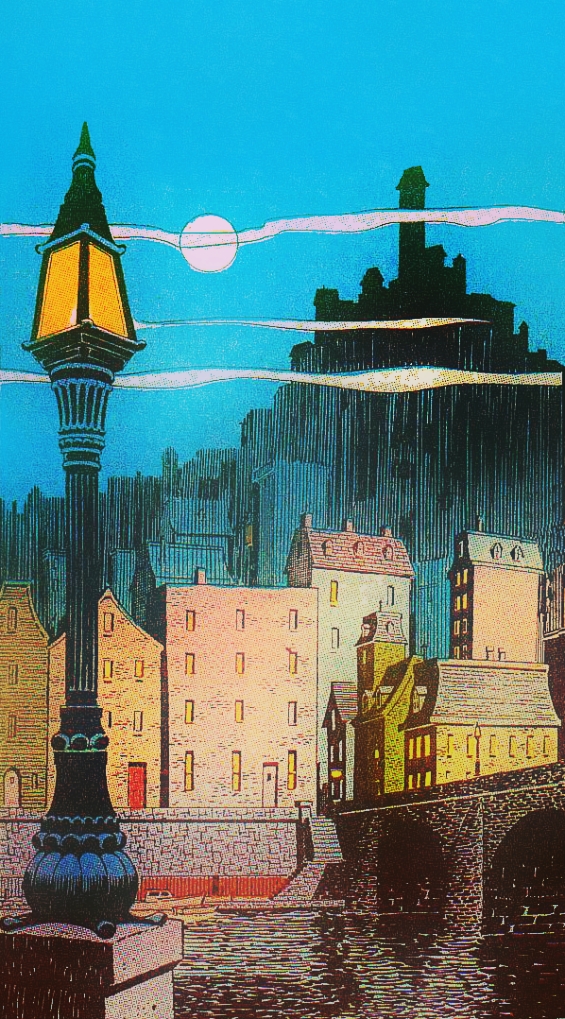
The Music Of Erich Zann - illustration by Andrew Brosnatch

Here are the opening lines:

“I have examined maps of the city with the greatest care, yet have never again found the Rue d’Auseil. These maps have not been modern maps alone, for I know that names change. I have, on the contrary, delved deeply into all the antiquities of the place, and have personally explored every region, of whatever name, which could possibly answer to the street I knew as the Rue d’Auseil. But despite all I have done, it remains an humiliating fact that I cannot find the house, the street, or even the locality, where, during the last months of my impoverished life as a student of metaphysics at the university, I heard the music of Erich Zann.

That my memory is broken, I do not wonder; for my health, physical and mental, was gravely disturbed throughout the period of my residence in the Rue d’Auseil, and I recall that I took none of my few acquaintances there. But that I cannot find the place again is both singular and perplexing; for it was within a half-hour’s walk of the university and was distinguished by peculiarities which could hardly be forgotten by any one who had been there. I have never met a person who has seen the Rue d’Auseil.

The Rue d’Auseil lay across a dark river bordered by precipitous brick blear-windowed warehouses and spanned by a ponderous bridge of dark stone. It was always shadowy along that river, as if the smoke of neighboring factories shut out the sun perpetually. The river was also odorous with evil stenches which I have never smelled elsewhere, and which may some day help me to find it, since I should recognize them at once. Beyond the bridge were narrow cobbled streets with rails; and then came the ascent, at first gradual, but incredibly steep as the Rue d’Auseil was reached.”

And the Rue d’Auseil, by the way, translates to “street of the threshold” – most appropriate.

Public domain:

LibriVoxThe Music Of Erich Zann
By H.P. Lovecraft; Read by Cameron Halket
1 |MP3| – Approx. 19 Minutes [UNABRIDGED]
Publisher: LibriVox.org
Published: October 19, 2008
|ETEXT|
A student of philosophy is forced, by lack of funds, to to take lodgings in a run down rooming house in a strange part of Paris. First published in National Amateur (March 1922), then later in the May 1925 issue of Weird Tales.

Creative Commons:

PseudopodEpisode #100 – The Music Of Erich Zann
By H.P. Lovecraft; Read by B.J. Harrison
1 |MP3| – Approx. 30 Minutes [UNABRIDGED]
Podcaster: Pseudopod
Podcast: July 25th, 2008

Commercial audiobook:

Horror Audiobooks - The Dark Worlds Of H.P. Lovecraft Volume 4 - The Rats In The Walls, The Shunned House, The Music Of Eric ZahnThe Dark Worlds Of H.P. Lovecraft, Volume 4: The Rats In The Walls, The Shunned House, The Music Of Eric Zann
By H.P. Lovecraft; Read by Wayne June
3 CDs – 2 Hours 41 Minutes [UNABRIDGED]
Publisher: Audio Realms
Published: 2006
ISBN: 1897304242
|READ OUR REVIEW|

Discussion:

H.P. Lovecraft Literary PodcastEpisode #23 – The Music Of Erich Zann
Participants Chris Lackey, Chad Fifer and Andrew Leman
1 |MP3| – Approx. 29 Minutes [DISCUSSION]
Podcaster: H.P. Lovecraft Literary Podcast
Podcast: September 12, 2010

Other:

The Music Of Erich Zann

There is a very good comics adaptation, by writer Roy Thomas and artist Johnny Craig, done for issue #5 (June 1970) of Marvel Comics’ Chamber Of Darkness (the title was changed to The Music From Beyond).

Here’s a disturbingly wordless stop motion animation adaptation:

Posted by Jesse Willis

LibriVox: The Point Of Honor by Joseph Conrad

SFFaudio Online Audio

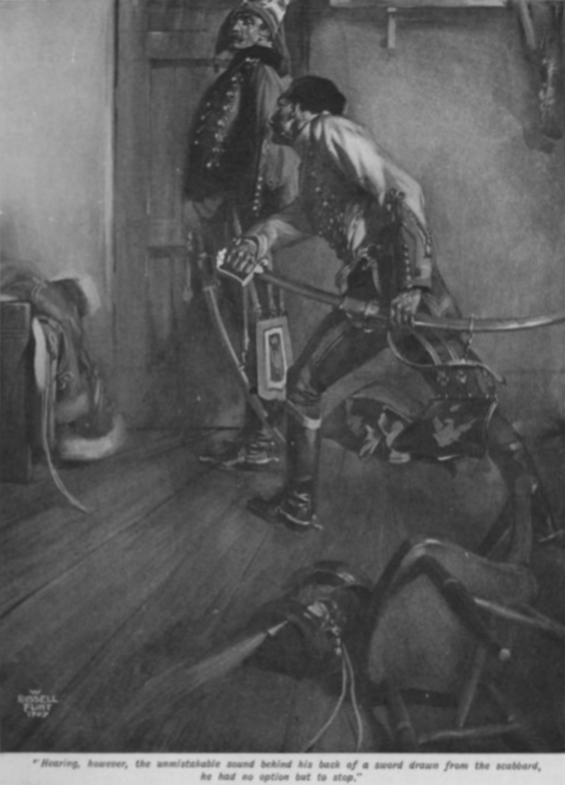
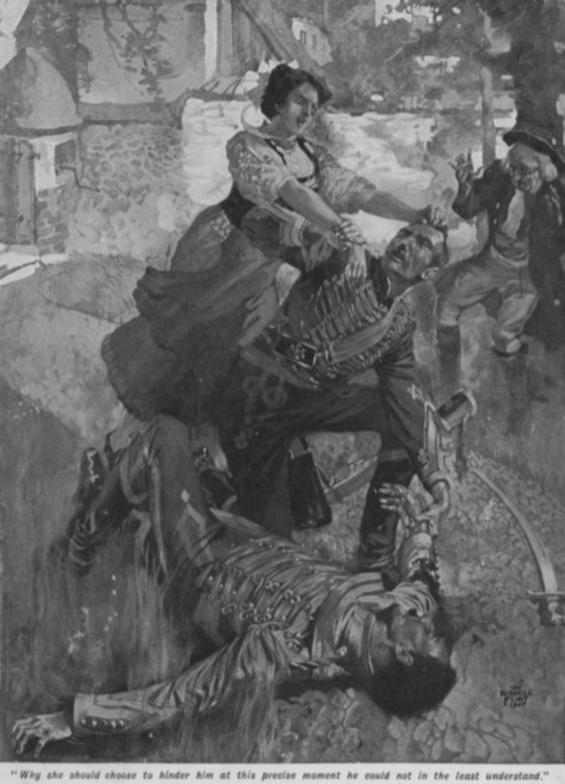
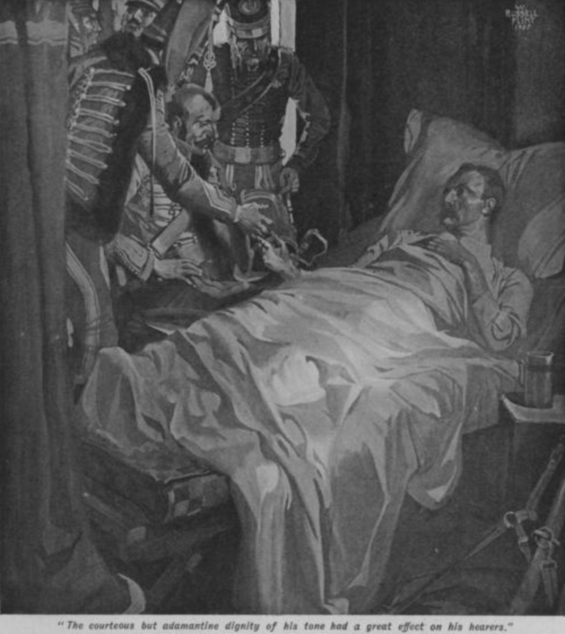
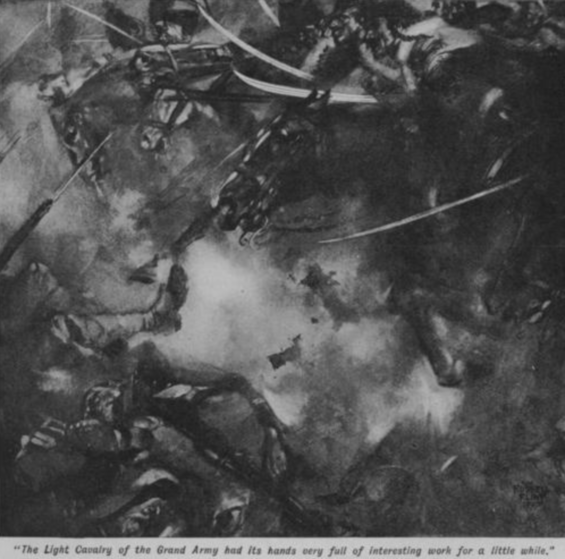
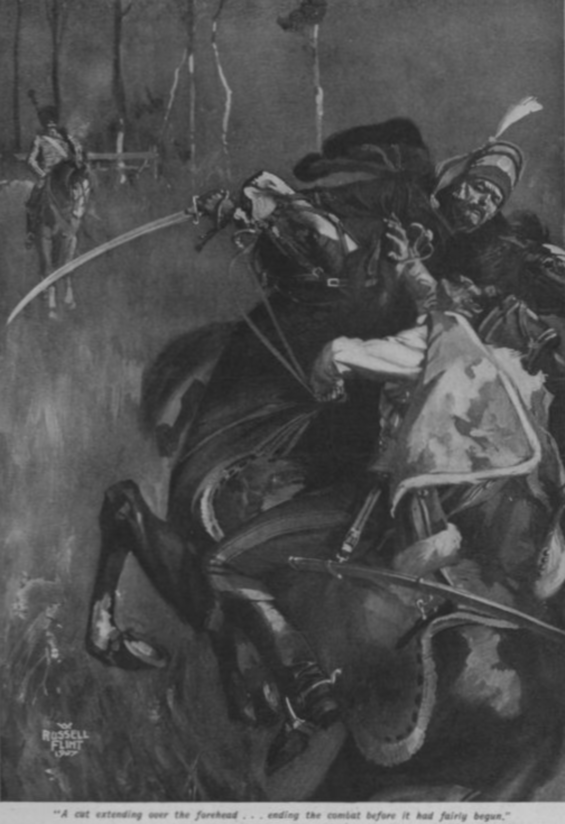
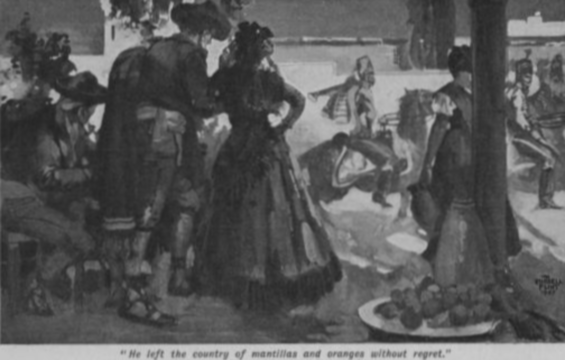
LibriVoxFirst published in Pall Mall Magazine, along with an H.G. Wells novel and a Jack London short story, The Point Of Honor is a Joseph Conrad novella that had its genesis in the real duels that two French Hussar officers fought in the Napoleonic era. Their names were Dupont and Fournier, which Conrad disguised slightly, changing Dupont into D’Hubert and Fournier into Feraud.


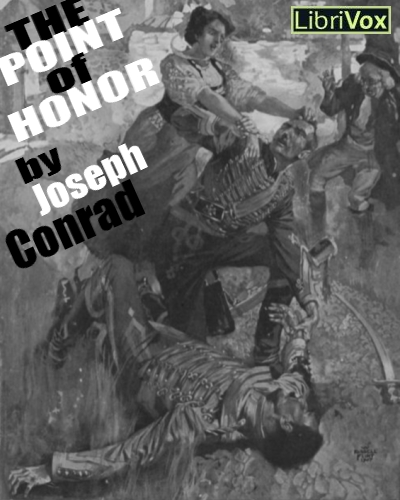
LIBRIVOX - The Point Of Honor by Joseph ConradThe Point Of Honor (aka The Duel)
By Joseph Conrad; Read by Mark F. Smith
4 Zipped MP3 Files or Podcast – Approx. 3 Hours 29 Minutes [UNABRIDGED]
Publisher: LibriVox.org
Published: May 18, 2008
Two French Hussar officers, D’Hubert and Feraud, quarrel over an initially minor incident that eventually turns into a bitter, long-drawn out struggle over the following fifteen years, interwoven with the larger conflict that provides its backdrop. At the beginning, Feraud is the one who jealously guards his honor and repeatedly demands satisfaction anew when a duelling encounter ends inconclusively; he aggressively pursues every opportunity to locate and duel his foe. As the story progresses, D’Hubert also finds himself caught up in the contest, unable to back down or walk away. Pall Mall Magazine’s January, February, March, April and May 1908 issues.

Part 1 |MP3| Part 2 |MP3| Part 3 |MP3| Part 4 |MP3|

Podcast feed: http://librivox.org/bookfeeds/the-point-of-honor-by-joseph-conrad.xml

iTunes 1-click |SUBSCRIBE|

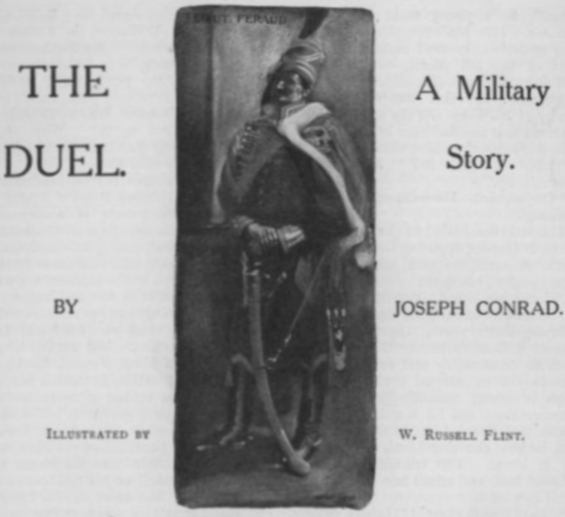
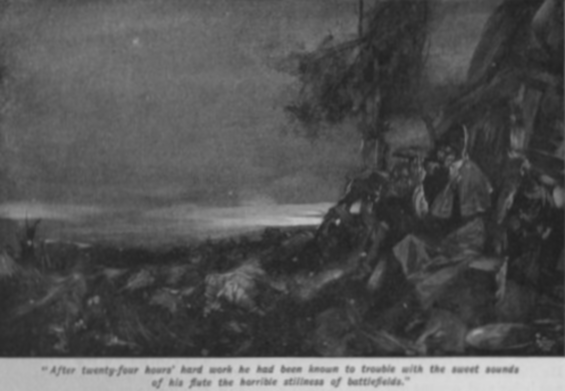
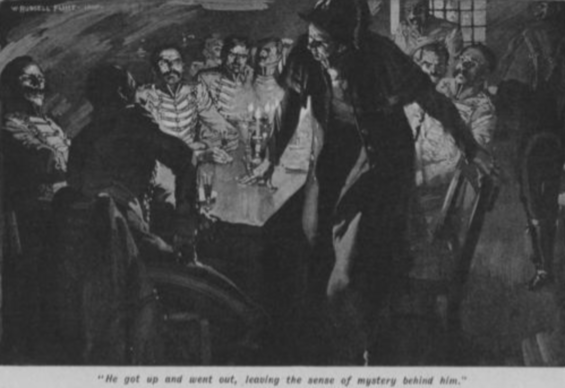
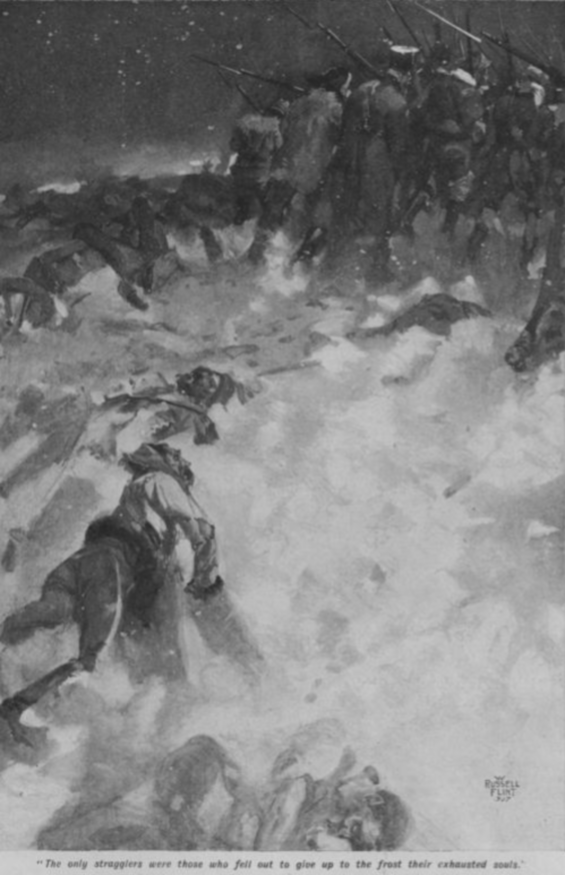
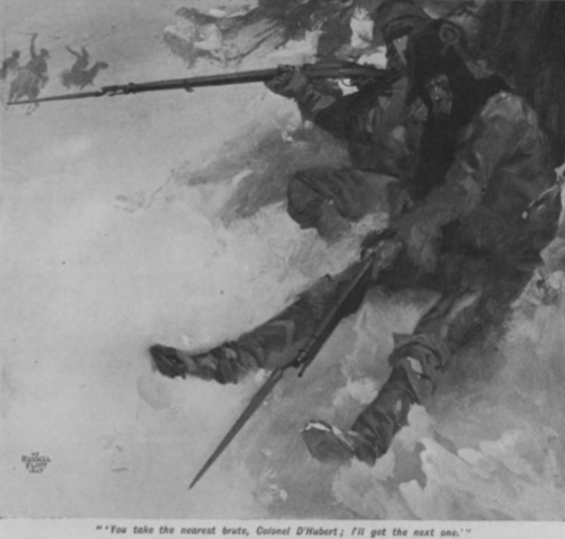
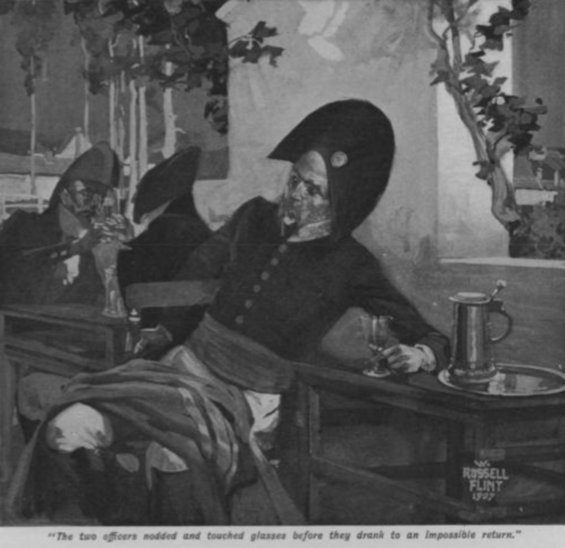
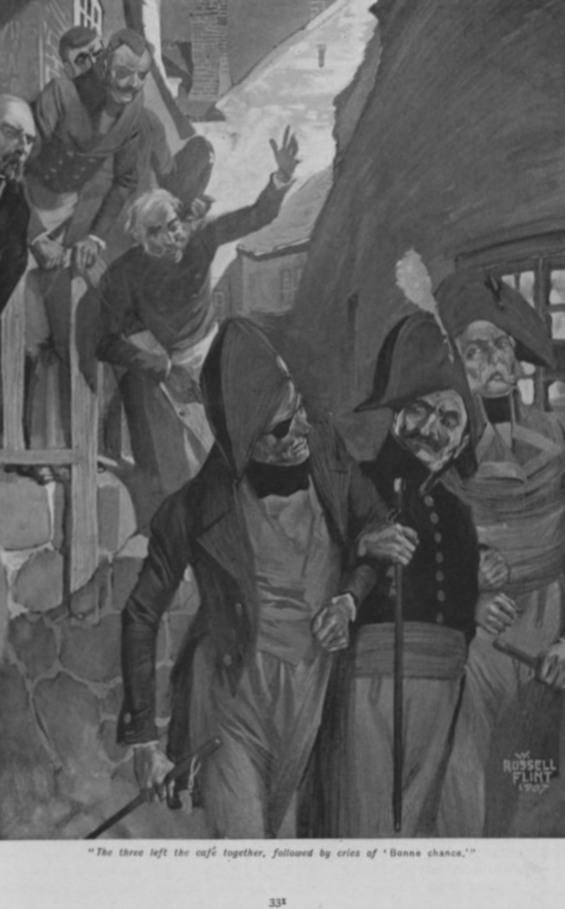
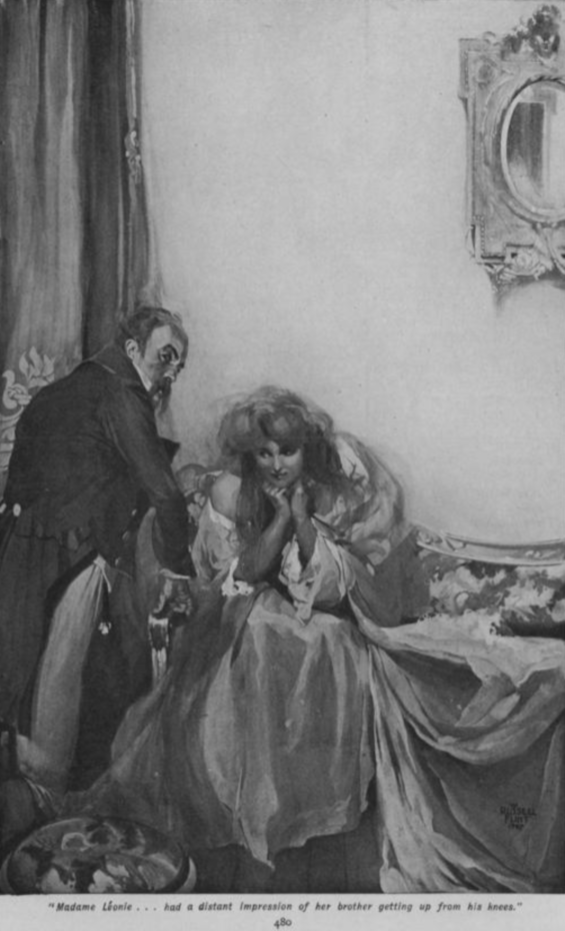
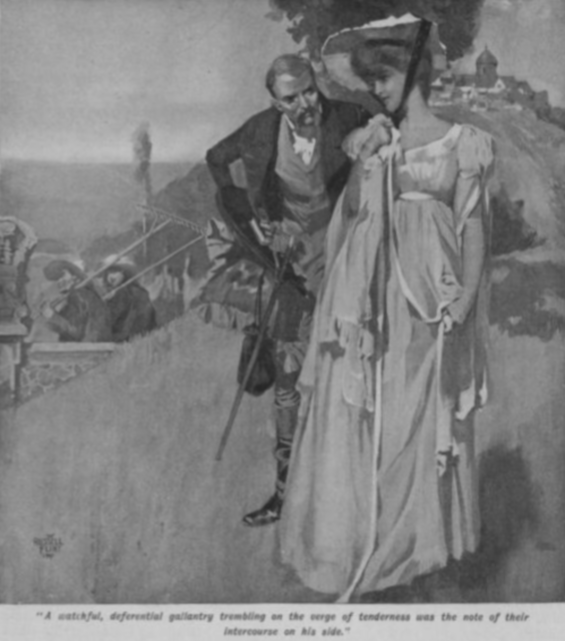
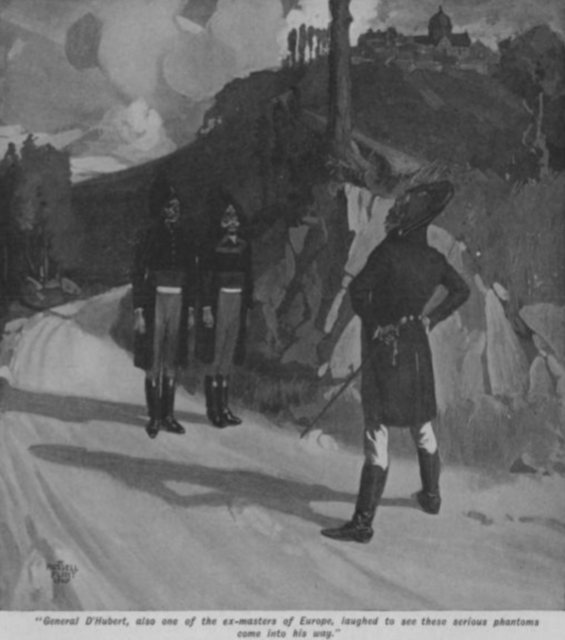
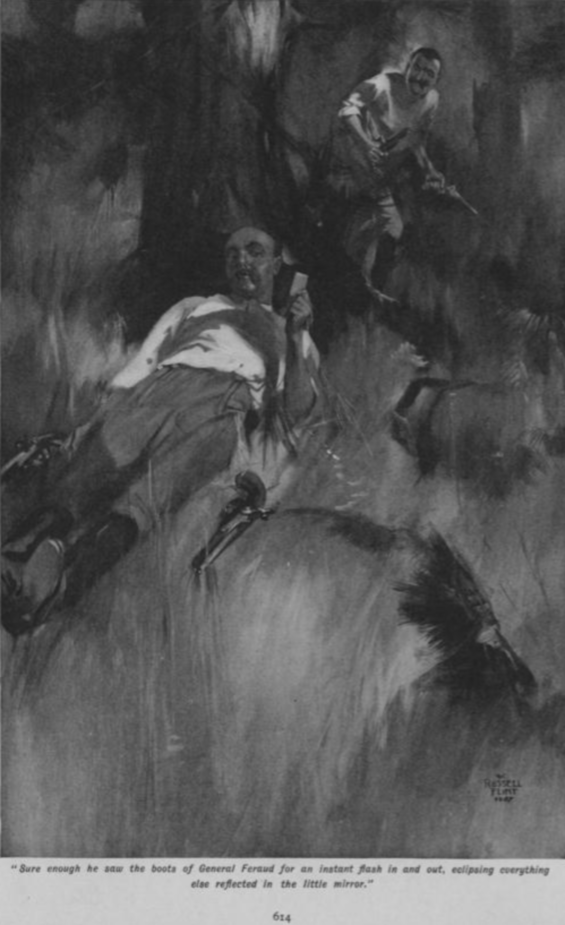
Here’s are the William Russell Flint illustrations from the original magazine serialization:

The Duel by Joseph Conrad - Illustrated by William Russell Flint

Here’s the trailer for The Duellists (1977) :

[Thanks also to ConradFirst.net and Live At The Heartbreak Lounge]

Posted by Jesse Willis

Commentary: The Raven by Edgar Allan Poe

The Raven

The Raven by Edgar Allan Poe – |MP3| (read by Anne Cheng)

ONCE upon a midnight dreary, while I pondered, weak and weary,
Over many a quaint and curious volume of forgotten lore—
While I nodded, nearly napping, suddenly there came a tapping,
As of some one gently rapping, rapping at my chamber door.
“ ’Tis some visitor,” I muttered, “tapping at my chamber door—
Only this and nothing more.”

Ah, distinctly I remember it was in the bleak December,
And each separate dying ember wrought its ghost upon the floor.
Eagerly I wished the morrow;—vainly I had sought to borrow
From my books surcease of sorrow—sorrow for the lost Lenore—
For the rare and radiant maiden whom the angels name Lenore—
Nameless here for evermore.

And the silken sad uncertain rustling of each purple curtain
Thrilled me—filled me with fantastic terrors never felt before;
So that now, to still the beating of my heart, I stood repeating
“ ’Tis some visitor entreating entrance at my chamber door—
Some late visitor entreating entrance at my chamber door;
This it is and nothing more.”

Presently my soul grew stronger; hesitating then no longer,
“Sir,” said I, “or Madam, truly your forgiveness I implore;
But the fact is I was napping, and so gently you came rapping,
And so faintly you came tapping, tapping at my chamber door,
That I scarce was sure I heard you”—here I opened wide the door;—
Darkness there and nothing more.

Deep into that darkness peering, long I stood there wondering, fearing,
Doubting, dreaming dreams no mortals ever dared to dream before;
But the silence was unbroken, and the stillness gave no token,
And the only word there spoken was the whispered word, “Lenore!”
This I whispered, and an echo murmured back the word, “Lenore!”—
Merely this and nothing more.

Back into the chamber turning, all my soul within me burning,
Soon again I heard a tapping something louder than before.
“Surely,” said I, “surely that is something at my window lattice;
Let me see, then, what thereat is, and this mystery explore—
Let my heart be still a moment, and this mystery explore;—
’Tis the wind and nothing more.”

Open here I flung the shutter, when, with many a flirt and flutter,
In there stepped a stately Raven of the saintly days of yore.
Not the least obeisance made he; not a minute stopped or stayed he,
But, with mien of lord or lady, perched above my chamber door—
Perched upon a bust of Pallas just above my chamber door—
Perched, and sat, and nothing more.

Then this ebony bird beguiling my sad fancy into smiling,
By the grave and stern decorum of the countenance it wore,
“Though thy crest be shorn and shaven, thou,” I said, “art sure no craven,
Ghastly grim and ancient Raven wandering from the Nightly shore—
Tell me what thy lordly name is on the Night’s Plutonian shore!”
Quoth the Raven, “Nevermore.”

Much I marvelled this ungainly fowl to hear discourse so plainly,
Though its answer little meaning—little relevancy bore;
For we cannot help agreeing that no living human being
Ever yet was blessed with seeing bird above his chamber door—
Bird or beast upon the sculptured bust above his chamber door,
With such name as “Nevermore.”

But the Raven, sitting lonely on that placid bust, spoke only
That one word, as if his soul in that one word he did outpour.
Nothing further then he uttered; not a feather then he fluttered—
Till I scarcely more than muttered: “Other friends have flown before—
On the morrow he will leave me, as my Hopes have flown before.”
Then the bird said, “Nevermore.”

Startled at the stillness broken by reply so aptly spoken,
“Doubtless,” said I, “what it utters is its only stock and store,
Caught from some unhappy master whom unmerciful Disaster
Followed fast and followed faster till his songs one burden bore—
Till the dirges of his Hope that melancholy burden bore
Of ‘Never—nevermore.’ ”

But the Raven still beguiling all my sad soul into smiling,
Straight I wheeled a cushioned seat in front of bird and bust and door;
Then, upon the velvet sinking, I betook myself to linking
Fancy unto fancy, thinking what this ominous bird of yore—
What this grim, ungainly, ghastly, gaunt, and ominous bird of yore
Meant in croaking “Nevermore.”

This I sat engaged in guessing, but no syllable expressing
To the fowl whose fiery eyes now burned into my bosom’s core;
This and more I sat divining, with my head at ease reclining
On the cushion’s velvet lining that the lamp-light gloated o’er,
But whose velvet violet lining with the lamp-light gloating o’er
She shall press, ah, nevermore!

Then, methought, the air grew denser, perfumed from an unseen censer
Swung by Seraphim whose foot-falls tinkled on the tufted floor.
“Wretch,” I cried, “thy God hath lent thee—by these angels he hath sent thee
Respite—respite and nepenthe from thy memories of Lenore!
Quaff, oh quaff this kind nepenthe and forget this lost Lenore!”
Quoth the Raven, “Nevermore.”

“Prophet!” said I, “thing of evil!—prophet still, if bird or devil!—
Whether Tempter sent, or whether tempest tossed thee here ashore,
Desolate, yet all undaunted, on this desert land enchanted—
On this home by Horror haunted—tell me truly, I implore—
Is there—is there balm in Gilead?—tell me—tell me, I implore!”
Quoth the Raven, “Nevermore.”

“Prophet!” said I, “thing of evil!—prophet still, if bird or devil!
By that Heaven that bends above us—by that God we both adore—
Tell this soul with sorrow laden if, within the distant Aidenn,
It shall clasp a sainted maiden whom the angels name Lenore—
Clasp a rare and radiant maiden whom the angels name Lenore.”
Quoth the Raven, “Nevermore.”

“Be that word our sign of parting, bird or fiend!” I shrieked, upstarting—
“Get thee back into the tempest and the Night’s Plutonian shore!
Leave no black plume as a token of that lie thy soul hath spoken!
Leave my loneliness unbroken!—quit the bust above my door!
Take thy beak from out my heart, and take thy form from off my door!”
Quoth the Raven, “Nevermore.”

And the Raven, never flitting, still is sitting, still is sitting
On the pallid bust of Pallas just above my chamber door;
And his eyes have all the seeming of a demon’s that is dreaming,
And the lamp-light o’er him streaming throws his shadow on the floor;
And my soul from out that shadow that lies floating on the floor
Shall be lifted—nevermore

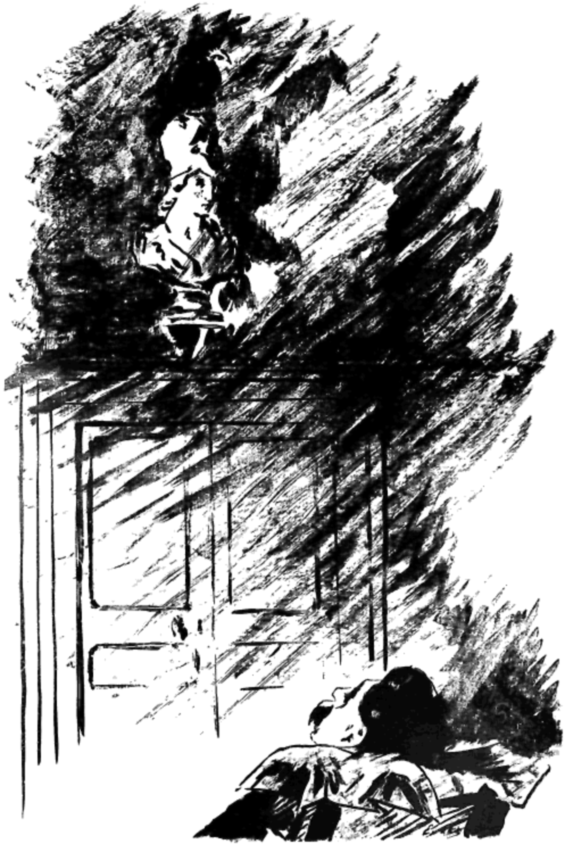
Upon The Bust Of Pallas - Edouard Manet

Edmund C. Steadman, in the introduction to Gustave Doré’s 1884 illustrated edition of The Raven, argues that while The Raven may not be Edgar Allan Poe’s best work that it is certainty “his representative poem” in part because it deals with his major theme: “the irretrievable loss of an idolized and beautiful woman.” And to my ears it certainly is a “treasure of mankind.” But, because of its length and accessibility, I think it is capable of being appreciated by even the roughest of barbarian hearts.

And why is that?

I’d suggest that the supernatural element, or the ambiguity of such, helps a lot. Ghosts, gods and demons are easy entry points.

Think of it as a more palatable forerunner to paranormal romance. Perhaps this kind of literature is best called “Dark Romanticism.”

From Wikipedia:

Dark Romanticism (often conflated with Gothicism or called American Romanticism) is a literary subgenre. It has been suggested that Dark Romantics present individuals as prone to sin and self-destruction, not as inherently possessing divinity and wisdom. G.R. Thompson describes this disagreement, stating “the Dark Romantics adapted images of anthropomorphized evil in the form of Satan, devils, ghosts, werewolves, vampires, and ghouls.” For these Dark Romantics, the natural world is dark, decaying, and mysterious; when it does reveal truth to man, its revelations are evil and hellish.

Now dark romanticism may just sound like a more literary description of paranormal romance, minus the mention of a myriad of tattoos, but its authors tackled tough subjects like the pointlessness of a loveless existence in a world without an afterlife. In a way that’s an inversion of paranormal romance.

So on that happy note, and bearing in mind the generally accepted saw that “Life is stranger than fiction”, my question for your barbarian heart is slightly different:

Is real life more horrific than fiction?

Poe’s answer in The Raven, I think, is that it is and by a wide margin.

I’m fairly confident that a wholly naturalistic interpretation of why The Raven quoth “nevermore” can be found in the lines (62-65):

“Doubtless,” said I, “what it utters is its only stock and store,
Caught from some unhappy master, whom unmerciful Disaster
Followed fast and followed faster till his songs one burden bore—
Till the dirges of his Hope the melancholy burden bore

And if it is true that the titular raven is not supernaturally prophetic, and its speech no more than mere mimicry, is the message it brings to the unnamed narrator at all lessened by a naturalistic interpretation?

I thought not.

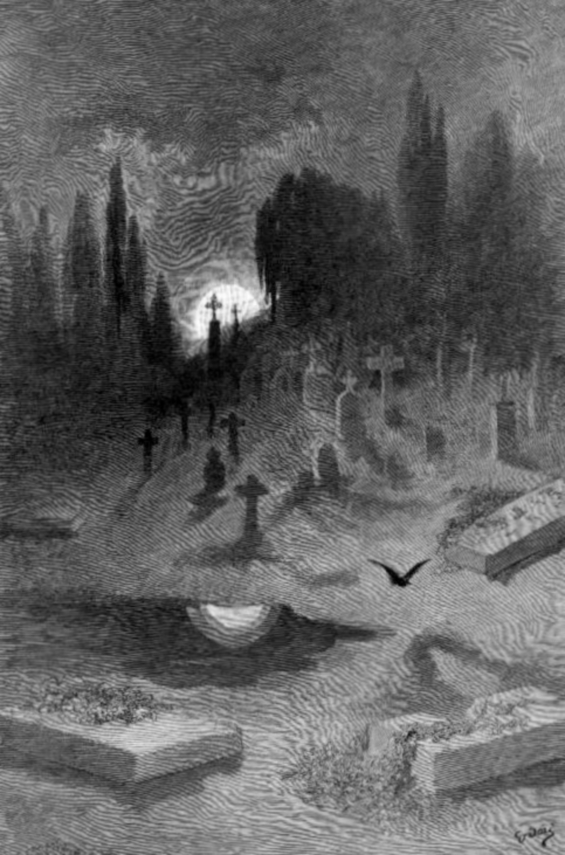
Plutonian Shore - GUSTAVE DORÉ

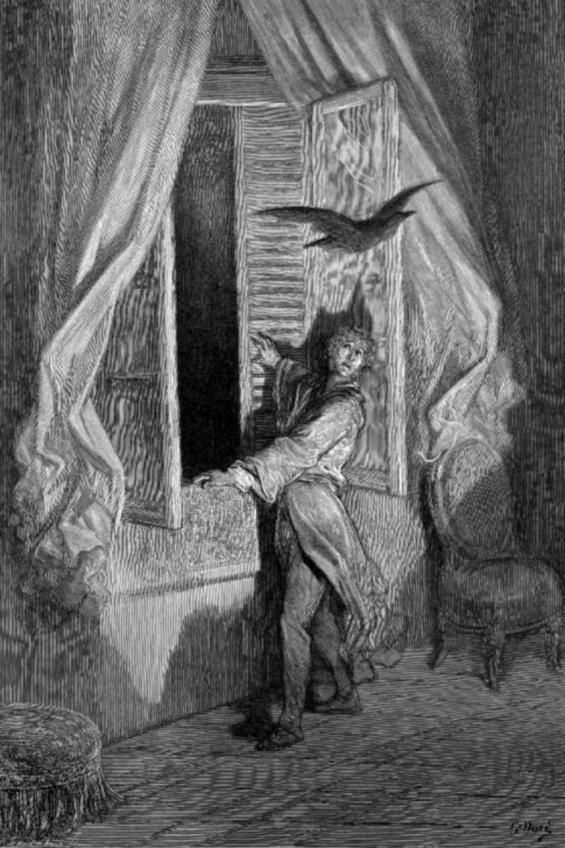
A Stately Raven Of The Saintly Days Of  Yore - GUSTAVE DORÉ

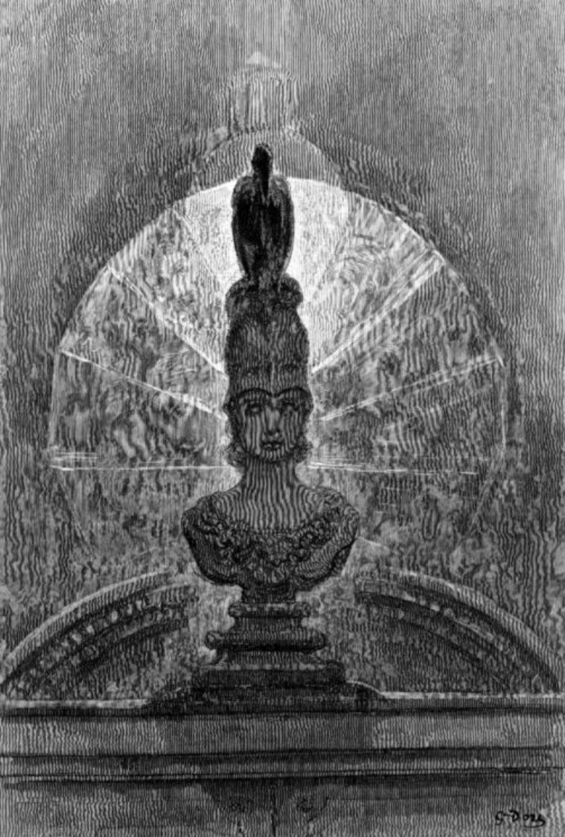
Upon The Bust Of Pallas  - GUSTAVE DORÉ

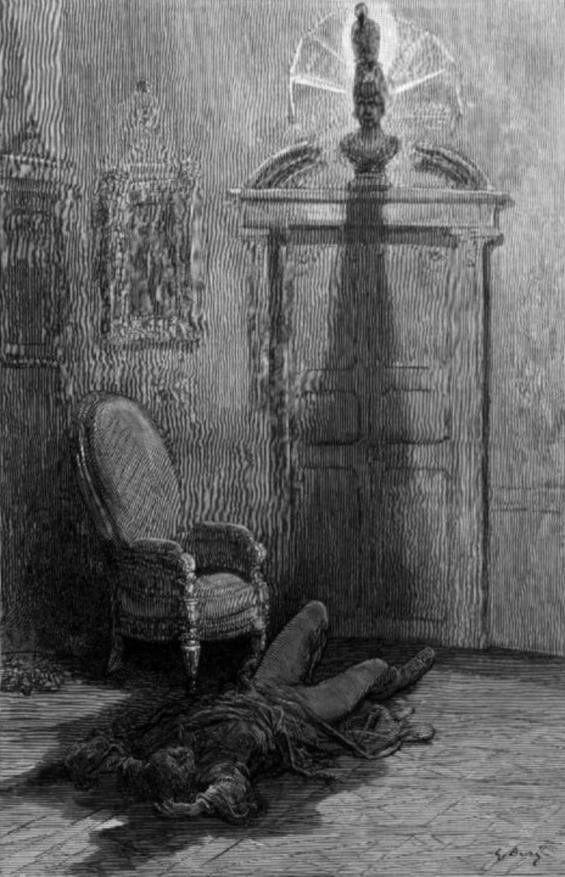
Shall Be Lifted Nevermore - GUSTAVE DORÉ

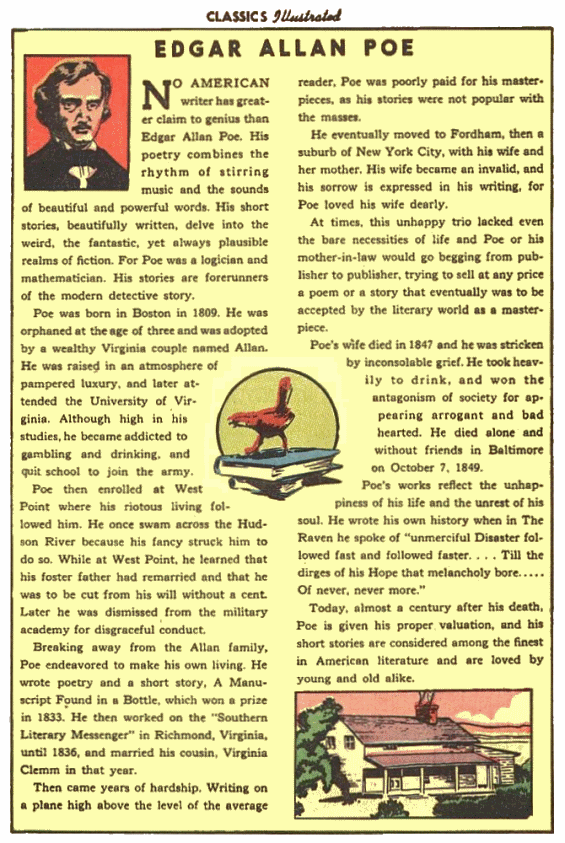
Classics Illustrated biography of Edgar Allan Poe

[via LibriVox and Gutenberg.org]

Posted by Jesse Willis

LibriVox: The Outlaw Of Torn by Edgar Rice Burroughs

SFFaudio Online Audio

Submitted for your approval…

LIBRIVOX - The Outlaw Of Torn by Edgar Rice BurroughsThe Outlaw Of Torn
By Edgar Rice Burroughs; Read by Richard Kilmer and Susan Umpleby
19 Zipped MP3 Files or Podcast – Approx. 7 Hours [UNABRIDGED]
Publisher: LibriVox.org
Published: March 31, 2010
The story is set in 13th century England and concerns the fictitious outlaw Norman of Torn, who purportedly harried the country during the power struggle between King Henry III and Simon de Montfort. Norman is the supposed son of the Frenchman de Vac, once the king’s fencing master, who has a grudge against his former employer and raises the boy to be a simple, brutal killing machine with a hatred of all things English. His intentions are partially subverted by a priest who befriends Norman and teaches him his letters and chivalry towards women.

Otherwise, all goes according to plan. By 17, Norman is the best swordsman in all of England; by the age of 18, he has a large bounty on his head, and by the age of 19, he leads the largest band of thieves in all of England. None can catch or best him. In his hatred for the king he even becomes involved in the civil war, which turns the tide in favor of de Montfort. In another guise, that of Roger de Conde, he becomes involved with de Montfort’s daughter Bertrade, defending her against her and her father’s enemies. She notes in him a curious resemblance to the king’s son and heir Prince Edward.

Finally brought to bay in a confrontation with both King Henry and de Montfort, Norman is brought down by the treachery of de Vac, who appears to kill him, though at the cost of his own life. As de Vac dies, he reveals that Norman is in fact Richard, long-lost son of King Henry and Queen Eleanor and brother to Prince Edward. The fencing master had kidnapped the prince as a child to serve as the vehicle of his vengeance against the king. Luckily, Norman/Richard turns out not to be truly dead, surviving to be reconciled to his true father and attain the hand of Bertrade

Podcast feed: http://librivox.org/rss/3632

iTunes 1-Click |SUBSCRIBE|

[thanks also to Richard Kilmer, Laura Caldwell, mim@can and Annise]

Posted by Jesse Willis

LibriVox: Operation: Outer Space by Murray Leinster

SFFaudio Online Audio

LibriVoxHere’s a vintage 1954 Murray Leinster novel that’ll make for some perfect summer listening (sorry folks on the bottom hemisphere of Earth, you’ll have to wait). Now if that’s not enough you may be interested to know that Operation: Outer Space is actually the third public domain Murray Leinster novel narrated by Mark Douglas Nelson! Check out our extensive AUTHOR PAGE for MURRAY LEINSTER to get the other two novels – and there’s lots more Leinster listening there too.

LIBRIVOX - Operation: Outer Space by Murray LeinsterOperation: Outer Space
By Murray Leinster; Read by Mark Douglas Nelson
10 Zipped MP3 Files or Podcast – Approx. 6 Hours 48 Minutes [UNABRIDGED]
Publisher: LibriVox.org
Published: June 25, 2011
|ETEXT|
Jed Cochrane is about to take off on man’s first interstellar voyage. His mission: Make sure it’s good television!

Podcast feed: http://librivox.org/rss/5252

iTunes 1-Click |SUBSCRIBE|

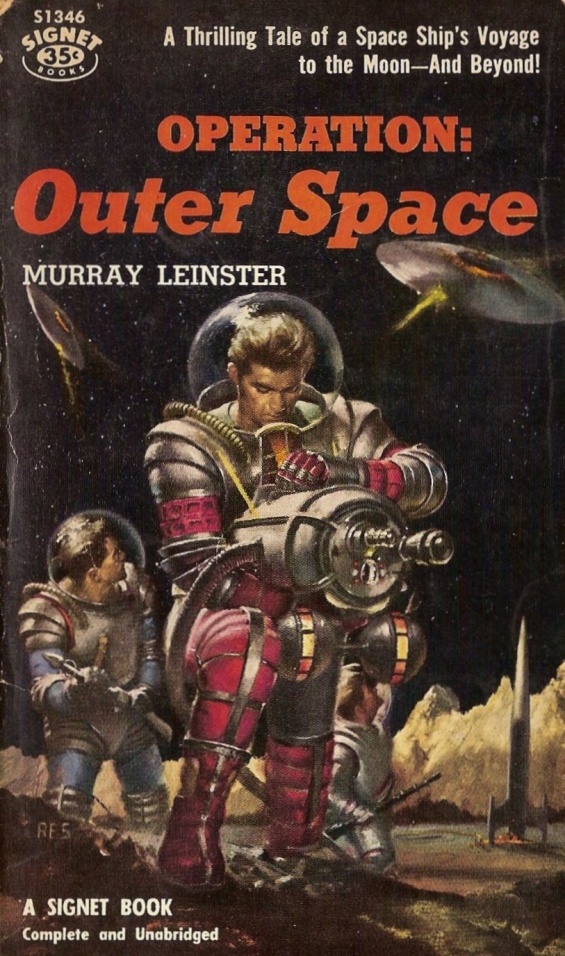
Here’s the cover of the 1957 Signet paperback edition:

SIGNET - Operation: Outer Space by Murray Leinster

And here’s the UK hardcover edition, by Grayson & Grayson, also published in 1957:

Grayson & Grayson - Operation: Outer Space by Murray Leinster

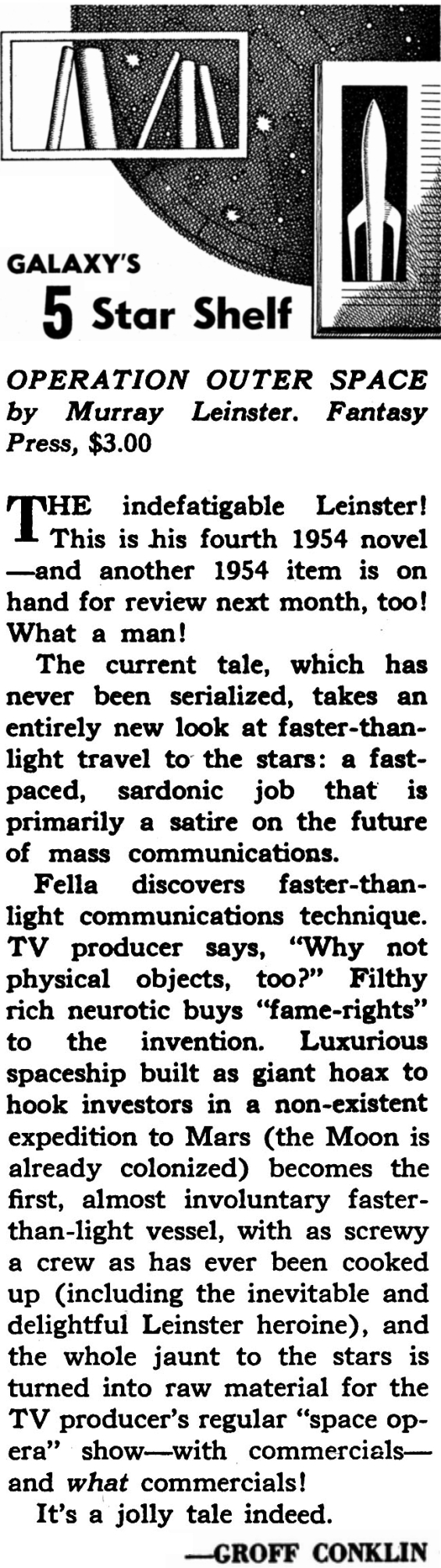
Here’s Groff Conklin’s review of Operation: Outer Space from Galaxy Magazine’s March 1955 issue:

Groff Conklin's review of Operation: Outer Space from Galaxy Magazine's March 1955 issue

[Thanks also to Betty M. and Barry Eads ]

Posted by Jesse Willis

LibriVox: The Green Rust by Edgar Wallace

Aural Noir: Online Audio

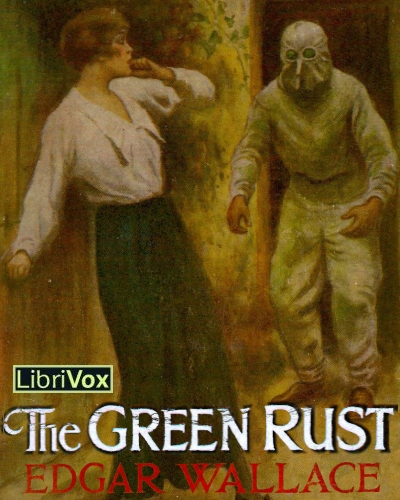
LibriVoxDon W. Jenkins, a San Diegan, may not be the ideal narrative match for this 1919 English murder mystery/Science Fiction novel, but he’s competent enough for the price, 100% FREE! The novel itself isn’t going to break any heads open with its sheer awesomeness either – but The Green Rust is a competent reading of a competent early twentieth century murder mystery (that’s also got some SF elements in it). Plus, it’s got some great vocabulary, a fairly compelling mystery at the center of it (who would kill a man on his deathbed?), the occasional dollop of hilarious dialogue (“Drunk or sober he is a man! Drunk or sober he is a man!” and “she’s as dumb as an oyster”) as well as some quaint technology on display (home gas meters run by coins).

LIBRIVOX - The Green Rust by Edgar WallaceThe Green Rust
By Edgar Wallace; Read by Don W. Jenkins
32 Zipped MP3 Files or Podcast – Approx. 8 Hours 2 Minutes [UNABRIDGED]
Publisher: LibriVox.org
Published: May 31, 2011
A millionaire is taken suddenly ill, and sensing his mortality, he asks his attorney to do him one last favor—to find and secretly watch over his missing niece, the daughter of his profligate deceased sister. This niece at the appropriate time would become heir to his millions. However, the millionaire is mysteriously murdered, stabbed to death in his sick bed. Oliva Cresswell, the unsuspecting niece, has been a cashier in a large West End store for five years when she meets a Mr. Beale, a self-described wheat merchant, is attacked in her flat and rescued by this Mr. Beale, is offered a job as his confidential secretary, refuses him, is unexplainably sacked and finds herself in need of his offer. The mysteries multiply and deepen as the story proceeds.

Podcast feed: http://librivox.org/rss/5391

iTunes 1-Click |SUBSCRIBE|

[Thanks also to Dawn Larsen and Availle]

Posted by Jesse Willis