LibriVox: The History Of Rasselas, Prince Of Abissinia by Samuel Johnson

SFFaudio Online Audio

LibriVoxThere are a lot of new audiobooks showing up on LibriVox every day of the week. This means I get to pick and choose amongst a vast roster of titles that I could possibly tell you about. One that I was not planning to post about was a 1759 Fantasy novel by Samuel Johnson. I had nothing against Johnson. I just hadn’t read any of his books. Sure I knew he had written a dictionary, but it wasn’t one of the ones that I had read. The problem really was I just didn’t know enough about Johnson to be interested in his novel. Frankly, the first thing that came to mind when I thought of Dr. Samuel Johnson was how great a character he was in the Ink and Incapability episode of Blackadder. That one never gets old.

But, then today I was listening to my favourite Australian podcast, ABC Radio National’s The Philosopher’s Zone, and they mentioned this book. I suspect this wasn’t fated, it being the 300th anniversary of Johnson’s birth people around the world are thinking about old Johnson – but even if it was fate – either if I changed my mind or my mind was changed – after listening to that show I’m telling you about this novel now. The show |MP3| was actually on Johnson’s stoic christian philosophy – or rather his reaction to the ancient stoics. Host Alan Saunders, and guest, John Wiltshire, talked about a poem and then this book and it’s position in Johnson’s philosophy. It was fascinating! Now to listen…

LibriVox - The History Of Rasselas, Prince Of Abissinia by Samuel JohnsonThe History of Rasselas, Prince of Abissinia
By Samuel Johnson; Read by Martin Geeson
17 Zipped MP3 Files or Podcast – Approx. 5 Hours 31 Minutes [UNABRIDGED]
Publisher: LibriVox.org
Published: September 25, 2009
In this enchanting fable (subtitled The Choice of Life), Rasselas and his retinue burrow their way out of the totalitarian paradise of the Happy Valley in search of that triad of eighteenth-century aspiration – life, liberty and happiness. According to that quirky authority, James Boswell, Johnson penned his only work of prose fiction in a handful of days to cover the cost of his mother’s funeral. The stylistic elegance of the book and its wide-ranging philosophical concerns give no hint of haste or superficiality. Among other still burning issues Johnson’s characters pursue questions of education, colonialism, the nature of the soul and even climate alteration. Johnson’s profoundest concern, however, is with the alternating attractions of solitude and social participation, seen not only as the ultimate life-choice but as the arena in which are played out the deepest fears of the individual: “Of the uncertainties of our present state, the most dreadful and alarming is the uncertain continuance of Reason.”

Podcast feed:

http://librivox.org/bookfeeds/rasselas-prince-of-abyssinia-by-samuel-johnson.xml

iTunes 1-Click |SUBSCRIBE|

In addition to the reader, Martin Geeson, this audiobook was produced by:

Dedicated Proof-Listener: Stav Nisser
Meta-Coordinator/Cataloging: Leni

[Thanks to all three LibriVoxateers]

Posted by Jesse Willis

Review of Anathem by Neal Stephenson

SFFaudio Review

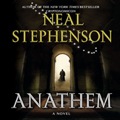
AnathemAnathem
By Neal Stephenson; Read by Oliver Wyman, Tavia Gilbert, William Dufris, and Neal Stephenson
Audible Download –  32 hours 30 minutes [UNABRIDGED]
Publisher: Macmillan Audio
Published: 2008
Themes: / alien invasion / philosophy / religion / alternate universe

After nearly two weeks of listening to this 2009 Hugo-nominated book during nearly every moment of my free time–getting ready for work in the mornings, sitting on the bus, tossing and turning in bed–I’ve finally finished Neal Stephenson’s latest tale of metaphysical adventure. Does the book measure up to Stephenson’s earlier work? More importantly, is it fun to read?

First, some background: Anathem is set on the planet of Arbre, a world much like, and yet unlike, our own. The tale opens in the year 3690 AR (After the Reconstitution), in the Mathic Consent of Saunt Edhar. Consents are much like the medieval monasteries of our own world, except that instead of contemplating religious matters the Mathic avout research and debate matters of math, science, and philosophy. The tale is told from the perspective of Fraa Erasmas, a young avout who has now lived at the Consent for ten years. A mysterious craft appears in the skies above Arbre, which is the driving force behind the plot, since it excites consequences and conflicts first in the Mathic world and then in the Saecular, or outside, world as well. The craft, it turns out, belongs to an alien race unknown to Arbre, and packs a significant military punch. The inhabitants of Arbre, Mathic and Saecular alike, must decide how to face this threat.

I can’t fully answer the first question, since the only other Stephenson novel I’ve read in full was his cyberpunk effort Snow Crash, which I thoroughly enjoyed. Stylistically speaking, comparing these two novels, though, is like comparing apples and oranges. The prose ofSnow Crash is taut, earthy, and vernacular, while that of Anathem is expansive, meandering, and somewhat more formal. Yet the two books share a tendency to veer into philosophical discourse that usually, but not always, has some relevance to the plot.

As to the second question, I wouldn’t quite characterize Anathem as “fun”. It certainly has many moments of intense action, wry humor, and emotional drama. These moments, however, are interspersed between long stretches of the aforementioned philosophical discourse. So one’s response to the novel largely depends on one’s tolerance for and appreciation of Stephenson’s vast store of scientific and theoretical knowledge. In this respect, as well as in its setting, Anathem resembles Umberto Eco’s equally challenging The Name of the Rose.

Those interested in such things will find here a treasure trove of insights (or “upsights” as they’re called in the world of Arbre) into the nature of reality, consciousness, and the universe. Without giving too much away, I’ll simply hint that the quantum physics principles that play such a large role in Philip Pullman’s His Dark Materials trilogy rear their hydra-heads here as well.

The book isn’t all dialogues and theorums and proofs. Much of Anathem‘s beauty stems from its likable characters. Fraa Erasmas is a young lad possessed of loyalty, imagination, and more heart than seems to be usual in the Mathic community. His best friend Fraa Lio, upon whom he bestows the epithet of “thistlehead”, takes a keen interest in the martial arts techniques, or vlor, of the Consent of the Ringing Veil. The cast of brothers is rounded out by the ambitious yet likable Fraa Jesry and the good-natured portly Fraa Arsibalt. Unlike medieval monastaries, Mathic consents are not segregated, so Erasmas and company are joined in their adventures by the capable but hot-tempered Suur Ala and the mild-mannered Suur Tulia. The real standout characters, though, are the enigmatic Fraa Orolo and Fraa Jad. The former has a fascination with cosmology and also with saecular speelies (read: movies), while the latter is first seen puzzling over a disposable razor from the outside world. Both these old men are reminiscent of Albus Dumbledore from the Harry Potter series in that they combine immense knowledge with eccentricity and childlike curiosity.

For a word nerd like myself, much of the pleasure from reading Anathem is derived from marveling at Stephenson’s ability to construct a linguistically coherent alternate reality that still has resonances in our own world. Take the word saunt, for instance, which denotes a Mathic avout who has made some sort of significant theoretical advance. As the book’s glossary explains, the word is actually a contracted form of the word savant, but also immediately brings to the reader’s mind the real-world word saint. I’m fairly certain that all these subtle layers of meaning were intentionally embedded, and this is just one example of many.

While there are endless avenues of literary, cultural, and philosophical allusions to explore and deep philosophical questions to unravel, I found myself a bit weary as I got to the end of the novel. Though certainly a more-than-capable storyteller, Stephenson seems more interested in advancing his scientific explorations, and overlays the story atop them. This is similar to sme of J.R.R. Tolkien’s writings, in which the story is made subservient to linguistic aims. I’m not quite sure where I fall on this “story-versus-substance” spectrum, but if I had to choose I think I’d lean towards the “story” direction.

Given its complexity of its language, Anathem poses a real challenge to audiobook producers. Fortunately, the narrators are up to the task. William Dufris performs the bulk of the novel, and he shifts easily from the erudite jargon of the book’s dialogues to its memorable emotional climaxes. Read by a less capable narrator, Anathem might be marketed as a surefire cure for insomnia, but Dufris brings every character to life as if they were in a speely, the Arbre equivalent of film.

Even with the few caveats listed earlier, it’s hard to underplay Neal Stephenson’s immense achievement with Anathem.

Posted by Seth Wilson
New Releases – Wonder Audio, Leiber and Weinbaum

SFFaudio Recent Arrivals

Did you know you can get either of these titles, as well as any other Wonder Audio title for free?  Just sign up at Audible.com/WonderAudio

The Night of the Long KnivesThe Night of the Long Knives
By Fritz Leiber; Read by Mark Douglas Nelson
3hr,  37 min.- [UNABRIDGED]
Publisher: Wonder Audio
Published: 2009

Available at Audible & iTunes

A Deathlander’s life is a rough one. Atomic radiation, murder and sex preoccupies the sparse inhabitants of what used to be a great portion of America’s West. Kill or be killed is the law of this sickened land. Multicolored radioactive dusts floats in the atmosphere of this nuclear desert.

When Ray Baker meets a woman on his sojourn, he doesn’t know if he wants to kill her or sleep with her. Ray doesn’t understand his urge to murder. But he feels it like all the other Deathlanders. Just as he knows the girl feels it. Laying down their arsenal of weapons will leave them both vulnerable. The cost of a moment of intimacy may lead to the last moments of their lives. And what to do when the act is over, and both their minds turn back to murder.

Parasite Planet: The Ham & Pat StoriesParasite Planet: The Ham & Pat Stories
By Stanley G. Weinbaum; Read by Mark Douglas Nelson
3hr, 47 min.- [UNABRIDGED]
Publisher: Wonder Audio
Published: 2009

Available at Audible & iTunes

The short and meteoric career of Stanley G. Weinbaum produced many instantly hailed classics. None had the breadth of wonder, and adventure with philosophic insight as the trilogy of stories that feature Ham Hammond and Patricia Burlingame.

Parasite Planet begins with Ham Hammond trekking across the surface of Venus. The environment is parasitic, filled with bizarre alien life forms like the lasso throwing Jack Ketch Trees and the doughpots, a mindless omnivorous ball of animate cells that devour all living things in their path. When Ham meets the contentious Patricia Burlingame, they have to march across Venus to safety. It’s not clear what is going to kill them first, Venus’s hostile environment or each other.

In The Lotus Eaters, Ham and Pat are on a special scientific expedition to the dark-side of Venus. They discover a strange warm-blooded plant. The most disconcerting thing about the plant is when it begins speaking English and waxing philosophically.

The Planet of Doubt brings the duo to Uranus on another special scientific expedition. The cloudy shrouded terrain strikes terror into the heart of Ham as tries to find the lost Pat who he hopes is still be alive!

Posted by The Time Traveler of the Time Traveler Show

Review of The Little Book by Selden Edwards

SFFaudio Review

The Little Book by Selden EdwardsThe Little Book
By Selden Edwards; Read by Jeff Woodman
13 CDs – 15 Hours – [UNABRIDGED]
Publisher: Penguin Audio
Published: Aug 2008
ISBN: 9780143143512
Themes: / Fantasy / Time Travel / Vienna / 19th Century / Philosophy /

The Little Book is the extraordinary tale of Wheeler Burden, California-exiled heir of the famous Boston banking Burdens, philosopher, student of history, legend’s son, rock idol, writer, lover of women, recluse, half-Jew, and Harvard baseball hero. In 1988 he is forty-seven, living in San Francisco. Suddenly he is—still his modern self—wandering in a city and time he knows mysteriously well: fin de siècle Vienna. It is 1897, precisely ninety-one years before his last memory and a half-century before his birth.

The genre aspects of this novel are not, well, novel. At least to the genre-savvy. Like Mark Twain’s Connecticut Yankee in King Arthur’s Court, the method of time travel is irrelevant. What’s important and interesting is the interaction of Selden Edwards’s fictional characters with their forebears and with historical characters, most notably Sigmund Freud and Mark Twain.

Wheeler Burden has lengthy discussions with Freud, seeming to shape in some way the later ideas that Freud published. He also spends a great deal of time with his own father, who was also in the past for an unknown reason. Since Wheeler’s father had died during World War II, this was an opportunity to get to know each other. Add a very beautiful grandmother, and one can almost hear Freud furiously scribbling notes in the background.

Jeff Woodman is a terrific narrator. He performs accents in a completely believable (and completely understandable) manner. Also notable is his performance of female characters, which is subtle and effective. I’m looking forward to hearing more of his audiobooks.

Posted by Scott D. Danielson

ABC RN’s Philosopher’s Zone on Frankenstein

SFFaudio Online Audio

ABC Radio National - The Philosopher’s ZoneABC Radio National has some of the best podcast radio shows. It rivals the Canadian Podcasting Corporation’s own terrific podcasts in many respects. One show I get to talk about here every once in a while is The Philosopher’s Zone. The latest show to makes me say: “Hey, check it out.” is…

|MP3| It’s alive! Frankenstein, science and philosophy in the Romantic period

The show talks about a new collection of essays about Mary Shelly’s novel and the science of her era.

I took a Women’s Studies course that talked a lot about the feminist interpretations of the novel. The arguments made, made a lot of sense, and still do. But, this show delivers other arguments.

Subscribe to the podcast feed:

http://abc.net.au/rn/podcast/feeds/pze.xml

Posted by Jesse Willis

Review of Calculating God by Robert J. Sawyer

SFFaudio Review

Audiobook - Calculating God by Robert J. SawyerCalculating God
By Robert J. Sawyer; Read by Jonathan Davis
Audible Download – 12 hours – [Unabridged]
Publisher: Audible Frontiers
Published: 2008
ISBN: None
Themes: / Science Fiction / Aliens / Paleontology / Religion / Philosophy / Space Travel /

One of the things I enjoy most about reviewing audiobooks is that I get to revisit novels that I’ve read and loved in the past. When these beloved novels are given great readers (not always the case), I can’t wait to get at them. Calculating God is one of those novels, and Jonathan Davis is an excellent narrator, so this audiobook leapt to the top of my TBR list the moment I realized it existed.

Jonathan Davis burst onto the science fiction scene with his stellar narration of Neal Stephenson’s Snow Crash (SFFaudio review here). Since then, in the science fiction genre, he’s been almost exclusively reading Random House’s Star Wars abridgments. He reads them well, but I was thrilled to see him step away from that and narrate another of science fiction’s great novels. He is one of our very best narrators and this is a fine performance. I was rapt the entire time, and even near tears at one moment in the book.

When I read this novel for the first time, I was a bit taken aback. I am a Catholic and I’ve been reading science fiction all of my life. I have never had a problem reconciling science and religion and have been both perplexed and dismayed that Christianity is portrayed so often as being incompatible with science. It’s certainly true that for many Christian churches this conflict is real, but those churches are not Catholic churches, despite the most famous illustration of the conflict being the Catholic treatment of Galileo. I tell everyone who cares that Galileo was an aberration in the history of the Church (not the norm), but still, it was a colossal (though admitted) mistake. But for myself, science and religion are NOT in conflict. I’ve included a link at the bottom of this review to an interview of Brother Guy Consolmagno, a Vatican astronomer that aired on CBC Radio as an illustration of a Catholic’s relationship with science. Robert J. Sawyer is mentioned in the interview as well.

Back to the novel at hand: The reason I was taken aback when I first read this book was that it’s the first novel I’ve ever read in which the aliens believe in God. That in itself makes this book interesting enough to pick up. Imagine – an alien lands on your front doorstep and starts to question your doubts about the existence of God. Most science fiction portrays religion as something that is grown through or evolved past. By the time an alien species is mature enough for stellar travel, surely they have jettisoned religion? There’s no place for such a thing in a rational, scientific universe. Right?

Well, not according to this novel. Sawyer presents, in a very entertaining and interesting way, arguments for and against God’s existence. The main character (Tom Jericho) is a paleontologist who is dying of cancer. An alien (named Hollus) lands near the Royal Ontario Museum and strolls right in, asking to see the fossils. And off the novel goes. Jericho and Hollus spend much of the novel together looking at fossils and discussing various topics that range from the wide, including mass extinctions and evolution, to the intimately personal, like the approaching death of Jericho. I can think of no better way to present these topics than this lively novel, and I’ll recommend it to anyone interested in thinking about these things, no matter which side of the fence they are on.

Sawyer uses science fiction to create circumstances that make us readers think about important ideas in different ways and from different perspectives. That’s exactly the kind of science fiction I love to read, and why I’ll keep coming back to Robert J. Sawyer for more. I’m very happy to have had a chance to revisit this novel, and even happier to be able to award it our SFFaudio Essential designation.

Audible.com has published a few more of Robert J. Sawyer’s novels: The Neanderthal Trilogy is there (Hominids, Humans, and Hybrids). They also have his Nebula winning novel The Terminal Experiment, published by Recorded Books. We reviewed it back in 2003.

Robert J. Sawyer’s Calculating God page: LINK

A link to a CBC interview of Brother Guy Consolmagno, Vatican Astronomer: LINK

Posted by Scott D. Danielson