The SFFaudio Podcast #053

Podcast

The SFFaudio PodcastThe SFFaudio Podcast #053 – Jesse and Scott are joined by Anne Frid de Vries of the Anne Is A Man blog for a talk about his wonderful podcast review blog.

Talked about on today’s show:
Anne Is A Man blog, reviewing podcasts, Five Free Favourites #4, Five Free Favourites (on Anne Is A Man), a Dutch person living in Israel, podcasting as “a new universe”, or “a secret world”, BBC Radio 4’s In Our Time, OPML files, iTunes, trading podcast subscription feeds, Dan Carlin, Dan Carlin’s Hardcore History, “History and Science Fiction go together like ham and cheese”, radio shows vs. podcasts, Dan Carlin’s Common Sense, interviews in different media, The Daily Show with Jon Stewart, CBC, Tapestry, Spark, APM’s Speaking Of Faith, Canada wins!, Mary Hynes, Ideas, TVO’s Big Ideas, Hunting For Robin Hood |READ OUR REVIEW|, Writers And Company (on a re-imagining of Robin Hood), WNYC’s RadioLab, Robert Krowlich, Krulwich On Science, The Do It Yourself Scholar blog, UCSD podcasts, Victor Maganga‘s courses on East Asian Political Thought and Politics And Warfare, Yale podcasts, Stanford podcasts, the rationales of rating and reviewing audio, Harriet Klausner, Google’s PageRank, reading good books twice, Thomas Mann, The Magic Mountain by Thomas Mann, Professor Hubert Dreyfus @ U.C. Berkley, the Greek and Judaic traditions, Nate DiMeo’s The Memory Palace, what’s wrong with radio!?!, radio in Canada, radio in the USA, radio in the Netherlands, radio in Israel, iTunes in Uzbekistan, The Teaching Company, where do you do your listening?, Scott’s Pick Of The Week: Robots Podcast, Talking Robots Podcast, “The Future Of Artificial Intelligence“, “Robots: Chaos Control“, Jesse’s Pick Of The Week: Carve Her Name With Pride: The Story Of Violette Szabo, S.O.E. operations, the film version of Carve Her Name With Pride, Dan Carlin’s series on The Ostfront, ‘WWII is the Iliad of our times’, the western front of WWI, Anne’s Pick Of The Week: New Books In History podcast, Marshall Poe, Jared Diamond, Yohanan Petrovsky-Shtern.

Posted by Jesse Willis

Review of Podkayne Of Mars by Robert A. Heinlein

SFFaudio Review

[Jesse’s Note: This is a first time review from one of my students. Rose sat down with a tattered old paperback copy of Podkayne Of Mars and a brand new Blackstone Audio CD audiobook of Podkayne Of Mars for a readalong – the result was this terrific review – Thanks Rose!]

Fantasy Audiobook - Podkayne of Mars by Robert A. HeinleinSFFaudio EssentialPodkayne of Mars
By Robert A. Heinlein; Read by Emily Janice Card
5 CDs – Approx. 6 Hours [UNABRIDGED]
Publisher: Blackstone Audio
Published: 2009
ISBN: 1433251612
Themes: / Science Fiction / Adventure / Reproduction / Politics / Family / Gambling / Venus / Mars /

From the author of Friday and Rocketship Galileo comes this classic tale featuring the grand master of science fiction’s most remarkable heroine. Podkayne Fries, a smart and determined maid of Mars, has just one goal in life: to become the first female starship pilot and rise through the ranks to command deep-space explorations. So when she is offered a chance to join her diplomatic uncle on an interstellar journey to distant Earth via Venus, it’s a dream come true—even if her only experience with diplomacy is handling her brilliant but pesky younger brother, Clark. But she’s about to learn some things about war and peace because Uncle Tom, the ambassador plenipotentiary from Mars to the Three Planets Conference, is traveling not quite incognito enough, and certain parties will stop at nothing to sabotage negotiations between the three worlds….

This is the first Robert A. Heinlein audiobook, or Heinlein book, and my first audiobook that I have ever read. I also hadn’t read any Science Fiction before. This was mostly because I thought Science Fiction was just fiction that was “beyond reality,” so I wasn’t really interested in it. However, after reading and listening to Podkayne Of Mars, I found myself considering reading another. Heinlein’s idea, that to freeze babies and decant them whenever the parents want, is fascinating. Since many women are busy with their work and have no time to take care of their babies, I think this practice and technology may come true in the future. One issue for me was I didn’t really like Clark at first. He acts brusquely, seemed selfish and didn’t seem to care about his family. I was, therefore, impressed by Clark when he decided to become more responsible and caring.

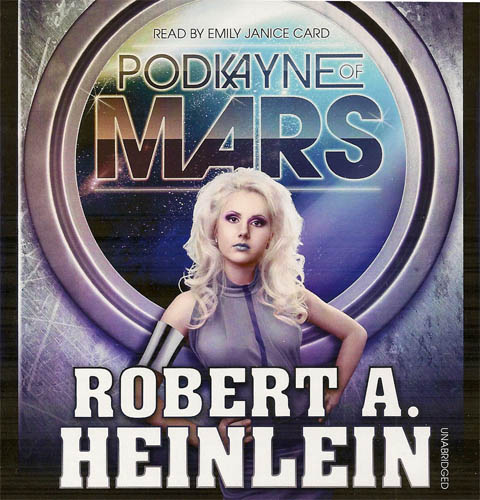
Emily Janice Card, daughter of Orson Scott Card, narrated Podkayne Of Mars. Card narrates the whole 176 page story all as Poddy, except seven pages from the end when Clark, her younger brother, takes over. I think Card’s voicing of Poddy was in-sync with a sentimental, skeptical, and ambitious young teen. It made me feel as if Poddy was reading her own story. However, Card’s voicing of Clark wasn’t as harmonious. Probably, this was because she is female. Compared to 1979 paperback edition, Poddy on this cover doesn’t really look like Poddy. Poddy looks quite cynical. I much prefer the 1979 edition because there Poddy looks more of a sentimentalist.

Posted by Rose [장미]

Review of Silence Please by Arthur C. Clarke

SFFaudio Review

Finis! Happy Birthday to us!

Science Fiction Audiobooks - Earthlight and Other Stories by Arthur C. ClarkeSilence Please
Contained in Earthlight and Other Stories: The Collected Stories of Arthur C. Clarke 1950-1951
By Arthur C. Clarke; Read by Various
Publisher: Phoenix Books
Published: 2010
Themes: / Science Fiction / Pubs / Sound / Opera / Physics /

What is it about a good pub that makes it such a good place to tell a story? Spider Robinson’s Callahan says “Shared pain is lessened; shared joy, increased.” That’s a good enough reason for me. Someone line me up with a pint, and one for my friend Spider. Let’s see who comes along.

“Silence Please” is Arthur C. Clarke’s first White Hart story of the fifteen that were later collected as The Tales of the White Hart. After the unnamed main character tells us of his surroundings (and how difficult this pub called The White Hart is to find), Harry Purvis sidles up to tell the tale of The Felton Silencer, a device that uses noise-canceling technology to deaden sound over a large area. The best use for such an engineering marvel? Revenge, of course!

The physics behind The Felton Silencer are explained fully. Never has an info dump been more entertaining! And the results make me eye those noise-canceling headphones suspiciously. Best use them only for emergencies.

The presentation is superior – Christopher Cazenove gives this one a dramatic read that comes off like a great British comedy.

A long while ago, Fantastic Audio published a series of audiobooks that contained all of the stories in The Collected Stories of Arthur C. Clarke, a huge collection of Clarke’s short fiction that was published (appropriately enough) in 2001. Phoenix Books is now re-issuing these audiobooks on Audible, at excellent prices. The Earthlight and Other Stories (1950-1951) collection is a great one to start with because in addition to this White Hart story, “The Sentinel” (which later inspired 2001: A Space Odyssey), “Time’s Arrow”, and “Earthlight” are there, too.

Posted by Scott D. Danielson

Review of The Crossroads by L. Ron Hubbard

SFFaudio Review

The penultimate review in the story-a-day 7th Anniversary Fun Run!

Science Fiction Audiobook - The Crossroads by L. Ron HubbardThe Crossroads
By L. Ron Hubbard; Read by a Full Cast
Approx 50 mins – [UNABRIDGED]
Publisher: Galaxy Audio
Published: 2010
Themes: / Science Fiction / Farming / Economics / Politics / Time / Trading / Vegetables /

Eben Smith is frustrated with government, who has offered (ordered?) to pay him to plow under his crops. But, these crops are “tangibles”, as Eben says, and it don’t make no sense to him. So he piles up the vegetables in his wagon, and heads off to find a buyer, leaving his wife to worry about him causing trouble with the government.

A day or so later, he arrives at The Crossroads. Four roads meet there; one concrete, one full of boulders, not passable except on foot. Another was made of metal. That leaves his own, a dirt road with a double row of ruts made by wagon wheels. Eben, not sure where to go from there, stops and waits for “someone with information”.

Eben has visitors, of course, and is a shrewd trader. Each visitor has his own quirks, and his own things he finds valuable. Eben sees things no farmer from the 1940’s has ever seen.

The story has a good quality. It’s very enjoyable pulp fiction, originally published in Unknown Fantasy Fiction in February 1941. It reminds me a bit of Clifford D. Simak, who, 17 years later, wrote “The Big Front Yard”. Eben has the same sort of can-do attitude as the main character in that story. Just as interesting are Eben’s distrust and criticism of the US government. Not much has changed in the last 70 years.

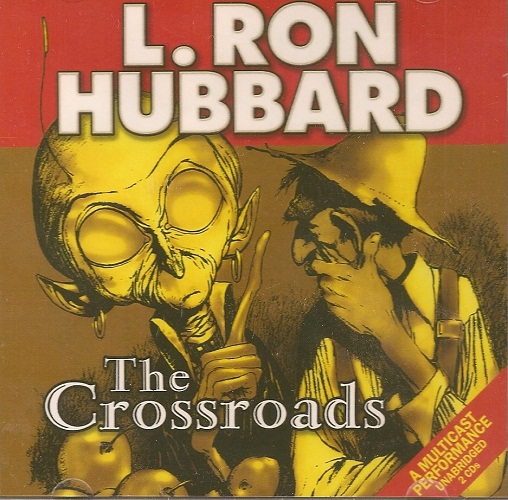
This CD is one of many in a series of L. Ron Hubbard stories published by Galaxy Press. It was extremely well done. There’s a main narrator, behind which are sound effects. Other actors perform the dialogue. Birds chirping set the roadside scene at high noon, and none of the effect are overpowering. Most of Eben’s visitors speak English, but one of them doesn’t. The spoken language was very well done, too. I become convinced after listening to this, the excellent Warhammer titles from The Black Library, and the great stuff coming from Graphic Audio, that it is not this type of audiobook I dislike. If it’s done well, it’s good stuff. It’s just so easy to do terribly.

With a pair of headphones, this was a very enjoyable listen.

Posted by Scott D. Danielson

Review of Breaking Point by James Gunn

SFFaudio Review

Welcome to Reviewopolis! Three stories to go…

Breaking Point
By James Gunn; Read by Julie Davis
Approx 2 Hours – [UNABRIDGED]
Podcaster: Forgotten Classics
Podcast: March 2009 (Episodes 111-113)
Themes: / Science Fiction / Aliens / Space Travel / Psychology /

The strength of the unit is the sum of the strengths of its members. The weakness of the unit can be a single small failing in a single man.

First, a few notes about the Forgotten Classics podcast: I really enjoy this podcast for a few reasons. Julie is an avid podcast listener, and if you are looking for podcast recommendations, look no further. She opens most episodes with something interesting from the Podosphere. These Podcast Highlights come from all over the map! For example, at the beginning of one the episodes containing this story (Episode 113), she highlights “Bob Dylan’s Themetime Radio Hour”. Would you have predicted Bob Dylan and James Gunn in the same podcast?

Another thing I like about Forgotten Classics is Julie’s commentary. She comments on the material she’s reading at the end of each podcast, providing a denouement that makes me think she’s just closed the book and knows everything I know up to this point in the story and nothing more.

Perhaps most important is the fact that Julie is a very good narrator. She reads clearly and with emotion. Stories are well-paced and enhanced by her pleasant voice.

The story at hand is “Breaking Point”, by James Gunn, which was first published in Space Science Fiction in March of 1953. A starship crew lands on an alien planet, crew a fairly well-oiled machine. The Captain recalls Leinster’s “First Contact”, when he mentions to the crew the importance of keeping the location of Earth secret “at all costs, until we’re sure we’re not going to turn up a potentially dangerous, possibly superior alien culture.” They quickly realize that they have done exactly that, when some external force, through unknown technology, won’t allow the hatch to be opened.

At this point, one of the crew members snaps. How could the hatch not open? There are many safeguards – this should not be happening! Cue the hysterial laughter. The aliens then start closing the crew in with a mysterious black (nothingness!) wall. Crew members flip out, one by one, as they try to figure out what’s happening before the walls close in completely. Are the aliens moving to close them all in, or are the alien moves specifically designed to unnerve specific crew members one at a time?

Julie said exactly what I was thinking when she mentioned that this story would be a comfortable fit on The Twilight Zone. Very weird stuff. It also reminded me of Stephen King’s The Langoliers, with the real world being blacked out in sections while people flee. Here, though, there’s nowhere to flee.

At the heart of the story is a conversation between the Captain and the medical officer about teams and how they are put together. Paresi, the medical officer tells the Captain:

Look, this is supposed to be restricted information, but the Exploration Service doesn’t rely on individual aptitude tests alone to make up a crew. There’s another factor—call it an inaptitude factor. In its simplest terms, it comes to this: that a crew can’t work together only if each member is the most efficient at his job. He has to need the others, each one of the others. And the word need predicates lack. In other words, none of us is a balanced individual. And the imbalances are chosen to match and blend, so that we will react as a balanced unit.

This while their living space continues to shrink. Is the medical officer saying that there is no such thing as a balanced individual, or that unbalanced people were purposefully selected and fitted together to make “a crew”? Either way, interesting. Thanks, Julie, for the story!

This story was completed as part of The 4th Annual SFFaudio Challenge.
Podcast Feed: http://feeds.feedburner.com/forgottenclassics

Posted by Scott D. Danielson

Review of The Illustrated Man by Ray Bradbury

SFFaudio Review

Here’s a review of The Veldt, story #20 in our 7th Anniversary Review Spree!

The Illustrated Man by Ray BradburyThe Veldt
Contained in The Illustrated Man
By Ray Bradbury; Read by Paul Michael Garcia
8 CDs – 9 Hours – [UNABRIDGED]
Publisher: Blackstone Audio
Published: 2009
ISBN: 9781433297199
Themes: / Science Fiction / Automated House / Computers / Children / Simulation /

In a house that cost them “thirty thousand dollars installed”, George and Lydia Hadley and their two children lived happily. Their shoes were tied with automatic shoe-tyers, their bacon was automatically fried, and, most importantly, their children were kept entertained. Life was good in their soundproof Happylife(tm) Home. Of course, things go terribly wrong. In the nursery, the kids seem to be spending a lot of time in Africa. With the lions.

The story was published in 1950, and though nobody’s tying my shoes, here in 2010 I can identify strongly with some of what Bradbury says here. At one point, George gets so upset that he decides to shut the house down:

“Lydia, it’s off, and it stays off. And the whole damn house dies as of here and now. The more I see of the mess we’ve put ourselves in, the more it sickens me. We’ve been contemplating our mechanical, electronic navels for too long. My God, how we need a breath of honest air!”

And he marched about the house turning off the voice clocks, the stoves, the heaters, the shoe shiners, the shoe lacers, the body scrubbers and swabbers and massagers, and every other machine he could put his hand to.

The house was full of dead bodies, it seemed. It felt like a mechanical cemetery. So silent. None of the humming hidden energy of machines waiting to function at the tap of a button.

Every so often I experience the same kind of angst and run around shutting things down. Things don’t end up so well for George, though. Maybe I better just leave it all on… and let the kids play with the lions. moohoowahahaha!

I’ve heard this story many many times, but I don’t know that I’ve actually heard an audiobook version before now. They’ve always been radio dramas, and this story has appeared several times: It was a Dimension X episode (1951), an X Minus One episode (1955), and Episode 11 of Bradbury 13. It was also televised as an episode of The Ray Bradbury Theater in the 1980’s.

Posted by Scott D. Danielson