Review of Press Enter_ by John Varley

SFFaudio Review

SFFaudio’s 7th Anniversary Reviewathon continues!

Science Fiction Audiobook - Press Enter_ by John VarleyPress Enter_
By John Varley; Read by Peter Ganim
2 Hours 53 Minutes – [UNABRIDGED]
Publisher: Audible Frontiers
Published: 2008
Themes: / Science Fiction / Mystery / Murder / Computers / Hacking /

This novella won the Best Novella Hugo in 1985 and the Best Novella Nebula in 1984. In 1984 I was 16, and my prize possession was a Commodore 64 computer. I recall programming on it, writing stories, and playing games. hmm. Not much has changed since then but the hardware, it looks like.

A story published in 1984 in which computers play a huge role is a history lesson. Floppy disks, modems, BBS’s – made me long for the good ole days. What was science fiction in 1984 now reads like historical fiction with an SF twist.

Victor receives a phone call one day from a computer, which tells him to run next door to his neighbor’s house. It will keep calling until he does it, says the computer. So he does, entering the house of a man he didn’t know well and finding him dead, an apparent suicide. Police and others are called in because this dead neighbor was into a lot of stuff: surveillance of neighbors, hacking into government systems, manipulation and theft of big money, all through his computers and his phones. Peter Ganim narrates the mystery well.

This is the longest story I’ve reviewed so far this month; it clocks in at 2 hours, 53 minutes. I LOVE novellas, and there is so much great science fiction out there at this length. Hollywood, take note! If you are mining for material, check out the science fiction novella.

Audible Frontiers has published many novellas, including more by John Varley (The Persistance of Vision is really excellent) and some by Connie Willis and Allen Steele.

Posted by Scott D. Danielson

LibriVox: Rastignac The Devil by Philip José Farmer

SFFaudio Online Audio

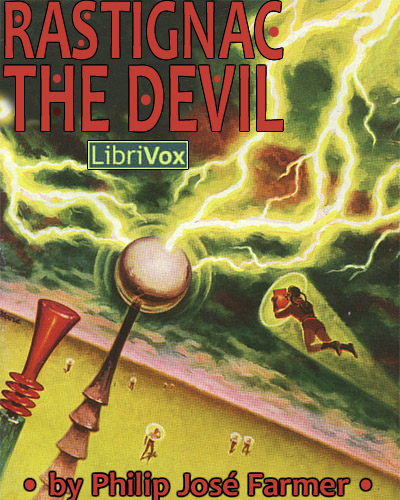
LibriVoxI get the sense that Rastignac The Devil is a satire, using the furniture of Alexandre Dumas’ The Three Musketeers. But I feel really embarrassed about not knowing what is going on, sub-textually, in this interesting, but baffling, novella by Philip José Farmer. Is it all an allegorical satire of some event in 17th century France?

A couple of other notes. Mike Resnick’s Starship series has a character named “Slick.” Slick is an alien with a sentient symbiotic skin (called a “gorib”). Rastignac The Devil has aliens and humans with just such a similar concept – very cool! Gregg Margarite, the narrator, does a very good job with the abundance of French words.

Anyway, like I said, I liked the story, thought it was weirdly cool, but don’t feel like I’ve understood it at all. Could someone fill me in?

LIBRIVOX - Rastignac The Devil by Philip Jose FarmerRastignac The Devil
By Philip José Farmer; Read by Gregg Margarite
2 Zipped MP3 Files or Podcast – Approx. 1 Hour 59 Minutes [UNABRIDGED]
Publisher: LibriVox.org
Published: March 19, 2010
Here is high fidelity fiction at Philip José Farmer’s story-telling best. It’s a vibrant, distractingly different tale of three centuries into the future. And as you read you’ll have a vague, uneasy feeling that it’s all taking place somewhere in the unexplored parts of the universe, even today. From Fantastic Universe May 1954.

Podcast feed: http://librivox.org/rss/4158

iTunes 1-Click |SUBSCRIBE|

[Thanks also to Barry Eads (aka KiltedDragon)]

Posted by Jesse Willis

Review of Identity Theft by Robert J. Sawyer

SFFaudio Review

Beginning the fourth week of this SFFaudio 7th Anniversary Story-a-Day Celebration! Be careful out there…

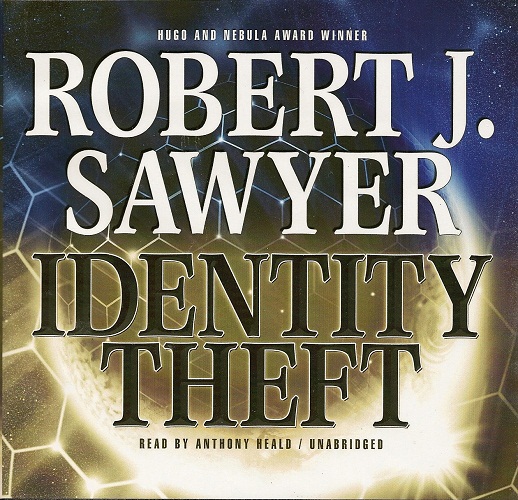
Science Fiction Audiobook - Identity Theft by Robert J. SawyerIdentity Theft
By Robert J. Sawyer; Read by Anthony Heald
2 Hours – [UNABRIDGED]
Publisher: Blackstone Audio
Published: 2010
ISBN: 9781441716729
Themes: / Science Fiction / Robots / Consciousness / Mystery / Detectives /

This is a great story. It originally appeared in Down These Dark Spaceways, and anthology edited by Mike Resnick and published by the Science Fiction Book Club. This version is read by Anthony Heald, a terrific narrator who was once the voice of choice for the Star Wars universe. He reads with energy and verve, great characterization and accents as needed.

Sawyer has said before that he feels that science fiction has more in common with the mystery genre than it does the fantasy genre, and this isn’t the first time he’s written an effective science fiction mystery. In the future Mars he presents, people can trade their bodies in for artificial ones, providing long life and more reliable body parts. The process requires making a copy of a person’s conscious mind, and imprinting that copy into the brain of the new body.

Like in many Sawyer stories, many of the implications of such a world are explored. What happens to the originals? What about unauthorized copies? In addition, there is a very interesting human settlement on Mars, and some fossil finding there. “Identity Theft” is a very entertaining novella, very well presented.

Posted by Scott D. Danielson

Aural Noir Review of the Improbable Adventures of Sherlock Holmes

Aural Noir: Review

The Improbable Adventures of Sherlock HolmesThe Improbable Adventures of Sherlock Holmes
Edited by John Joseph Adams; Read by Simon Vance and Anne Flosnik, John Joseph Adams (uncredited)
18 CDs – 22 hours [UNABRIDGED]
Publisher: Brilliance Audio
Published: 2010
ISBN: 1441839070
Themes: / Mystery / Crime / Alternate History / Science Fiction / Horror / 19th Century / London /

“When you have eliminated the impossible, whatever remains, however improbable, must be the truth.” This famous Sherlock Holmes quote is the impetus which drives this intelligent, inventive, and at times irreverent compilation of Sherlock Holmes stories written in the last few decades. As John Joseph Adams explains in his introduction, his aim in compiling these stories is to explore the uneasy peace between the cold clear logic of the deerstalker-wearing, pipe-smoking detective and the unanswered, perhaps unanswerable mysteries which continue to thwart human investigation to this very day. While many of the stories miss the mark of this goal entirely, the collection as a whole succeeds in pushing Holmes in new directions while staying true to the spirit of Sir Arthur Conan Doyles’s original work.

The stories in this collection fall into one of three categories. First, there are the traditional mysteries. These are stories that, with but slight alteration, might easily have found a home among Conan Doyle’s own work. The best of these tales expand upon characters or cases mentioned in the original œuvre only in passing. Mrs. Hudson’s Case by Laurie R. King, for instance, features Holmes’s protégé Mary Russell as its protagonist and reveals the character of Holmes’s long-suffering landlady. Edward D. Hoch’s A Scandal In Montreal, meanwhile, reunites Sherlock Holmes with his sometime nemesis Irene Adler. As a whole, however, this category fits rather uneasily into the collection because, by and large, there is little in the way of “the improbable” in any of these stories. All are well-written and most are engaging; they simply miss the point.

The second category I would call historical, or pseudo-historical. In most respect these stories are similar to those of the first category, with one redeeming addition: Sherlock Holmes crosses paths with historical figures from the Victorian era. Stephen Baxter’s The Adventure of the Inertial Adventure sees our detective join forces with author of scientific romances H.G. Wells, while Tony Pi’s Dynamics Of A Hanging brings mathematician Charles Dodgson (better known as Lewis Carroll) into the Holmesian world. The highlight of this grouping, though, is The Adventure Of The Field Theorem by Vonda N. McIntyre, in which Sherlock Holmes investigates crop circles at the behest of none other than Arthur Conan Doyle.

The last category throws Sherlock Holmes–and let’s not forget Doctor Watson, through whose eyes we see most of these tales unfold–into genres as wide-ranging as alternate history, horror, and science fiction. Subjectively, I liked these stories best because they fall into genres which I most commonly read. Objectively, these stories succeed because they deliver on the promise of “improbable adventures.” The collection opens with a chilling tale by horror master Tim Lebbon, which unlike most Holmes stories is never intellectually resolved. The Singular Habits Of Wasps by Geoffrey A. Landis, perhaps my favorite story in the collection, puts a fascinating otherworldly spin on the mysterious murders of Jack the Ripper. Robert J. Sawyer’s closing story, You See But You Do Not Observe, pits Holmes’s intellect against the fermi paradox concerning extraterrestrial life. The collection is worth the price of admission for these entries alone.

Simon Vance carries the bulk of the narration, with Anne Flosnik reading only a few stories featuring female protagonists. Flosnik performs solidly in her few appearances. Simon Vance’s portrayal of Holmes and Watson is spot-on; the former speaks with a whip-sharp voice, while the latter lumbers along in a more lugubrious manner. He falls short only when narrating the few “New World” characters who figure in the stories, but these cases are uncommon and Vance’s accent isn’t off by much. John Joseph Adams himself narrates the collection’s introduction, as well as introductory passages to each story.

Whether you’re a fan of mystery, history, or something further afield, chances are high you’ll find something to sate your appetite in The Improbable Adventures of Sherlock Holmes. I’ll venture out on a limb and say that visitors to this site will likely be most interested in the tales of speculative fiction. I assure you, in particular, that you’ll not be disappointed.

Posted by Seth Wilson

Review of Human Weakness by Karen Traviss

SFFaudio Review

The 7th Anniversary Reviewapalooza continues! May contain nuts.

Science Fiction Audiobook - Halo EvolutionsHuman Weakness
By Karen Traviss; Read by Jen Taylor
Contained in Halo: Evolutions
90 Minutes – [UNABRIDGED]
Publisher: Macmillan Audio
Published: 2010
Themes: / Science Fiction / Military SF / Artificial Intelligence / Computers / Aliens /

I have died more deaths per minute in Halo than anyone else I know. I spawn, look around, and thud. Or boom. Or thump thump thump. I spend a LOT of time waiting to spawn. Don’t like to brag, but my rate of death has to be some kind of record.

So I listened to this Halo story by Karen Traviss. “Human Weakness”, it’s called. It’s a good story about an artificially intelligent computer that is left behind when The Flood arrives and the humans run for their lives. The story is about something called “The Gravemind”, a borg-like malevolent entity that assimilates data, and it’s attempt to infiltrate the left-behind AI. No matter how much the Gravemind tries to convince the AI to allow it access, the AI refuses. Interesting! Not too many humans in this story.

I mentioned this to a friend of mine whose Halo death rate is respectable. I told him that the AI’s name was Cortana, and he knew exactly who that was. Then I realized that she’s the girl that talks to me at the beginning of Halo 3. That sent me to the Halopedia, where everything started coming together. I haven’t played much Halo in story mode, obviously, but I’m more interested in doing so than I was. A big storyline!

And oh yeah! The narrator was top-notch. Her name is Jen Taylor.

The description of the Halo: Evolutions anthology:

When humanity expanded beyond the safety of Earth to new stars and horizons, they never dreamed what dangers they would encounter there. When the alien juggernaut known as the Covenant declared holy war upon the fragile human empire, millions of lives were lost—but, millions of heroes rose to the challenge. In such a far-reaching conflict, not many of the stories of these heroes, both human and alien, have a chance to become legend. This collection holds eleven stories that dive into the depths of the vast Halo universe, not only from the perspective of those who fought and died to save humanity, but also those who vowed to wipe humanity out of existence.

Posted by Scott D. Danielson

Review of Eros, Philia, Agape by Rachel Swirsky

SFFaudio Review

Yet another story in SFFaudio’s 7th Anniversary Exposition of Excellent Stories! Step right up…

Science Fiction Audiobook - Eros, Philia, Agape by Rachel SwirskyEros, Philia, Agape
By Rachel Swirsky; Read by Rachel Swirsky
1 Hour 12 Minutes – [UNABRIDGED]
Publisher: Tor.com (Tor Story Podcast #013)
Published: 2010
Themes: / Science Fiction / Love / Robots / Divorce / Children / Relationships /

Adriana shrugged. “They’re all beautiful, right?”

“We’ll need specifications.”

“I don’t have specifications.”

The salesman frowned anxiously. He shifted his weight as if it could help him regain his metaphorical footing. Adriana took pity. She dug through her purse.

“There,” she said, placing a snapshot of her father on one of the display tables. “Make it look nothing like him.”

I’ve been really lucky this month. I’ve listened to thirteen stories, and they’ve all been winners. This one may be the best of the lot!

Adriana goes through with the purchase in that scene above – she buys herself a robot husband named Lucian. She then has a baby named Rose. Though Rose has none of Lucian’s DNA (he has none to give, of course), this is a family. The decision to purchase a robot whose body is made to order and whose personality can be molded to fit does not prevent relationship problems, though. It introduces different ones.

You can probably tell from just that short section that Adriana is a character with a lot of internal conflict. I immediately cared about her, and Lucian, and little Rose. This is a wonderful story that I’ll be reading again.

You can grab the story |HERE|

Or subscribe to the Tor Story Podcast at this link: http://feeds.feedburner.com/TorDotStories

Enjoy!

Posted by Scott D. Danielson