LibriVox: Doctor Ox’s Experiment by Jules Verne

SFFaudio Online Audio

LibriVoxHere’s a new audiobook from LibriVox that I am eager to hear. Eric S. Rabkin, who we had as a guest on the SFFaudio Podcast last year, had some fascinating insights about this story in his Teaching Company lecture series Masterpieces of the Imaginative Mind: Literature’s Most Fantastic Works. The narrator for the LibriVox audiobook version is Alan Winterrowd. He’s a blogger and podcaster (he started the Penny Dreadful Podcasts in March 2009).

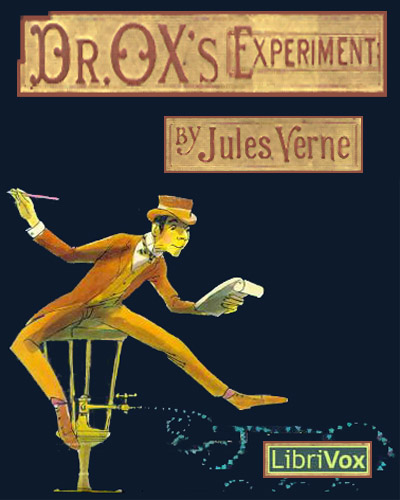
LIBRIVOX - Dr. Ox's Experiment by Jules VerneDoctor Ox’s Experiment
By Jules Verne; Read by Alan Winterrowd
5 Zipped MP3 Files or Podcast – Approx. 2 Hours 13 Minutes [UNABRIDGED]
Publisher: LibriVox.org
Published: January 24, 2010
An early, light-hearted short story, published in 1872 by Jules Verne. It takes place in the Flemish town of Quiquendone, where life moves at an extraordinarily tranquil pace. Doctor Ox has offered to light the town with a new gas, but actually has other plans in place.

Podcast feed: http://librivox.org/rss/3562

iTunes 1-Click |SUBSCRIBE|

[Thanks also to Elli and David Lawrence]

Posted by Jesse Willis

LibriVox: DeathWorld 2 by Harry Harrison

SFFaudio Online Audio

LibriVoxHere’s an SF novel I never expected to see as an audiobook. It’s Harry Harrison’s follow up to his terrific novel DeathWorld. Here’s what one LibriVoxateer (libraryanne) sez of DeathWorld 2 as read by my friend Gregg Margarite:

“Humorous, fast moving story and another superb solo. I am so fortunate to be able to proof listen for such superb readers. Way to go Gregg!”

Indeed, thanks so much Gregg!

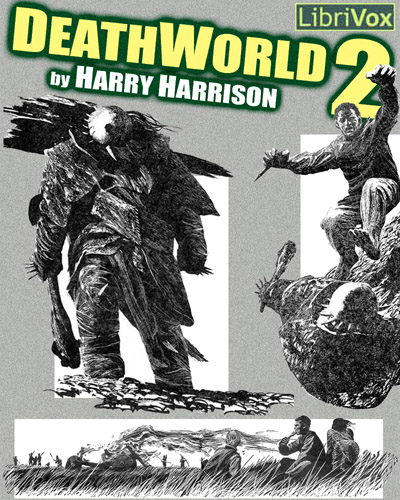
LIBRIVOX - DeathWorld 2 by Harry HarrisonDeathWorld 2 (aka The Ethical Engineer)
By Harry Harrison; Read by Gregg Margarite
5 Zipped MP3 Files or Podcast – Approx. 4 Hours 9 Minutes [UNABRIDGED]
Publisher: LibriVox.org
Published: January 24, 2010
The Ethical Engineer also known as Deathworld II finds our hero Jason dinAlt captured to face justice for his crimes, but the ever-wily gambler crashes his transport on a primitive planet populated by clans that hoard knowledge. It’s a difficult situation for a guy who just wants to get back to Pyrrus. First published in the July and August 1963 issues of Analog Science Fact & Fiction.

Podcast feed: http://librivox.org/rss/3942

iTunes 1-Click |SUBSCRIBE|

Now if only someone could make an unabridged audiobook out of Bill, The Galactic Hero:

[thanks also to Betty M. and James Christopher]

Posted by Jesse Willis

LibriVox: A Knyght Ther Was by Robert F. Young

SFFaudio Online Audio

LibriVoxRobert F. Young (1915-1986) was an American public school janitor. In addition to maintaining what I can only assume to have been immaculate hallways and washrooms in Bufallo, NY schools, he is also remembered for having written five novels, as well as a few dozen short Science Fiction stories, novellas and novelettes. His authorial production started in 1953 with a sale to Startling Stories. Later sales were made to Playboy, The Saturday Evening Post, Collier’s and Analog.

This story is inspired in part by Geoffrey Chaucer’s The Canterbury Tales and features a rogue time traveler named Tom Mallory who transits to 6th century Europe in search of an unparalleled treasure. Perhaps Terry Gilliam or Michael Palin filched this as a story seed for their 1981 classic Time Bandits?

LibriVox - A Knyght Ther Was by Robert F. YoungA Knyght Ther Was
By Robert F. Young; Read by Roger Melin
6 Zipped MP3 Files or Podcast – Approx. 2 Hours 19 Minutes [UNABRIDGED]
Publisher: LibriVox.org
Published: January 23, 2010
“But the Knyght was a little less than Perfect, and his horse did not have a metabolism, and his ‘castle’ was much more mobile—timewise!—than it had any business being!” In 2178, once time travel had become a simple task, it had also been outlawed. Those who chose to ingnore this law were known as time-thieves, and Tom Mallory was among the best of them. When he learns the precise whereabouts of the Holy Grail in 542, he sets out to obtain it with the intention of returning it to the 22nd century to make a handsome profit and to settle on Get-Rich-Quick Street. Off to the year 542 he travels to the castle of Carbonek where the great Knight Sir Launcelot is said to have possession of the Sangraal. First published in Analog Science Fact & Fiction July 1963.

Podcast feed: http://librivox.org/rss/3941

iTunes 1-Click |SUBSCRIBE|

Trailer for Time Bandits (1981):

[Thanks also to Betty M. and Annise]

Posted by Jesse Willis

Review of The Invisible Man by H.G. Wells

SFFaudio Review

Science Fiction Audiobook - The Invisible Man by H.G. WellsThe Invisible Man
By H.G. Wells; Read by James Adams
5 CDs – Approx. 5.5 Hours [UNABRIDGED]
Publisher: Blackstone Audio
Published: 2009
ISBN: 9781433277528
Themes: / Science Fiction / Invisibility / Chemistry / Biology / Crime / 19th Century / Sussex / Morality / Personal Responsibility /

On a freezing February day, a stranger emerges from out of the gray to request a room at a local provincial inn. Who is this out-of-season traveler? More confounding is the thick mask of bandages obscuring his face. Why does he disguise himself in this manner and keep himself hidden away in his room? Aroused by trepidation and curiosity, the local villagers bring it upon themselves to find the answers. What they discover is a man trapped in a terror of his own creation, and a chilling reflection of the unsolvable mysteries of their own souls.

While nobody could really deny H.G. Wells was an amazing and talented Science Fiction author I think we can all agree that some of his fictions are superior to others. Among those that are not superior is The Invisible Man. This is not from any serious defect in the novel’s writing. Indeed, I cannot see anything that H.G. Wells has really done badly or that he could have done better. So, if it couldn’t have been done better then why isn’t it better? I think the problem stems from two interrelated factors: One is a serious technical gripe, something in the book and unavoidable, and the other being the smallness of that idea. Taken together they make it difficult to fully engage with. What holds back The Invisible Man from an utter perfection is at the weak premise at the very core of the novel, invisibility. Invisibility is both impossible and small. I’ve expanded on its impossibility in another essay. Its smallness is a problem I will tackle here.

Invisibility is a long standing meme in human culture: Plato describes invisibility in the legend of The Ring Of Gyges, Tolkien used a similarly endowed ring in The Lord Of The Rings, and even modern scientific versions of invisibility (the invisible-like camouflage in Predator) are still with us. The problem is invisibility isn’t a story, its barely a half of an idea in terms of ideas – its a place to take a story, but it isn’t a very fruitful one. I felt the same way when I read Richard Matheson’s The Incredible Shrinking Man |READ OUR REVIEW|READ OUR REVIEW|. I though: “A man shrinking, that’s new!” It was new and completely unfruitful. See the fallout from the idea of a man shirking inexorably towards nothingness is a feeling of emptiness. The man shrinks, the world gets bigger. A man shrinks, everyday objects become like mountains and house pets like dragons. Its interesting, to be sure, but it isn’t a story. Like invisibility, no amount of hand-waving can make the explanation scientifically plausible. Unlike, the The Incredible Shrinking Man however I can still recommend The Invisible Man – Wells is the master of Science Fiction. In The Invisible Man he takes a fatally flawed concept, invisibility, and writes the shit out of it. When Griffin, the scientist and anti-hero of the title goes about explaining his methodological reasoning in a Socratic dialogue, he is fully persuasive. Check this passage out:

“Phew!” said Kemp. “That’s odd! But still I don’t see quite … I can understand that thereby you could spoil a valuable stone, but personal invisibility is a far cry.”

“Precisely,” said Griffin. “But consider, visibility depends on the action of the visible bodies on light. Either a body absorbs light, or it reflects or refracts it, or does all these things. If it neither reflects nor refracts nor absorbs light, it cannot of itself be visible. You see an opaque red box, for instance, because the colour absorbs some of the light and reflects the rest, all the red part of the light, to you. If it did not absorb any particular part of the light, but reflected it all, then it would be a shining white box. Silver! A diamond box would neither absorb much of the light nor reflect much from the general surface, but just here and there where the surfaces were favourable the light would be reflected and refracted, so that you would get a brilliant appearance of flashing reflections and translucencies—a sort of skeleton of light. A glass box would not be so brilliant, not so clearly visible, as a diamond box, because there would be less refraction and reflection. See that? From certain points of view you would see quite clearly through it. Some kinds of glass would be more visible than others, a box of flint glass would be brighter than a box of ordinary window glass. A box of very thin common glass would be hard to see in a bad light, because it would absorb hardly any light and refract and reflect very little. And if you put a sheet of common white glass in water, still more if you put it in some denser liquid than water, it would vanish almost altogether, because light passing from water to glass is only slightly refracted or reflected or indeed affected in any way. It is almost as invisible as a jet of coal gas or hydrogen is in air. And for precisely the same reason!”

“Yes,” said Kemp, “that is pretty plain sailing.”

So, I’m of two minds on The Invisible Man. It derives its heart from a weak concept – and like the phlogiston theory of combustion it is discredited, and undeserving of serious consideration. Despite all this I still find myself willing to recommend you read the novella. The psychological rigor that Wells brings to the novel makes The Invisible Man quite possibly the first and last straight Science Fiction story worthy of our attentions.

Narrator James Adams is a capable reader, he reads the third person perspective text with what sounds like an authentic English accent. The clam-shell style case, for the library CD edition that I received, features a bit of fading text on the cover, a design inspired by the invisibility of the title. Unfortunately this makes the details hard to make out in anything other than a bright light environment. Blackstone Audio has four other formats available too: Cassette, MP3-CD, digital download (via Audible.com) and playaway (a kind of disposable MP3 player that can only play one book). Given the widespread availability of The Invisible Man by other audiobook publishers I’d like to have seen some value added materials, perhaps a specially commisioned introduction by Professor Eric Rabkin and or an afterward by Professor Michael D.C. Drout.

One thing I like about paperbooks that rarely (if ever) gets included in an audiobook is a map. Maps are fun and informative. One of the funnest paperback series ever was the old Dell Mapbacks. Here’s the Map from the back of Dell’s edition of The Invisible Man:

The Invisible Man by H.G. Wells - A Dell Book (MAPBACK)

Posted by Jesse Willis

The Guardian Books Podcast: Looking ahead in Science Fiction

SFFaudio Online Audio

The Guardian Books PodcastSays The Guardian…

“Science fiction is the marmite of literature – people tend to love it or hate it. Yet no one could deny that it has produced many of the great myths of our age, from Frankenstein’s monster to William Gibson’s cyber-reality.

SF blogger Damien Walter joins our panellists to discuss where it is now, and why we should all tune in to a genre that can be satirical, prophetic, political and plain good fun, often all at the same time. He also outlines some of the titles to look out for in 2010.

We also look at John Wyndham’s previously unpublished novel, Plan For Chaos, and interview China Miéville, rising star of the ‘new weird’.”

Sez Damien G. Walter:

“I have the pleasure of being a guest on this week’s Guardian Books Podcast. This was my second time on the show, but this time around the whole episode is dedicated to speculative fiction. Hurrah! We discuss the new John Wyndham novel (yes, you heard that right) and the reasons why there are so many sub-genres in SF. Michelle Pauli interviews China Mieville, and I give my SF picks for 2010.”

That old/new John Wyndham novel, Plan For Chaos, sounds very interesting, apparently its a kind of hybrid Science Fiction/Hard Boiled Crime novel. The rest of the podcast is also well worth listening to.

Have a listen |MP3|

Or get it via The Guardian’s podcast feed:

http://www.guardian.co.uk/books/series/books/podcast.xml

[via Clampants on HuffDuffer]

Posted by Jesse Willis

SFPRP: Smoke by Donald E. Westlake and more invisible men

SFFaudio Online Audio

Luke Burrage, in the second of two consecutive shows with me as a guest on Science Fiction Book Review Podcast, is talking about Smoke by Donald E. Westlake and other stories about invisibility. We thoughrouly examine the invsiblity meme, discuss its strengths and weaknesses and chat about possible upcoming topics of conversation!

The Science Fiction Book Review Podcast SFBRP #079 – Smoke and more invisible men
1 |MP3| – Approx. 58 Minutes [UNABRIDGED]
Podcaster: SFBRP.com
Podcast: Monday, January 18, 2010

Here’s what we talked about:
Luke’s The Invisible Man podcast (SFBRP#78), The Invisible Man by H.G. Wells, Donald E. Westlake’s Smoke, invisibility, Freddie Urban Noon, crime, Smoke is an invisible man story done right, Memoirs Of An Invisible Man by H.F. Saint, Memoirs Of An Invisible Man (the 1992 film), invisibility in Fantasy (J.R.R. Tolkien’s The Lord Of The Rings), invisibility in Science Fiction (The Invisible Man by H.G. Wells), invisibility in a comic crime story, what are the problems with being an invisible thief?, humor, New York, Richard Stark, hard boiled crime, 5 Writing Lessons Learned from Donald Westlake, “When the phone rang Parker was in the garage killing a man.”, The Writing Excuses Podcast, Luke’s review of Makers by Cory Doctorow (SFBRP #74), big tobacco, Westlake’s way of telling a story “he went into the unspeakable kitchen.”, Westlake is a masterful writer of sentences, Peg Briscoe (Freddie’s girlfriend) is a competent confederate, how do you steal things when you’re invisible? (people will see the stolen goods floating down the street!), how do you sell stolen goods when you’re invisible? (you’ll need a confederate), invisibility is a small but well known meme, comparing the memes of invisibility and time travel, nailing small coffins and flogging tiny horses, The Man With The Getaway Face by Richard Stark, the Stark novels are faced paced and utterly absorbing, the differences between Stark novels and Westlake novels, The Hunter by Richard Stark, Payback (the 1999 film), more invisible men, Hollow Man (the 2000 film), Sony used a fake reviewer to shill its movies, unlikeable characters in novels vs. film, the concept of invisibility is a human concept and not a worldly phenomenon (and what that does to our perception of possibility), negating a phenomenon doesn’t create a new phenomenon, invisibility in The Hitch-Hiker’s Guide To The Galaxy series, Jack Ward, The Sonic Society, Superman, why Superman is impossible, invisible men cannot smoke or drink or eat if they want to remain wholly invisible, Neil Morrisey, The Vanishing Man (1998), future memes and themes for podcasts: THE YELLOW PERIL, when will China take over the world? (soon), David Wingrove’s Chung Kuo series, The Insidious Dr. Fu-Manchu by Sax Rohmer, the Judge Dee mysteries, Starship: Flagship by Mike Resnick, Kirinyaga by Mike Resnick |READ OUR REVIEW|, ***watch out for the false ending*** Alan Moore‘s The League Of Extraordinary Gentlemen, Captain Nemo, Mina Harker, Allan Quatermain, the National Treasure series, Indiana Jones,
6 Insane Fan Theories That Actually Make Great Movies Better, the best television show ever made: The Adventures Of Young Indiana Jones, doing something with a television show that no-one has ever done on TV before or since, automating your podcast with Audacity, python.

http://www.sfbrp.com/?feed=podcast

iTunes 1-Click |SUBSCRIBE|

Posted by Jesse Willis