LibriVox: Talents, Incorporated by Murray Leinster

SFFaudio Online Audio

Yum yum!

LIBRIVOX - Talents, Incorporated by Murray LeinsterTalents, Incorporated
By Murray Leinster; Read by Mark Nelson
12 Zipped MP3 Files – Approx. 6 Hours 9 Minutes [UNABRIDGED]
Published: LibriVox.org
Published: February 14, 2010
Bors felt as if he’d been hit over the head. This was ridiculous! He’d planned and carried out the destruction of that warship because the information of its existence and location was verified by a magnetometer. But, if he’d known how the information had been obtained–if he’d known it had been guessed at by a discharged spaceport employee, and a paranoid personality, and a man who used a hazel twig or something similar–if he’d known that, he’d never have dreamed of accepting it. He’d have dismissed it flatly!

Podcast feed: http://librivox.org/rss/3832

iTunes 1-Click |SUBSCRIBE|

[Thanks also to Tricia G]

Posted by Jesse Willis

Review of Sunrise Alley by Catherine Asaro

SFFaudio Review

Science Fiction audiobook - Sunrise Alley by Catherine AsaroSunrise Alley
By Catherine Asaro; Read by Hillary Huber
10 CDs – Approx. 11.5 Hours [UNABRIDGED]
Publisher: Blackstone Audiobooks
Published: December 2007
ISBN: 1433213007
Themes: / Science Fiction / Romance / Androids / Artificial Intelligence / California / Cyborgs /

When a shipwrecked stranger washed up on the beach near research scientist Samantha Bryton’s home, she was unaware that he was something more than human. He said his name was Turner Pascal—but Pascal was dead, killed in a car wreck. This man only held the remainder of Pascal’s consciousness in a technologically-enhanced humanoid body. He was, in fact, an experiment by the notorious criminal Charon, a practitioner of illegal robotics and android research. Charon has been secretly copying human minds into android brains, with plans to make his own army of slaves. On the run from this most ruthless criminal, Samatha and Turner seek help from Sunrise Alley, an underground organization of AIs and androids that have gone rogue. But these cybernetic outlaws are rumored to have their own hidden agenda.

It may not be so much that women and men are from different planets as women and men care about different things. Or it may be just that Catherine Asaro and I care about different things. Very different things. I have this hypothesis: people, even when they are lying to you, or writing fiction, can tell you a lot about themselves by what they focus on over and over. The word that kept coming up over and over again in Sunrise Alley was “trust.” Catherine Asaro, or at least her viewpoint character, Samantha Bryton, cares a whole helluvalot about trust. Me, I don’t care about trust, at least not in the way Asaro seems to wants me to. Based on the scenes in Sunrise Alley Asaro seems to think that being chased is also of great interest to a reader. Maybe it is to some readers. It isn’t to me. Turner Pascal, the mobile MacGuffin, is being chased prior to the novel’s start. Then Turner, the bellboy turned android, and Samantha, the scientist turned beachcomber, are chased all over the globe. They are chased in cars, by helicopter, by jet, on foot, in cars again.

The meme of an artificial person, android or evolving intelligence as Asaro dubs it, is often an interesting idea to work with in fiction. Philip K. Dick did some amazing things with it Do Androids Dream Of Electric Sheep? as did Alfred Bester in Fondly Fahrenheit. Even later career Robert A. Heinlein managed to tell a compelling story with an artificial person in Friday. William Gibson’s Neuromancer is a globe trotting adventure with an artificial intelligence as the MacGuffin. But Catherine Asaro’s take on AI and androids leaves me empty and depressed.

When Samantha and Turner aren’t being chased by unseen foes they are usually making love in one of Samantha’s many beds (in one of her many houses), or in a tastefully decorated secure facility bedrooms (where they are being held prisoner). But those looking for scene after scene of socially redeeming hot piston on human action will also be sadly disappointed. The order of the day in Sunrise Alley is for the scientist and the bellboy to show each other their emotions, their vulnerable sides and speak essentially the same dialogue over and over.
The android, Turner, has an inferiority complex and his savior/companion/scientist girlfriend is needed to shore up his insecurities. The central problem in the novel, other than their being chased, comes when Turner starts to modify his body in order to solve their problems and escape their captors (because apparently Samantha has no skills herself). In doing this Turner is increasingly loosing the handsome human looks he was given by his evil maker (the bad guy who we don’t get to meet for more than half the novel). This makes Samantha have to deal with the increasing repulsion she feels towards Turner’s increasingly mechanical-looking body. And that is basically encapsulates my big problem with this story. Writing sentences about a character’s emotional life and his/her feelings towards another character’s body parts makes me really, really annoyed.

I like idea fiction, stories that tell me something on an intellecutal level. Asaro’s Sunrise Alley seems to be merely operating on the level of wish-fulfillment. Samantha Bryton is beautiful, wealthy, and unemployed by choice. When the novel begins a handsome, insecure man has just washed up on her beach. She rescues him and drags him to the safety of her inviting home. Did I mention that Samantha also has two homes in the woods? One is near the beach in a forest, another is in some other forest, just a convienient chapter’s distance away. Both homes are filled with top-notch security, lovely decor and garages full of vehicles to make James Bond greatly envious. The explanation of why a quietly retired scientist needs to own two woodsy homes within a few hours driving distance of each other isn’t at all satisfactory. And neither is the explanation as to why she has a spy cars with built-in cloaking devices, bulletproof glass, oil slick droppers and mortars.

The worst sin that Asaro commits, in my opinion, is the final revelation which comes in the form of a pathetic pseudoscience, namely repressed memory.Sunrise Alley is not just a bad novel, but badly conceived, badly written and generally bad. This is the worst novel I have ever read. This is the worst I have ever reviewed. This is the worst I have ever finished.

Narrator Hillary Huber is tasked with making Samantha Bryton’s neurotic thoughts come alive. She pitches her voice a little deeper when voicing Turner Pascal. Huber is a fine narrator, this material is beneath her skill.

Posted by Jesse Willis

LibriVox: Short Science Fiction Collection 028

SFFaudio Online Audio

LibriVoxHere’s a new assemblage of short Science Fiction stories, in audiobook form, that are in the public domain. You can re-cut them, sell them, give them away, put them in your podcast or anything else you want. That’s what “public domain” means! The only thing you can’t do with them is copyright them. These are mostly new stories to LibriVox, mostly from the mid-20th century, but the final story in the collection is from the 19th century. Written by Edgar Allan Poe, fictionalizing a new alchemical invention by a real life contemporary of Poe’s. It comes off as plausible – to readers of the period it may have been mistaken as true, given the time and who the central character is. But we know it’s definitely SF. Right?

tabithat’s reading of The Servant Problem by Robert J. Young is another new story in this collection. It offers an intriguing premise. A ghost town needs to be sold off and appraised by an scrupulously honest real estate agent. The town’s only remaining resident is mum on the issue. But what made everyone else leave and where did they go? The answer is neat, even if it is kind of a shaggy dog tale. Whether it’s a legitimate “Feghoot” or not I’ll leave more discerning listeners to decide.

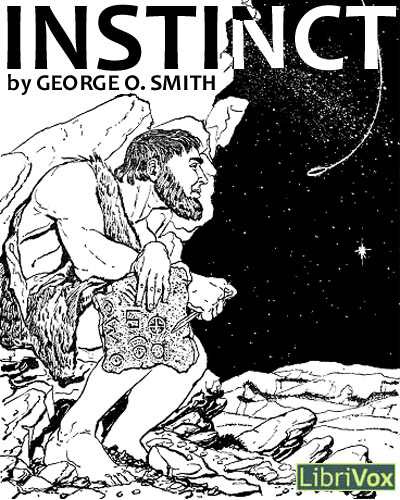
George O. Smith’s Instinct will probably be more likable to many than my estimation of it. It’s well written, but to mind it’s not particularly fruitful. Sort of a “racial memory” story – which when you think a bit about it is kind of the flip side of “ancient astronauts.” Meh.

LibriVox - Short Science Fiction Collection Vol. 028Short Science Fiction Collection 028
By various; Read by various
10 Zipped MP3 Files or Podcast – Approx. 4 Hours 50 Minutes Minutes [UNABRIDGED]
Publisher: LibriVox.org
Published: October 11, 2009
Science Fiction is speculative literature that generally explores the consequences of ideas which are roughly consistent with nature and scientific method, but are not facts of the author’s contemporary world. The stories often represent philosophical thought experiments presented in entertaining ways. Protagonists typically “think” rather than “shoot” their way out of problems, but the definition is flexible because there are no limits on an author’s imagination. The reader-selected stories presented here were written prior to 1962 and became US public domain texts when their copyrights expired.

Podcast feed: http://librivox.org/bookfeeds/short-science-fiction-collection-028.xml

iTunes 1-Click |SUBSCRIBE|

LIBRIVOX - Attention Saint Patrick by Murray LeinsterAttention Saint Patrick
By Murray Leinster; Read by Gregg Margarite
1 |MP3| – Approx. 46 Minutes [UNABRIDGED]
Publisher: LibriVox.org
Published: October 11, 2009
Legends do, of course, get somewhat distorted in the passage of time. In the future, the passage across space to other planets may cause a slight modification here and there… From Astounding Science Fiction, January, 1960.

GALAXY Science Fiction Magazine - July 1956Bad Medicine
By Robert Sheckley; Read by Megan Argo
1 |MP3| – Approx. 38 Minutes [UNABRIDGED]
Publisher: LibriVox.org
Published: October 11, 2009
A man is mistakenly treated by a psychotherapy machine intended for Martians. while big corporations rule the world, paying a separate police department to enforce brand loyalty. First published in Galaxy Science Fiction Magazine July, 1956
Astounding Science Fiction September 1955Blessed Are the Meek
By G.C. Edmondson; Read by Mark F. Smith
1 |MP3| – Approx. 13 Minutes [UNABRIDGED]
Publisher: LibriVox.org
Published: October 11, 2009
Every strength is a weakness, and every weakness is a strength. And when the Strong start smashing each other’s strength … the Weak may turn out to be, instead, the Wise. This story was first published in the September 1955 issue of Astounding.

LibriVox - Has Anybody Here Seen Kelly? by Kenneth O'HaraHas Anybody Here Seen Kelly?
By Bryce Walton; Read by Bellona Times
1 |MP3| – Approx. 26 Minutes [UNABRIDGED]
Publisher: LibriVox.org
Published: October 11, 2009
The body tanks had to be replenished and the ship had to be serviced—and the crew was having a Lotus dream in its bed of protoplasm. But Kelly knew how to arouse them… From If Worlds of Science Fiction July 1954.
LibriVox - Instinct by George O. SmithInstinct
By George O. Smith; Read by Ric F
1 |MP3| – Approx. 29 Minutes [UNABRIDGED]
Publisher: LibriVox.org
Published: October 11, 2009
You can keep a good man down, if you’ve got enough headstart, are alert and persistent … so long as he limits himself to acting like a good man… From Astounding Science Fiction March 1959.

Fantastic Universe January 1957Mex
By Laurence M. Janifer; Read by soualhi1
1 |MP3| – Approx. 5 Minutes [UNABRIDGED]
Publisher: LibriVox.org
Published: October 11, 2009
Talented William Logan [Laurence M. Janifer], though he hails from Dodger territory, tells a quiet story from down near the Mexican border, where men are very close to ancestral memories and to the things which dwell in the shadows. Logan is one of the more interesting of the newer writers. From Fantastic Universe January 1957.
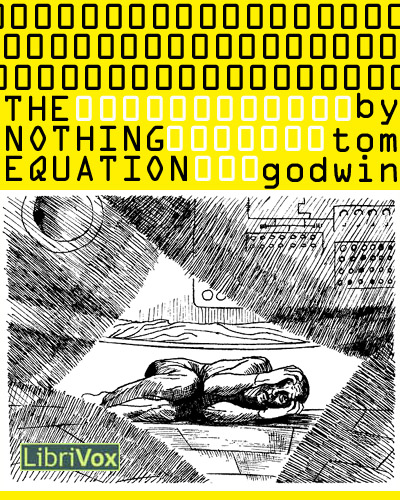
LibriVox Science Fiction - The Nothing Equation by Tom GodwinThe Nothing Equation
By Tom Godwin; Read by Mark Nelson
1 |MP3| – Approx. 21 Minutes [UNABRIDGED]
Publisher: LibriVox.org
Published: October 11, 2009
The space ships were miracles of power and precision; the men who manned them, rich in endurance and courage. Every detail had been checked and double checked; every detail except— From Amazing Stories December 1957.

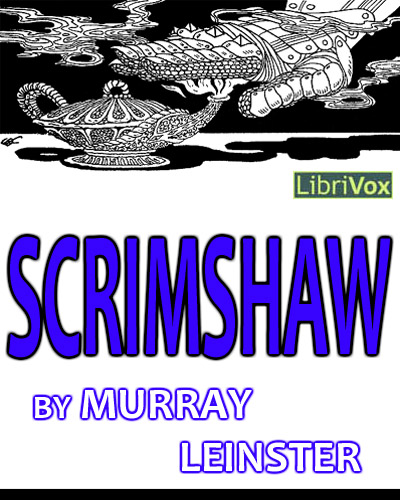
LibriVox - Scrimshaw by Murray LeinsterScrimshaw
By Murray Leinster; Read by Gregg Margarite
1 |MP3| – Approx. 35 Minutes [UNABRIDGED]
Publisher: LibriVox.org
Published: October 11, 2009
The old man just wanted to get back his memory—and the methods he used were gently hellish, from the viewpoint of the others… From Astounding Science Fiction September 1955.

LIBRIVOX - The Servant Problem by Robert F. YoungThe Servant Problem
By Robert F. Young; Read by tabithat
1 |MP3| – Approx. 1 Hour [UNABRIDGED]
Publisher: LibriVox.org
Published: October 11, 2009
Selling a whole town, and doing it inconspicuously, can be a little difficult … either giving it away freely, or in a more normal sense of “selling”. People don’t quite believe it… From Analog Science Fact Science Fiction November 1962.

LibriVox -Von Kemplen And His Discovery by Edgar Allan PoeVon Kempelen And His Discovery
By Edgar Allan Poe; Read by Gregg Margarite
1 |MP3| – Approx. 17 Minutes [UNABRIDGED]
Publisher: LibriVox.org
Published: October 11, 2009
German chemist, Baron Von Kempelen, possess an alchemical process which can transform lead into gold. The news of the discovery had already caused a two hundred per cent leap in the price of lead in Europe. First published in the April 14, 1849 edition of The Flag of Our Union.

[Thanks also to Wendel Topper and Lucy Burgoyne for proofing and coordinating and cataloging]

Posted by Jesse Willis

Dunesteef: A Princess Of Earth by Mike Resnick

SFFaudio Online Audio

Dunesteef Audio Fiction MagazineCory Doctorow writes plenty of stories which mine the title and themes of old and famous SF stories. Here’s a similar one from Mike Resnick. It is, as typical with Resnick, emotional, literate and sentimental. Those are words applicable only in the positive sense. The story is narrated by the Dunesteef podcast’s hosts, Rish Outfield and Big Anklevich. They don’t do too bad a job with the reading.

Unfortunately, they have added a lot of bed music, and some ridiculously redundant sound effects. I wish people wouldn’t try to turn an unabridged reading into a half-assed audio drama. The text reads:

“I think I’ll light a fire,” I said. “I haven’t used the damned fireplace all winter. I might as well get my money’s worth.”

“It’s not necessary,” he said. “I’ll be all right.”

“It’s no bother,” I said, opening the screen and tossing a couple of logs onto the grate. “Look around while I’m doing it.”

And the Dunesteef version has all that PLUS the added sound effects of a fireplace screen being pulled open and a crackling fire for the rest of the story. Those sounds are placed in our minds when Mike Resnick writes them and the narrator speaks them. We experience those sounds in our heads by merely having them spoken. Added sound effects are not only not needed they actually harm the storytelling!

DUNESTEEF - A Princess Of Earth by Mike ResnickA Princess Of Earth
By Mike Resnick; Read by Rish Outfield and Big Anklevich
1 |MP3| – Approx. 66 Minutes [UNABRIDGED with sound effects and music]
Podcaster: Dunesteef
Podcast: February 12, 2010
When a man’s wife dies, he is left with little purpose in his life beyond pushing through to the end of each day. Then, in the middle of one of the worst snowstorms of the year, he gets a visitor. A man, stark naked, and freezing out in the snow. What could he possibly be doing here in the man’s backyard in this state? First published in Asimov’s Science Fiction Magazine, December 2004.

Podcast feed: http://dunesteef.libsyn.com/rss

Posted by Jesse Willis

Review of The Unincorporated Man by Dani Kollin and Eytan Kollin

SFFaudio Review

TANTOR MEDIA - The Unincorporated Man by Dani Kollin and Eytan KollinThe Unincorporated Man
By Dani Kollin and Eytan Kollin; Read by Todd McLaren
2 MP3-CDs – Approx. 24 Hours 30 Minutes [UNABRIDGED]
Publisher: Tantor Media
Published: May 2009
ISBN: 9781400161720
Themes: / Science Fiction / Utopia / Dystopia / Time Travel / Slavery / Economics / Business / Cryonics / Immortality / Virtual Reality / Philosophy / Law / Alaska / Colorado / Los Angeles / Switzerland / Nanotechnology / Space Elevator /

The Unincorporated Man is a provocative social/political/economic novel that takes place in the future, after civilization has fallen into complete economic collapse. This reborn civilization is one in which every individual is incorporated at birth and spends many years trying to attain control over his or her own life by getting a majority of his or her own shares. Life extension has made life very long indeed. Now the incredible has happened: a billionaire businessman from our time, frozen in secret in the early twenty-first century, is discovered and resurrected, given health and a vigorous younger body. Justin Cord is the only unincorporated man in the world, a true stranger in this strange land. Justin survived because he is tough and smart. He cannot accept only part ownership of himself, even if that places him in conflict with a civilization that extends outside the solar system to the Oort Cloud. People will be arguing about this novel and this world for decades.

Even though I had never heard of the authors I like this book right from the start. The title reminded me of a Philip K. Dick novel called The Unteleported Man. There are probably a whole bunch of SF books following the formula “The (negative attribution) Man”, with The Invisible Man perhaps being the first of them. But there’s a lot more to like about this novel than the title alone. Among the pleasures it brings is good, old-fashioned idea based SF. It has been quite a while since I was so intellectually engaged by a novel’s central premise. And The Unincorporated Man has one. Set on a future Earth The Unincorporated Man is fundamentally different in both tone and scope than most SF novels I’ve read recently. Authors Dani and Eytan Kollin have envisioned a future in which the institution known as “the corporation” has replaced the convention of “person.” When born each child has stock of 1000 shares issued in his or her name. 10 percent of these stocks are held by each parent, the government gets another 5 percent and the rest is held in trust until the age of majority after which the balance of the stock is given to the child-cum-adult. He or she can then sell, or keep his or her stocks as they so desire. Holding a majority of your own stock insures relative autonomy (based on the amount above 50% you hold). The primary difficulty comes when you realize that you’ll need to invest in yourself. If you want an education you’ll need to pay for it. But without an education the pay won’t be much. So, you can either get education money by working at a low-wage job, and deriving whatever profit percentage your current stock level allows, or by selling your stock off for cash. This typically manifests itself in the majority of humanity not owning majority in themselves. With the possibility of living for centuries, thanks to the ubiquitous nanotechnology, you’d be wise to invest in an education. But in so doing you’ll loose control of your majority, and thus perhaps have to work at jobs that your shareholders choose, take vacations when your shareholders agree and generally have your life dictated to you by those that hold your stock. Why not just take the money and loaf? Who cares what the shareholders say? They can’t make you work can they? Well, yes they can. The corporate system is enforced by a forced mental audit that is applicable whenever shareholders think a corporation, who they hold stock in, is committing malfeasance (shirking their job, deliberately getting fired, etc.). Every corporation is trackable, thanks to GPS-like implants, and is thus ultimately accountable to his or her shareholders. It is the ultimate invasive tyranny, a slavery to the bottom line, a profit motive enforced by an invisible hand that you shook a deal with.

But things aren’t all doom and gloom. Those who are lucky enough to have been born with enough money, drive, intelligence, talent or beauty are able to do pretty much whatever they like with their time – that is assuming they don’t loose too much of their stock in luxuries or in judgments rendered against them in civil lawsuits. You can live like a king, wear any kind of clothing you like, read the newsies and travel the world in an endless party. But, as the centuries have rolled past it seems that fewer and fewer people have found it fashionable (or is the correct word possible?) to retain or even re-seek their majority stock. After all, in their nanotechnological society material abundance sees that no-one starves, no-one remains un-housed. Freedom, it seems, is just out of fashion. Enter Justin Cord and his unincorporated status.

I really liked this novel, but it isn’t without a few caveats. I found the fascinating society portrayed to be the most interesting thing about The Unincorporated Man. The characters are all pretty stiff and the problems facing Jason Cord, our hero, were far less interesting than they were useful in exploring this strange new society. Like many novels I review this one suffers most greatly from excessive page count. At 480 pages the novel takes 24.5 hours to listen to. I’d have preferred the novel with a steadier editorial hand. The editor could have done two relatively easy things. First he or she could have cut out a lot of the filler. I’m not just talking about empty sentences, there are many scenes that could have been eliminated or described in just a sentence or two. There are, for instance, two big court cases in this nove. Would it have been impossible to tell this story in one? Second, there was a useless detour along the way. I enjoyed it, but don’t see any reason it was needed in this novel. It could have been easily explored separately, in another novel. Dani Kollin and Eytan Kollin wanted to talk about the relatively unexplored idea, a social scourge in the form of really vivid virtual reality. Larry Niven did something similar with his idea of the “tasp,” but that wasn’t exactly VR. If you could live your whole life in an artificial reality that was extremely cheap why wouldn’t you? The answer, cooked up by Kollins, is less persuasive than I’d have hoped. And again it doesn’t really need to be in this particular novel. They foresee a coming global catastrophe created not by ecological destruction, but rather by an addictive technological neuropathology. That’s great, but like I said it doesn’t need to be in this novel. When a false reality is far more enjoyable than a real one why should we care about the real one? Good question. Just don’t ask it here.

Narrator Todd McLaren, who I first encountered in Richard K. Morgan’s Altered Carbon |READ OUR REVIEW|, is very talented. He mispronounce one or two words. “Concomitant.” being one of them. McLaren isn’t called to do many accents here, but he gives voice to a fairly large cast of characters. There are also several scenes in which he is required to portray a man giving impassioned speeches to crowds. These don’t sound like shouts, thankfully, but instead give the impression of a strained voice, speaking so as to be heard.

Posted by Jesse Willis

The SFFaudio Podcast #047

Podcast

The SFFaudio PodcastThe SFFaudio Podcast #047 – Jesse and Scott talk audiobooks, The Invention Of Lying (the perfect movie for audiobook fans), and hot blimp on zeppelin action.

Talked about on today’s show:
fantastic coffee, recent arrivals, Penguin Audio, Anita Blake, Laurell K. Hamilton, Bloody Bones, The Killing Dance, Burnt Offerings, narrator Kimberly Alexis, paranormal romance, Sookie Stackhouse, True Blood, Buffy: The Vampire Slayer, horror, Full Cast Audio, Emmie And The Incredible Shrinking Rat by Lynne Jonell, Skybreaker by Kenneth Oppel |READ OUR REVIEW|, the Matt Cruse series, SFFaudio Essential, Starclimber by Kenneth Oppel,Mainspring by Jay Lake |READ OUR REVIEW|, Blackstone Audio, Planet Of Exile by Ursula K. Le Guin, the Hanish Cycle series, The Word For World Is Forest by Ursula K. Le Guin, Avatar, Audible Frontiers, Book Of The Road, Tales Of Earth Sea by Ursula K. Le Guin, A Wizard Of Earthsea by Ursula K. Le Guin |READ OUR REVIEW|, Harlan Ellison, Recorded Books, The Dark Design by Philip Jose Farmer, more airships, current listens, Game Change, text to audiobook techniques, Dennis Boutsikaris, Engines Of God by Jack McDevitt, new releases, The Eyes Of Darkness by Dean Koontz, Brilliance Audio, Heroes Of The Valley by Jonathan Stroud, the Bartimaeus Trilogy, fantasy, quest, Jonathan Stroud’s Heroes of the Valley: Thalia Kids’ Book Club, Matthew Cody, Tantor Media, Time Travelers Never Die by Jack McDevitt, SFSignal’s review of Time Travelers Never Die, Battlestar Galactica, “McDevitt is ooh-wow Science Fiction in the Arthur C. Clarke tradition,” Flatland: A Romance Of Many Dimensions by Edwin A. Abbott, math-fiction, the LibriVox edition of Flatland, narrator James Langton, did you get your free audiobook from Tantor Media?, Scott Brick, The Time Machine by H.G. Wells, Alice’s Adventures In Wonderland, The Futurist by James P. Othmer, narrator William Dufris, Richard K. Morgan, narrator Simon Jones, Bill Murray, Robin Williams, Dead Poets Society, Zombieland, The Invention Of Lying is a romantic comedy that’s philosophical Science Fiction, Ricky Gervais, Jennifer Garner, Macmillan Vs. Amazon.com: ebook pricing dispute, John Scalzi’s Whatever post on the topic, Apple iPad, Amazon’s deletion of 1984, “bailouts for everyone!”, big evil corporations and the “tyranny of the bottom line”, Brilliance Audio, Killing Floor by Lee Child, one star reviews, the Cynical-C Blog, Daily Dose Of Ingersoll, You Can’t Please Everyone, Letter From Mark Twain To A Snake Oil Peddler, LibriVox: Extract From Captain Stormfield’s Visit To Heaven by Mark Twain, the merits and demerits of the iPad and the iPhone vs. the iPod Classic, Frederick Pohl’s The Way The Future Blogs, Pohl on Isaac Asimov |Part 1|Part 2|, the Moonies, Jerry Pournelle at Brigham Young University with Mormons and Scientologists, Life, The University & Everything 28, Margaret Atwood: History Denier, The Year Of The Flood by Margaret Atwood |READ OUR REVIEW|, Fredösphere, Orson Scott Card’s politics vs. his books, Apollo 11, Apollo 12, Apollo 14, Apollo 15, Apollo 16, Apollo 17, NASA’s Constellation Program, 10 NASA Inventions You Might Use Every Day, Wil Wheaton’s audiobooks are on Lulu.com, Just A Geek by Wil Wheaton |READ OUR REVIEW|, Memories Of The Futurecast, Julie’s Forgotten Classics podcast, Scott’s Pick Of The Week: Scenting The Dark And Other Stories by Mary Robinette Kowal, Subterranean Press, Ronald Rabbit Is A Dirty Old Man by Lawrence Block, epistolary novel, Cinderella Sims by Lawrence Block, Hard Case Crime, Jesse’s Pick Of The Week: Da Vinci’s Inquest, Intelligence, Castle, CSI is “six people standing around telling each other information they all already know,” Da Vinci’s Inquest does not use the pro forma police procedural TV show construction, Da Vinci’s Inquest is like The Wire but set in Vancouver, Acorn Video.

Posted by Jesse Willis