Review of Foundation and Empire by Isaac Asimov

Science Fiction and Fantasy Audio

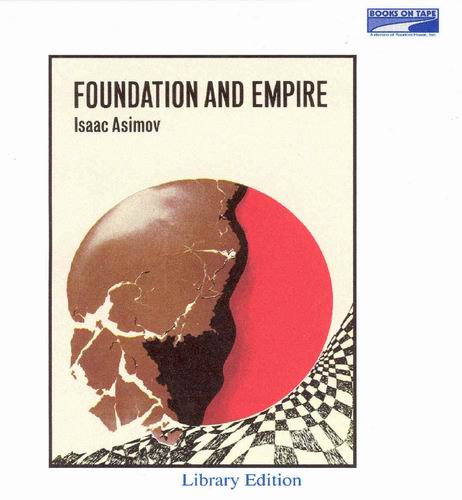
Science Fiction Audiobook - Foundation and Empire by Isaac AsimovFoundation and Empire
By Isaac Asimov; Read by Scott Brick
8 CD’s, 10 hours [UNABRIDGED]
Publisher: Books on Tape
Published: 2005 (Re-issued with new narrator)
ISBN: None on package
Themes: / Science Fiction / Psychohistory / Galactic Empire / Mental Powers /

This classic novel contains two parts. The first is The General and is much like Foundation in tone and subject matter. Galactic Empire is dying, and the Foundation grows in strength. The story is about Bel Riose, a General in the Empire, and the Empire’s last gasp against the Foundation.

But then Asimov takes it up a notch. “The Mule” is the second part of the book, and is one of Asimov’s finest works. The Foundation is unexpectedly confronted with an enigma who calls himself The Mule. Hari Seldon could not have considered such an anomaly in his equations, and when historical events are altered by The Mule’s mental ability to influence people, the Foundation responds.

And what more can I say about Scott Brick? I really enjoy him, and look forward to his narrations. This book was written more than fifty years ago, and it holds up as much more than a historical curiosity. Brick does a fine job with it.

Posted by Scott D. Danielson

Review of ENGLISH 3020 Studies In Narrative: Science Fiction & Fantasy

SFFaudio Review

Science FictionIndependent and Distance Learning – ENGLISH 3020 Studies In Narrative: Science Fiction & Fantasy
Lectures by P.C. Hodgell and Michael Levy
20 MP3 Lectures
LINK: http://lrc.lib.umn.edu/Engl3020.htm
Approx 19 Hours [UNABRIDGED]
Publisher: University Of Minnesota
Published: 2002 (But recorded over several years)
Themes: / Non-Fiction / Science Fiction / Fantasy / Horror / Time Travel / Gothic Horror / Utopias / Dystopias / Religion / Vampires / Urban Fantasy / High Fantasy / Sword and Sorcery / Cyberpunk / Messiah / Apocalypse / Future War / Supermen / Robots / Feminism / Computers / Robots / Androids / Cyborgs / Dungeons & Dragons / Aliens /

Pat Hodgell and Mike Levy discuss the details of SF&F’s history in under 20 hours – no mean feat. Though in amongst the broad academic strokes there are many nice discussions listeners should note. These are academic university lectures, and not an entertainment talk show so the evidentiary schema is the primary focus.

The lectures are vaguely sequential to the history of science fiction and fantasy. The first lectures by Levy discusses the origins of Science Fiction, tackling the progenitive triumverate of Mary Wollstonecraft Shelley, H.G.Wells, and Jules Verne. The second lecture explores the early and mid twentieth century figures in the field: Edgar Rice Burroughs, Hugo Gernsback, John W. Campbell, Robert A. Heinlein. For the third and fourth lectures Fantasy author Pat Hodgell and the course’s instructor presents the origins of modern Fantasy from its roots in gothic novels and romanticism and then the various 19th century fantastic writings.

Levy’s turn on the fifth lecture covers the early Utopian and Dystopian stories with particular attention to the novels We, 1984 and Brave New World. His insightful commentary continues into the sixth lecture and covers post World War II SF with Astounding Vs. Galaxy Science Fiction Magazines, and the novels Frederik Pohl and C.M. Kornbluth’s The Space Merchants, Kurt Vonnegut’s Player Piano and John Brunner’s Shockwave Rider. For lectures seven and eight Hodgell investigates English Fantasy authors Charles Williams, C.S. Lewis and J.R.R. Tolkien. Handing off to Levy again for lectures nine and ten covering the general theme of Religion and the specific themes of Messiah and Apocalypse with the novel examples of James Blish’s A Case Of Conscience, Walter M. Miller Jr.’s A Canticle For Leibowitz, Arthur C. Clarke’s Childhood’s End and Robert A. Heinlein’s Stranger In A Strange Land.

Lecture eleven covers the theme of evolutionary Supermen – homo superior in his early fictional incarnations and where the strange motivation to write about them comes from. Lecture twelve is similar to eleven except its focus is on the manufactured heirs to humanity in the form of Computers, Robots, Androids and Cyborgs. This is also the first lecture to include a guest, SF author William F. Wu! Lectures thirteen and fourteen cover the ever popular Time Travel theme, including Connie Willis’ Firewatch, Mark Twain’s A Connecticut Yankee In King Arthur’s Court, Michael Moorcock’s Behold The Man and two of Heinlein’s excellent SF short stories All You Zombies and By His Bootstraps.

Lectures fifteen and sixteen investigate fantasy fiction after Tolkien’s influence covering the various themes of Horror, Vampires, Urban Fantasy, High Fantasy, Sword and Sorcery and the influence of the role playing game Dungeons & Dragons. Among the stories specifically discussed are Fritz Leiber’s Smoke Ghost, Richard Matheson’s I Am Legend, Ursula K. Le Guin’s “Earthsea” novels, Terry Pratchett’s “Discworld” novels and Robert E. Howard’s “Conan” stories. Lectures seventeen and eighteen examine women’s role in science fiction, with the themes of Utopias and Feminism, discussion of the novels Venus Plus X by Theodore Sturgeon and The Left Hand Of Darkness by Ursula K. Le Guin, as well as discussion of it’s authors, the likes of Joanna Russ, Ursula K. Le Guin, James Triptree Jr. and Octavia Butler.

Lecture nineteen breaks from the lecturing professor mold with Pat Hodgell doing an interview in the home of Minnesota SF author Gordon R. Dickson. He talks about how he writes, where he gets his ideas (from history dontcha know) and about the writing process – and this is a very valuable interview as Dickson is now deceased. Dickson novels discussed include among others Dorsai! and Soldier Ask Not. Pat Hodgell concludes the lecture series with a roundtable discussion with herself, Levy and SF author Elanor Arnason. Together they talk about Cyberpunk, William Gibson’s Neuromancer and the film Blade Runner, the use of Aliens in SF and some final thoughts about where they thing SF and F is going.

The sound quality of these lectures isn’t great. There are many background noises, people whispering, lecturers too close and too far from the mic, Gordon R. Dickson coughs a bit and various other aural annoyances are legion. But, it was recorded at a good level and I don’t think I missed one word that was above a whisper – these are lectures and they are free so don’t complain! The funny thing is after hearing these lectures I feel a very strange urge… to learn more about Minnesota. I’ve never had that urge before but Pat Hodgell and Mike Levy manage to include so many Minnesota references and connections into their lectures they sold me on the whole ‘10,000 Lakes to Explore’ deal! Hmmm, maybe these lectures are being given away for free because their underwritten by the Minnesota Tourism Bureau? In any case I heartily recommend you give one or some of these lectures a try they are good listening and good edjamacation.

Here’s a breakdown of the lectures::

Lecture 1 – 29 Minutes 6 Seconds – SF FOUNDATIONS
(LINK: http://lrc.lib.umn.edu/dai/P131_1A.MP3)

Lecture 2 – 27 Minutes 8 Seconds – SF FOUNDATIONS
(LINK: http://lrc.lib.umn.edu/dai/P131_1B.MP3)

Lecture 3 – 26 Minutes 46 Seconds – FANTASY
FOUNDATIONS
(LINK: http://lrc.lib.umn.edu/dai/P131_2A.MP3)

Lecture 4 – 27 Minutes 10 Seconds – FANTASY
FOUNDATIONS
(LINK: http://lrc.lib.umn.edu/dai/P131_2B.MP3)

Lecture 5 – 26 Minutes 7 Seconds – THE FUTURE
(LINK: http://lrc.lib.umn.edu/dai/P131_3A.MP3)

Lecture 6 – 26 Minutes 3 Seconds- THE FUTURE
(LINK: http://lrc.lib.umn.edu/dai/P131_3B.MP3)

Lecture 7 – 28 Minutes 2 Seconds- HOBBITS AND INKLINGS
(LINK: http://lrc.lib.umn.edu/dai/P131_4A.MP3)

Lecture 8 – 27 Minutes 9 Seconds- HOBBITS AND INKLINGS
(LINK: http://lrc.lib.umn.edu/dai/P131_4B.MP3)

Lecture 9 – 27 Minutes 18 Seconds- SCIENCE FICTION AND
RELIGION
(LINK: http://lrc.lib.umn.edu/dai/P131_5A.MP3)

Lecture 10 – 26 Minutes 57Seconds – SCIENCE FICTION
AND RELIGION
(LINK: http://lrc.lib.umn.edu/dai/P131_5B.MP3)

Lecture 11 – 27 Minutes 18 Seconds – SUPERMEN
(LINK: http://lrc.lib.umn.edu/dai/P131_6A.MP3)

Lecture 12 – 28 Minutes 11Seconds – ROBOTS, ANDROIDS
AND CYBORGS
(LINK: http://lrc.lib.umn.edu/dai/P131_6B.MP3)

Lecture 13 – 26 Minutes 7 Seconds- TIME TRAVEL
(LINK: http://lrc.lib.umn.edu/dai/P131_7A.MP3)

Lecture 14 – 27 Minutes 11 Seconds – TIME TRAVEL
(LINK: http://lrc.lib.umn.edu/dai/P131_7B.MP3)

Lecture 15 – 28 Minutes 2 Seconds – MODERN FANTASY AND
HORROR
(LINK: http://lrc.lib.umn.edu/dai/P131_8A.MP3)

Lecture 16 – 43 Minutes 47 Seconds – MODERN FANTASY
AFTER TOLKIEN
(LINK: http://lrc.lib.umn.edu/dai/P131_8B.MP3)

Lecture 17 – 27 Minutes 30 Seconds -WOMEN IN SCIENCE
FICTION
(LINK: http://lrc.lib.umn.edu/dai/P131_9A.MP3)

Lecture 18 – 27 Minutes 57 Seconds -WOMEN IN SCIENCE
FICTION
(LINK: http://lrc.lib.umn.edu/dai/P131_9B.MP3)

Lecture 19 – 44 Minutes 16 Seconds – AN INTERVIEW WITH
GORDON R. DICKSON
(LINK: http://lrc.lib.umn.edu/dai/P131_10A.MP3)

Lecture 20 – 43 Minutes 46 Seconds – CYBERPUNK AND
ALIENS
(LINK: http://lrc.lib.umn.edu/dai/P131_10B.MP3)

Posted by Jesse Willis

Review of The Voice from the Edge Vol. 1: I Have No Mouth a…

SFFaudio Review

Science Fiction Audiobooks - The Voice from the EdgeThe Voice from the Edge Vol. 1: I Have No Mouth and I Must Scream
By Harlan Ellison, read by Harlan Ellison
5 CD’s – 6 hours [UNABRIDGED stories]
Publisher: Fantastic Audio
Published: 2002
ISBN: 1574535374
Themes: / Science Fiction / Collection / Series / Post-Apocalypse /Artificial intelligence / Utopia / Dystopia / Magic Realism / Love / Hell /

There are two basic reasons to invest in a short story collection by a single author. The first is to experience first hand the stylistic, thematic, and technical contributions the author has made to his genre and to literature in general; the second is to sample the dynamic range the author covers, to gauge the extent of his palette.

This audio book delivers the first in spades. With Harlan Ellison’s friendly, yet curmudgeonly introduction, we are thrust immediately into the gritty, rawness he helped bring to science fiction. Such stories as the harrowing, lurid, complex title story, the gleefully offensive misogyny and sociopathy of “A Boy and His Dog”, the pop-cultural, pejorative ranting of “Laugh Track”, and the sophomoric sexual preoccupation of “The Very Last Day of a Good Woman” clearly delineate the dark, adult-oriented themes he introduced, as well as his predilection for unlikable anti-heroes who often leave us feeling a bit less comfortable about ourselves. And on such material, his distinctive narrative style shines. He curses with conviction, and his voice handles guilt, revenge, and damnation with seeming familiarity.

In the overall story choice, we also have a remarkable demonstration of the range of Ellison’s writing. Compare the patient, redemptive power of “Paladin of the Lost Hour” to any of the stories mentioned above, and you’ll see what I mean. Throw in the sly, haunted twist of “The Time of the Eye”, the overwrought post-modernism and tedious beatnik vamping in “’Repent Harlequin!’ said the Tick-Tock Man”, the sublime, hellish search for love in “Grail”, and the puzzling juxtaposition of the truly horrific and the trivial in “The Lingering Scent of Woodsmoke”, and you cover quite a swath of not only the science-fiction spectrum, but the fiction spectrum in general.

Unfortunately, the use of a single narrator for all these stories blurs their uniqueness, especially since that narrator is Harlan Ellison. His delivery style can be enjoyable, but it is so raw, so exaggerated and so pervasive that it tends to flatten the relief of the work itself. I can’t say that I question the wisdom of having Ellison narrate, for on any single story his voice adds the confident insight that only an author can bring to his own work. But this is a collection, and the diverse stories deserve a wider range of vocal performance to truly showcase their differences. My advice is to make the best of this paradox by taking the collection slowly. The quality of the material, the exceptionally crisp sound and the fine, user-friendly packaging make this an audio book you should not miss, just make sure to pace yourself.

Posted by Scott D. Danielson

Review of Shadow of the Giant by Orson Scott Card

Science Fiction Audiobooks - Shadow of the Giant by Orson Scott CardShadow of the Giant
By Orson Scott Card; Read by David Birney, Scott Brick and cast
10 CD’s – 12 hours [UNABRIDGED]
Publisher: Audio Renaissance
Published: 2005
ISBN: 1593974965
Themes: / Science Fiction / World Politics / War / Leadership /

I’ve been a fan of Orson Scott Card’s Ender series for a long time. I’ve read them all in print, some more than once. When Card started to be published in unabridged audio (a medium that Card really likes) I listened to them all, too. And I loved them again.

As I did this one. Shadow of the Giant is the fourth book in the Shadow series, which started with Ender’s Shadow, then continued with Shadow of the Hegemon and Shadow Puppets. The novels follow Ender’s jeesh – the fellow students who helped him defeat the Buggers in Ender’s Game. Ender himself is off-planet, on his way to help colonize a planet. The Battle School students that were left behind are desired by the world’s governments, since they are jockeying for position after the defeat of the common enemy.

There’s a ton of things going on before this novel even starts. It works stand-alone, though, because Card takes time to let the reader know what needs to be known before moving on.

The book basically has two fronts. First, the real-life game of Risk© that is going on between nations of the world – nations ruled by past Battle School students – and Peter Wiggin’s efforts to unify everyone under a single government.

Second is the story of Bean, Petra, and their children. In a previous book, Bean and Petra have several embryos created with hopes of being able to have a normal child. Several of them were stolen and implanted in other women with hopes of creating another brilliant person that could be under the control of others. Bean and Petra search for these women while having the child they had planned on.

The audiobook is just excellent. David Birney, Scott Brick, and others perform the book. It flows so well, and there are moments to listen to again and again, like the deeply affecting conversation between Ender and his brother Peter in the last part of the book. For a person who has followed the story from the beginning, those moments are gold – filled with both the weight of the moment and the weight of all that came before. The audio performances enhance those moments, adding another layer of depth as the actors interpret the text. This book was in the right hands.

Card says that we are not quite at the end here. According to notes on his website, the writing of this book created another story to be told. So we’ve all got that to look forward to.

Posted by Scott D. Danielson

Review of Tales of Kirinyaga #1 by Mike Resnick

Science Fiction Audiobooks - Kirinyaga by Mike ResnickTales of Kirinyaga #1
By Mike Resnick; Read by Pat Bottino
1 Cassette – 83 Minutes [UNABRIDGED]
Publisher: Infinivox
Published: 1997
ISBN: 1884612237
Themes: / Science Fiction / Orbital Platform / Culture /

This title from Infinivox contains two short stories by Mike Resnick. The first story, “One Perfect Morning, With Jackals”, tells of a Kenyan named Koriba who has decided to leave the Earth for Kirinyaga, an orbiting piece of real estate where he believes that he and others can live in the ancient ways of his own culture, free of the influence of European culture.

“Kirinyaga” is the second story, which takes place on Kirinyaga itself. Again, Koriba is the main character, and is living the culture he wants to live. He witnesses a baby born feet first. Since this is a sure sign of demon possession, he kills the child. “Maintenance” then pays a visit in order to tell him that he can’t be doing such things, and thus the culture clash begins anew. This Hugo Award winning story is very well-written and affecting, leaving you with much to think about.

Pat Bottino is the reader, and I found him a bit wooden, a bit emotionless, but the material is strong enough to shine through. Infinivox has a knack of selecting excellent stories to record – I haven’t heard an Infinivox title yet that I didn’t enjoy.

Posted by Scott D. Danielson

Review of Survival: Species Imperative #1 by Juile E. Czerneda

Science Fiction Audiobook - Survival: Species Imperative 1 by Julie CzernedaSurvival: Species Imperative #1
By Juile E. Czerneda; Read by Christine Marshall and William Dufris
1 MP3-CD, 16hr [UNABRIDGED]
Publisher: Paperback Digital
Published: 2005
ISBN: 1584390050
Themes: / Science Fiction / Alien Life / Biology /

Survival is the first novel in the planned trilogy entitled Species Imperative. It’s science fiction in the grand tradition – written by a scientist, it contains plenty of science. As I was listening, I likened it to Clarke’s Rendezvous with Rama in the way it is a constant detailed unfolding view of an alien mystery. But the comparison would have to stop there, because in this book the aliens are right there; in Rama we never got to actually see them.

The story’s main character is Dr. Mackenzie Connor, who honestly wants nothing to do with aliens. Her thing is salmon, and we first meet her while she’s studying salmon at a research facility in northwest North America. Then, a Dhryn arrives. A Dhryn is a six armed, blue, intelligent alien who seeks out Dr. Connor specifically to share some archaeological information with her. But shortly after the Dryhn arrives, strange things start to happen at the research facility, which propel Dr. Connor into a partnership with the alien as they unravel an enigma. Event by event and discovery by discovery mysteries unfold.

Christine Marshall and William Dufris turn in excellent performances. The two narrators tell the story seamlessly in a masterfully edited dual narration. The Dhryn’s voice (performed by Dufris) is very effective, and is a great example of how audiobook narration can add depth to an author’s character. Marshall has the bulk of the narrating duties here, and she sets a good pace for the prose, which contains much expositional material.

Overall, this is good hard science fiction that like all good hard science fiction leaves us much to consider; in this case about humanity, nature, and the relationship between the two.

Posted by Scott D. Danielson