News, Reviews, and Commentary on all forms of science fiction, fantasy, and horror audio. Audiobooks, audio drama, podcasts; we discuss all of it here. Mystery, crime, and noir audio are also fair game.
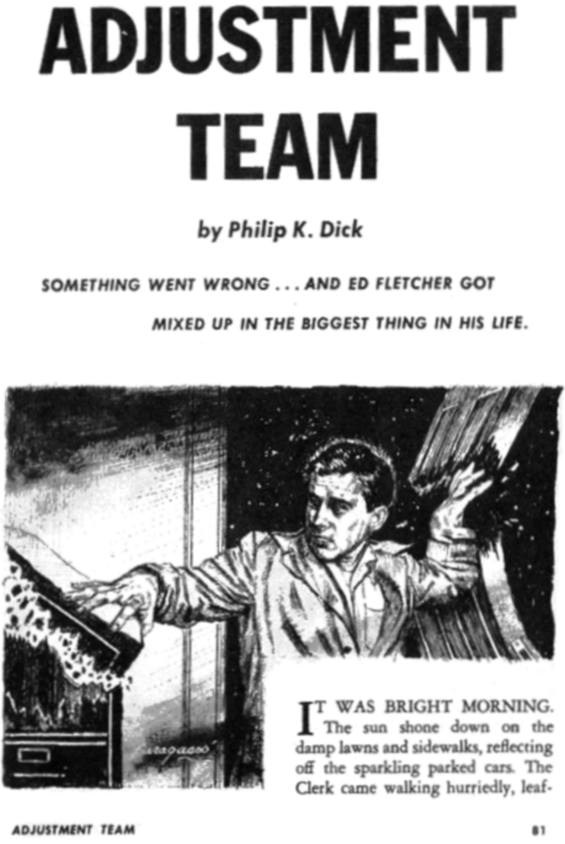
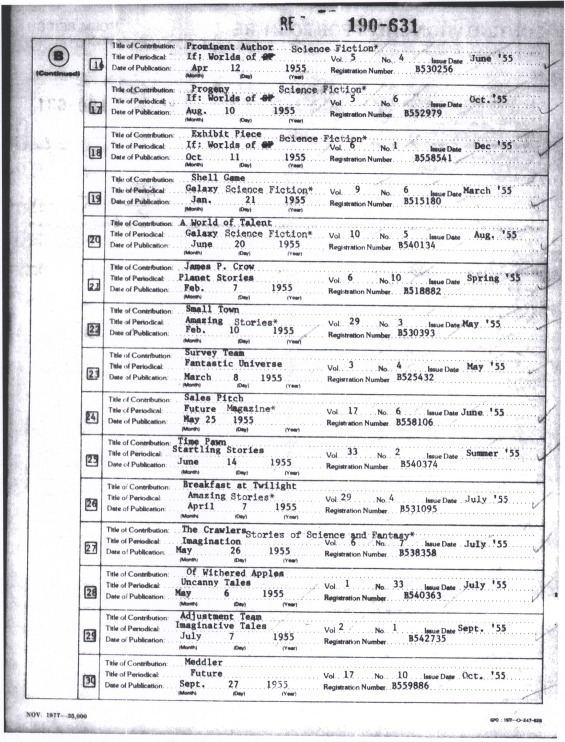
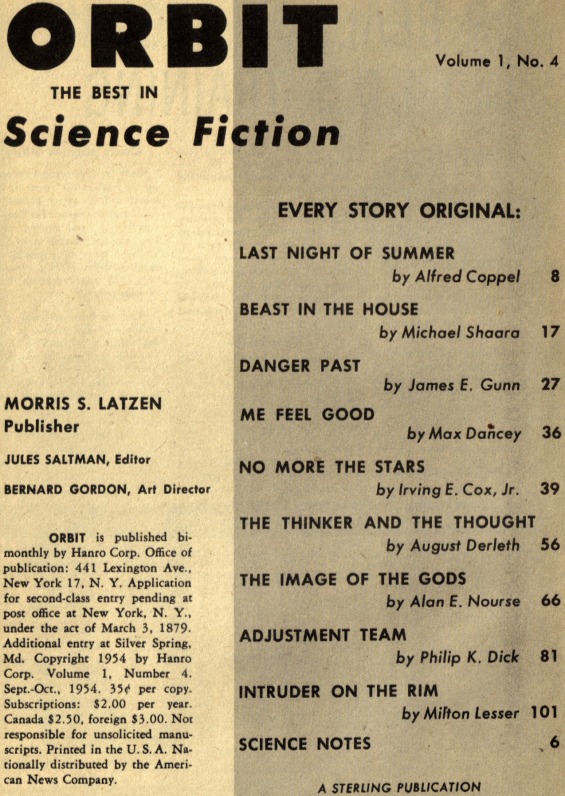
Look what the dragnet dragged in! This is a complete and unabridged recording of a story that’s been suppressed by threats of a lawsuit. Originally recorded for inclusion in a LibriVox collection of short Science Fiction stories, Adjustment Team was unjustly subject to DMCA takedown notifications |HERE| and |HERE|. The facts are these: The story wasn’t actually copyright renewed as evidenced by this falsified document RE190631 (page 2 back). We can see that the true first publication date of Adjustment Team was in Orbit Science Fiction No.4 Sept-Oct 1954 (not Imaginative Tales September 1955). Thanks Drama Pod!
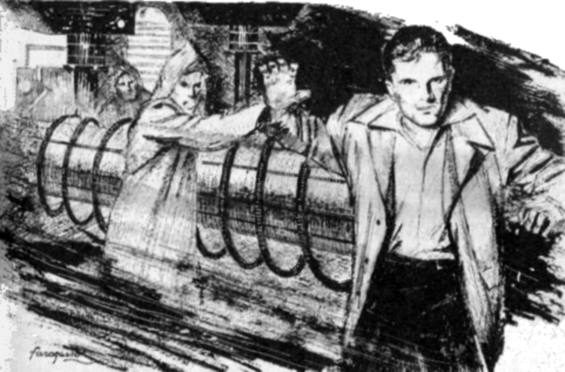
Adjustment Team
By Philip K Dick; Read air jordan 4 retro red thunder by Gregg Margarite
1 |MP3| – Approx. 59 Minutes [UNABRIDGED]
Podcaster: The Drama Pod
Podcast: November 14, 2011 “Something went wrong and Ed Fletcher got mixed up in the biggest thing in his life.” First published in Orbit Science Fiction, Sept-Oct 1954, No.4.
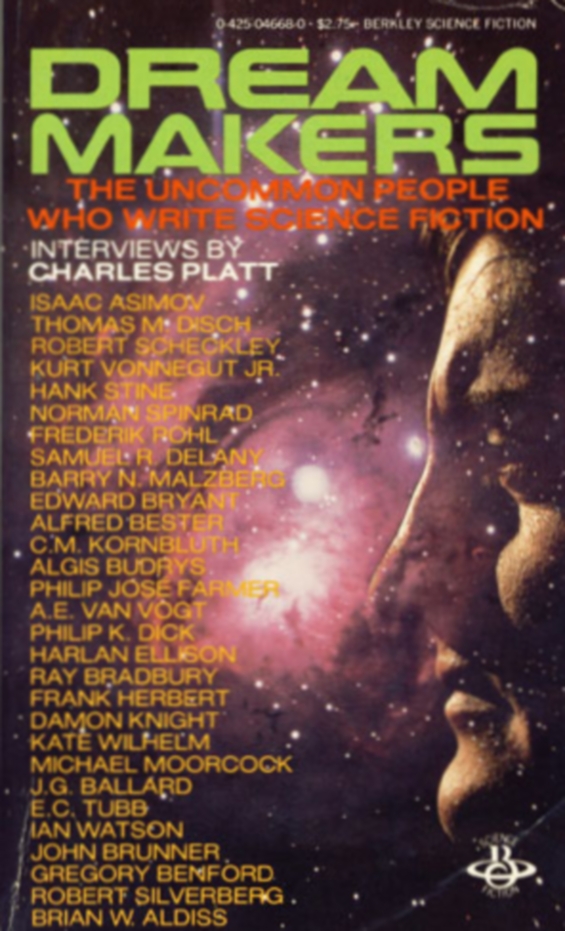
This essential interview with Philip K. Dick, conducted by Charles Platt and recorded in 1979 in Santa Ana, California, is sure to be immensely important for Dick scholars. It was recorded for Platt’s book Dream Makers: The Uncommon People Who Write Science Fiction.
Here’s the video converted back to audio, |MP3| and although it isn’t huffduffable, it is downloadable.
Notes:
-Dick was “plenty peculiar” because he read books
-he wasn’t gay despite his hanging around with gay friends
-Quakers were about the only group in the world Dick didn’t have some sort of grievance against
-Dick claims to have been kicked out of university for failing mandatory ROTC training
-Dick read The World Of Null-A by A.E. van Vogt and found in it great inspiration for his ideas about the perception of reality and reality itself
-Dick perceived his high school geometry teacher as a mechanism
–Roog and other “interior projection stories”
-Dick’s fiction can be incomprehensible if you do not accept his premise (namely that “each of us lives in a unique world.”)
–Martian Time Slip.
-When Dick went to a psychotherapist he was told he was an alcoholic (despite his being a teetotaler)
-“attack therapy”
-totalitarian communities
-why Dick writes about anti-heroes
-paranoia
-“I am inevitably persuaded by every argument that is brought to bare”
-private worlds
–The Three Stigmata Of Palmer Eldritch
–Time Out Of Joint
-artificial memories / false memories
-the influence of drugs on Dick’s writing was only in the output (using amphetamines he was completing 60 finished pages per day)
-Dick’s one real acid trip
–A Scanner Darkly
-cats and cat curiosity
-Carl Jung and “the collective unconscious”
-John Belushi (on Saturday Night Live)
-WWI and the battle of The Marne
-Sergei Eisenstein’s Alexander Nevsky
-WWI and the battle of The Marne
-Dick’s father fought in WWI (in the 5th Marines) and told Philip the stories about it
–All Quiet On The Western Front by Erich Maria Remarque
-“the god of this world is evil”
–Maze Of Death
–Ubik
–Eye In The Sky
-WWII
-something is terrible is wrong (when everyone cheers a burning man)
-empathy for animals (human and rodent)
-the killing of a rat (haunted Dick)
-Buddha
–Flow My Tears, the Policeman Said
-lambs and sheep
–Valis (his then latest novel)
-standing on the shoulders of giants
-disorder (evil) -> order (benign)
-Dick claims to have been eccentric but not insane
-“it fired my agent, it fired my publisher” (it being the spirit that was possessing him)
-Dick’s letter to the Roman Catholic Church (about the miracle that occurred)
-conspiracies
-the Cumaean Sibyl informed Dick that the American Republic is in danger of turning into the American Empire (in 1974)
-PKD on censorship (he’s against it, unless you aren’t)
-the War Of The Spanish Lowlands
-Congressman Charles E. Wiggins got letters from Dick (written while he was possessed by the spirit of the Cumaean Sibyl)
-the Nixon tape transcripts were forgeries (according to Dick’s Cumaean Sibyl)
-the Paul Williams article in Rolling Stone on Dick
-Dick’s tutelary spirit promised to return Dick to a garden upon his deathbed
–Diana
-Norman Spinrad
-“I’m in the Portuguese States Of America”
-a Chinese finger trap
–We Can Build You
-Platt: “Do you recognize the possibility that you were talking to yourself?” Dick: “Yes.”
-multiple personalities
-Archimedes principle
–Faith Of Our Fathers
-Ursula K. Le Guin thought Dick was crazy
-pre-socratic philosophy
Talked about on today’s show:
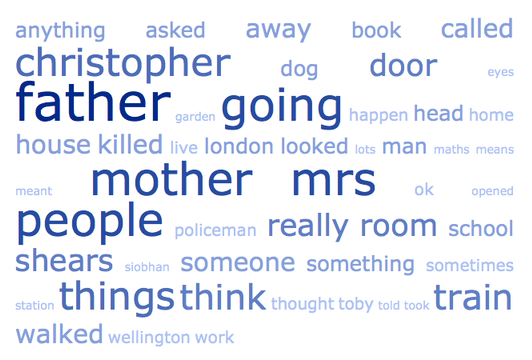
the upside-down dog cover, Jesse doesn’t like the cover, Eric finds hidden meaning in the cover, Sir Arthur Conan Doyle, is it mainstream or a mystery or YA?, Asperger’s or autism?, what is it like to be inside another person’s head?, generates tolerance, Elaine’s post on TED Talk: Elif Şafak on The Politics Of fiction, neurotypical characters, extraordinary abilities and extraordinary deficits, Constituting Christopher: Disability Theory And Mark Haddon’s by Vivienne Muller, Scott loves lists, the reader is ahead of the narrator, unreliable narrators, Flowers For Algernon by Daniel Keyes, The Speed Of Dark by Elizabeth Moon, mystery vs. family drama, Oedipus, “Sophocles not Freud”, Christopher Robin, (Winnie The Pooh), “there is something naively wonderful going on”, information vs. meaning, who did it? vs. why did it get done?, moving from what to why, Eric found the book joyful and uplifting, at the end?, abusive vs. human vs. murderous, PETA would not be pleased, “sometimes people want to be stupid”, Occam’s Razor, “now I know what box they fit into”, Cinderella, the Grimm Brothers, Jesse loves the infodumps, the asides are a highlight, where is Siobhan?, the Recorded Books audiobook version has a great narrator (Jeff Woodman), prime numbered chapters, are the pictures necessary?, Orion (the hunter in the sky), the most common word in the book is ‘and’, “he’s adding things up”, “this is a very true book”, “lies expand infinitely in all directions”, what Science Fiction and mystery look for, “sometimes people want to be stupid”, prime numbers are like life, rationalism vs. empiricism, Christopher yearns for uniqueness, right triangles, the appendix (is not in the audiobook), the brown cow joke, unreliable narrator, Conan Doyle’s beliefs, information vs. understanding, Harriet The Spy, dude don’t stab people, “a tag cloud of the novel”, Alexander And The Terrible, Horrible, No Good, Very Bad Day by Judith Viorst, Slaughterhouse Five by Kurt Vonnegut, Jr., “Repent Harlequin!”, Said The Ticktockman by Harlan Ellison, sense of wonder, Toby the rat (Algernon), Uncle Toby, The Life And Opinions Of Tristram Shandy by Laurence Sterne, the poet “does not number the streaks of the tulip 18th century”, The History of Rasselas by Samuel Johnson, Candide by Voltaire, books inside books, Have Spacesuit, Will Travel by Robert A. Heinlein, Three Men In A Boat by Jerome K. Jerome, Donald E. Westlake, Lawrence Block, Jo Walton’s Among Others, the third season of Star Trek, art making reference to itself, The Time Machine by H.G. Wells, Star Trek‘s third season, Spectre Of The Gun, “we just need the skeleton to tell the story”, “most of the protagonists in Science Fiction novels don’t read Science Fiction”, Jenny’s review of Ready Player One, The Emperor Of Mars by Allen_Steele (audio link), standing the test of time, Jesse’s extended metaphor about winnowed books washing up on beaches 100 years later, Eric is reading Uncle Tom’s Cabin by Harriet Beecher Stowe, propaganda melodrama, Super Sad True Love Story by Gary Shteyngart, Light In August by William Faulkner, the humanizing influence, comparing The Curious Incident Of The Dog In The Night-Time with The Speed Of Dark, the novel’s form shapes the novel market, Jesse thinks series hurt readers, wondering what’s going to happen next vs. what idea is being explored, the value of series, the train trip, the maths exam, “the walls are brown”, in Science Fiction metaphors are real, clarified butter and clarified mother, the word “murder”, Julie Davis’s reading of Uncle Tom’s Cabin, Carrot Juice Is Murder by Arrogant Worms, the fairy tale that is Sherlock Holmes, is the father good?, a clarified father, Jesse was tricked into reading this book, Jenny likes Margaret Atwood’s trilogy, “get ‘im Jenny”, Oryx And Crake, H.G. Wells didn’t need any sequels!, sequel is as sequel does, David Copperfield by Charles Dickens, The Godfather, the market rules, the world building is the point (for series and authors), Agatha Christie, The Tyranny Of The “Talented” Reader, The Wheel Of Time by Robert Jordan, has Neuromancer by William Gibson passed it’s prime? (tune in next week to find out), Home Is The Hunter by Henry Kuttner, Jesse looks to books to deliver on ideas (not to make time pass).
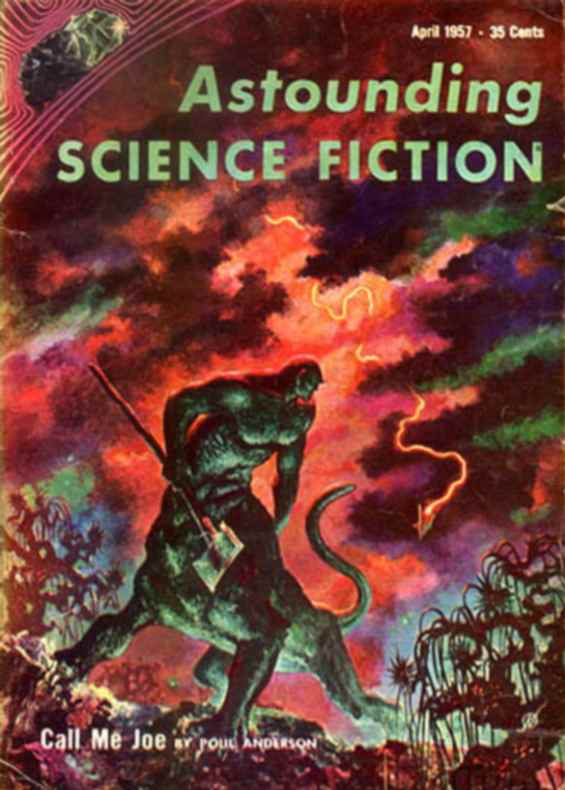
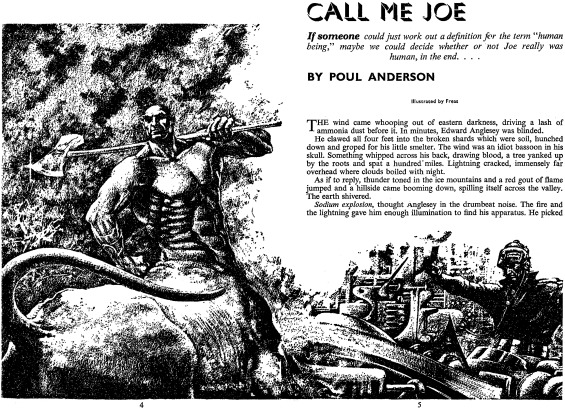
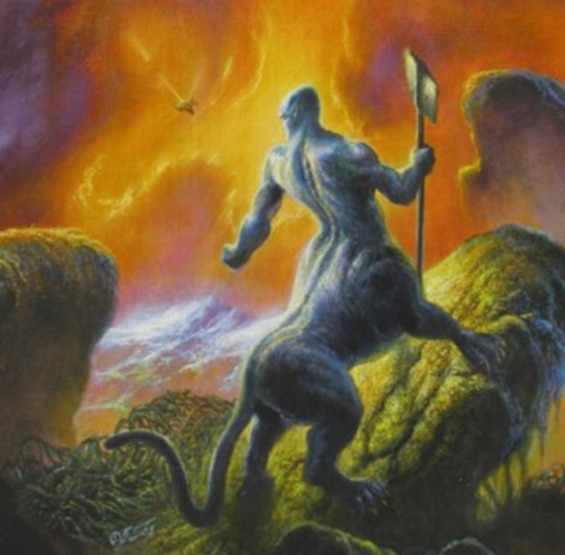
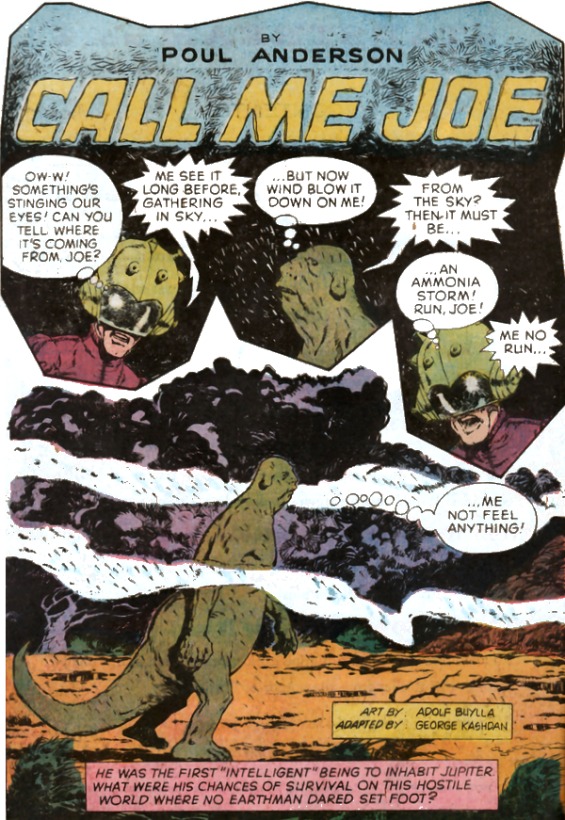
Here is one of the greatest stories of speculative imagination, a true Science Fiction yarn in the greatest sense of that tradition. Collected previously in such anthologies as Masterpieces: The Best Science Fiction Of The Twentieth Century and The Science Fiction Hall of Fame, Volume Two A (in which it is the first story). Here is Poul Anderson’s magnificent novelette Call Me Joe.
Call Me Joe
By Poul Anderson; Read by Warren James
6 Parts – Approx. 1 Hour 22 Minutes [UNABRIDGED]
Provider: Hour 25 Online
Released: March 2001
Part 1 |MP3| Part 2 |MP3| Part 3 |MP3| Part 4 |MP3| Part 5 |MP3| Part 6 |MP3| To explore Jupiter you’ll have to do more than build a pressurized suit, you’ll need a lot more. Just ask Joe. First published in the April 1957 issue of Astounding Science Fiction.
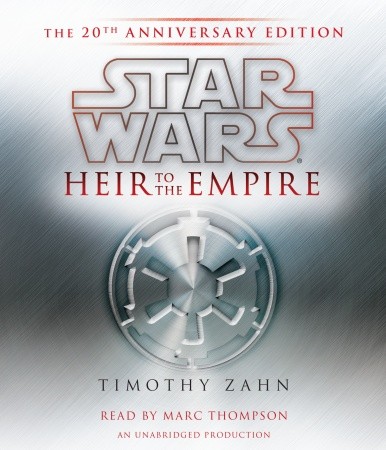
Star Wars: Heir to the Empire, 20th Anniversary Edition
By Timothy Zahn; Read by Marc Thompson
13 Hours – [UNABRIDGED]
Publisher: Random House Audio
Published: 2011
Themes: / Science Fiction / Fantasy / Star Wars / Revolution / Space Opera /
Listening to Star Wars: Heir to the Empire on unabridged audio was nostalgic for me. I read the novel in print when it came out almost 20 years ago. I liked it then, and I enjoyed this audiobook, too.
There have been many Star Wars audiobooks. Until a few years ago, the available titles were abridged, anywhere from 3 hours to 9 hours in length. One of the qualities of those short audiobooks that I liked is that they successfully incorporated the Star Wars sounds, and I LOVE the Star Wars soundscape. I expected this unabridged reading to leave those sounds behind, but I’m very happy to report that they are here. This audiobook opens with the John Williams opening score, and there are plenty of light sabers, droids, wookies, and blasters throughout. Awesome.
It’s a few years after the Battle of Endor (from Return of the Jedi), and the New Republic now has to deal with the fact that they’ve won. Many of the characters we know from the original film trilogy are here: Luke Skywalker, Princess Leia and her husband Han, Chewbacca, R2D2, C3PO, Lando Calrissian, etc. Making things difficult for our heroes is Grand Admiral Thrawn and an unstable Dark Jedi named Joruus C’Boath.
I was impressed with Marc Thompson’s skilled narration. He was able to evoke these well-known characters with his voice, from outright impression to a cadence change or other verbal tic. I always knew which character was speaking.
This novel came out well before the film versions of Episodes 1, 2, and 3, so there are blessedly no midi-chlorians here. If you like the original Star Wars films and have considered reading one of the novels, this audiobook is an excellent place to start. I enjoyed revisiting Lucas’ universe, and it’s an entertaining story.
The SFFaudio Podcast #132 – a complete and unabridged reading of Home Is The Hunter by Henry Kuttner and C.L. Moore, read by Pat Bottino. The audiobook is followed by a discussion of the story. Participants include Scott, Jesse, and Tamahome.
Talked about on today’s show:
The July 1953 issue of Galaxy Science Fiction, Henry Kuttner, C.L. Moore, the questionable authorship, Worlds Of Wonder: Exploring The Craft Of Science Fiction edited by Robert Silverberg (aka Science Fiction 101), this is a really really really Science Fiction story (soft SF), sociology, psychology, politics, Scott didn’t like it (at first), Robert Silverberg’s essay Home Is The Hunter: The Triumph Of Honest Roger Bellamy, Central Park in New York, an alien mindset, philosophy, “why do you want things?”, the accumulation of things, “the ultimate gathering of stuff”, glass vs. plastic, immortality, “the Bellamy within”, caring about posterity, “victory over self”, rejecting the premise, Hunters are trained from the age of six, television, “the most powerful man in New York”, boxing’s ranking system, being Honest Roger Bellamy is akin to being Brad Pitt, “incentives change constantly”, “not in this age of science”, populi, “a post scarcity society”, sometimes he wears a hare shirt, “women weaken knees”, fratricide, A.E. Housman’s Home Is The Sailor, Robert Louis Stevenson’s Requiem, home is death, compare it to Philip K. Dick, “plenty deep”, the loss of love (in favour of discipline and obedience), girls were turned out into the populi, ancient history, Ancient Rome, Sparta (had a Spartan lifestyle), the Agogae system, Crypteia (secret society/secret police), Helots, Frank Miller’s 300, is Roger Bellamy crazy?, why did the Spartan’s live as they did? the Peloponnese, the Persian Empire, their culture, the Protestant work ethic, “idle hands”, his self esteem is tied to the number of heads he holds, if you could have anything…, “I want a machine that can make me money”, after you collect everything you want what is left to want?, a “status” society, a trustworthy criminal in a world without material want, is Roger Bellamy happy? Has he triumphed?, happiness is “the exercise of vital powers, through lines of excellence, in a life affording them scope.”, workaholics, Steve Jobs, satisfaction vs. happiness, why the death of a young person is a tragedy, “I did not really want to kill”, brainwashing vs. culture, what makes you rich is the number of heads you hold, “I have more points than you”, “most kills badge”, turning the infinitely reproducible into scarcity (grinding), “there’s no deeper explanation”, gold farming, Cory Doctorow’s For The Win, Occupy Earth, hunting for friends on facebook, the ultimate in keeping up with the Joneses, the shrinking (but still comfortable) middle class, the great depression, the great machine is society, “we have all the high fructose corn syrup we need.”


 Adjustment Team