
The SFFaudio Podcast #369 – READALONG: The First Men In The Moon by H.G. Wells

Podcast

The SFFaudio PodcastThe SFFaudio Podcast #369 – Jesse and Juliane Kunzendorf discuss The First Men In The Moon by H.G. Wells.

Talked about on today’s show:
1900, 1901, dystopia, Looking Backward by Edward Bellamy, The Sleeper Awakes, “on the moon” vs. “in the moon”, Neil Armstrong and Buzz Aldrin, the 1964 movie, the framing story, a multinational crew, technical issues, the 2010 adaptation, putting a frame around the story, a Moon Landing fair, a grumpy old man, a kinematoscope, the “real” first Moon landing, Bedford, differences, no plants on the Moon, drugged up, introducing a woman, men acting stupid, a comedy, how Bedford and Cavor meet, passive aggressive, the three workman, almost comedic, a sinister undertone, The War Of The Worlds in reverse, a disappointing ending for the movie, a really strong ending for the book, to make it a family movie, light and amusing vs sinister and serious, coming from Elizabeth Moon’s Trading In Danger, Wells’ language, The Invisible Man, explaining some scientific principle, analogies, maybe there is something like cavorite, the detection of gravitational waves, glass, bromine solution, transparent to gravity, a dodecahedron, a glass sphere, louvered blinds of cavorite, at the bottom of an ocean of air, shooting all of the Earth’s atmosphere into space, genius, genius!, flying to the Moon, the spaceship as an eye, driving school, always look where you want to go, how eyes work, why the movies have been forgotten, the last transmission, the 2010 movie ending, symmetry, what Wells is saying with this book, the last word, ambiguity, the loneliness of humanity, lost, he’s not his identity, what Cavor is doing in those transmissions, utopia/dystopia, wrestling with our purpose as human beings on the surface of the Earth, one definition of work: activity on or near the Earth’s surface, astronauts and miners, the great mind, hive mind, so much Science Fiction afterwards, how life works, ants, on the topic of war, Bedford is the classical monster character, The Country Of The Blind, crystallized in the 1964 movie, hiding from his debts, Blake, once you start suspecting this guy, some of that story is true, putting a good spin on it, subtlety, gold chains, the Selenite’s head broke just like an eggshell, turning the moon into another colony, the whole history of humanity, fighting over useless things, a mirror in front of humanity, the Native Americans, scientific naivety, are we gonna reform our ways?, WWI, giving ultimatums, honor, respect to warriors, (in vino veritas), the surplus population, later SF, Brave New World by Aldous Huxley, the latter half of this book, the brain, the dictionary, the one who likes to draw, one who is really good at metaphor, off in lala land thinking lala thoughts, the communication specialist, the one who knows all the stuff, the illustrations, the alphas the betas the gammas the deltas, the three worker specialists, the joiner, the earth worker, the metal worker, the name Cavor – caver?, it sounds good, caver vs. cavor, the Lord Bedford, claiming the Moon for the Queen, the BBC audio drama, a very serious book, the Mooncalves, the word “mooncalf”, “abortive fetus of a cow or other farm animal”, all sorts of resonances, a scene that makes vegetarians, the reading material that Bedord brings: TidBits (magazine), selling fishknives, Cavor brings the complete works of William Shakespeare, another connection to Brave New World, The Tempest, a story of colonialism, the only native occupant is Caliban, he’s funny and wise in his untutored way, one of the insults that Prospero throws at , the title of Brave New World, an ironic usage, the one slip-up that Wells mad that Huxley picks-up, Bedford’s play, it would work as a play, act 1, act 2, act 3, the flight as an interlude, trying to find the sphere again, two hours left to go?, another interlude in space, an epilogue, how you would stage it, the gold that he brings back from the Moon, living in Italy, published in The Strand, very meta, you can really see the staging, Cosmopolitan, November 1900 first then The Strand, December 1900, serialized as he wrote it, the end of the Cosmopolitan serialization, an elaborate suicide, a dream, Moon gold, a most extraordinary communication, alive in the Moon, is he hoaxing me here?, The War Of The World radio drama, how the spaceship disappears, the boy who disappears into space, Bedford In Infinite Space, at least 10 days, something weird about time, Einsteinian relativity, time works differently when you travel, criticism of this book, C.S. Lewis’ objections, one world government, new world order, a fascistic totalitarian society, lets look at this, other writers do their own version, a sign of a good book, taking the essence, other interpretations, audio drama as a soporific, two dreams, dreaming the ending of The First Men In The Moon, that’s exactly what happened!, my unconscious or semi-consciousness heard it, such a great ending, left for dead, did Bedford feel guilty for leaving Cavor on the Moon?, not the kind of person to have self-doubts, not very charitable, how it actually went, the best possible spin, this is just the way he is as a human, humans are terrible, his nature, Jesse’s secret, The War Of The Worlds, one of Juliane’s first SF books, the illustrations, reading it with the old serialized magazines, chapter endings, what a great end, did Wells have an influence on the illustrations, how adaptations will always take away the plants on the Moon, The Lost World by Sir Arthur Conan Doyle, seeing dinosaurs with skin, a resultant mistake, dinosaurs in popular culture arent shown with feathers, Jurassic Park and Jurassic World, a false picture of the reality, we’ll never be able to get passed this point, daylight savings time, were stuck unable to shift out of a system that doesn’t work, we’re stuck, were stuck with war, when Bedford is completely alone he loses his particular niche, if you zoom out, we’re nothing, what are we that we have to fight each other, we’re all stuck here with gravity, why those interludes are so important to the book.

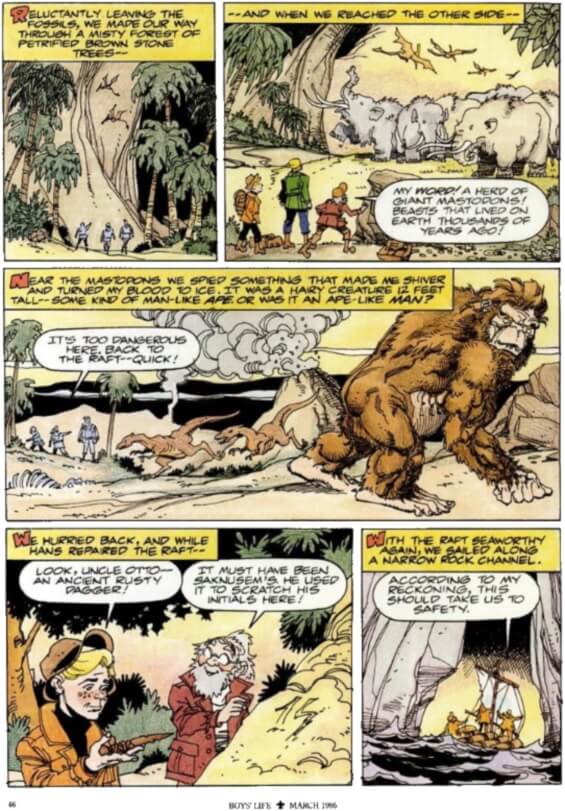
Marvel Classics - The First Men In The Moon by H.G. Wells

from Charlton Comics - Ghost Manor, Issue 23, 1975

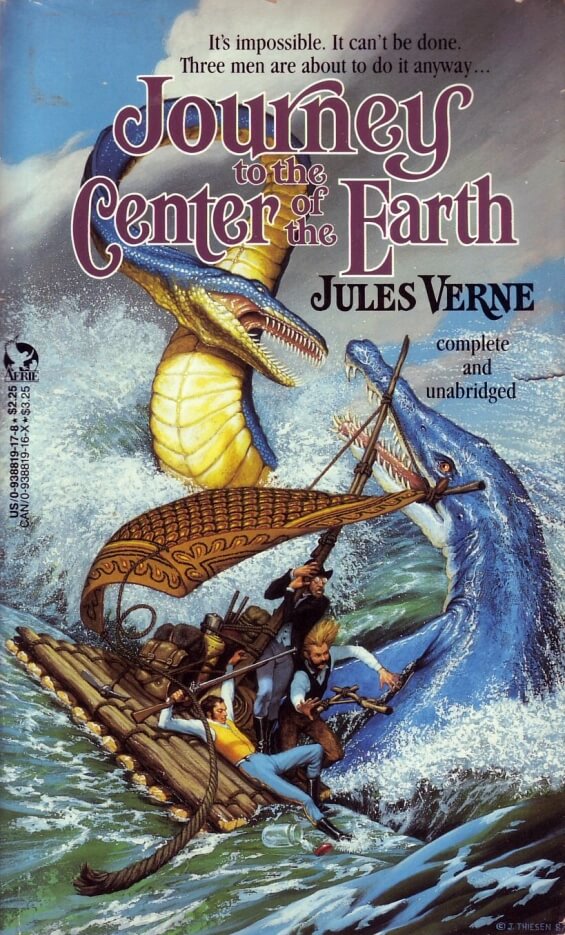
The First Men In The Moon by H.G. Wells - art by Bob Eggleton

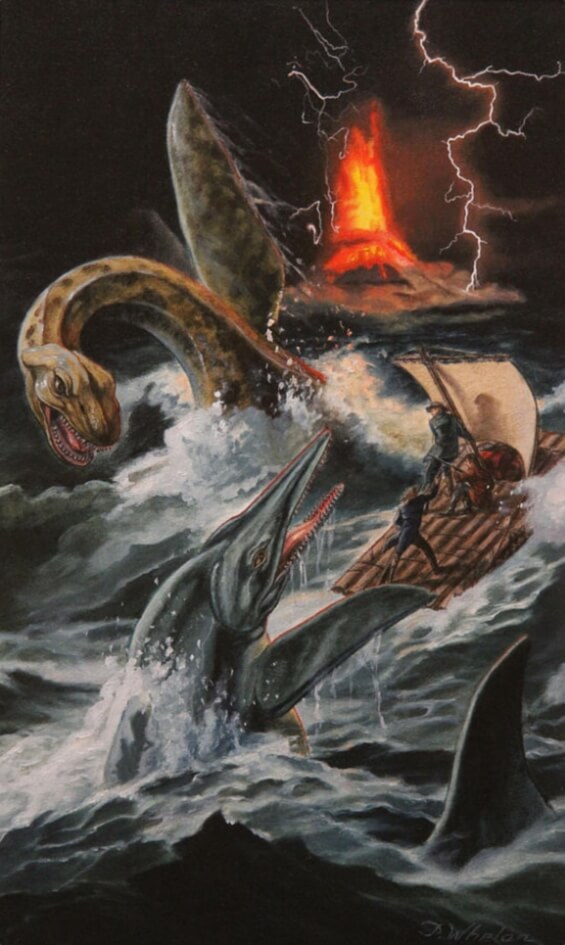
The First Men In The Moon by H.G. Wells - The Mooncalves - art by Bob Eggleton

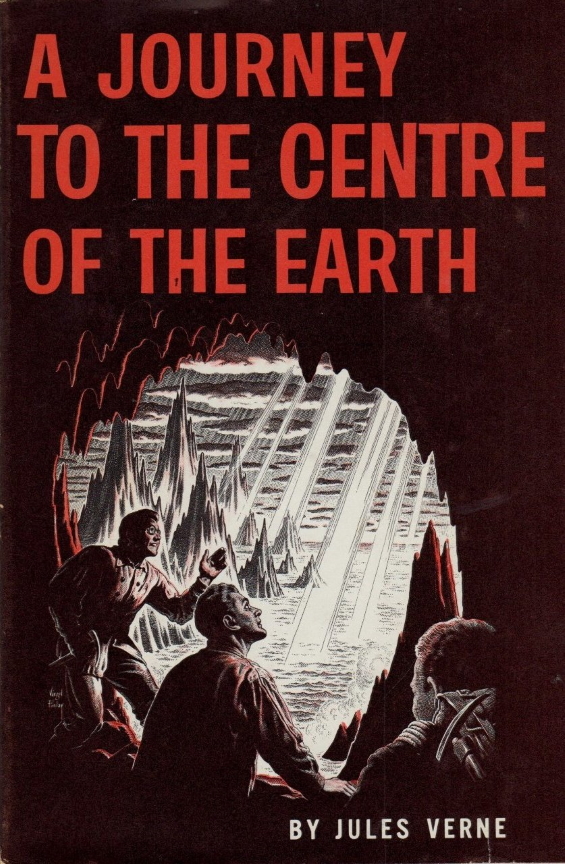
The First Men In The Moon by H.G. Wells - The Selenites illustrated by Bob Eggleton

Posted by Jesse Willis

The SFFaudio Podcast #368 – AUDIOBOOK: The First Men In The Moon by H.G. Wells

Podcast
H.G. Wells' The First Men In The Moon
The SFFaudio PodcastThe SFFaudio Podcast #368 – The First Men In The Moon by H.G. Wells, read by Mark F. Smith.

This UNABRIDGED AUDIOBOOK (7 hours 50 minutes) comes to us courtesy of LibriVox.org. The First Men In The Moon was first serialized in Cosmopolitan, November 1900 to April 1901.

The next SFFaudio Podcast will feature our discussion of it!

Cosmopolitan Magazine (Nov., 1900 - June, 1901). H. G. Wells' "The First Men in the Moon."  illustrations by E. Hering

Cosmopolitan Magazine (Nov., 1900 - June, 1901). H. G. Wells' "The First Men in the Moon."  illustrations by E. Hering

Cosmopolitan Magazine (Nov., 1900 - June, 1901). H. G. Wells' "The First Men in the Moon."  illustrations by E. Hering

Cosmopolitan Magazine (Nov., 1900 - June, 1901). H. G. Wells' "The First Men in the Moon."  illustrations by E. Hering

Cosmopolitan Magazine (Nov., 1900 - June, 1901). H. G. Wells' "The First Men in the Moon."  illustrations by E. Hering

Cosmopolitan Magazine (Nov., 1900 - June, 1901). H. G. Wells' "The First Men in the Moon."  illustrations by E. Hering

Cosmopolitan Magazine (Nov., 1900 - June, 1901). H. G. Wells' "The First Men in the Moon."  illustrations by E. Hering

Cosmopolitan Magazine (Nov., 1900 - June, 1901). H. G. Wells' "The First Men in the Moon."  illustrations by E. Hering

Cosmopolitan Magazine (Nov., 1900 - June, 1901). H. G. Wells' "The First Men in the Moon."  illustrations by E. Hering

Cosmopolitan Magazine (Nov., 1900 - June, 1901). H. G. Wells' "The First Men in the Moon."  illustrations by E. Hering

Cosmopolitan Magazine (Nov., 1900 - June, 1901). H. G. Wells' "The First Men in the Moon."  illustrations by E. Hering

Cosmopolitan Magazine (Nov., 1900 - June, 1901). H. G. Wells' "The First Men in the Moon."  illustrations by E. Hering

Cosmopolitan Magazine (Nov., 1900 - June, 1901). H. G. Wells' "The First Men in the Moon."  illustrations by E. Hering

Cosmopolitan Magazine (Nov., 1900 - June, 1901). H. G. Wells' "The First Men in the Moon."  illustrations by E. Hering

Cosmopolitan Magazine (Nov., 1900 - June, 1901). H. G. Wells' "The First Men in the Moon."  illustrations by E. Hering

Cosmopolitan Magazine (Nov., 1900 - June, 1901). H. G. Wells' "The First Men in the Moon."  illustrations by E. Hering

Cosmopolitan Magazine (Nov., 1900 - June, 1901). H. G. Wells' "The First Men in the Moon."  illustrations by E. Hering

Cosmopolitan Magazine (Nov., 1900 - June, 1901). H. G. Wells' "The First Men in the Moon."  illustrations by E. Hering

Cosmopolitan Magazine (Nov., 1900 - June, 1901). H. G. Wells' "The First Men in the Moon."  illustrations by E. Hering

Cosmopolitan Magazine (Nov., 1900 - June, 1901). H. G. Wells' "The First Men in the Moon."  illustrations by E. Hering

Cosmopolitan Magazine (Nov., 1900 - June, 1901). H. G. Wells' "The First Men in the Moon."  illustrations by E. Hering

Posted by Jesse Willis
The SFFaudio Podcast #367 – READALONG: The Prince And the Pauper by Mark Twain

Podcast

The SFFaudio PodcastThe SFFaudio Podcast #367 – Jesse, Julie Davis, and Maissa talk about The Prince And the Pauper by Mark Twain.

Talked about on today’s show:
1881, 1882, Julie’s Mark Twain obsession, realistic fiction, children’s literature, reading with teenagers, old books teach you their vocabulary, quasi-historical fiction, Tom Sawyer, something classier, Sir Walter Scott, like Dickens-lite, sooo Dickens!, Huckleberry Finn, young people of all ages, anything public domain was marketed for children, appealing to children, sympathetic characters, lacking wry cynicism, less biting, he’s an anglophile, making points, how do we treat people, trading places, The Pickwick Papers, Nicholas Nickleby, Bleak House, the progress of an author, everybody knows the story, enters the popular culture like a fable, a meta-issue, where’s the science fiction and the fantasy?, Jesse’s thinking, The Prisoner Of Zenda, Ruritania, inspired by, precursors, an immediate classic, that Ringo (1974) movie, Carrie Fisher, that Monty Python thing, so much fun, and his talentless half brother, Vincent Price, John Ritter, chock-full of fun, The Man In The Iron Mask by Alexandre Dumas, Double Star by Robert A. Heinlein, this phenomenon, replacing the king, Citizen Of The Galaxy, the influence of Twain is in SF, Three Men In A Boat by Jerome K. Jerome, Great Expectations, David Copperfield, the Wishbone adaptation, way down into the culture, Dave (with Kevin Kline and Sigourney Weaver), Moon Over Parador with Richard Dreyfuss, in that continuum, A Connecticut Yankee In King Arthur’s Court, research and divergence, footnotes, Edward, Lady Jane Gray, Star Trek: Mirror, Mirror, parrallel worlds, Freaky Friday, so many avenues, Big with Tom Hanks, swapped identity, genre defining, what it says on the tin, parody versions, The Monkees, 25 minutes of ridiculous, The Monkees a fake version of The Beatles, Twain’s Joan Of Arc book, incredibly well plotted, dreaming the life of a king, Tom is the king of Offal Court, crazy, King of the Gamecocks and King Foofoo, Miles Hendon’s story is parallel to Prince Edward’s plot, it goes really deep, Tom’s two sisters, Nan and Bess, Mary and Elizabeth, everybody gets to be king or queen for a day, queen for nine days, Mary’s short reign, Elizabeth’s long reign, a lot of pain and torture and unjust punishment and superstition, the psychological irony, every king should live by the laws of his subjects, the Blue Laws, pardonings, wise judgement, chapter 22/23, not a joke book, situational humour, doing the Robin Hood thing, the Ruffler, a beggar who refuses to beg, threatening the tinker with a soldering iron, a thief who won’t steal, putting a clime on him, a cant term for an ulcer, a slatternly woman and a diseased baby on the side of the road, an here’s the recipe, the mother daughter witches, witchcraft, the wisdom of Solomon from the mouths of babes, foolishly wise, native common sense, hath it always this dread effect?, a parallel scene, when Edward is in gaol as Tom, the crime of being Baptists, who burned?, burned at the stake, Tom had watched a procession, crisp flesh, some gruesome stuff, not a satire, straightforward historical (romanticized), Errol Flynn as Miles Hendon in the 1937 movie, the Oliver Reed movie adaptation (1977), tainted by Ringo, too heavy, Ernest Borgnine, Rachel Welch, interchangeable beauty, you monster!, he’s Errol Flynn-ing it all over the place, a heavy focus on the Miles story, Charlton Heston as Henry VIII, he was every historical male figure, all the time travelers form the 1970s movies, Miles’ brother is sent to the American colonies and becomes a politician, making it more satirical, the 1977 adaptation is very faithful to the novel, comedy, Edith, the children’s hospital, when Twain visited Europe he bought a lot of books, after his ordeal, teachings out of books, The Merchant Of Venice, reading the classics, I’ll make a classic tale, as if it has been with us forever, absolutely historical fiction and yet…, a Disney version, a timeless story, remember the humanity of the people around us, applying your humanity, anchor in reality, the kids, forgoing the crazy laws, I’m going to honor children always, meta-stuff, a short reign, the romantic relationship, she spurns Tom and marries a rich old Earl, Romeo And Juliet, twin brother from another mother, Ivanhoe, close enough, about as far away from SFF as Jesse will go, Moby Dick, Wrath Of Khan, William Shatner is the white whale, Patrick Stewart, the whipping boy, “to cheapen miracles by wasteful repetition”, he’s going places, what do you do with your time?, the Prince’s eyes flashed, speak on, we wade and swim in the canals, reality was so dreary, be careful what you wish for, the grass is always greener, delicious irony, adults child relationships, Mark Twain’s relationship with Dorothy Quick, on a trans-Atlantic crossing, a Disney movie about their relationship, Dorothy Quick was a Weird Tales poet, a New York Times obituary for March 16th, 1962:

DOROTHY QUICK, POET AND AUTHOR
Mystery Writer Dies – Was Friend of Mark Twain

Mrs. Dorothy Quick Mayer of 880 Park Avenue and East Hampton, L.I., a writer who treasured a childhood friendship with Mark Twain, died yesterday at her home here after a long illness.

Miss Quick was a girl of 11 in 1907 when she met the famous author on an Atlantic crossing. She was returning to Plainfield, N.J., from Europe with her parents, the late Mr. and Mrs. Henry Quick.

Recognizing Twain (Samuel L. Clemens) by his wavy hair and white suit, she walked around and around the deck, passing very slowly by his chair each time, until he finally came over and introduced himself.

“It was the beginning of a friendship that was to last until the very day of his death,” [1910] she recalled in 1954.

After the voyage she received a telegram from Twain asking whether she would prefer as a birthday present “one elephant or 10,000 monkeys.” She replied that she would prefer his books – which he sent her, along with a tiny white elephant.

Her memories of Mark Twain were published last year by the University of Oklahoma Press under the title “Enchantment.”

Miss Quick was married in 1925 to John Adams Mayer, who died in 1940. She continued to write under her maiden name. Her collected poems were published by the University Press, Washington. She also wrote mystery stories and contributed a weekly column for many years to newspapers in East Hampton and Riverhead, L.I.

Since 1960 Miss Quick had been honorary president of the Mark Twain Association of New York. Her other literary memberships included the P.E.N. Club, Pen and Brush, the National League of American Penwomen, the Brooklyn Poetry Circle, Women Poets of New York, and the Society of Composers, Artists and Authors.

over-sexualizing everything, Jack London and H.G. Wells, Nathaniel Hawthorne and Herman Melville, Wilkie Collins and Charles Dickens, Edgar Allan Poe and Charles Dickens, a persuasive fan letter, Poe and Dickens had a private lunch, my pet raven, the end of Barnaby Rudge, a can of leaded paint, Poe had been struggling with a particular poem: The Raven, Dickens is the epitome of success, his reviews, there’s a reason why, put that in, worth a reread!

Mark Twain and Dorothy Quick

Posted by Jesse Willis

The SFFaudio Podcast #366 – AUDIOBOOK: The Prince And The Pauper by Mark Twain

Podcast

The Prince And The Pauper by Mark Twain

The SFFaudio PodcastThe SFFaudio Podcast #366 – The Prince And The Pauper by Mark Twain, read by John Greenman.

This UNABRIDGED AUDIOBOOK (6 hours 50 minutes) comes to us courtesy of LibriVox.org. The Prince And The Pauper was first published in 1881.

The next SFFaudio Podcast will feature our discussion of it!

The Prince And The Pauper by Mark Twain - illustration by Charles Beck

The Prince And The Pauper by Mark Twain - illustration by Charles Beck

The Prince And The Pauper by Mark Twain - illustration by Charles Beck

The Prince And The Pauper by Mark Twain - illustration by Charles Beck

The Prince And The Pauper by Mark Twain - illustration by Charles Beck

The Prince And The Pauper by Mark Twain - illustration by Charles Beck

The Prince And The Pauper by Mark Twain - illustration by Charles Beck

The Prince And The Pauper by Mark Twain - illustration by Charles Beck

The Prince And The Pauper by Mark Twain - illustration by Charles Beck

The Prince And The Pauper by Mark Twain - illustration by Charles Beck

Posted by Jesse Willis
The SFFaudio Podcast #365 – AUDIOBOOK/READALONG: The Dunwich Horror by H.P. Lovecraft

Podcast

The SFFaudio PodcastThe SFFaudio Podcast #365 – Jesse, Bryan Alexander, and Mr Jim Moon talk about The Dunwich Horror by H.P. Lovecraft.

Talked about on today’s show:
Weird Tales, April 1929, set in 1928, the Wikipedia entry, “one of the few tales Lovecraft wrote wherein the heroes successfully defeat the antagonistic entity or monster of the story”, the heroes were a nice family who kept to themselves, hounding the downtrodden, the story structure, the lily white mom, a virgin birth to an extraordinary son, an invisible brother, the holy trinity, it’s Jerusalem all over again, another fallen world, Dostoevsky’s The Grand Inquisitor, she’s sooo virginal, towards racism, non-human entities, deeply inset, the whole of Dunwich is inbred, more sanctified, extreme exogamy, Wilbur Whateley’s literary model, Frankenstein’s monster, yellow skin, lustrous black hair, hounded by the community, nudism is not a sin on your own land, they’re non-Christians, persecution, one of the great problems of Frankenstein, the creation of new life in a socially horrible way, for lack of a better appendage, some of the things Wizard Whateley says are troubling, Wilbur’s strangeness, reserve books, deny all access to this kid, the Call Of Cthulhu RPG is modeled on this story, Yog-Sothoth’s appearances in other stories, Through The Gates Of The Silver Key by E. Hoffman Price and H.P. Lovecraft, the opener of the way, Randolph Carter, Wilbur’s diary, the clearing off of the Earth, a lonely teenager, contempt for his mom, her albinism, somewhat deformed, gestures and hints, her unnamed son, Wilbur is dark, another step down the albinism route, The Invisible Man by H.G. Wells, the Alan Moore and Jacen Burrows Providence adaptation (issue 4), Robert Black, the Wilbur stand-in is Willard, the audio drama, family photos, the madwoman in the attic (the mad brother in the attic), dad’s always feeding him, he’s just a big kid, wonderfully atmospheric, he’s a horror writer, the normal way to read this story, weird fiction, The Colour Out Of Space, science fiction, Providence, Rhode Island, Athol, dread and horror, straight-up horror, Lovecraft and race, Lovecraft and class, poor white people are monstrous and horrific, inbred and weak, a fun Malcolm Gladwell piece, To Kill A Mockingbird demonized poor white folk, Trump-bashing, Oswald Spengler’s The Decline Of The West, have we peaked?, patronizing the poor, this is shocking, Theodore Dreiser, Jacob Reese’s How The Other Half Lives, Dracula by Bram Stoker, Degeneration: Fear Of The White Race Declining, war, we’ll all be Teddy Roosevelt and Baden-Powell, WWI, prohibition, the first U.S. propaganda committee, the end of The Shadow Over Innsmouth, rural threat, The Terrible Old Man, a cultural flip-flop, the rural folk as the other, the tipping point, urban migration, canary women in munition factories, the yeoman past, the gold doubloons, where did that money come from?, practicing alchemy?, Keanu Reeves, a ghurka knife, Dracula’s money belt, poor Wilbur, dogs wanna eat him!, dogs are mean, barking at things we cannot see, the dog as index of character, good people feed you bad people eat you, unlike the whippoorwills?, The Great God Pan by Arthur Machen, Wilbur is a little goaty, concepts and styles, the gods having union with humans and birthing the monstrous, a neuroscientist, a gibbering wreck, a trail of destruction, literal devolution, absolute corruption in human form, Helen Vaughn, a mystery story, disturbing hints, an enturely different story with entirely different tropes, a classic bad seed story, a giant monster on the loose story, a New England kaiju story, the Moodus Noises, hollow earth stories, lost race stories, Edward Bulwer-Lytton’s The Coming Race, ravines of problematic depth, Lovecraft casts a spell upon the reader, entranced by the language, landscape description, Elmore Leonard, stage-setting, the river as a serpent, oddly suggestive, feeling uneasy, the weird tale aspect, a little too round and a little too even, pulling down all the stones on all the hilltops, At The Mountains Of Madness, Dreams Of Animals, other families, the etymology of panic, somebody’s panic face, red scares, yellow perils, bank panics, the god Pan,

The word derives from antiquity and is a tribute to the ancient God, Pan. One of the many gods in the mythology of ancient Greece: Pan was the god of shepherds and of woods and pastures. The Greeks believed that he often wandered peacefully through the woods, playing a pipe, but when accidentally awakened from his noontime nap he could give a great shout that would cause flocks to stampede. From this aspect of Pan’s nature Greek authors derived the word panikon, “sudden fear,” the ultimate source of the English word: “panic”.

multiples of Pan:

Pan could be multiplied into a swarm of Pans, and even be given individual names, as in Nonnus’ Dionysiaca, where the god Pan had twelve sons that helped Dionysus in his war against the Indians.

a scapegoat, panic is the sense that everything around you is alive, 1806, a beautiful valley, a few cows, not interested in the modern economy, industry “didn’t take”, party line telephones, gossip, no phone at the Whateley farm, are they all practice hidden religions, The Horror Of The Burying Ground, a humor piece, an experimental embalmer, Herbert West: Embalmer, they’re alive!, everyone goes to their graves alive, gothic horror, comedy, set in Vermont?, Will Murray, Lovecraft’s revisions, tongue in cheek, blackly comic self-parody (almost), The Horror Of The Museum, Hazel Heald, in the 19th century everyone was afraid of premature burial, Edgar Allan Poe, a New York City echo, the different adaptations, the 2009 SciFi channel version, Jeffrey Combs, Dean Stockwell (Dr Yueh), the 1970 movie adaptation, a satanist movie, a lot of the story is in it, an anti-hero, Professor Armitage, Dennis Wheatley, cosmic horror, a beholder from Dungeons & Dragons gone berserk, a staff with a thunderbird totem, don’t go near the hills on certain nights of the year, a resentment, the degenerate side of the family, the opening credits, the love interest, the natural order, the big interpolation, an abomination, like Philip K. Dick, a source for films (mostly bad), The Resurrected, Blade Runner, Total Recall: 2070, Minority Report TV series, The Man In The High Castle TV series, the problem is there’s no real hope…, exactly the opposite of Dick’s idea, what that means for us, the medium shift (from book to movie), The Stone Tape (the BBC radio drama adaptation), checking out a book as a plot point, the Suspense radio drama adaptation of The Dunwich Horror, OTR, The War Of The Worlds, a Lovecraftian flavour, a sense of weirdness, using the whippoorwills, the Dark Adventure Radio Theatre adaptation, Wayne June is Mr Creeps, The Great God Pan, Out Of The Earth, The Thing In The Woods by Margery Williams, Ooze, an episode of Lovejoy, Ian McShane, regular uncursed artifacts, Deadwood, Dunwich On Sea (or In Sea?), a Swinburne poem, Stone Angel, The Ancient Track, Lovecraft’s description of other books in poems, a restatement of the Whateley family, Jesse reads a poem, Mr Jim Moon quotes from Zaman’s Hill, Lovecraft Country, Massachusetts and Vermont, very rural, Wizard Alexander, so articulate, glib stereotype, it would be childish to say it was indescribable…, a master of horror with a deep seated love of humour.

The Dunwich Horror by H.P. Lovecraft - illustrated by Hugh Rankin

The Dunwich Horror - illustration by Rowena Morrill

BART - The Dunwich Horror by H.P. Lovecraft

Lancer Books - The Dunwich Horror by H.P. Lovecraft

Posted by Jesse Willis
The SFFaudio Podcast #364 -AUDIOBOOK/READALONG: The Lottery In Babylon by Jorge Luis Borges

Podcast

The SFFaudio PodcastThe SFFaudio Podcast #364 – Jesse, Bryan Alexander, Mr Jim Moon, and Paul Weimer talk about The Lottery In Babylon by Jorge Luis Borges

Talked about on today’s show:
aka The Babylonian Lottery, 1941, 1962, The Library Of Babel, baffling mystifying, blurring and seeping, The Garden Of Forking Paths, the framing story, the context, he’s leaving, in this “statement”, missing fingers, a rented cloak, a tattoo of the second letter of the Hebrew alphabet, fleeing the city, Samuel Taylor Coleridge’s Rime Of The Ancient Mariner meets Forrest Gump, abomination and criminal, the sacred disorder of our lives, an affection for the company, Solar Lottery is a similar Philip K. Dick novel, company vs. corporation, like everyone in Babylonia…, that’s a lot of proconsuls, metaphorical, metonymies for the high and the low, Dark City, those Borgesian moments, deliberate inaccuracies, the hand changed hands, Borgesian translations, The Pit And The Pendulum, a story without hop with Hope as the title, not having firm ground on any detail solidifies the Borgesian effect, Labyrinths, the company’s communications, a mask factory, trash and kipple, Thomas Ligotti, one of the heresies, lottery is a myth we tell ourselves to make sense of chance, The Red Tower, an authentic madman, sacrifices, priest or sorcerer, Kabbalist magic, the mysterious assassination, where’s A?, he’s B, he turned into a god!, deified, a god of Chance, Heliogabalus, Martian Time-Slip by Philip K. Dick, an autistic boy, they’re reading the same books, omnivorous readers, reincarnation, thinking through reincarnation, Jesse’s weird theory, I’m Napoleon, more than just wish-fulfillment, what if we are living in a universe in which there is only one soul, the Platonic references, no need to follow the laws of time, John Rawls’ the Veil Of Ignorance, it’s a lottery in essence, a rich European healthy body, what we would want for other people is what we would want for ourselves, justice, if we take it as literally true…, we can’t see all of his body, waiting for Charon to show up in his boat, a perfect story for the middle of the twentieth century, the least inequality, the most inappropriate story for the twenty-first century, a radical document, when is this taking place, after Elagabalus but before the fall of Babylon?, the barbers, the mythology, to omit -> to interpolate -> to change, making a curved line between points, this is the symbolic scheme, infinite draws, all that is necessary is that time is infinitely divisible, one of those Xeno stories…, an infinitely divisible strawberry pie?, something tricky going on here, the company’s origins as a religious explanation for fate, as noted on the Wikipedia entry, Qaphqa (Kafka), The Castle, a sacred latrine -> it’s a holy shit -> it’s a pisser, mask factories, the messages come from the kipple, the sacred lions, scribbles on the ruined walls of the mask factory, thicker layers, the tease of Plato, we’re still in the cave, the Allegory Of The Cave, if it’s not a cabal… (kabbal?), it must be the lottery, were all a part of the secret cabal, the Paranoia RPG, trust the computer, trust the company, Jim’s punishment and Jesse’s reward, a spy LARP, the intertwined nature, I have throttled the sacred bulls, declared invisible for a year, based on a Robert Silverberg story, no matter what happens he gets executed, a universal solvent, application to the modern day scientific view, random chains of cause and effect, science as a conspiracy theory, god playing dice, medium sized objects are subject to physical laws, the ghosts and shadows of quantum mechanics, an expert in Anglo Saxon, studying Norwegian history as one does, some hidden premise, reminiscent of Olaf Stapledon, was To See The Invisible Man by Robert Silverberg inspired by this story?, like Lovecraft family Borges’ family had a huge library, of these executors…, enriched torture, a Swiftian character, the last sentence as a thesis statement, what’s the worse horror, the lottery as a consolation religion, think about that in 1941.

The Babylonian Lottery by Jorge Luis Borges

Posted by Jesse Willis