
The SFFaudio Podcast #137 – READALONG: A Princess Of Mars by Edgar Rice Burroughs

Podcast

The SFFaudio PodcastThe SFFaudio Podcast #137 – Scott, Jesse, Tamahome and David Stifel talk about the audiobook of A Princess Of Mars by Edgar Rice Burroughs.

Talked about on today’s show:
A Princess Of Mars, the martian novels, Edgar Rice Burroughs’ first novel was originally titled Under The Moons Of Mars, “I can write rot as bad as this”, WWI, Orville and Wilbur Wright, Normal Bean vs. Norman Bean vs. normal brain, All-Story, Gods Of Mars, Tarzan, Pellucidar, H.G. Wells, Earnest Hemingway, the science with fantastic elements, Mastermind Of Mars, organ (and brain) transplants, radium rifles with radium bullets, zeppelins, the Martian navy, David has been acting since he was 13 years old, the 1960s resurgence of Burroughs books, Ballantine Books vs. Ace Books (in a war for the drug store paperback racks), the authorized vs. unauthorized editions of Burroughs and J.R.R. Tolkien books, The Lost Continent, Tarzan At The Earth’s Core, Del-Rey Books, Tarzan Of The Apes, getting into narration, Irwin Porges, a rich rhythm of language, “Sator Throg is a personal friend of mine”, Tars Tarkas is David’s impression of James Earl Jones doing Darth Vader, Sola, “rescue the girl, escape from capture, become a gladiator and save the planet”, A Princess Of Mars begins as a western, Zane Grey, Arizona, Idaho, it is a kind of a western on Mars, “all of his slaves worshiped the ground he walked on”, good to his slaves and good to his animals, Burroughs loved animals (especially horses), themes of A Princess Of Mars include a love of animals and nature (and nudism), ERBZine website, the James Killian Spratt edition of A Princess Of Mars (puts the nudity up front and center), modesty vs. showmanship, everybody is nude on Barsoom, Teddy Roosevelt, the 19th century physical culture movement, Conan and Robert E. Howard, Edgar Rice Burroughs, the oddness of an author who disdains writing, “back to nature and forward”, Flavor Flav or Max von Sydow, repulsor rays, Son Of Frankenstein, a telescope on Mars is looking at Earth, Percival Lowell, Lieutenant Gullivar Jones: His Vacation, the dying civilization that we see, The War Of The Worlds by H.G. Wells, The Martian Chronicles by Ray Bradbury, Philip K. Dick, “esoteric metaphysical spiritualism”, telepathy, John W. Campbell, lying for honorable reasons, the inconsistencies of lies and deceit in a world with telepathy, How John Carter Got To Mars (is kind of like the Mormon idea of the afterlife), astral projection, Houdini, Thuvia, Maid Of Mars, “the thought was made flesh”, Burroughs was a religious man, the unexplained preservation of Carter’s dead body, Bram Stoker, H.P. Lovecraft, “this is a fun book”, “like a Buck Rogers serial”, the serialization, cliffhangers, Swords Or Mars, Synthetic Men Of Mars, “Deja Thoris has laid an egg”, the curiously oviparous martians, the disney John Carter movie, Princess Of Mars, “Tarzan in a vest, does that work for you”, an evil Russian in cahoots with a French countess, “he was a splendid specimen of the white race”, Gone With The Wind, Greystoke: The Legend of Tarzan, Lord of the Apes, The Lord Of The Rings (movies), the Dynamite Entertainment Warlord Of Mars cover (#5 is done in the style of Norman Rockwell), Marvels Comics, Frazetta, HBO, a stage adaptation of A Princess Of Mars, a ballet of Spartacus (!), Gustav Holst’s Mars, Bringer Of War, Flash Gordon, Franz Liszt, Bronson Pinchot was interviewed by Grover Gardner (Blackstone Audio), the process of narrating an audiobook, The Godfather, Deja Thoris doesn’t get much screen time, Sola is a good character, Thuvia gets more of a leading role in Thuvia, Maid Of Mars, arbitrary customs that extend the narrative, S.M. Stirling’s In The Courts Of The Crimson Kings, Burroughs’ Venus books, all planets are occupied by people (except Mercury).
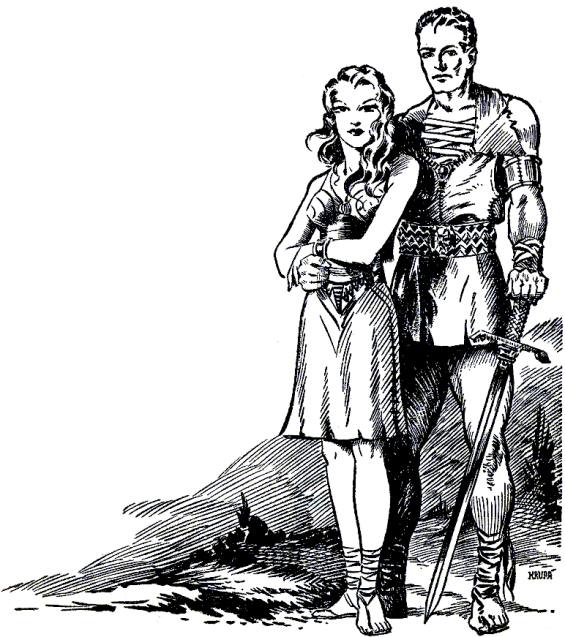
John Carter of Mars and Deja Thoris Princess of Helium (fully clothed)
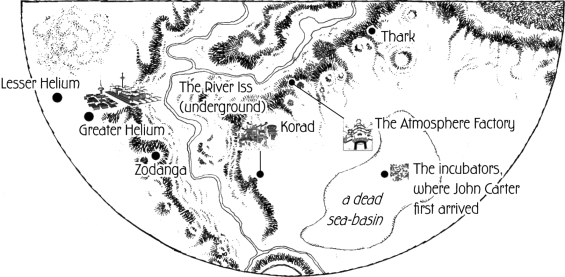
Map Of Barsoom from Dynamite Entertainment's Warlord Of Mars (illustrating the events of A Princess Of Mars)
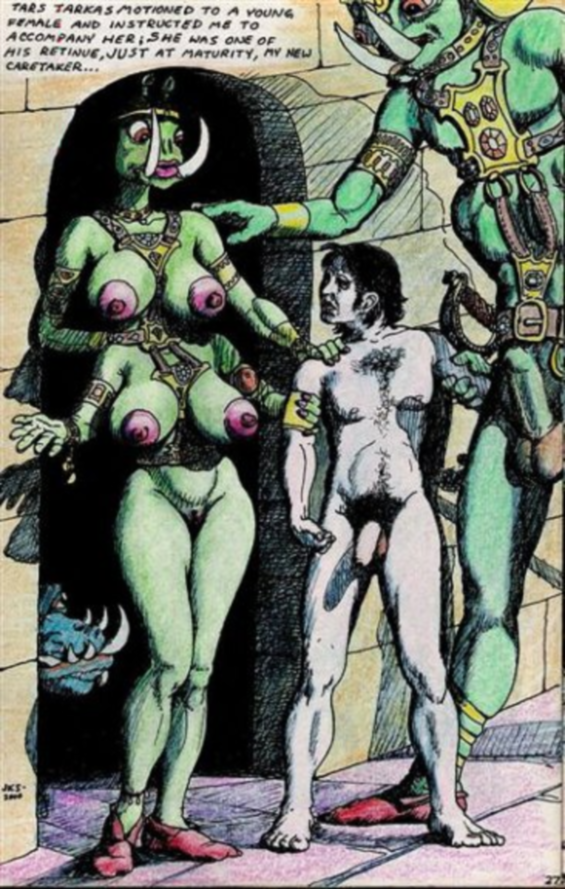
John Carter meets Sola - illustration by James Killian Spratt.
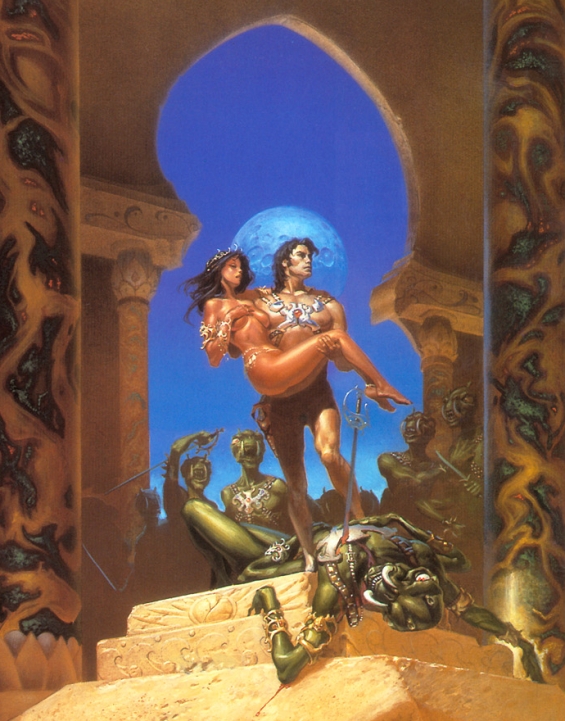
Michael Whelan - A Princess Of Mars
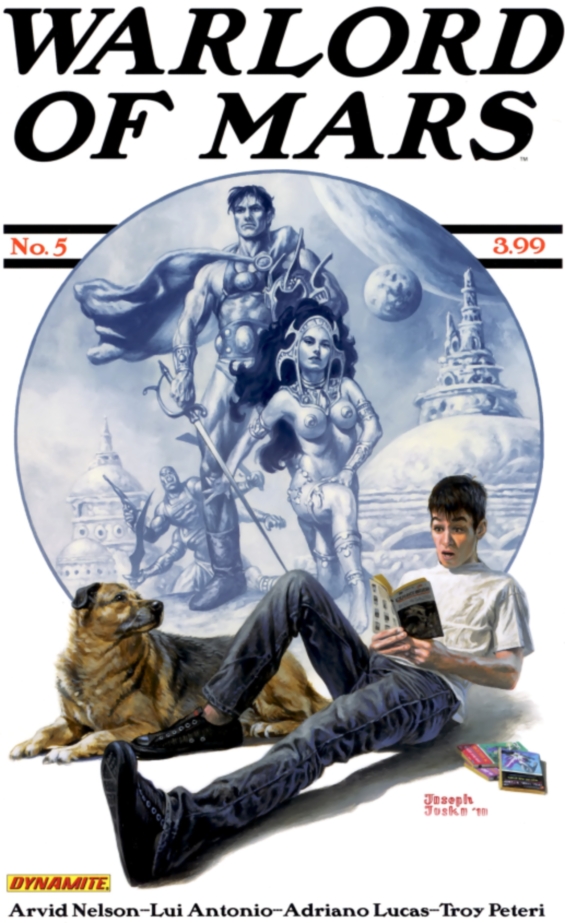
Warlord Of Mars Issue #5 cover by Joe Jusko
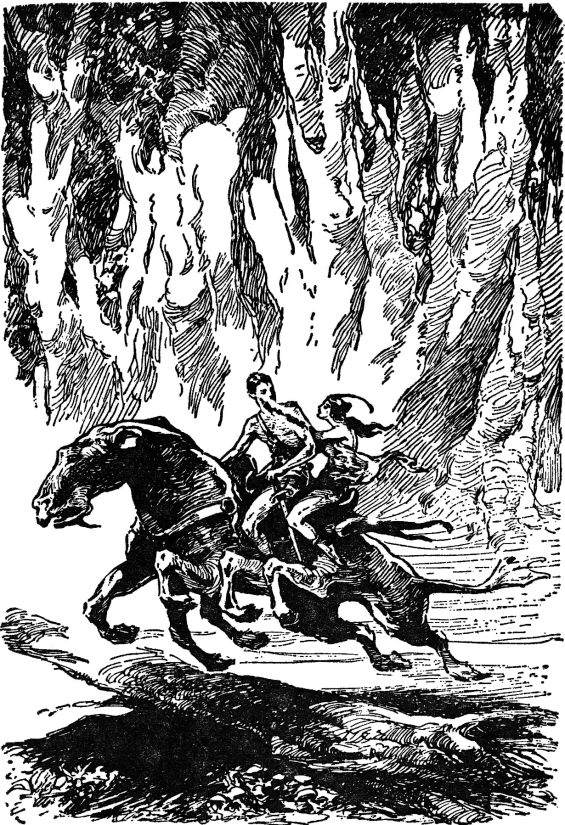
Riding A Thoat
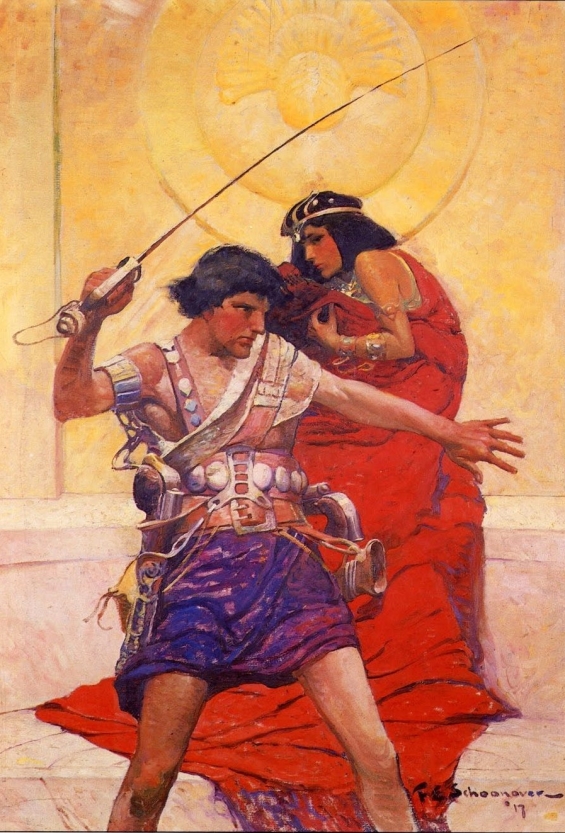
A Princess Of Mars - illustration by Schoon
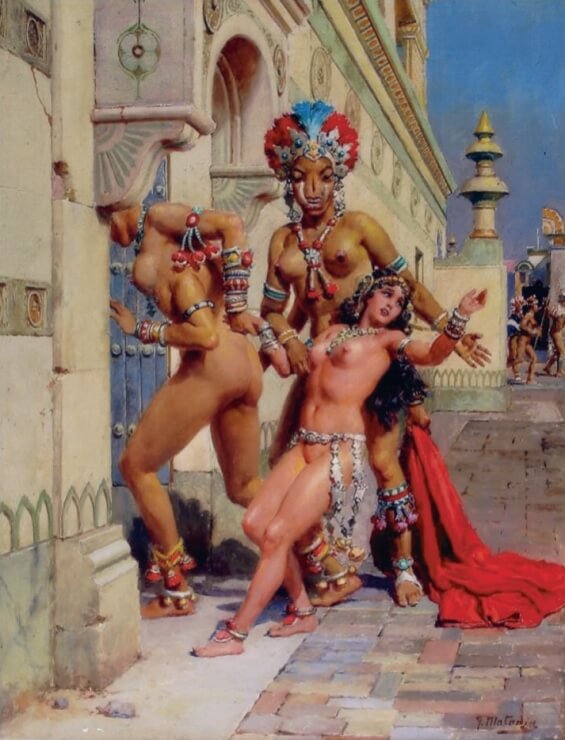
Fortunino Matania illustration of a scene from A Princess Of Mars by Edgar Rice Burroughs
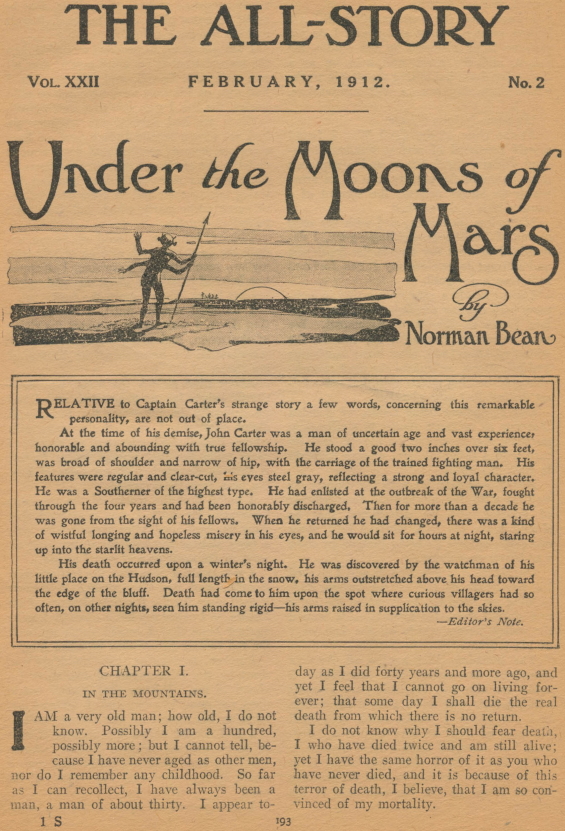
All-Story, February 1912
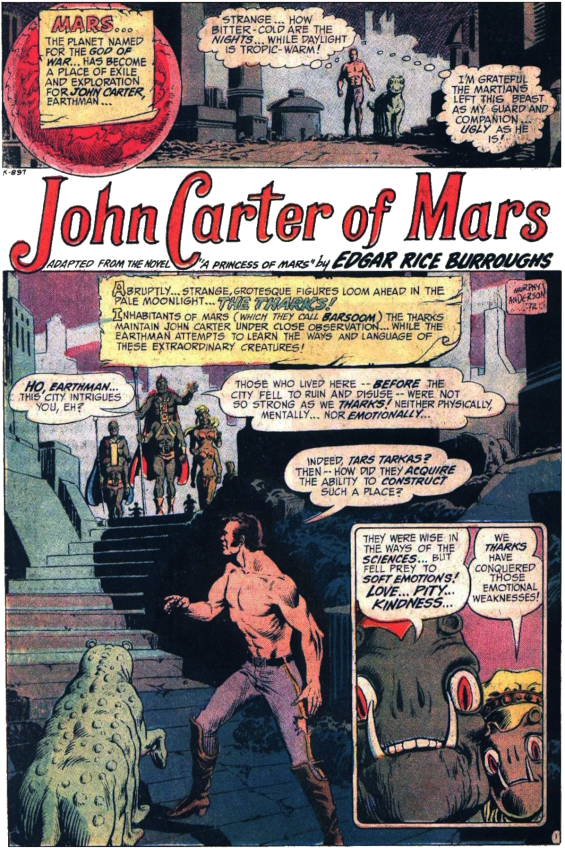
DC Comics Tarzan - John Carter
A PRINCESS OF MARS by Edgar Rice Burroughs

Posted by Jesse Willis
The SFFaudio Podcast #136 – READALONG: Neuromancer by William Gibson

Podcast

NEUROMANCER
The SFFaudio PodcastThe SFFaudio Podcast #136 – Jesse, Tamahome, Eric S. Rabkin, and Jenny talk about Neuromancer by William Gibson.

Talked about on today’s show:
What was really going on in 1984, the introduction to the audiobook, 3 MB of RAM, Commodore 64, Apple IIe, TI-99/4A, the 10 Year Anniversary Edition of Neuromancer, video arcade vs. arcade, Tank War Europa, Spy Hunter, Sinistar, BBC audio drama adaptation of Neuromancer, cyberpunk, Jenny couldn’t connect with Case the first time, Alfred Bester, the revolutionary effect of Neuromancer, “a very special book”, Mexico City, “an important novel”, Yevgeny Zamyatin’s We, The New Yorker’s parody of Neuromancer, the New Wave, “one great new idea per book”, Samuel “Chip” Delany, The Einstein Intersection, The Lovesong Of J. Alfred Prufrock by T.S. Eliot, “The sky above the port…”, Blade Runner, “time to murder and create”, Hesiod, “And he never saw Molly again.”, an untethered morality, the Rastafarian religion, WWI, virtual worlds, Second Life, Gibson’s intentions, Gravity’s Rainbow by Thomas Pynchon, conspiracy, The Crying Of Lot 49, William S. Burroughs, Naked Lunch, “the silent frequency of junk”, The Wonderful Wizard Of Oz, Dorothy’s shoes, L. Frank Baum, “the face of evil is the face of total need”, The Electric Kool-Aid Acid Test by Tom Wolfe, “slouching through the streets of Paris”, Case is a “man of decided inaction”, God was Adam’s employer, Dixie Flatline wants to die, Free Will, Eric felt for Case, 1980s, Watergate, a totemic fascination with color and material, branding, Pattern Recognition, the Sanyo spacesuit, Hosaka is a computer?, a dead channel would be blue (today), Ian Fleming, James Bond, Walther PPK, “elegance and cosmopolitanism”, John Brunner’s Stand On Zanzibar, Escape From New York, Johnny Mnemonic, the fear of what technology is going to bring, Case’s youth, detritus vs. kipple, Philip K. Dick, Martian Time-Slip, Galactic Pot-Healer, “you can’t prove that the United States exists” in Neuromancer, Case was a street-kid, Gibson has built something that has mythic power, the lame Braun robot, Molly -> Mother -> Mary, SSN vs. SIN, a Case study (pun), he has been assigned a SIN, Oedipus, they function as if they were physical, Case: “You know you repeat yourself man.” Dixie: “Yeah, it’s my nature.”, the Sprawl trilogy and “when it changed”, when is Neuromancer set?, “a rich kid’s hideout”, real kipple vs. fake kipple, “built by carpenters to look rustic”, 18th century fake ruins, Versailles (and the Hameau de la reine), the Tessier-Ashpool are fucked up, Mona Lisa Overdrive, cloning, Count Zero, “they dumped themselves into this matrix”, communication technologies begin with porn, A Chorus Line, SimStim gets short shrift in Neuromancer, Strange Days, Molly’s meat-puppet memories, 1-900 numbers, the lotus eaters, Circe, the Sirens song, The Lion of Comarre by Arthur C. Clarke, the heisters are motivated or moved by their A.I. puppet-master, Case’s motivation, Molly’s motivation, Corto/Armitage’s motivation, like Rabbit in Vernor Vinge’s Rainbow’s End, these characters want to believe in their own free will, Neuromancer‘s motivation, “who’s the bad guy in this book?”, “who isn’t?”, the shuriken is the only moral totem in the book, dystopia vs. dystopic, “the wavelength of amphetamine”, spit instead of cry, Jenny is kind of cheating (because she’s read the sequels), is Molly wrong for Case?, Eric questions the new pancreas, it’s Noir (because everyone smokes), Jo Walton’s review of Neuromancer (see the top and comment 59.), Jesse appreciates the world (and the great motivation of the plot), Eric likes Case (in part) because he’s the only one who doesn’t want to physically hurt anyone else, O’Neil colony, the fake French youths, Case is not Neo, The Matrix is a fairy tale with a prophecy whereas Neuromancer is Science Fiction, the Sprawl Trilogy vs. The Matrix Trilogy, Star Wars, “stuck in bullet time”, V: For Vendetta is a fantastic movie, Jenny thinks we should listen to the soundtrack to The Matrix, “the machine and the moment”, Tama thought the second half of Neuromancer dragged, Mary Shelley’s Frankenstein is also Necromancer‘s antecedent ,”what do we owe to what we create?”

Neuromancer

Julian Assange has a copy of Neuromancer by William Gibson

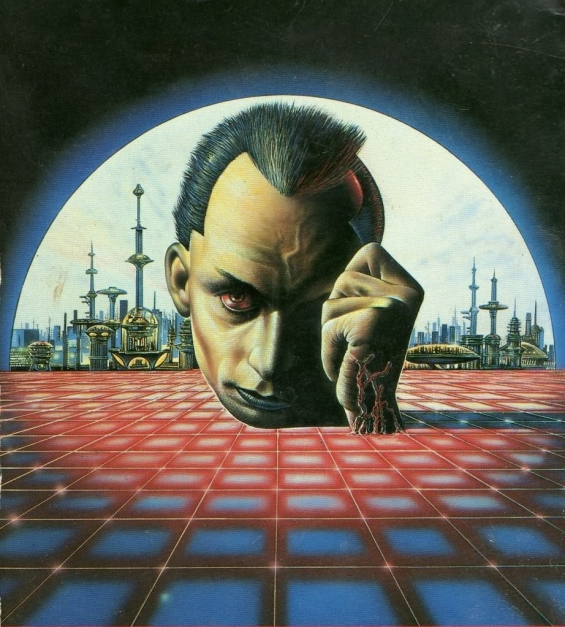
NEUROMANCER - illustration by Barclay Shaw

Posted by Jesse Willis

1979 Philip K. Dick interview with Charles Platt (Santa Ana, California)

SFFaudio Online Audio

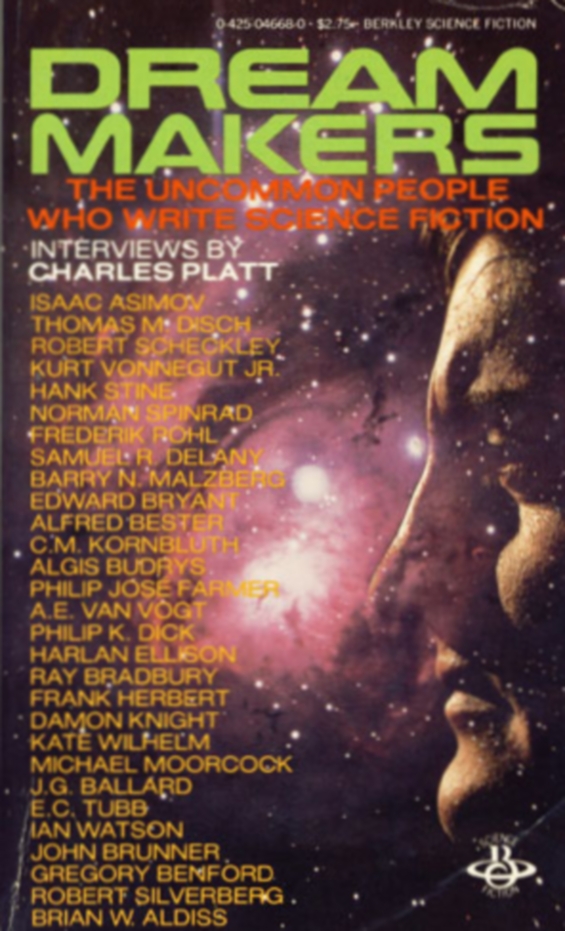
This essential interview with Philip K. Dick, conducted by Charles Platt and recorded in 1979 in Santa Ana, California, is sure to be immensely important for Dick scholars. It was recorded for Platt’s book Dream Makers: The Uncommon People Who Write Science Fiction.

Here’s the video converted back to audio, |MP3| and although it isn’t huffduffable, it is downloadable.

Notes:
-Dick was “plenty peculiar” because he read books
-he wasn’t gay despite his hanging around with gay friends
-Quakers were about the only group in the world Dick didn’t have some sort of grievance against
-Dick claims to have been kicked out of university for failing mandatory ROTC training
-Dick read The World Of Null-A by A.E. van Vogt and found in it great inspiration for his ideas about the perception of reality and reality itself
-Dick perceived his high school geometry teacher as a mechanism
Roog and other “interior projection stories”
-Dick’s fiction can be incomprehensible if you do not accept his premise (namely that “each of us lives in a unique world.”)
Martian Time Slip.
-When Dick went to a psychotherapist he was told he was an alcoholic (despite his being a teetotaler)
-“attack therapy”
-totalitarian communities
-why Dick writes about anti-heroes
-paranoia
-“I am inevitably persuaded by every argument that is brought to bare”
-private worlds
The Three Stigmata Of Palmer Eldritch
Time Out Of Joint
-artificial memories / false memories
-the influence of drugs on Dick’s writing was only in the output (using amphetamines he was completing 60 finished pages per day)
-Dick’s one real acid trip
A Scanner Darkly
-cats and cat curiosity
-Carl Jung and “the collective unconscious”
-John Belushi (on Saturday Night Live)
-WWI and the battle of The Marne
-Sergei Eisenstein’s Alexander Nevsky
-WWI and the battle of The Marne
-Dick’s father fought in WWI (in the 5th Marines) and told Philip the stories about it
All Quiet On The Western Front by Erich Maria Remarque
-“the god of this world is evil”
Maze Of Death
Ubik
Eye In The Sky
-WWII
-something is terrible is wrong (when everyone cheers a burning man)
-empathy for animals (human and rodent)
-the killing of a rat (haunted Dick)
-Buddha
Flow My Tears, the Policeman Said
-lambs and sheep
Valis (his then latest novel)
-standing on the shoulders of giants
-disorder (evil) -> order (benign)
-Dick claims to have been eccentric but not insane
-“it fired my agent, it fired my publisher” (it being the spirit that was possessing him)
-Dick’s letter to the Roman Catholic Church (about the miracle that occurred)
-conspiracies
-the Cumaean Sibyl informed Dick that the American Republic is in danger of turning into the American Empire (in 1974)
-PKD on censorship (he’s against it, unless you aren’t)
-the War Of The Spanish Lowlands
-Congressman Charles E. Wiggins got letters from Dick (written while he was possessed by the spirit of the Cumaean Sibyl)
-the Nixon tape transcripts were forgeries (according to Dick’s Cumaean Sibyl)
-the Paul Williams article in Rolling Stone on Dick
-Dick’s tutelary spirit promised to return Dick to a garden upon his deathbed
Diana
-Norman Spinrad
-“I’m in the Portuguese States Of America”
-a Chinese finger trap
We Can Build You
-Platt: “Do you recognize the possibility that you were talking to yourself?” Dick: “Yes.”
-multiple personalities
-Archimedes principle
Faith Of Our Fathers
-Ursula K. Le Guin thought Dick was crazy
-pre-socratic philosophy

Dream Makers: The Uncommon People Who Write Science Fiction

[via SFSignal.com and youtubemp3.tv]

Posted by Jesse Willis
Recent Arrivals: Blackstone Audio, Brilliance Audio

SFFaudio Recent Arrivals

The Boat Of A Million Years by Poul Anderson
Genesis by Poul Anderson
Shadow On The Sun by Richard Matheson
Other Kingdoms by Richard Matheson
Farnham’s Freehold by Robert A. Heinlein
The Stainless Steel Rat Gets Drafted by Harry Harrison
The Stainless Steel Rat For President by Harry Harrison
The Stainless Steel Rat Sings The Blues by Harry Harrison
The Stainless Steel Rat Goes To Hell by Harry Harrison
The Stainless Steel Rat Joins The Circus by Harry Harrison
Count Zero by William Gibson

Posted by Jesse Willis

BSAP: OTR Swag Cast: John Steele, Adventurer

SFFaudio Online Audio

BrokenSea Audio Presents: OTR Swag CastOf the many podcasts I’m subscribed to the one that I take the most for granted, and mention the least, is BrokenSea Audio’s OTR Swag Cast. OTR, of course, stands for Old Time Radio. But there are at least a dozen old time radio podcasts and I don’t really like any of them except for the OTR Swag Cast. One of the reasons I love it so much is that the host, Bill Hollweg, has a passion for audio drama that’s truly infectious. Moreover, he picks interesting, obscure and excellent OTR. The latest show, which isn’t actually hosted by Hollweg, features the first episode of a 1949 Mutual Network series called “John Steele, Adventurer.” It’s a really terrific episode! Titled “Cargo Unknown”, it introduces the John Steele, a former WWII fighter pilot who runs a one man airline that carries cargo to all points around the world. And in this episode it puts him into a dangerous situation straight away. The cargo he carries is of course both deadly and beautiful and the show makes for really terrific listening. The only sadness here is some sort of digital compression artifacting that can drown out some of the quieter scenes. The OTR Swag Cast typically runs over an hour, and so after that first half hour of excellence there’s their regular welcome backup feature, The Avengers!

If you haven’t heard the OTR Swag Cast before, pick it up with this episode, you’ll love it! |MP3|

Podcast feed: http://brokensea.com/otr/?feed=podcast

Posted by Jesse Willis

LibriVox: King Of The Khyber Rifles by Talbot Mundy

SFFaudio Online Audio

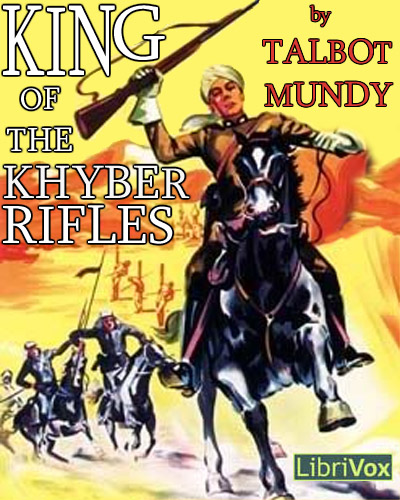
LibriVoxKing Of The Khyber Rifles is an war and espionage novel by one of Robert E. Howard’s favourite writers. Described as “fantastic” (in the literary sense), perhaps because of the inclusion of a fair amount of Theosophy amongst all it’s action and intrigue.
I kind of like Brett W. Downey’s narration too. His rendering of the text sounds very 1920s to me and his voice seems designed to say stuff like: “the kid’s got a lot of moxie I tell you.”

LIBRIVOX - King Of The Khyber Rifles by Talbot MundyThe King Of The Khyber Rifles
By Talbot Mundy; Read by Brett W. Downey
18 Zipped MP3 Files or Podcast – Approx. 9 Hours 57 Minutes [UNABRIDGED]
Publisher: LibriVox.org
Published: May 12, 2010
Athelstan King is a British Secret Agent stationed in India at the beginning of WWI. He is attached to the Khyber Rifles regiment as a cover, but his real job is to prevent a holy war. “To stop a holy war single-handed would be rather like stopping the wind–possibly easy enough, if one knew the way.” King is ordered to work with a mysterious and powerful Eastern woman, Yasmini. Can King afford to trust her? Can he afford not to? First published in Everybody’s Magazine May 1916 to January 1917.

Podcast feed: http://librivox.org/rss/4127

iTunes 1-Click |SUBSCRIBE|

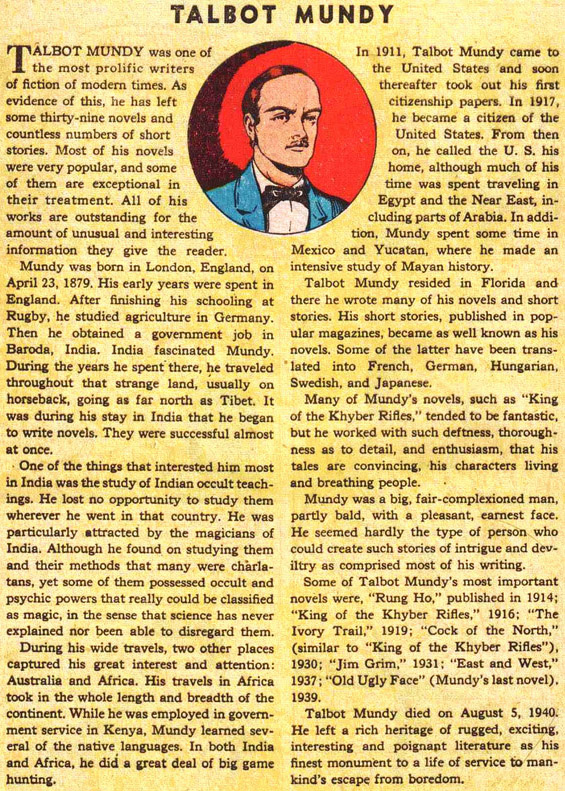
Here’s the Talbot Mundy biography from the Classics Illustrated edition of King Of The Khyber Rifles:

Classics Illustrated's Talbot Mundy biography

[via TriciaG and Annise]

Posted by Jesse Willis