BBCR4 + RA.cc: The Cookie Lady by Philip K. Dick

SFFaudio Online Audio

BBC Radio 4RadioArchives.ccBack in 2003 BBC Radio 4 produced a five part series of fantastic tales called, simply, Five Fantastic Tales.

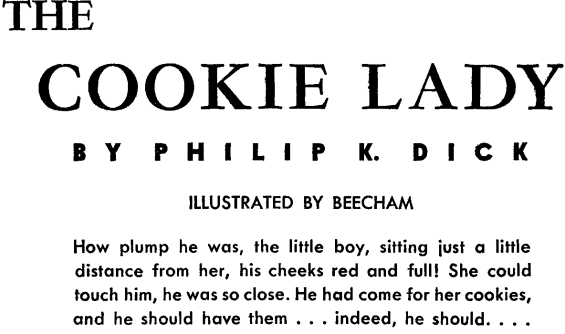
Among them was a vignette, a horror tale, The Cookie Lady by Philip K. Dick. It’s the only audio production of this obscure story ever done.

Unfortunately, the reading is abridged.

Fortunately, it is well read by Liza Ross and is available, via torrent, from RadioArchive.cc!

The Cookie Lady by Philip K. Dick

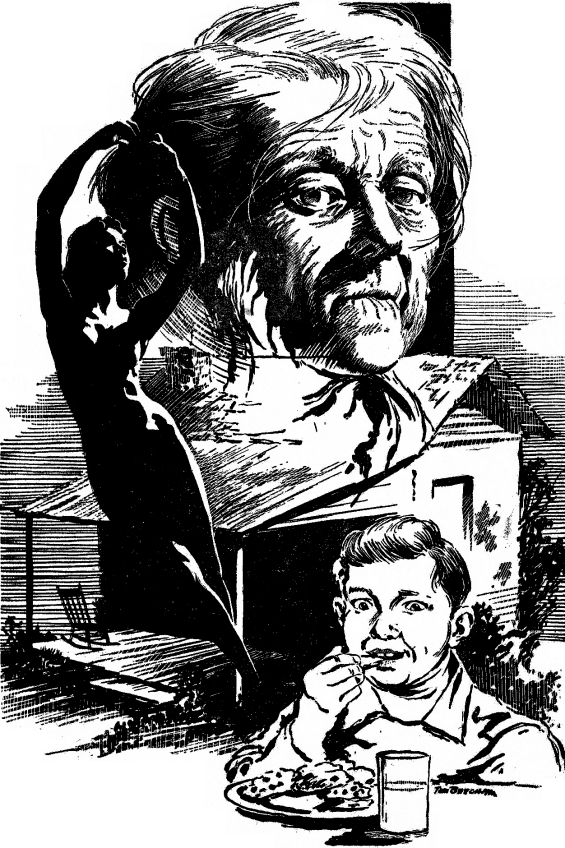
Here is the illustration, by Tom Beecham, from the original publication in Fantasy Fiction, June 1953:

The Cookie Lady by Philip K. Dick

Posted by Jesse Willis

The Nameless City by H.P. Lovecraft

SFFaudio Online Audio

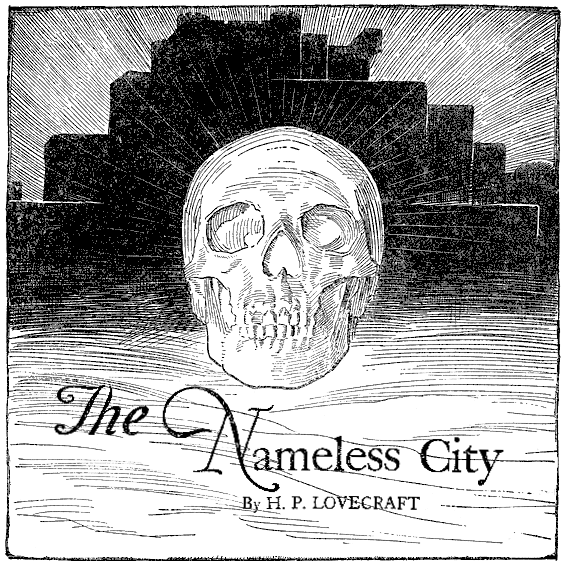
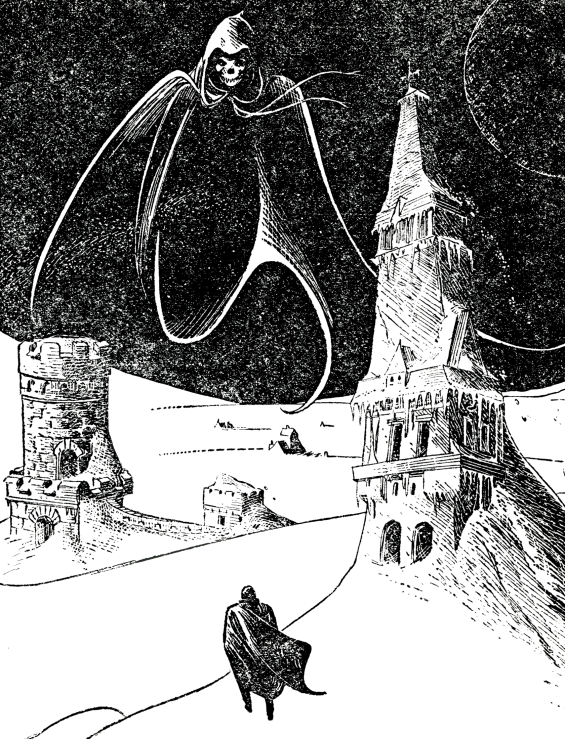
The Nameless City by H.P. Lovecraft (illustration by Jack Binder from Weird Tales, November 1938)

H.P. Lovecraft’s 5,000 word short story, The Nameless City, was based one of his dreams. That dream, in turn, was inspired by the last line of Lord Dunsany’s story The Probable Adventure Of The Three Literary Men, a story from 1911 (itself available as an |MP3| from LibriVox). Indeed, the line is even quoted within the tale:

“the unreverberate blackness of the abyss”

The eponymous, anonymous, city itself seems to have been inspired by “Iram, the City of Pillars” which was a mysterious lost city – a kind of “Atlantis of the Sands” – that is mentioned in the Quran.

And one critic, according to the detailed Wikipedia entry for the story, has it that Lovecraft was inspired by At the Earth’s Core by Edgar Rice Burroughs.

And for all those reasons The Nameless City is certainly worth looking at, if you can find it.

To help I’ve assembled a |PDF| made from a scan of the story, as published in the November 1938 issue of Weird Tales.

And here are several freely available narrations:

LibriVoxThe Nameless City
By H.P. Lovecraft; Read by Mark Nelson
1 |MP3| – Approx. [UNABRIDGED]
Publisher: LibriVox.org
Published: January 23, 2008
It lay silent and dead under the old cold desert moonlight, but what strange race inhabited the abyss beneath those cyclopean ruins?
First published in The Wolverine, No. 11, November 1921.

LibriVoxThe Nameless City
By H.P. Lovecraft; Read by Scott Carpenter
1 |MP3| – Approx. 28 Minutes [UNABRIDGED]
Publisher: LibriVox.org
Published: October 19, 2008
It lay silent and dead under the old cold desert moonlight, but what strange race inhabited the abyss beneath those cyclopean ruins?
First published in The Wolverine, No. 11, November 1921.

LibriVoxThe Nameless City
By H.P. Lovecraft; Read by Rebecca M.L.
1 |MP3| – Approx. 31 Minutes [UNABRIDGED]
Publisher: LibriVox.org
Published: April 14, 2011
It lay silent and dead under the old cold desert moonlight, but what strange race inhabited the abyss beneath those cyclopean ruins?
First published in The Wolverine, No. 11, November 1921.

Yog Radio PodcastThe Nameless City
By H.P. Lovecraft; Read by Michael Scott
1 |MP3| – 28 Minutes [UNABRIDGED]
Podcaster: Yog Radio
Podcast: May 7, 2006
It lay silent and dead under the old cold desert moonlight, but what strange race inhabited the abyss beneath those cyclopean ruins?
First published in The Wolverine, No. 11, November 1921.

Posted by Jesse Willis

The Forgotten Enemy by Arthur C. Clarke

SFFaudio Online Audio

The Forgotten Enemy by Arthur C. Clarke

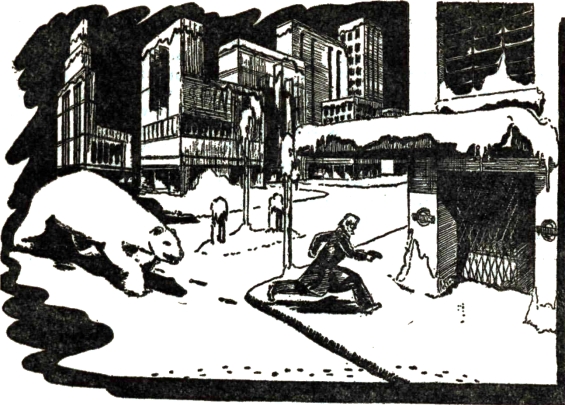
The Forgotten Enemy - from Avon Science Fiction And Fantasy Reader, January 1953 - Illustration by John Giunta

This is the third time I’ve posted about this wonderful podcast episode. The last time was just last year. But I’ve just come across another wonderful illustration, this time from a reprinting in an issue of Avon Science Fiction And Fantasy Reader, so I’ve just had top post about it again. It’s highly recommended listening.

The Forgotten Enemy by Arthur C. ClarkeA Bite of Stars, a Slug of Time, and Thou – The Forgotten Enemy
By Arthur C. Clarke; Read by Elisha Sessions
1 |MP3| – Approx. 1 Hour [UNABRIDGED]
Podcaster: A Bite Of Stars A slug Of Time And Thou
Podcast: 2008
In a bleak snow and ice covered London, a lone survivor faces isolation, polar bears and loneliness. But even his one hope, the idea that a rescue team is crossing the Atlantic ice sheet isn’t enough to stave off The Forgotten Enemy. First published in December 1948, in an issue of King’s College Review.

First broadcast in 2008 on Resonance FM 104.4 FM in London, U.K, The Forgotten Enemy is an excellent Arthur C. Clarke tale. Set in London, it tells of solitary man waiting for rescue. He can almost hear the helicopters. Yes, the helicopters. The slow, loud, helicopters coming inevitably from the north. But what of the terrible white menace that threatens his lonely existence? Can he survive?

One aspect of the tale may remind you of 28 Weeks Later, another may remind you of The Day After Tomorrow. But fear not, this story pays far greater dividends than either of those.

In the discussion that follows the story is described as a “cozy calamity” and it’s compared to Who Goes There? and A Pail Of Air. It is a wonderful podcast – all around!

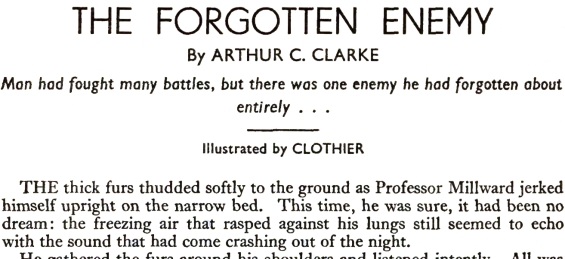
Here’s the accompanying art, by Clothier, from the New Worlds printing:

The Forgotten Enemy by Arthur C. Clarke

Posted by Jesse Willis

Lightspeed: The Streets Of Ashkelon by Harry Harrison

SFFaudio Online Audio

“For me, it’s one of those stories that does what SF does so very well, shining a light into those murky places where mundane fiction either will not or can not go: asking difficult questions about the nature of faith, belief and pride (and taking a few well aimed and accurate shots at the nature of colonialism along the way).” – James Lecky

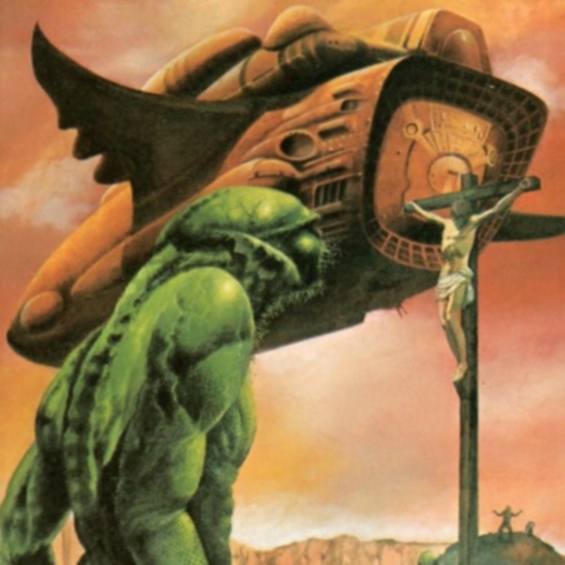
Two Tales And Eight Tomorrows by Harry Harrison - art by Jim Burns

The Streets Of Ashkelon is a terrific tale audiobooked as part of last month’s issue of Lightspeed. Sometimes classified as a horror, often reprinted, it’s a classic SF story that’s in dialogue with James Blish’s A Case Of Conscience. Maria Doria Russell’s The Sparrow could also be considered a part of this long conversation. But unlike either of those novels this fifty year old short story takes the other side, stridently offering a challenge to the authority of faith’s promulgators. It asks an important question:

Ought evangelists and proselytizers have any business promoting their religion to aliens?

This is an SF story in the vein of Star Trek and H.G. Wells, so ought we not to read the innocent aliens as an allegory for something a little closer to home?

Decide for yourself.

Lightspeed MagazineLightspeed – The Streets Of Ashkelon
By Harry Harrison; Read by Paul Boehmer
1 |MP3| – Approx. 49 Minutes [UNABRIDGED]
Podcaster: Lightspeed
Podcast: September 2012
First published in New Worlds Science Fiction, #122, September 1962.

Posted by Jesse Willis

LibriVox: Pygmalion’s Spectacles by Stanley G. Weinbaum

SFFaudio Online Audio

Pygmalion’s Spectacles was first published in 1935 in the aptly named Wonder Stories magazine. Four years after it’s first publication it was reprinted in Startling Stories as a “classic” and it was placed in their “Scientifiction Hall Of Fame.” It was reprinted again in Fantastic Story magazine in the Spring 1955 issue. Three magazine publications is a rare occurrence for any SF story. So, what makes this story special?

Well, this tale of utopia, immortality, and romance, is also, most probably, the very first story to feature the concept of virtual reality.

Here’s the description from the Wikipedia entry:

A comprehensive and specific fictional model for virtual reality was published in 1935 in the short story Pygmalion’s Spectacles by Stanley G. Weinbaum. In the story, the main character, Dan Burke, meets an elfin professor, Albert Ludwig, who has invented a pair of goggles which enable “a movie that gives one sight and sound […] taste, smell, and touch. […] You are in the story, you speak to the shadows (characters) and they reply, and instead of being on a screen, the story is all about you, and you are in it.”

And though the ideas may be pioneering, the plot of Pygmalion’s Spectacles is very similar to Fitz-James O’Brien’s The Diamond Lens, itself an excellent SF tale. The tone of their respective endings differs, but their plot, in which a man falls in love with an intangible woman, is straight out of the Greek mythology that Weinbaum alludes to. And they both use science, rather than magic to get to their respective endings.

There is, I should also point out, a LibriVox |MP3| recording of the Metamorphoses by Ovid, a 2,000 year old poem featuring the myth of Pygmalion.
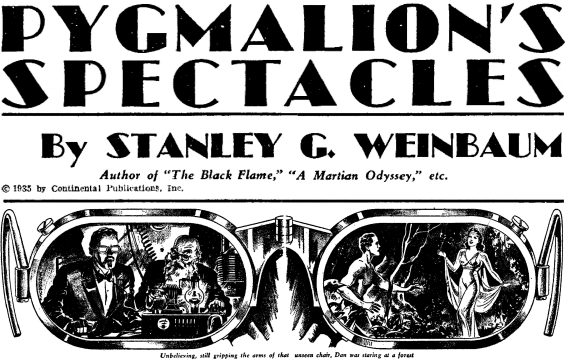
Pygmalion's Spectacles by Stanley G. Weinbaum

Here is a |PDF| made from the Pygmalion’s Spectacles publication in Fantastic Story. And here are two LibriVox versions (my advice, go for the first one):

LibriVoxPygmalion’s Spectacles
By Stanley G. Weinbaum; Read by Gregg Margarite
1 |MP3| – Approx. 43 Minutes [UNABRIDGED]
Publisher: LibriVox.org
Published: January 13,2009
He put on the glasses and fell in love with a dream… First published in Wonder Stories, June 1935.

LibriVoxPygmalion’s Spectacles
By Stanley G. Weinbaum; Read by Chrystal Layton
1 |MP3| – Approx. 45 Minutes [UNABRIDGED]
Publisher: LibriVox.org
Published: November 17, 2007
He put on the glasses and fell in love with a dream… First published in Wonder Stories, June 1935.

Pygmalion’s Spectacles illustration by Lumen Winter (from Wonder Stories, June 1935):
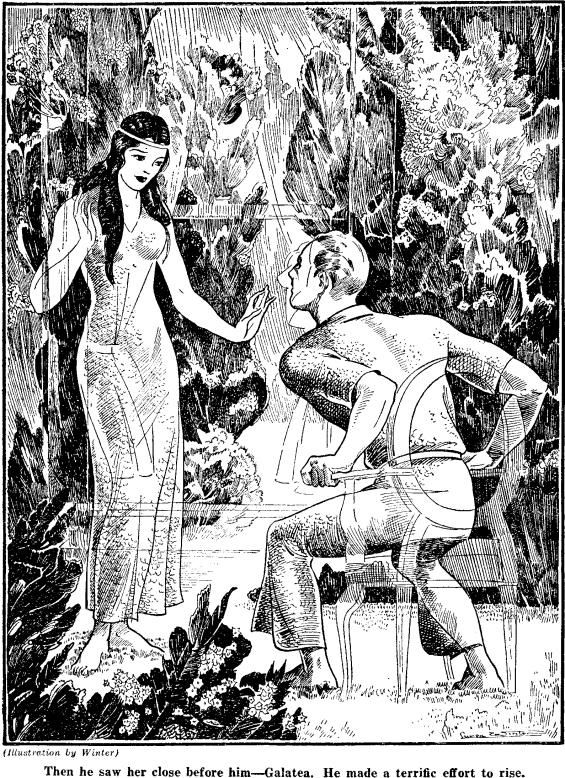
Pygmalion's Spectacles -  illustration by Lumen Winter

Pygmalion’s Spectacles illustration by Virgil Finlay (from Fantastic Story Magazine, Spring 1955):
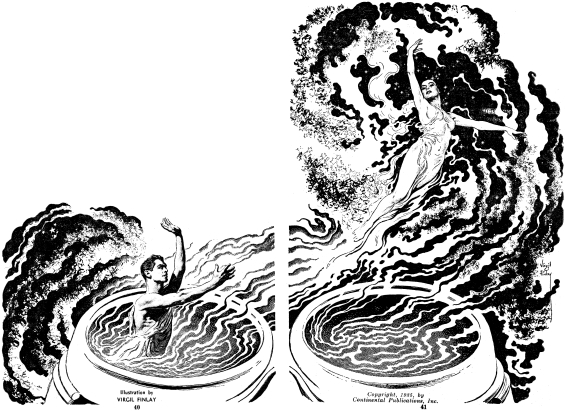
Pygmalion's Spectacles - illustration by Virgil Finlay

Painting of Pygmalion and the statue by Jean-Baptiste Regnault:
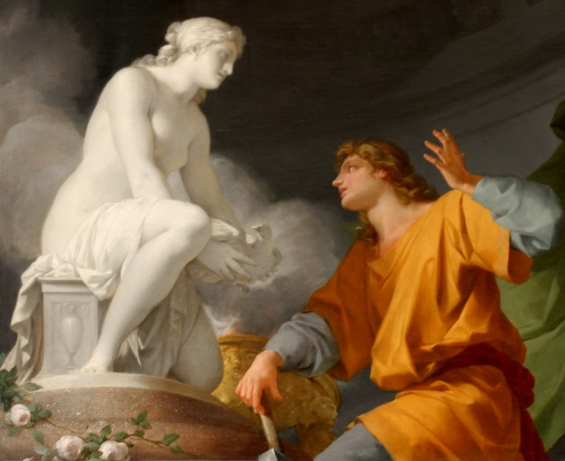
Jean-Baptiste Regnault - Pygmalion

[Thanks to Tim at The Drama Pod for the reminder]

Posted by Jesse Willis
CBC: As It Happens: Moonlight by Guy de Maupassant (as read by Alan Maitland)

SFFaudio Online Audio

Here’s a sweet find from the CBC Digital Archives! It’s Alan Maitland, perhaps you know him as “Front Porch Al”, reading Moonlight (aka In The Moonlight) by Guy de Maupassant.

It was first broadcast on CBC Radio’s As It Happens on August 2, 1993.

The tale of a misogynist priest, the Abbé Marignan, who is ruled purely by reason, but whose view of life and love is influenced by the magic and splendour of moonlight.

And, I’m pleased to offer a different translation of the same story in |PDF| form.

Posted by Jesse Willis