Review of The Reapers Are The Angels by Alden Bell

SFFaudio Review

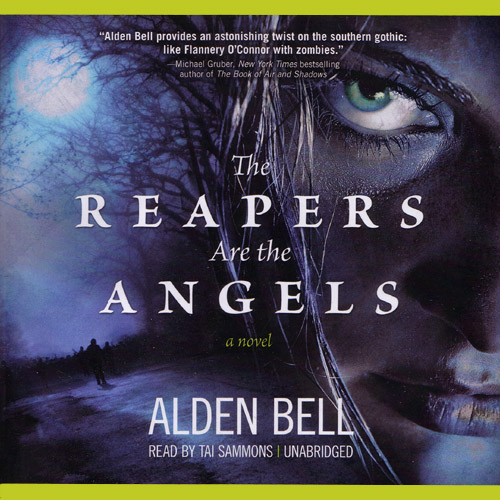
BLACKSTONE AUDIO - The Reapers Are The Angels by Alden BellSFFaudio EssentialThe Reapers Are The Angels
By Alden Bell; Read by Tai Sammons
6 CDs – Approx. 6.8 Hours [UNABRIDGED]
Publisher: Blackstone Audio
Published: August 2010
ISBN: 9781441765994
Themes: / Fantasy / Horror / Zombies / Post-Apocalypse / The South /

God is a slick god. Temple knows. She knows because of all the crackerjack miracles still to be seen on this ruined globe.

Like those fish all disco-lit in the shallows. That was something, a marvel with no compare that she’s been witness to. It was deep night when she saw it, but the moon was so bright it cast hard shadows everywhere on the island. So bright it was almost brighter than daytime because she could see things clearer, as if the sun were criminal to the truth, as if her eyes were eyes of night. She left the lighthouse and went down to the beach to look at the moon pure and straight, and she stood in the shallows and let her feet sink into the sand as the patter- waves tickled her ankles. And that’s when she saw it, a school of tiny fish, all darting around like marbles in a chalk circle, and they were lit up electric, mostly silver but some gold and pink too. They came and danced around her ankles, and she could feel their little electric fish bodies, and it was like she was standing under the moon and in the moon at the same time. And that was something she hadn’t seen before. A decade and a half, thereabouts, roaming the planet earth, and she’s never seen that before.

And you could say the world has gone to black damnation, and you could say the children of Cain are holding sway over the good and the righteous—but here’s what Temple knows: She knows that whatever hell the world went to, and whatever evil she’s perpetrated her own self, and whatever series of cursed misfortunes brought her down here to this island to be harbored away from the order of mankind, well, all those things are what put her there that night to stand amid the Daylight Moon and the Miracle of the Fish—which she wouldn’t of got to see otherwise.

See, God is a slick god. He makes it so you don’t miss out on nothing you’re supposed to witness firsthand.

I actually asked to review this book because I’d seen it described as a “twist on the southern gothic: like Flannery O’Connor with zombies.” As someone who has just begun to appreciate Flannery O’Connor’s writing this hit me like a challenge. However, as I listened to the first chapter, I was struck by the unexpected beauty of the writing and themes that many people wouldn’t attempt, especially in a zombie book. This unexpected beginning was merely the first of the many surprises that Alden Bell had for me in The Reapers Are The Angels.

Temple is a fifteen year old girl who was born ten years after the zombie apocalypse happened. No attempt is made to understand or solve the zombie problem. No government has been formed from the survivors. It is a world with pockets of survivors who set up such systems as seem good to them individually. Chaos rules. Temple has never known a world where zombies were not part of the landscape and this gives us a unique perspective into the apocalyptic novel. It is the world of the survivors where the zombies are a danger but not a shock.

Temple is a fearless drifter, moving from place to place to see wonders or carry out such tasks as she feels she has been given to perform. One such task is when she comes across a severely retarded man in a poignant scene where he is running from zombies with his dead grandmother in his arms. She takes on the task of getting the man, who she calls “Dummy” until she learns his name (Maury), to a safe place where he will be looked after. A wealth of information is conveyed in that name, “Dummy.” This is a world where politically correct doesn’t matter, where truth can sound hard but be kind. Temple is matter-of-fact because that is the only coin that counts in a world where zombies roam wild.

Early in Temple’s travels she encounters the man who becomes her nemesis. Interestingly enough, they understand each other better than any other people on earth, although they are at odds. Both are “God-haunted,” both recognize the truth and resolve it takes to “stay right.” He wants to kill Temple and she understands why, but nevertheless is not going to let him succeed. She is also afraid of something evil within herself which keeps her on the move. In the process of evading her relentless pursuer and caring for her protoge, Temple roams across the South, encountering a wide variety of wanderers and societies. Some are clinging to hopes of returning to normalcy, some accept the new way of the world but refuse to understand it for what it is. Many people encountered are kind and a surprising number of them are also traveling despite the uncertain times. All are shown through Temple’s honest gaze which even can understand and accept the zombies as long as she isn’t being attacked.

This doesn’t mean that Temple is only pragmatic, however. She is weighed down with grief from past actions, which we gradually discover in the course of the novel. She feels joy and wonderment at events such as the fish in the excerpt above and her overriding desire is to see Niagara Falls some day. As she chatters to the largely speechless Maury we see the natural personality of a 15-year-old girl emerge every so often.

I have never read a book with this perspective. I love a good apocalypse story, watching the survivors get over the shock or succumb depending on their natures, watching the alternative governments set up, watching the various ways that everyone attempts to restore the most important aspects of the status quo. This book has no such moments. The world already has “gone to black damnation” but even so there are moments of beauty, meditation on what is right, suspense over what Temple will find in each town, whether she can get Maury to safety, how she will finally elude the determined killer on her trail, and what the evil is that she feels is deep within her. I rarely have listened to a book with such intensity or found myself surprised as often by the lyrical, fluid writing.

Tai Sammons narrates this book with restrained clarity. She has the ability to seamlessly shift into accents from upper class to hardscrabble Southerner while taking on the characters so that the listener tends to forget that there is just one person reading. She does this without altering her voice much either which is a rare skill and one that enhanced the book greatly. In fact, after I found out that the print version does not have quotation marks used for dialogue, I realized that in listening to Sammons’ narration I was enjoying this book in probably the best format for easy understanding. (This experience made me reconsider reading The Road by Cormac McCarthy who is known for both excellent stories and also for the difficulty of reading his prose. I will be seeking out the audio version.)

As with the best science fiction or fantasy, ultimately this story is about much larger issues than hordes of wandering zombies, who have the least presence of any monsters I’ve ever read about. There is blood aplenty, make no mistake, but zombies are far less dangerous that what lies within Temple and her pursuer. The book is not perfect. Some of the plot details are immediately obvious, although they take Temple a long time to figure out, which can be a bit frustrating to the reader. However, overall the book packs its equal share of surprises in plot which more than compensate for the failures.

The Reapers Are The Angels looks at the pursuit of beauty, the pursuit of God, the flight from inner demons, and the fact that none of us can ever see the whole truth at any time. We are too small and truth is woven too large. It isn’t Flannery O’Connor but it doesn’t need to be to accomplish the same thing that O’Connor always wrote about. The Reapers Are The Angels is a book about being human with all the questions and struggles that humans have had throughout time. Highest recommendation.

Posted by Julie D.

Review of Brad Lansky and the Anti-Starc by J.D. Venne

SFFaudio Review

Brad Lansky and the Anti-StarcBrad Lansky and the Anti-Starc
By J.D. Venne; Performed by a full cast
1 Hour 44 Minutes – [AUDIO DRAMA]
Publisher: Protophonic
Published: 2010
Themes: / Science Fiction / Hard SF / Audio Drama / Starships / Stars / Artificial Intelligence / Life /

These are troubled times. MARA, the mighty blue supergiant of the Torvus Iubar system is dying, as are the other thirteen ambistars that make up the Ambistar Collective. Billions of lives are in peril. What conceivable force could cause the simultaneous death of fourteen ambistars thousands of light-years apart?

Attention Audiofiles: here is something to sink your ears into. Superior audio design is the hallmark of J.D. Venne’s Brad Lansky audio series, and this latest title (Brad Lansky and the Anti-Starc, the 4th installment) is the best yet. Through rich audio, Venne tells the continuing story of Brad Lansky and his crew, who this time are in search for the cause of the impending destruction of an amazing network of stars.

This audio drama is not your typical fare. The effects, music, and actors combine for an audio experience that reminds me a bit of Meatball Fulton’s Ruby series. Not in subject matter, but in presentation: there and here, the audio is the thing. The sound is as interesting as the story, and Venne’s story is pure hard science fiction. Be sure to use a good set of headphones, and enjoy the ride!

For more info, including samples and purchase data, visit protophonic.net!

Posted by Scott D. Danielson

Review of The Girl With The Dragon Tattoo by Stieg Larsson

Aural Noir: Review

WHOLE STORY AUDIO BOOKS - The Girl With The Dragon Tattoo by Stieg LarssonThe Girl With The Dragon Tattoo
By Stieg Larsson; Read by Saul Reichlin
Audible Download – Approx. 18 Hours 50 Minutes [UNABRIDGED]
Publisher: Whole Story Audio Books
Published: May 2009
Provider: Audible.com
Themes: / Mystery / Murder / Intrigue / Political Intrigue / Hacking / Violence / Sex / Sweden / Politics / Feminism /

Forty years ago, Harriet Vanger disappeared from a family gathering. Her body was never found, yet her uncle is convinced it was murder – and that the killer is a member of his own family. He employs journalist Mikael Blomkvist and the tattooed, truculent computer hacker Lisbeth Salander to investigate. When the pair link Harriet’s disappearance to a number of grotesque murders from forty years ago, they begin to unravel a dark and appalling family history. But the Vangers are a secretive clan, and Blomkvist and Salander are about to find out just how far they are prepared to go to protect themselves.

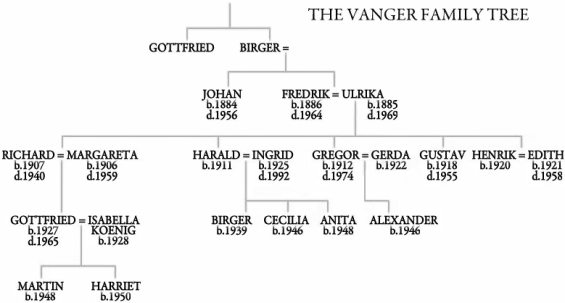
Better to read than to listen…maybe. There are too many characters in The Girl With The Dragon Tattoo and we get to know all their names and all their breakfast habits, no matter how minor a role they play in the story. And like the overdeveloped minor characters, there are also many overly lengthy descriptions and over-described scenes that are not key to the plot. It may be that both the character and the storyline problems that I describe are more distracting in the audiobook version than in the print book. After finishing The Girl With The Dragon Tattoo I started reading the second book, The Girl Who Played With Fire, in paperback in order to compare the experiences. I still notice the excessive detail in the paperbook, but it is a more minor annoyance than in the audiobook. At first I thought my discomfort was because The Girl With The Dragon Tattoo is a translation from Swedish, but I recognized that the translation is seamless. The only other Swedish books, in translation, that I recall reading are those of Astrid Lindgren and, if memory serves, they weren’t nearly as cluttered as The Girl With The Dragon Tattoo. A quick look at the paperbook edition of The Girl With The Dragon Tattoo revealed that the print edition comes with a genealogical table for keeping track of the numerous members of the Vanger family.

On the whole the almost 19 hours of listening is pleasant enough. There is no doubt that the main character is compelling, the plot interesting and that the reader, Saul Reichlin, is brilliant – but as an audio experience it can be daunting – at least without carrying around a character map.

[Here’s one!]

The Vanger Family Tree

Posted by Elaine Willis

Aural Noir review of Downtown by Ed McBain

Aural Noir: Review

Here’s the first review by a long time internet ally, fellow proponent of all things Donald E. Westlake, and soon a guest on The SFFaudio Podcast.

BOOKS ON TAPE - Downtown by Ed McBainSFFaudio EssentialDowntown
By Ed McBain; Read by Michael Prichard
8 Cassettes – Approx. 8 Hours [UNABRIDGED]
Publisher: Books On Tape
Published: 1992
ISBN: 0736621423
Themes: / Crime / New York / Humor / Murder / Mistaken Identity /

Michael Barnes is in New York on business. He has a couple of hours to kill before his plane leaves. It’s Christmas Eve. When he stops for a drink, he finds a young woman very attracted to him. He swells with masculine pride. But soon Michael’s wallet and then his rented car are stolen – only to resurface on the other side of town in unexpected company – a corpse!

There’s nothing quite like picking up a book (metaphorically) you’ve never heard of and know nothing about and discovering that you’ve stumbled across a classic. This was my experience with Ed McBain’s Downtown.

A classic? Strong words, there, Trent. But I mean it. I just recently read Donald Westlake’s The Hot Rock, which I loved and which is considered the classic comic crime novel. Downtown is nearly if not just as good (although very different).

Our protagonist is Michael Barnes, an orange-grower from Florida who is about to fly out of New York City on Christmas Eve, after a meeting with his advertising agency, when he gets hustled by a gorgeous woman and her fake police detective accomplice in an airport bar. His drivers license, credit cards, and money now gone, he goes downtown to report the crime to the police, getting his rental car stolen along the way. From there, he ends up on the lam accused of murder, running hither and thither meeting all sorts of strange people and ending up in all sorts of strange situations as he tries to figure out just what the hell is going on.

Tempering this craziness is the fact that Michael Barnes has some serious emotional baggage–he’s a cuckold and bitter about it, has issues with his mother, and was scarred by his combat experience in Vietnam (although he’s not an offensive psycho stereotype, thank God). These emotional scars are played upon masterfully by McBain, for dark humor or for grounding moments of pathos as appropriate, and they give Downtown a humanity that makes the whole farce unexpectedly powerful.

I don’t know why Downtown isn’t better known. Maybe Ed McBain just pumped out so many books that lots of his stuff falls through the cracks while readers get stuck trying to read the 87th Precinct and Matthew Hope novels in order. Maybe it’s because nobody made a movie out of it (although see below). Maybe, and this is a strong possibility, the style of humor doesn’t appeal to a broad enough audience.

Whatever the reason, Downtown deserves much better than obscurity. It’s clever, witty, touching, and terrific.

That’s the book review portion of this write-up, but I don’t want to end without bringing up something that struck me while listening to Downtown.

With a movie director figuring prominently in the plot, Downtown is loaded with film references (including to Evan Hunter/Ed McBain films The Birds and Fuzz). A movie not mentioned is one that Downtown bears a great resemblance to–Martin Scorsese’s After Hours.

If you’re not familiar with this film (too few people are), After Hours is a comedy about a fairly-average Joe who meets all sorts of strange people and ends up in all sorts of strange situations in late-night Manhattan. Oh, and he also gets accused of a crime he didn’t commit.

The setting and several story elements in After Hours are very similar to Downtown. The style of humor (dry with repetitive absurdity) also bears a marked resemblance. Both even feature prominent references to The Wizard Of Oz.

Coincidence? Homage? Rip-off (I doubt that)? Subconscious borrowing? We’ll likely never know. But if you liked After Hours, you’ll probably like Downtown, and vice versa. And if you’re not familiar with either, do yourself a favor and check them both out.

I listened to the 1992 edition of Downtown from Books on Tape, read by Michael Prichard. When I started the book, I thought his reading was stiff, but I quickly recognized that he had done a great job capturing the somewhat-uptight, neurotic lead character. Mr. Prichard is also quite skilled in creating voices to distinguish the many other characters without resorting to ridiculous exaggerations or outrageous accents (in a book with a lot of ethnic characters, no less). Downtown is written in a highly rhythmic style, with lots of short sentences and lots of repetition. Prichard grasps this and captures the novel’s rhythms superbly. It’s a really good reading.

There are two other editions of Downtown (both available at Audible.com), an abridged version from Phoenix Books read by Stephen Macht and an unabridged version from Brilliance Audio read by David Regal. For the sake of comparison, I listened to the available samples of both.

Downtown is a lousy candidate for abridgment, but even if it wasn’t I wouldn’t care for Stephen Macht’s reading, which is overdramatic.

David Regal’s reading is considerably better. His interpretation is quite different from Michael Prichard’s, making Michael Barnes sound like a traveling salesman. I would have to hear more to have a real sense of how well this works but I heard enough that I think I can judge it a solid effort. Go with the Books on Tape edition if you can find it, but if you can’t, Regal’s version will likely do as a substitute.

Posted by Trent Reynolds

FREE LISTENS REVIEW: House on the Borderland

Review

The House on the Borderland by William Hope Hodgson

Source: LibriVox (zipped mp3s)
Length: 5 hr, 22 minutes
Reader: Alan Winterrowd

The book: Halloween is getting close, so for the remainder of October, I’ll be posting reviews of horror novels and stories at Free Listens and here on SFFaudio. House on the Borderland by William Hope Hodgson is the perfect place to start, since it was a major influence on the writing of H.P. Lovecraft and ushered in a new type of supernatural horror novels for the 20th century.

Two gentlemen vacationing in Ireland find a manuscript in the ruins of an old house. In it, the former owner of the house describes how his house lies on the border of a demonic realm and how he ends up having to defend himself against pig-like invaders from this other dimension. The beginning of this narrative is eerie while the climax is heart-thudding terrifying, but a large section of the middle, in which the narrator describes a hallucinogenic dream in which he travels to the end of the world, dips into boredom. Apart from this middle section, the novel is a short, spooky classic of horror literature.

Rating: 7/10

The reader: Winterrowd is a voice that I haven’t come across before. His voice is strong and confident, with an American accent. He gives a fairly straight reading, without much emotion. This doesn’t mean that his reading is dull – he varies his pace and emphasis – but he doesn’t try to embellish the text, which can be good or bad, depending on your taste. In some early chapters, there’s a faint ringing in the recording, but later on this problem seems to go away and the sound is fine.

Posted by Seth

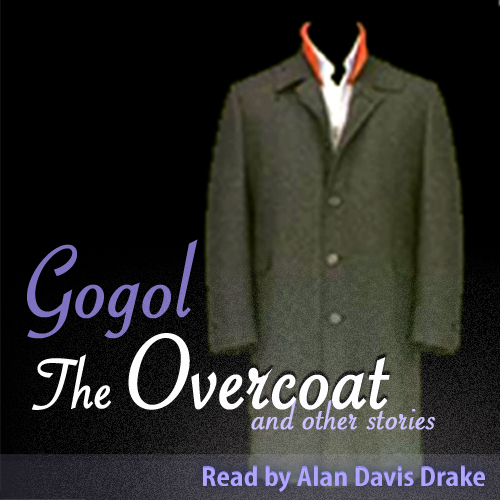
FREE LISTENS REVIEW: The Overcoat by Nikolai Gogol

Review

The Overcoat by Nikolai Gogol

Source: Archive.org (part 1 | part 2)
Length: 1 hr, 28 min
Reader: Alan Davis Drake

The story: This classic tale, also translated as “The Cloak”, is one of the most revered stories in Russian literature, but it’s also a ghost story. Akaky Akakievich is a poor clerk in a government office who is the butt of many jokes from his colleagues as much for his social ineptitude as for his threadbare overcoat.  When he finally decides to get the overcoat mended, he runs into one problem after another, leading eventually to ghostly revenge.

Many of the themes that would be common to the greats of Russian literature trace their heritage to this story: the hopelessness of poverty, the striving to move up in a class-striated society, government indifference and arrogance, and injustice for the powerless. Tolstoy, Dostoevsky, and Chekhov would continue these themes in their own literature, building great works from common starting material.

Despite the heavy themes, this is a story with plenty of humor. Gogol even pokes fun at the conventions of storytelling by breaking the fourth wall. Part of the genius of this story is the tension between the listener’s tendency to sympathize with the plight of Akaky Akakievich or laugh at his awkwardness and eagerness to impress his colleagues.

Rating: 9/10

The reader: This may be a free recording, but that doesn’t make Alan Davis Drake any less of a professional. His voice is smooth and expressive in his narration, bringing out the sometimes subtle humor in this piece. His intonations for the dialogue bring out the pattern of Russian speech without doing a broad accent. The short musical pieces at the beginning and end of each part do not distract from the reading and are not played over the narration.

Review by Seth, Free Listens blog