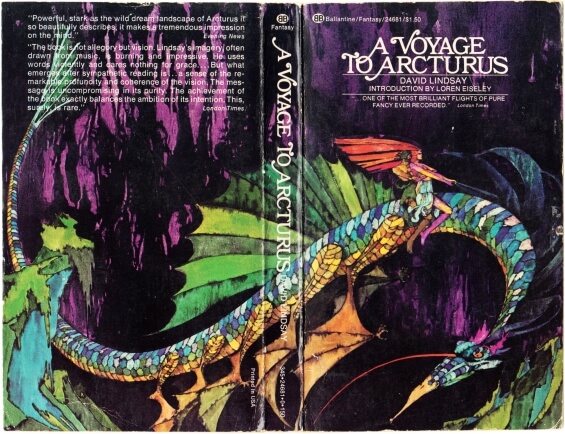
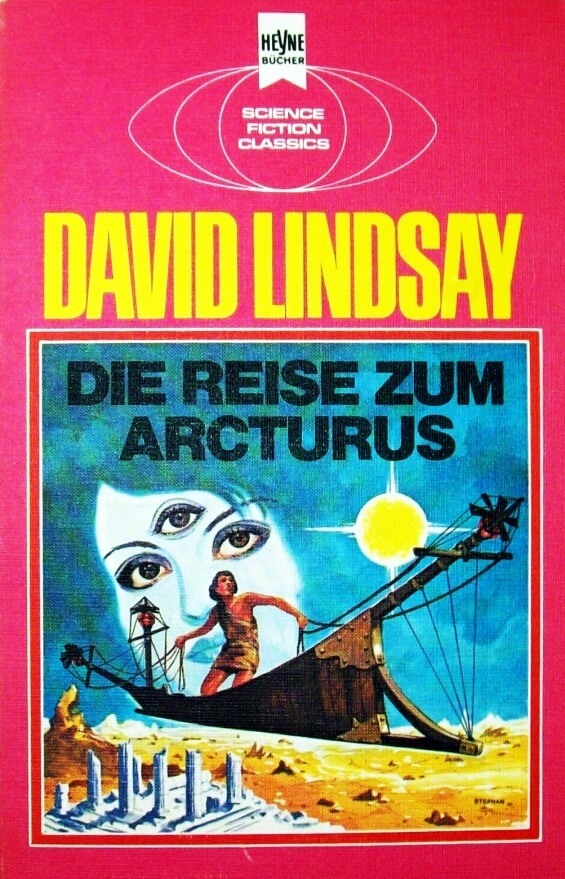
 The SFFaudio Podcast #335 – A Voyage To Arcturus by David Lindsay, read by Mark Nelson.
This UNABRIDGED AUDIOBOOK (11 hours 5 minutes) comes to us courtesy of LibriVox.
A Voyage To Arcturus was first published in 1920.
Posted by Jesse Willis
News, Reviews, and Commentary on all forms of science fiction, fantasy, and horror audio. Audiobooks, audio drama, podcasts; we discuss all of it here. Mystery, crime, and noir audio are also fair game.

The SFFaudio Podcast #335 – A Voyage To Arcturus by David Lindsay, read by Mark Nelson.
This UNABRIDGED AUDIOBOOK (11 hours 5 minutes) comes to us courtesy of LibriVox.
A Voyage To Arcturus was first published in 1920.
Posted by Jesse Willis

 Jurassic Park
By Michael Crichton; read by Scott Brick
Publisher: Brilliance Audio
[UNABRIDGED] 12 CD’s; 15 hrs. 9 min
Themes: / dinosaurs / adventure / cloning / DNA /
Publisher summary:
An astonishing technique for recovering and cloning dinosaur DNA has been discovered. Now humankind’s most thrilling fantasies have come true. Creatures extinct for eons roam Jurassic Park with their awesome presence and profound mystery, and all the world can visit them—for a price.Until something goes wrong.…
I can’t believe how much I enjoyed this book. I guess I’ve always had my reservations because of what an impact the movie had on me as a kid. I was about 9 or 10 when the movie first came out and it blew my mind. As the book likes to point out, boys love dinosaurs and that was true.
As a side note, I’m loving how much my son (5 y.o.) loves dinosaurs. He knows so much more about them than I do, in fact his favorite is the Giganotosaurus, a dinosaur I learned existed from him.
 (the hipster’s T-Rex)
Now, I’ll be the first to admit my memory of of the movie is a tad hazy, but from what I do remember, the movie actually follows the book quite a bit, at least up until about 2/3 of the book where either my memory is bad or the books is completely different (oh and Grant loves kids in the book, which is … opposite). More than I would have guessed, which was not a lot.
There’s a little more detail to the initial attacks we see in the movie and it’s not quite as gruesome in parts (and much more gruesome in others). The girl gets attacked by the Compsognathus (little green dinos), or **”compys” as they’re known. **excuse my spelling, I listened to the audio and like Fox news, I don’t feel the need to fact check.
The park is just about ready to open and it’s time to get all the consultants together to make sure it’s on the right track. Thus, Grant and Sattler, Ian Malcolm, the attorney Jennaro, and a couple others are flown in.
Of course, nefarious doings are going on and a competitor wants in on the dinosaur action. In comes Dennis Nedry, who is pretty much spot on copied in the movie. Excellent job Wayne Knight. He’s pretty much built the entire IT system for the park and thus has quite a bit of control over pretty much everything. I don’t remember his involvement in the park being this extensive, but then again, I was 9. There’s a frikkin’ T-REX!!!

As we all know, everything goes to pot and we all know what goes from here. Even though the movie diverges from the book, we all know what goes on from here.
And it’s awesome. I had a blast listening to this book and Scott Brick is such a talented narrator, you don’t even notice him reading. It’s just pure story.
A couple *important* things I wanted to point out… some spoilers for the book:
1. The lawyer, Jennaro, is not as spineless as in the movie, does not get eaten while he’s sitting on the toilet by a T-Rex (okay, that was an awesome addition), and even saves the day at one point by pointing out law that doesn’t exist. (No, this sudden support for the lawyer has nothing to do with the fact that I have an Esq. on the end of my name … perish the thought)

2. Was Lex Murphy that annoying in the movie? I really don’t remember that. She’s super duper annoying in the book.
3. Ian Malcolm’s Chaos Theory should have been cut down like in the movie. There are a number of times he’s going off about it and you’re literally thinking, aren’t there dinosaurs around the corner about to eat them? Does anyone care about any theory at this time besides the theory of escaping dinosaurs? Still a great character, just weird timing of his rants about corporations and such, which I’m not disagreeing with.

(literally the only image you’re allowed to use when referring to Ian Malcolm)
4. So this book was published in 1990 and this book had maybe a total of 15 to 20 people at risk, not counting the rest of the world that could potentially be at risk by dinosaurs escaping. We’re talking people you’re honestly worried about dying or not throughout the book.
Jump to 2015, Jurassic World, and we’ve got an entire park open with thousands and thousands of people at risk. Does that say something about how our society’s penchant for destruction?
5. But seriously, back to Malcolm, Chaos Theory essentially comes down to – because dinosaurs are an unknown, and much like the weather – unpredictable – you’re all screwed and nothing will work right. And then Malcolm gloats. Even while dinosaurs are stalking him.
Now, the opposing argument in the book is that zoos exist so why can’t dinosaurs be kept in a zoo? My problem is that if everyone gave up because there was an unknown then we’d have just about nothing. People go forward with the unknown all the time. Many fail, but that’s how great success comes as well. I guess I’m saying I needed more to this theory and preferably when I can think about the theory and not when DINOSAURS ARE LITERALLY AROUND THE CORNER TRYING TO EAT YOU.
6. Jurassic Park gets lots of crap for providing false ideas as to what dinosaurs actually looked like (see raptors). While it’s true, if you ignore the story, it is explained. You know that whole science part toward the beginning, well they talk about only finding partial DNA and having to graft in DNA from other animals (which actually becomes a huge problem). This would lend toward dinosaurs that don’t actually look like they’re supposed to and I’m fine with that explanation.
I have to say, after 25 years, Jurassic Park really held up well. Lots of the communication issues would be the same problem nowadays because of the fact that they’re on a remote island that cell phones would be problematic on anyway. It helps that a book doesn’t have to actually reproduce computer screens so you can picture those as high tech as you want as long as you ignore the amounts of memory they mention. At least they’re in the gigabytes still.
And most of this I just point out because of how into the book I was. I really had a blast listening to Jurassic Park and I can highly recommend a reading of this classic. One of the few book/movie combinations where I can honestly say I loved both for their own reasons. Now, I need to go track down a copy of that movie. If only there were some online subscription service like Oyster for movies.
4 out of 5 Stars (highly recommended)
Posted by Bryce L.

“The 1980s television classic Robin of Sherwood is making a comeback to audio. The original cast – including Ray Winstone, Jason Connery, Clive Mantle, Judi Trott and Nickolas Grace – will reunite for a one-off audio adventure, The Knights of the Apocalypse. It will be released in early 2016.
The Knights of the Apocalypse was penned after the end of the television series by the creator of Robin of Sherwood, Richard Carpenter, but never filmed. In tribute to Carpenter, who died in 2012, all profits will go to his favourite charities. Robin of Sherwood fans can help bring the story to life, and receive exclusive rewards, by donating towards production costs through crowdfunding platform Indiegogo from September 15th 2015.
The feature-length story will be produced by Bafflegab Productions, producers of audio series The Scarifyers (as heard on BBC Radio 4 Extra), Hammer Films audio anthology Hammer Chillers, and The Brenda and Effie Mysteries, starring Anne Reid (winner of the Gold New York Radio Award for Best Audiobook 2015)”
-from the press release
The Indiegogo campaign wbegins today: http://igg.me/at/robin-of-sherwood
Posted by Jesse Willis
The SFFaudio Podcast #334 – The Birth-Mark by Nathaniel Hawthorne; read by Fred Heimbaugh. This is an unabridged reading of the story (50 minutes) followed by a discussion of it. Participants in the discussion include Jesse and Fred.
Talked about on today’s show:
The Pioneer, March 1843, a Hawthorne Poe fest, contemporaries, The Scarlet Letter, a quote by Poe about Hawthorne, the CBS Radio Mystery Theater, well known?, why this story Fred?, he’s obsessed with sin, sociopaths, trigger warnings, neurosis, shame, luck, shaped by sin, a mark upon the family, subconscious Freudian messages, Commentary Magazine, Why College Kids Are Avoiding the Study of Literature by Gary Saul Morson, textual density, vocab, Lovecraft poems, Fungi From Yuggoth poems, harbours, kids are now shuttled between school the home and the mall, ranting against Hawthorne, The House Of The Seven Gables, revolutions in 20th century literature, Ernest Hemingway, the show don’t tell revolution, Hawthorne is the telling-est teller who ever telled, the right attitude toward sin, the two facedness of people, Hawthorne is attacking late stage decadent Puritanism, a homosexual vibe, what is the lesson?, science reaches too far?, Gothic horror, the evil wizard or the mad scientist, science as the channel to unlimited power, elixirs, potions, not even futuristic, Georgiana, Aminadab?, where is this story set?, Aylmer’s castle, Aylmer’s wealth, a compartmentalized life, from the third person POV, the host narration, obsession, the left side, the sinister side, she’s been marked, in the dream, chemical means, pre-Darwin, “I’ve got these old books”, Mary Shelley’s Frankenstein, a natural philosopher, science vs. alchemy vs. magic, Isaac Newton, almost as if he was Ben Franklin, electricity, many suitors, Aylmer’s wooing, is Aylmer gaslighting Georgiana?, she’s reading, a Medieval heroine, a character of of Greek mythology, is a sex-change story?, is this a boob-job story?, envy, the tips of two small fingers, she’s compared to a marble statue, small pox scars, Marilyn Monroe‘s beauty mark, does positioning matter?, Supernatural Horror And Literature by H.P. Lovecraft, a meditation on obsession, many uninteresting analysis, so little action, beyond the sexual interpretation, Hawthorne doesn’t seem all that prudish, how far can you go in purist of perfection in a fallen world, a mark of original sin, wanting knowledge (of good and evil?), the sin of disobedience, Frankenstein and Aylmer are reading the same books, the process of creating a man in Frankenstein, the lightning bolt, Luigi Galvani, grave-robbing, Paracelsus, the gold thing is your way of getting funding, when writing a grant…, this might lead to a cure for cancer(!), alchemy as a religion, The Cask Of Amontillado, Eric S. Rabkin, “the niter, it grows”, Montresor or Fortunato, niter, growing human shaped things inside of bottles, poisons, psychology and the occult, the difference between alchemy and science is openness, the Royal Society, Harry Potter’s school, there have to be muggles, magically oblivious, J.K. Rowling, natural greed, the ethic of sharing knowledge, France’s version of the Royal Society, like the obsession with “open source” or the “public domain”, The Oval Portrait by Edgar Allan Poe, sooo lifelike, sooo beautifully painted, Gothic horror, the evil mad scientist is destroyed by the power he unleashes, The Portrait Of Dorian Gray by Oscar Wilde, the ending, what is Hawthorne saying?, was Aylmer’s attempt doomed from the beginning?, Jesse’s mom, one of the most important powers of a teacher, she has “THE VOICE”, Muad’dib (Paul Atredies), Steve Jobs’ reality distortion field, a profound revelation, philosophy and critical thinking, vitamins are bullshit, fish oil woke Fred’s brain, North America has the world’s most expensive urine, religion wants you to take it on authority, bronze age holy texts, religion as book club where you only ever read one book (or just listen to a guy who did), cynicism or wisdom, loyalty to the organized religion of your family, inherited religions, fundamentalist belief systems, the narcissism of small differences, splintering, revolting revolutionaries, purity of doctrine, young earth creationists, Catholicism as an almost ethnicity (an identity), Hawthorne as a stopgap between H.G. Wells and Mary Shelley, the murky origins of Science Fiction, Dante, Lucifer frozen in the ice, a Gothic ghost story, Frankenstein’s obsession is with defeating death, too in love with science, Hawthorne’s message is like: “don’t drink too much”, Greek symposia, what really happened at a Greek symposium, “write drunk and edit sober”, The Odyssey, mixing water with wine, getting plastered is a sign on unmanning, the Greek obsession was with finding the moderation between too little and too much, what was Hephzibah’s sin?, her sin is being too worried about sin, “you will eat blood”, public shaming is a little much, be moderate with your casting of sin, John Wesley, a healthy functioning society, wealth corruption, falling into decadence, the protestant work ethic is kicking-in, Guggenheim, ransoming the grandchild, leaving it all to art, Andrew Carnegie, John D. Rockefeller, Fred’s all time favourite Science Fiction novel: The Diamond Age by Neal Stephenson, how do we raise the next generation?, a supercharged Kindle, matter compilers, Star Trek‘s replicator, eating green sludge, window panes made out of pure diamond, handmade hipsters, how you raise the next generation in a wealthy society, we are unimaginably wealthy, are Japan’s young people uninterested in sex?, Richard Dawkins on Twitter, The Last Question by Isaac Asimov, Gothic-y, Science-y, Microcosmic God by Theodore Sturgeon, a great inventor, Neoterics, he’s stealing their ideas, the ultimate mad scientist story, following in the tradition, somatoypes, ectomorph (Aylmer), mesomorph (Aminidab), endomorph (Jesse), it’s a scam!, Hillary Clinton, the Ronald Reagans of the world, this is astrology, people think that once you’ve got a word for something you understand it, wearing the mask long enough…, IQ tests, quantification, any time we think we understand the most complex thing in the universe…, there really is a subconscious, tweeting dreams, psychology, the book club with only one book in it, The Great Courses (The Teaching Company), Eric S. Rabkin, survey courses, kooky specializations, the best way to learn, the perennial student, taught not to learn, philosophy of art, credentialism, Jesse can guess the exact words in a student’s vocabulary, guess your weight or age, how Jesse gets work, gaming credentialism, no high school diploma, a contempt for institutionalized learning, a play-by-the-rules personality, grade inflation, what did Mussolini do?, intimidation vs. cultivation, give the students the experience of reading, reading as a meeting of minds, defending a dissertation, essays, we’re obsessed with essays (for the wrong reason), ohhh spoilers!, the big problem with almost any media, “I don’t want to spoil it for you.”, testing is easier, a kind of objectivity, don’t blame the actors for shitty Hollywood movies, status is society, education as the cultivation of minds, there aren’t enough people who are willing to rebel!


Posted by Jesse Willis
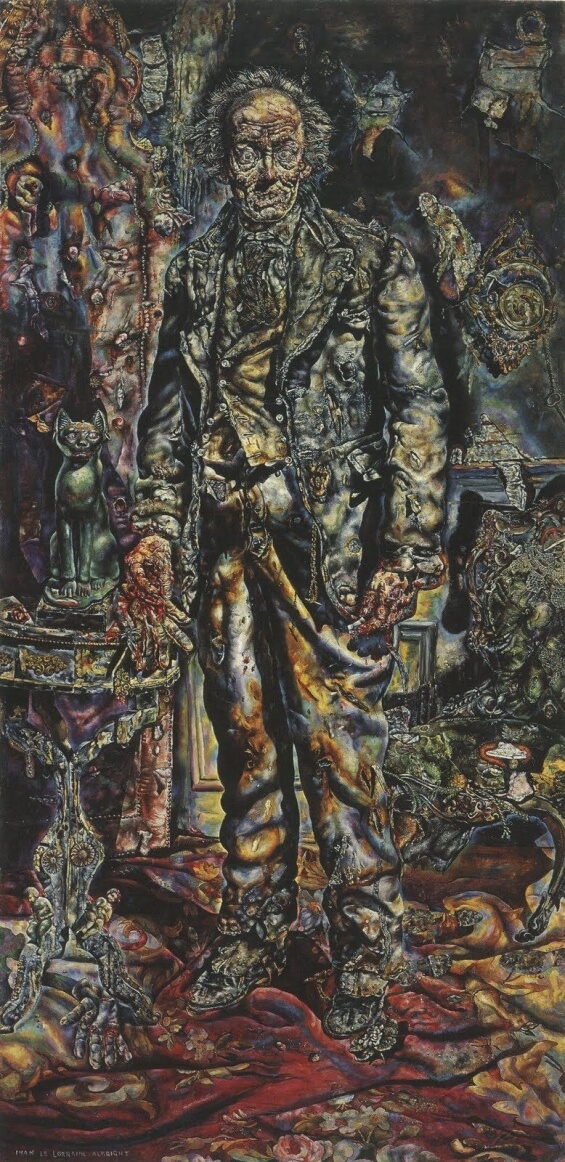
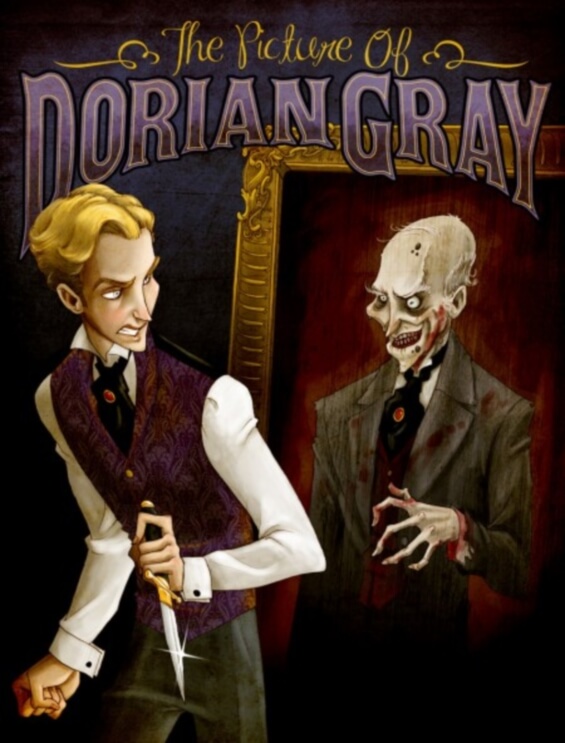
 The SFFaudio Podcast #333 – The Picture Of Dorian Gray by Oscar Wilde. Participants in the discussion include Jesse, Julie, Seth, and Rose.
Talked about on today’s show:
the 1891 version, the 1890 version, Heather Ordover‘s reading of The Picture Of Dorian Gray, a rich odor of lilac, a saddle-bagged divan, Mark Twain’s A Double Barrelled Detective Story, making fun of somebody, a single esophagus, elaborate descriptions, oriental texts, the monotony and tedium of this kind of life, Lord Henry’s epigrams, entertainment vs. a savage critique of society, the dark side, being clever vs. delving deeper, Basil, sin, vanity, a Faustian pact, eternal beauty, beauty as inspiration, don’t say such things in front of Dorian!, the preface, epigrammatic writing, the trial, celebrity, the libel lawsuit, Basil’s trip to France, giving in to the senses, the decadent movement, turns of phrase, the cost of everything and the price of nothing, little witticisms, art and artists, the Gothic parts, those who find ugly meanings in beautiful things, taking the preface seriously, Edgar Allan Poe, should I take this seriously, the decline of the epigrammatic novel, linguistic sophistry, “all influence is immoral”, being immoral is fine, the seven deadly virtues, The Hound by H.P. Lovecraft, a wizard’s medallion, so full of ennui, St. John is a mangled corpse, devastating ennui, only the somber philosophy of the decadents, Baudelaire, that detestable course, Lovecraft’s response to what Wilde was responding to, the Black Museum, voluminous black hangings, the uncovered grave, just like Dorian Gray, another literary connection, The Great Gatsby, skeletons in his closet, the critic and the spectator, all art is quite useless, putting too much into art, the lowest form of art, Lord Henry never involves himself, Wilde can’t adhere to his own philosophy, putting yourself into art, the yellow covered book, he was poisoned by a book, swayed by everything, the book argument, Sibyl Vane, Juliet, Imogen, Viola, perpetuating Basil’s error, lots of cool things in it, the jewels and the clothing and the fabric, Renaissance poisonings, evil as a mode to realize the beautiful, so many good things to like, Sibyl Vane as a reflection of Dorian Gray, reflected suicide, Vane as a triple entendre, killed by her grease paint, the Yellow Book, Jesse loves intertextual things, À Rebours by Joris-Karl Huysmans, ten bound copies bound in different colours, double the amount of orchids and no white ones, every flavour of feeling and experience, indulging in every kind of experience, living your life as a piece of art, the Yellow Book rebound for every mood he was in, camouflage, yellow as code for gay, the yellow nineties (the 1890s), adding a layer, To Kill A Mockingbird, 1894, The Yellow Book (magazine), 1895, The King In Yellow by Robert W. Chambers, symbolism of artistic movements, the vane family, Dorian as a byproduct of melodrama, an allegory for artistic movements, a reaction to Victorianism, reveling in immorality, a sin of thoughtlessness, eventually all that’s left is evil, the rage of Caliban, this is a really important book, the deal with the devil, super-realistic, a very constructed book, making a very real point, the second time Caliban comes up, the Lipincott’s version, the critics mostly savaged the book, then the preface as a standalone defense, the volume publication, edits, the second appearance of Caliban, The Tempest by William Shakespeare, Miranda, the beginning of chapter 7, the Jewish manager, The Horror At Red Hook, racism, a pompous humility, going bankrupt over a poet, anti-semitism, making fun of Charles Dickens, is it just Dorian Gray that’s racist?, the most amazing waistcoat, gorgeous servility, behind the scenes, the “Bard”, you can’t trust anything Lord Henry says, private letters, Dorian Gray starts to resemble in his interests and his appearance the Jew manager, ugly on the outside, overly dramatized servility, Mrs. Vane’s words, indentured servitude or genuine theatrical enthusiasm, wanting Sibyl Vane to succeed, you can’t trust appearances, the chapter about jewels, cloth, Dorian Gray is obsessed with exterior appearance, Fitz-James O’Brien’s The Diamond Lens, a microscopist, what you need is a diamond for your microscope, it doesn’t count, casual racism, this is why we cannot censor books, “man” instead of “Jew”, the hideous man in an amazing waistcoat, re-reading Uncle Tom’s Cabin by Harriet Beecher Stowe, we love them, in one letter, a massacre of Jews, Wilde loves to shock, Basil is who Oscar Wilde sees himself as, artists pouring things in to books that they can’t themselves see, an accumulated spackle (of censorship), Geoffrey Chaucer, Julie’s movie group, Philomena, what are we doing?, putting a taboo on looking at power, horrible corruption, Basil’s murder, first time reads, Lord Henry’s wife is named Victoria, why it isn’t called a “portrait” of Dorian Gray, The Oval Portrait by Edgar Allan Poe, “It’s perfect!”, The Canterville Ghost as a redemptive and sweet story, an obvious homage to Mr Hyde from Strange Case Of Dr Jekyll And Mr Hyde by Robert Louis Stevenson, how do you balance, looking at temptation, starting in a garden, the poison of the book, Henry is wreathed in smoke [like Satan!], something with strawberries, if this is a Faustian tale…, the issue we all deal with all of the time, The Long Conversion Of Oscar Wilde, flirtations with Catholicism, 1888, the very first book where spoiler applied is Strange Case Of Dr Jekyll And Mr Hyde, we know about the painting, the scientist friend should have been named Dr Jekyll, Jesse watched almost every movie version, I need my equipment…I hate you, a later suicide, this book applies to the entire Victorian society, saying the same thing a different way, Sherlock Holmes, 1891, The Yellow Wallpaper, 1892, The Time Machine, 1897, Dracula, The Island Of Dr Moreau, 1899, Heart Of Darkness, will the books of this decade be remembered in 120 years?, The Rosie Project, Fifty Shades Of Dorian Gray, are we sympathetic?, nudges, and the audio drama, will you stay tonight, the 1945 film version is very good and faithful, the use of color, fifty shades of silver, 1973 TV movie version (is on YouTube), Dark Shadows, Angela Lansbury as Sibyl Vane, 1976 version, Jeremy Brett as the painter, the 2009 horror movie version is horrible, Colin Firth, the niece, every Dorian Gray is handsome, too handsome, why is no one asking about his youthful appearance?, diet or exercise, male Dorian Grays, the Selfie Of Dorian Gray, modern gender views, really quite gay, Wilde, Stephen Fry, Wilde’s children and wife, the term “homosexual”, indecency.
Posted by Jesse Willis

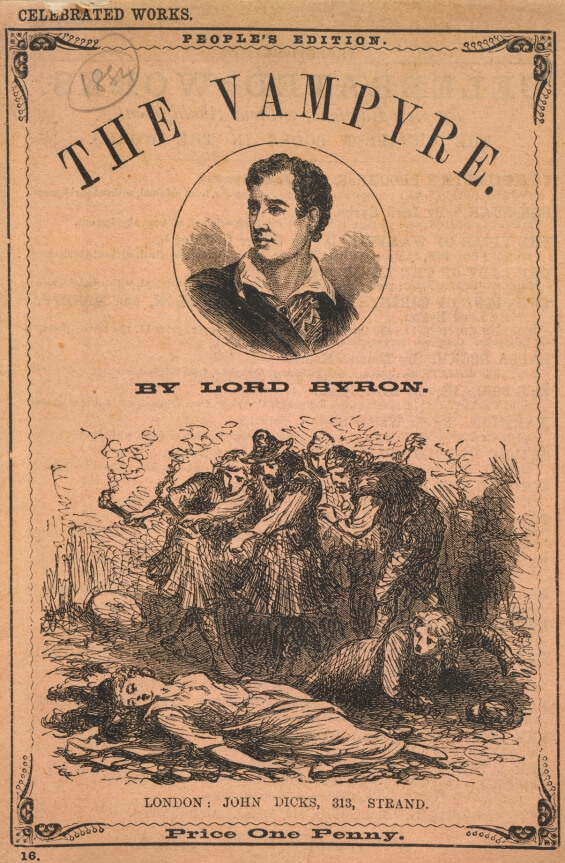
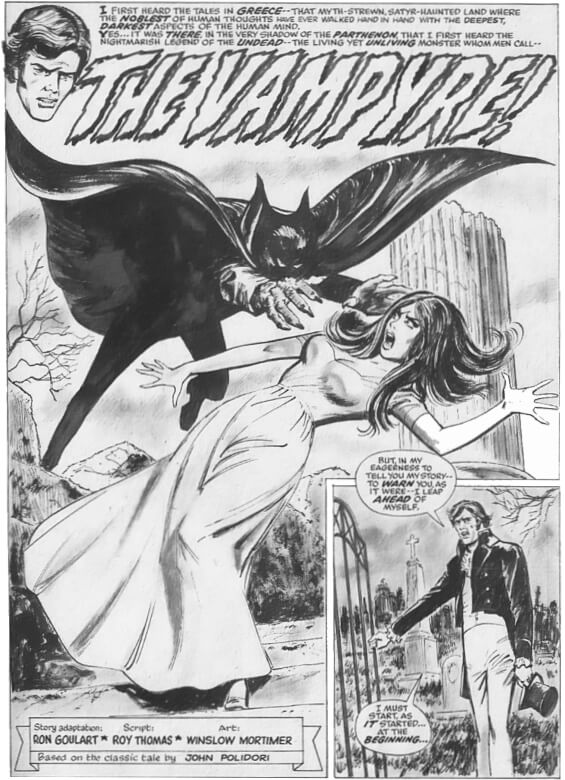
Once thought to have been written by Lord Byron, The Vampyre is one of the earliest fictions about vampires. It precedes Bram Stoker’s Dracula by 78 years!
In the summer of 1816 Europe suffered a climate abnormality. Holed up in a chateau near Lake Geneva, Lord Byron, Percy Shelley, Mary Shelley, Claire Clairmont and Dr John Polidori were kept inside by three days of rain. To pass the time indoors yhe five romantics read aloud from a French anthology of German ghost stories, Fantasmagoriana. Inspired by these, and their own experiences, both Mary Shelley and Dr John Polidori would produce their own fantastic tales. Mary Shelley’s was of course Frankenstein, Polidori’s was The Vampyre.
Check out narrator Gregg Wagland‘s worthy reading of The Vampyre by Dr John Polidori.
Posted by Jesse Willis