Review of The Shield-Maiden by Michael Tinker Pearce and Linda Pearce

SFFaudio Review

The Shield-MaidenThe Shield-Maiden (The Foreworld Saga: A Foreworld SideQuest #4)
By Michael Tinker Pearce and Linda Pearce; Narrated by Mary Robinette Kowal
Publisher: Brilliance Audio
Publication Date: 4 January 2013

Themes: / Mongoliad / Vikings / fantasy / warriors /

Publisher summary:

Sigrid is a Shield-Maiden who yearns to break free of the restrictions of her father’s home and join the Sworn Men in an actual raiding expedition. When a small diplomatic party that includes members of the Shield-Brethren lands at her family’s holding on Göttland, the party’s second in command, Halldor, sees in Sigrid a vision of beauty and power that might challenge – and even destroy – many men.

And when bloody chaos ensues at a nearby Viking fishing village, Sigrid proves she has more than mere talent: she has Vor – the fate sight – an astonishing focus in fighting that sets her apart from nearly all who have ever lived and puts her in the rare company of the finest Shield-Brethren.

But as Sigrid and her family confront her otherworldly ability, will it prove to be a gift to be celebrated, or an affliction to be cured?

Review:

Note: This book is available individually (as I listened to it) or as a part of the book SideQuest Adventures No. 1, which includes The Lion in Chains, The Beast of Calatrava: A Foreworld Sidequest, and this story.

As with The Lion in Chains and The Beast of Calatrava: A Foreworld Sidequest, this story is a “sidequest” in the Foreworld Saga, basically a side story to the main-line books intended to give readers more information on certain characters. As with The Beast of Calatrava: A Foreworld Sidequest, this story seemed to be farther removed from the main crusades in The Mongoliad world, taking place in the north sort of near where the Shield Brethren have their main training facility, though one of the characters, Halldor, may have been a minor character in the main series (his name was familiar, at least).

This short story explores the mysterious “Vor,” the somewhat mystical “force” that overtakes many of the Shield Brethren when they fight. In this story, we see that this force, which is often mentioned in reference to the visions that some of them have (notably, Percival), can also afflict female warriors, and that it is also attributed to feats of amazing bravery and strength, that it is what enables the Shield Brethren to be victorious even against crazy odds. The main character in this story is a young woman, Sigrid, the daughter of the land owner where the story occurs. She has trained as a Shield Maiden, though still lives on her father’s lands, hasn’t been allowed (by her father) to join any of the local skirmishes, even though she’s taken a vow to be a Shield Maiden. Things change, however, when her people find themselves under attack by some Danes, where Sigrid’s ability in battle helps win the day–plays a key role in the victory, in fact. Suddenly, her family, her people, and Sigrid herself, must come to terms with what she is and what she can do. This story was refreshing in that it was primarily about a female warrior, though some of the reactions from the other characters were all too familiar.

Narrated by Mary Robinette Kowal, it was fitting to have a female voice narrate the story of the female warrior. Kowal’s narration was quite good, far superior to the narrator in Siege Perilous (the only other Mongoliad-world story I’ve listened to not narrated by Luke Daniels). That said, sometimes the pronunciation was odd, for places or things mentioned in this book and in others. For example, the island where the Shield Brethren do their initiation was pronounced by Kowal as “Tear’s Hammer” where Daniels pronounced it “Tear-shamar). This sometimes made it confusing to keep the entire world in my head as I listened, but did not detract from the overall story.

All in all, it was a nice diversion for a Saturday afternoon. Continue reading
Review of City of Golden Shadow by Tad Williams

SFFaudio Review

City of Golden ShadowCity of Golden Shadow (Otherland #1)
By Tad Williams; Narrated by George Newbern
Publisher:  Penguin Audio
Publication Date: 30 October 2014
[UNABRIDGED] – 28 hours, 42 minutes

Themes: / cyberpunk / virtual reality / science fiction /

Publisher summary:

Surrounded by secrecy, it is home to the wildest dreams and darkest nightmares. Incredible amounts of money have been lavished on it. The best minds of two generations have labored to build it. And somehow, bit by bit, it is claiming the Earth’s most valuable resource – its children.

Review:

I hate to admit this, but I judged this book by the cover at first. I knew nothing about the book when I started listening, I hadn’t even read the blurb in the description. I saw a fantastical-looking image on the cover and, knowing that Tad Williams typically writes fantasy novels/series, I just assumed it was a fantasy novel. I was wrong. This is actually a cyberpunk book, a quite good one at that. There was only one downside to the book, which I may as well get out of the way now: it’s not a complete story. The book ends with no plot lines resolved and more questions than answers…so, if you read this book, be prepared to read at least the next book in the series (River of Blue Fire. I say “at least” because I have only just started that book (and it’s 24.3 hours long!), and I have no idea if it resolves any of the story. There are 4 books in the Otherland series in total (City of Golden Shadow, River of Blue Fire, Mountain of Black Glass, and Sea of Silver Light, the first two of which are available in audio so far).

The plot is intriguing. In a future-world setting (the book was written in 1996), virtual reality (VR) in the form of using an avatar to explore the “net,” is fairly commonplace. Many people, instead of congregating/living in cities with malls and town centers and such, live good parts of their lives in the virtual world. At least, the younger people seem to do this. Main character Reny (a nickname for Irene) is a teacher of computer science/VR manipulation at a university. One day she comes home to find her little brother, Steven, comatose after spending some time in the VR world. Setting out to try to figure out what left him in the coma, she comes across a hint of a world called “Otherland,” a world within the VR world. In parallel, a kid named Orlando is exposed to “Otherland” in a part of his online video game. They find themselves searching for answers on Otherland, enlisting the help of some others who have also found out about the mysterious world, all seeking answers for what it is and why it’s harming kids. There is another story in the book, of a man named Paul. He may or may not have been a soldier in World War II, but somehow has found himself stuck in the world of Otherland without the ability to escape. There is also the story of those running Otherland, some with more nefarious reasons than others…

The entire plot is engaging, if sometimes a little confusing to keep track of who is where (especially at first, as the world and characters are introduced). That said, the book drew me in more or less from the get-go, and I found excuses to listen more as I went about my days. Williams, unlike many authors I’ve read recently, is able to describe the world and the technology organically through the telling of the story. Where some people would spend time info-dumping, Williams is able to make the world comprehensible by explaining things to characters, or having the reader go along with the process of discovery with the characters. For a book written in 1996, Williams was somewhat a visionary of technology and how people use it. In the book, there are VR systems (think: Oculus Rift taken to the extreme), normal day-to-day use of the internet, tablets, videophony…things that are in the early years of widespread adoption now.

The characters in this book are very interesting. I’ve read a lot of complaints, recently, from people who wish that there were more women and/or minorities in the books that they read, especially genre fiction. This book doesn’t have that problem. Reny is a South African black woman, and one of her closest friends through the story is a native African. One of the main villains is Australian and there seem to be people from across the globe involved in either the world or trying to study the world. When Reny needs help, she turns to another woman (another professor in computer science-type fields) for aid, and though men are involved, they are on an equal footing with the women. While I normally don’t fault a book for having weak female characters, it was refreshing to have such diversity in the book.

George Newbern’s narration was fantastic, if a little slow. I found that I had to bump up the playback speed slightly, otherwise it felt like the pauses were a little too long, the speech a little too slow. This made some of the characters or world aspects a little hard to understand at times (pronunciation-wise), but that didn’t detract from the story. It was always easy to keep track of who was talking and what was going on, thanks to Newbern’s voices for the characters and for the main narration.

All in all, I really liked this book. I wish it had come to some form of closure, or at least given some more hints on the motives of the villains, but that’s a minor complaint. I’ve already started the second book and can’t wait to see where the story goes.

Posted by terpkristin.

The SFFaudio Podcast #303 – READALONG: The Narrative Of Arthur Gordon Pym Of Nantucket by Edgar Allan Poe

Podcast

The SFFaudio PodcastThe SFFaudio Podcast #303 – Jesse and Paul Weimer talk about The Narrative Of Arthur Gordon Pym Of Nantucket by Edgar Allan Poe

Talked about on today’s show:
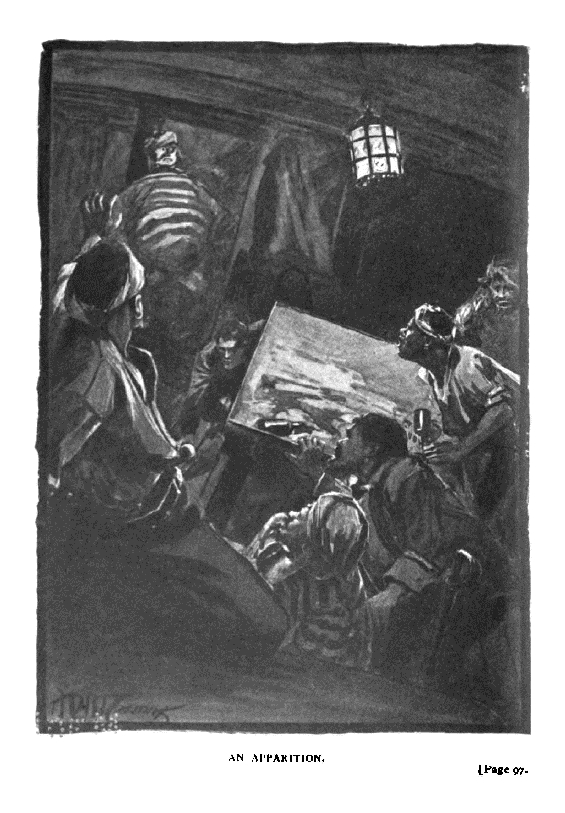
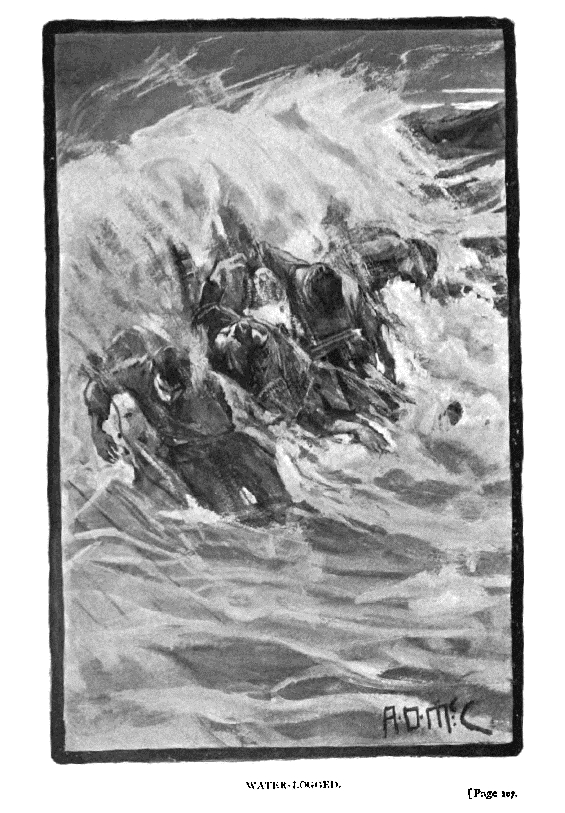
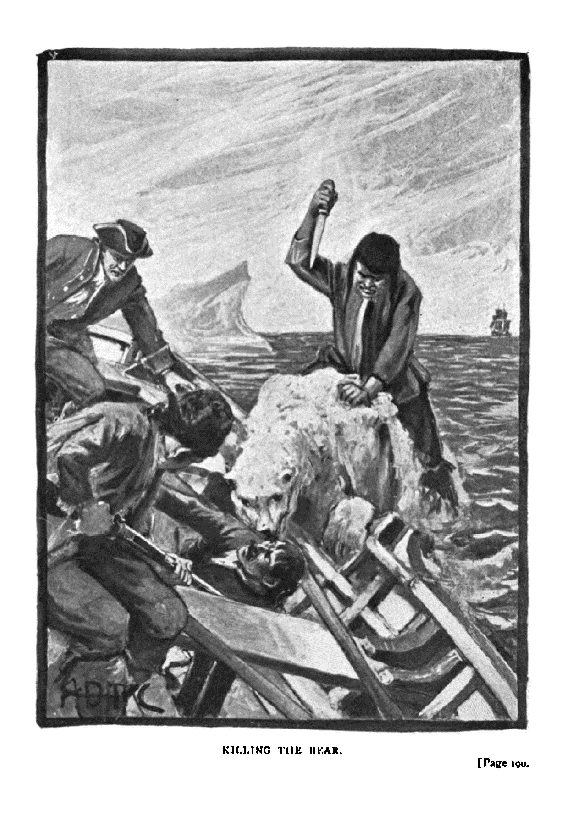
1838, Poe’s only completed novel, Paul’s Poe years, The Tell-Tale Heart, a macabre sort of phase, Deus Irae by Philip K. Dick and Roger Zelazny, fix-ups, Premature Burial, Ms. Found In A Bottle, The Oblong Box, The Gold Bug, secret codes, Poe is old and public domain and not particularly racist, The Pit And The Pendulum, the Poe theme, the death of a beautiful woman is conspicuous by her absence, the meta-commentary, Tristram Shandy, The Cask Of Amontillado, a dog named Tyger (burning bright?), William Blake, Jules Verne, An Antarctic Mystery, Ms. Found In A Copper Cylinder, Antarctica, “Ms. Found In A…”, “it was begun to have been serialized”, fake stories as true stories, Captain Cook’s Antarctic expeditions, “a labyrinth of lumber”, how to load a ship, Moby Dick by Herman Melville, Washington Irving, SF as a generally American phenomenon, a slow creep of fantastic elements, full-blown surrealism, the drinking, on the Grampus, dressing like a ghost, another phantom in white, “Mr. Pym is not available”, a genuine narrative, missing islands, a metaphor for alcoholism, sailing in a storm, half-sunk/drunk, echoes, the plague ship, the Penguin, echoes, all these lies, a note from the Wikipedia entry, fictional analogues for real events, autobiographical drinking, The Lighthouse by Edgar Allan Poe (a fragment), “I expected to inherit some money”, money problems, “he’s pouring his troubles into this manuscript”, this is Poe’s version of Dude, Where’s My Car?, an unreliable narrator, an excellent story, Samuel Taylor Coleridge’s The Rime Of The Ancient Mariner, albatrosses, thematic similarities, they eat many birds, “an unmentionable thought”, subsequent cannibalism, the same ghost ship as in Rime?, Antarctic spirits, H.P. Lovecraft, the subtitle:

Comprising the Details of Mutiny and Atrocious Butchery on Board the American Brig Grampus, on Her Way to the South Seas, in the Month of June, 1827. With an Account of the Recapture of the Vessel by the Survivers; Their Shipwreck and Subsequent Horrible Sufferings from Famine; Their Deliverance by Means of the British Schooner Jane Guy; the Brief Cruise of this Latter Vessel in the Atlantic Ocean; Her Capture, and the Massacre of Her Crew Among a Group of Islands in the Eighty-Fourth Parallel of Southern Latitude; Together with the Incredible Adventures and Discoveries Still Farther South to Which That Distressing Calamity Gave Rise.

who wrote the subtitle?, they didn’t have the concept of spoilers, the opposite of a spoiler, The Savage Land (Marvel Universe), Edgar Rice Burroughs’ The Land That Time Forgot, a hollow earth theory, this is a Science Fiction book in a strange sense, what’s with the multi-layered coloured water?, the strange creatures, the creature’s corpse in the white waters, is Australia a place?, At The Mountains Of Madness, why Poe is not in outer space, basically these Antarctic people are aliens, this is very Stanley G. Weinbaum (A Martian Odyssey), Michael Moorcock’s Seas Of Fate, H. Rider Haggard, duplicitous natives in the black land, what will be in the white lands?, a heavily read book (in the 19th century), The House Of The Seven Gables by Nathaniel Hawthorne, when Lovecraft describes it…, haunted by the architecture of homes, Lovecraft’s description of Pym:

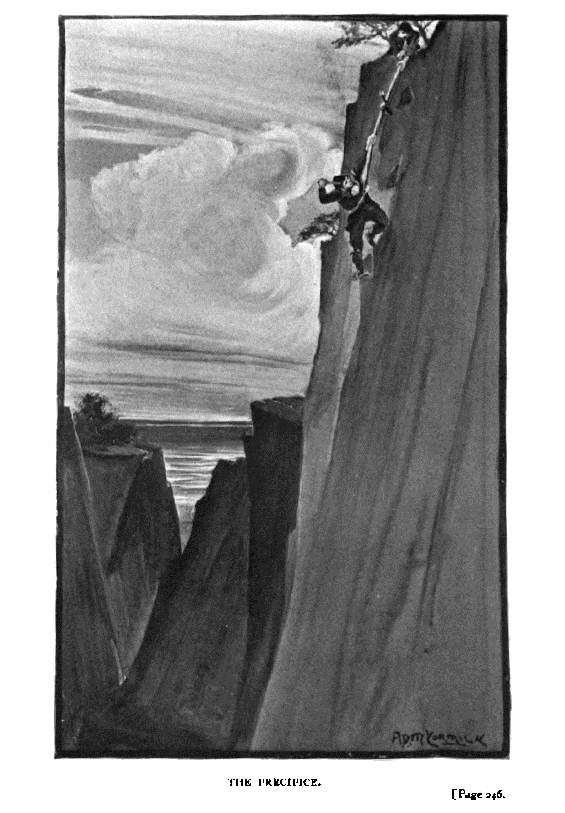
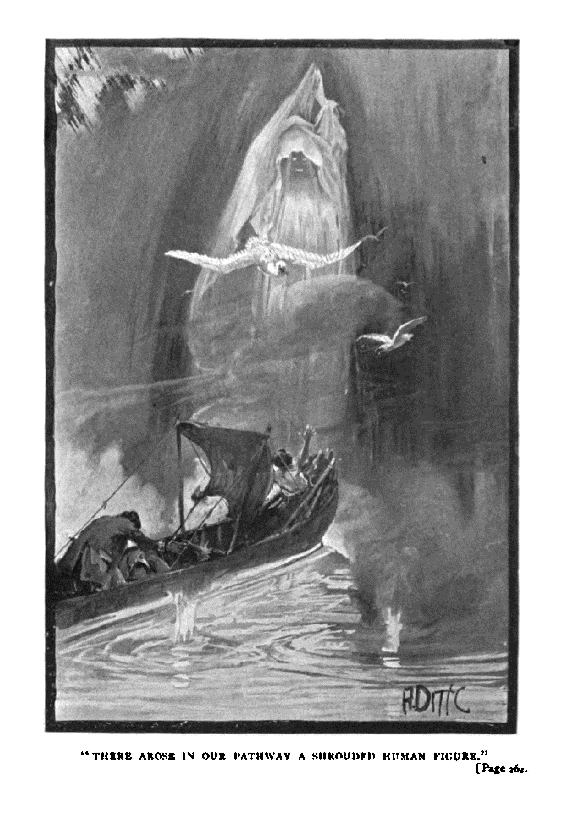
“In the Narrative of A. Gordon Pym the voyagers reach first a strange south polar land of murderous savages where nothing is white and where vast rocky ravines have the form of titanic Egyptian letters spelling terrible primal arcana of earth; and thereafter a still more mysterious realm where everything is white, and where shrouded giants and snowy-plumed birds guard a cryptic cataract of mist which empties from immeasurable celestial heights into a torrid milky sea.”

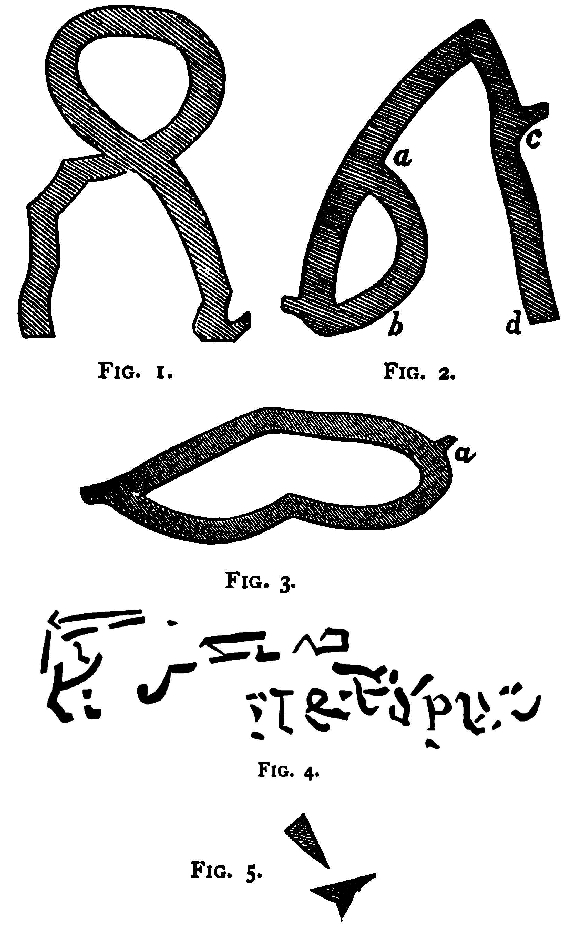
pouring into the hollow Earth?, Journey To The Center Of The Earth, At The Earth’s Core, Kublah Khan by Samuel Taylor Coleridge, leaving the ending open to the reader, how will he get back to Nantucket?, the names A. Gordon Pym and E. Allan Poe, framing devices, The Turn Of The Screw, a framing device gives the reader an extra distance, The Secret Sharer by Joseph Conrad, Robert Silverberg’s The Secret Sharer, the southern polar bear, “Tekeli-li, tekeli-li.” the face of an open book, downy feathers, what does it mean?, whiteness, philological scrutiny, “white-phobic”, the audiobook narration, copyright, a total Poe thing to do, Poe loved cryptography, Poe would be writing in Elvish, a font nerd, hanging out with Charles Stross and Alan Moore, can you imagine Poe at a Worldcon?, a drunkard’s story, shoplifting at The Innsmouth Bookshop, Fungi From Yuggoth XV: Antarktos:

Deep in my dream the great bird whispered queerly
Of the black cone amid the polar waste;
Pushing above the ice-sheet lone and drearly,
By storm-crazed aeons battered and defaced.
Hither no living earth-shapes take their courses,
And only pale auroras and faint suns
Glow on that pitted rock, whose primal sources
Are guessed at dimly by the Elder Ones.

If men should glimpse it, they would merely wonder
What tricky mound of Nature’s build they spied;
But the bird told of vaster parts, that under
The mile-deep ice-shroud crouch and brood and bide.
God help the dreamer whose mad visions shew
Those dead eyes set in crystal gulfs below!

the black cone, the primal sources, Lovecraft quoting himself, that shrouded white figure, “Tekeli-li don’t kill the albatross”, Lemuria, Thule, the novel as a journey, how do you return from the surreal?, what happened to Tyger?, they ate him!, Dirk Peters (so manly he has two penises), Tyger’s collar, someone was going to drown the dog, poor Tyger, a horrendously awful horrifying experience, when Paul Theroux visited Jorge Luis Borges he read him The Narrative Of Arthur Gordon Pym Of Nantucket, Borges thought Pym was Poe’s greatest work, the interest in the meta, strange runes, Lovecraft was a teetotaler, deep into madness (not drunken madness), genetic disease or confronting reality, The Call of Cthulhu, dreams, a fever dream?, forgetting, a change in tenses, the missing two or three final chapters, Xeno’s paradox, a Mercator map, and Greenland, is that all racism?, “a nautical negro”, Toni Morrison, the black cook, don’t go into a tiny box-canyon with natives of any colour, scrupulously honest, earlier bushwhacked voyagers, going piratical?, going whaling?, the mutiny, Mr. Starbuck, why is Pym stowing away in the first place?, the captain that ran them down was drunk, boating skills, Treasure Island, Augustus’ father, the inexplicable weevils, “taking liberally from the spirits”, this narrative is full of holes, a free sea voyage, Pym is a teenager, everybody has a boat on Nantucket, an adventure of a lifetime, Pym is “not available”, Jeremiah N. Reynolds, Poe’s last word was “Reynolds”, a possibly apocryphal story, Mocha Dick, the long conversation of conversation of Science Fiction, Moby Dick is in dialogue with Pym and Mocha Dick, bibliographic archaeology, The Island Of Doctor Moreau by H.G. Wells, in a dinghy, considering cannibalism, drawing straws, “and dropped like stones”, did their bones dropped likes stones?, the narrator becomes more and more unreliable, dis-masted, a teetotaler who drinks only coffee.

The Narrative Of Arthur Gordon Pym Of Nantucket - subtitle

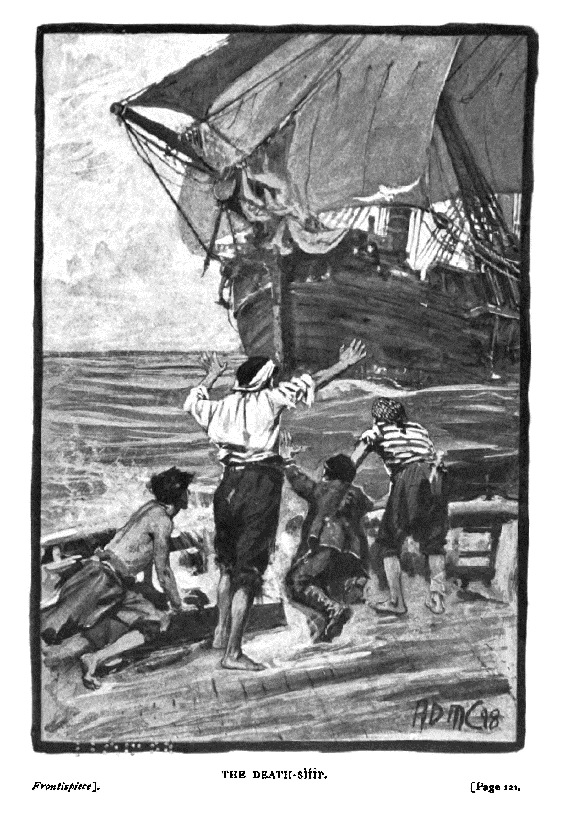
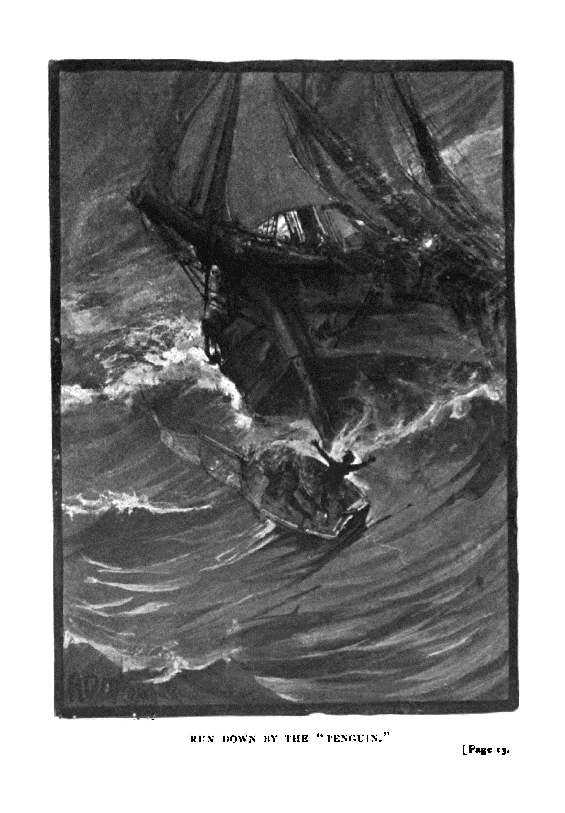
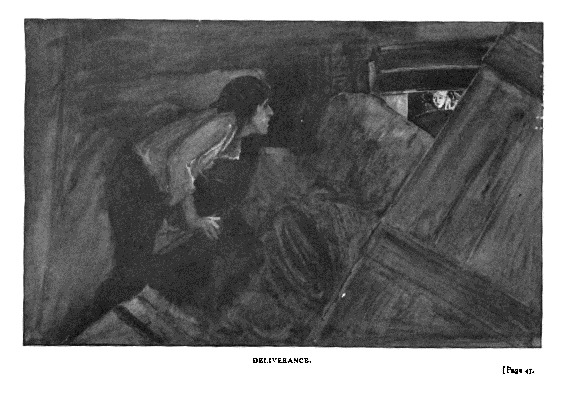
The Narrative Of A. Gordon Pym by Edgar Allan Poe - 1902 illustration by Frederick Simpson Coburn

The Narrative Of A. Gordon Pym by Edgar Allan Poe - 1902 illustration by Frederick Simpson Coburn

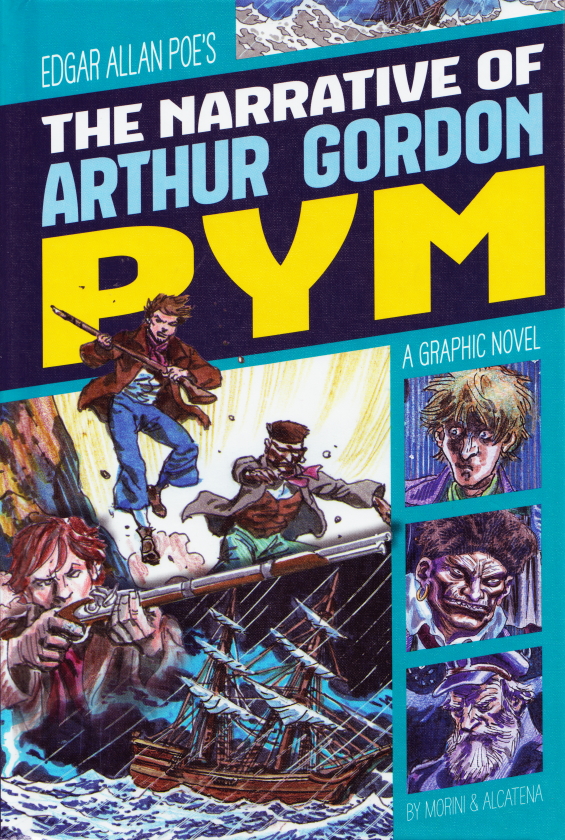
The Narrative Of Arthur Gordon Pym adapted by Morin and Alcatena

Posted by Jesse Willis

The SFFaudio Podcast #302 – AUDIOBOOK: The Narrative Of Arthur Gordon Pym Of Nantucket by Edgar Allan Poe

Podcast

The SFFaudio PodcastLit2GoThe SFFaudio Podcast #302 – The Narrative Of Arthur Gordon Pym Of Nantucket by Edgar Allan Poe, read by Rick Kistner.

This UNABRIDGED AUDIOBOOK (6 hours 14 minutes) comes to us courtesy of Lit2Go, a fabulous website offering individual chapter MP3s and streaming audio (all available HERE).

The Narrative Of Arthur Gordon Pym Of Nantucket was first published in 1838.

The next SFFaudio Podcast will feature our discussion of it!

The Narrative Of Arthur Gordon Pym Of Nantucket by Edgar Allan Poe
TheNarrativeOfArthurGordonPymOfNantucketByEdgarAllanPoe_Page_021
TheNarrativeOfArthurGordonPymOfNantucketByEdgarAllanPoe_Page_056
TheNarrativeOfArthurGordonPymOfNantucketByEdgarAllanPoe_Page_107
TheNarrativeOfArthurGordonPymOfNantucketByEdgarAllanPoe_Page_118
TheNarrativeOfArthurGordonPymOfNantucketByEdgarAllanPoe_Page_211
The Narrative Of Arthur Gordon Pym Of Nantucket by Edgar Allan Poe - Page 254
TheNarrativeOfArthurGordonPymOfNantucketByEdgarAllanPoe_Page_260
TheNarrativeOfArthurGordonPymOfNantucketByEdgarAllanPoe_Page_277

Posted by Jesse Willis

X Minus One: Junkyard adapted from the story by Clifford D. Simak

SFFaudio Online Audio

X-Minus OneJunkyard
Based on the short story by Clifford D. Simak; Adapted by George Lefferts; Performed by a full cast
1 |MP3| – Approx. 30 Minutes [RADIO DRAMA]
Broadcaster: NBC
Broadcast: February 22, 1956
Provider: Internet Archive
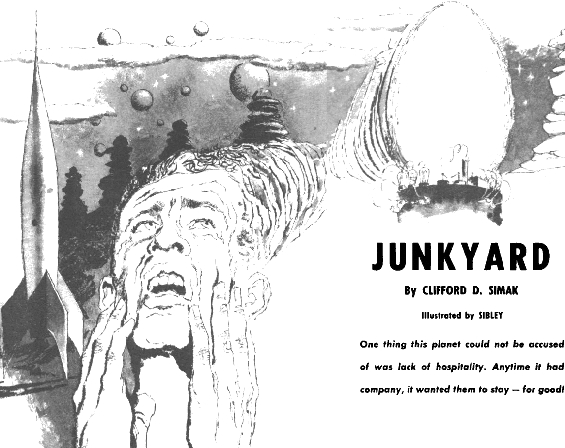
A spaceship finds some strange artifacts from an unremarkable planet. But when the crew tries to take off they find that they’ve forgotten how to fly the ship.
First published in Galaxy, May 1953.

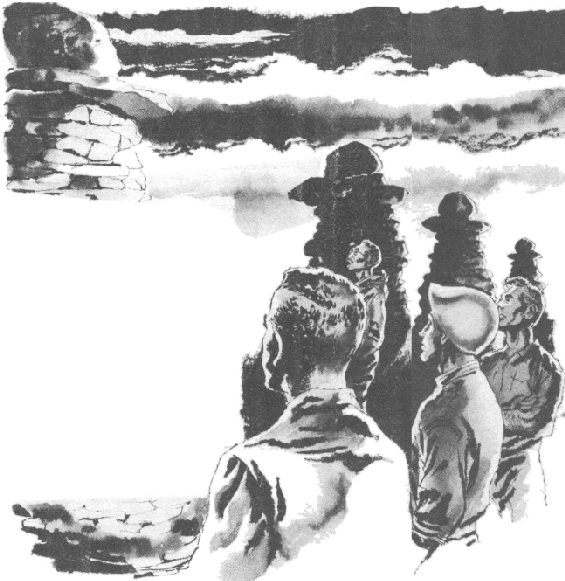
Though the original story is still under copyright in the United States the X Minus One adaptation (above) and the original Don Sibley illustrations, from Galaxy, May 1953, (below) are in the PUBLIC DOMAIN.

Junkyard by Clifford D. Simak - Illustrated by Don Sibley

Posted by Jesse Willis

The SFFaudio Podcast #301 – NEW RELEASES/RECENT ARRIVALS

Podcast

The SFFaudio PodcastThe SFFaudio Podcast #301 – Jesse, Scott, Jenny, and Tamahome talk new releases and recent arrivals.

Talked about on today’s show:
Reading goals and the Reading Envy podcast, spy novels, The IPCRESS File by Len Deighton is a more serious version of James Bond, film version stars Michael Caine, The Bourne Identity by Robert Ludlum, Rogue Male by Geoffrey Household, SFFaudio Podcast #95 features a discussion with Eric Rabkin about SS-GB by Len Deighton, a Britain-centered, less crazy version of Man in the High Castle by Philip K. Dick, Scott on rereading Hyperion (but hasn’t read Fall of Hyperion), the Hyperion audiobook is highly recommended, Wool by Hugh Howey now a graphic novel, Jesse doesn’t like open questions that require him to read more, Kindle Worlds, Mobile Library by David Whitehouse, Bookworm villain from Batman, The Magician’s Lie by Greer Macallister reminiscent of The PrestigeA Pleasure and a Calling by Phil Hogan, some synopses are better-written than others, Patricia Highsmith, The Brenda and Effie Mysteries: The Woman in a Black Beehive by Paul Magris especially for audio, The Last Passenger by Manel Loureiro, Aurora CV-01 by Ryk Brown looks to be the perfect Scott book, this podcast features a real phaser, Hellhole by Gina Damico (not to be confused with the Kevin J. Anderson book of the same name), never underestimate evil on a sugar high, Proxima by Stephen Baxter, on how discoveries in astronomy affect science fiction, Kate Wilhelm in Orbit by Kate Wilhelm is a collection of her short stories from ca. 1966-1980 in Orbit anthologies, Scott didn’t “get” Wilhelm’s short story The PlannersSuperEgo by Frank J. Fleming, I Am Not a Serial Killer by Dan Wells, Dexter in spaaaaaaace!, A Murder of Clones by Kristine Kathryn Rusch is part of the Retrieval Artists universe, first audiobook in the series produced by Scott, the series would make a good TV show, The Android’s Dream by John Scalzi narrated by Will Wheaton, Future Crime by Ben Bova, a collection of short stories, file sharing used to happen by mail, we demand the return of cassettes (not!), #GetOffMyLawn, Pacific Edge by Kim Stanley Robinson is part of a triptych, an actual utopia, Orange County of the future, Jesse and Scott met Kim Stanley Robinson at WorldCon, no kaiju, Mort(e) by Robert Repine, Southern Reach trilogy by Jeff VanderMeer now available in one package via Audible, “there must be something wrong with it, it’s too popular!”, Make Room! Make Room! by Harry Harrison a.k.a. the book that inspired Soylent Green, Jenny lives on lentils and soybeans, The Deep by Nick Cutter, The Abyss meets The Shining, discussion of The Abyss which is recommended sans the last five minutes, Freedom Club by Saul Garnell, Trigger Warning short story collection by Neil Gaiman, on authors doing test runs or tryout stories to develop an idea, the difference between plotters and pantsers, The Globe: The Science of Discworld II by Terry Pratchett, Ian Stewart, and Jack Cohen is actually a novel, Jenny debunks the theory that all stories come from an origin, Endsinger by Jay Kristoff, Marked by Sarah Fine, Piers Anthony’s Apprentice Adept series, these books may or may not be kinky–weird kinky, Strange Case of Dr. Jekyll and Mr. Hyde by Robert Louis Stevenson, David Hasselhoff does the musical, Markheim, a short story by Stevenson.

Posted by Jesse Willis