Commentary: Fredric Brown’s Eternal Arena

SFFaudio Commentary

For nearly a year I’ve been studying the extensive influence of Fredric Brown’s 1944 short story, Arena. It took a recent article, on roughly the same topic, over on the excellent bare•bones e-zine blog, to prompt me to actually finish writing up this post – which is essentially a collection of inspired by and/or similar stories. That other post, by Jack Seabrook, mostly covers the Outer Limits‘ response to Arena – which is something that I’ve only briefly mentioned. Seabrook’s article and the thoughtful comments it’s spawned are well worth looking at |HERE|. One of the comments there also points out the connection to Richard Connell’s The Most Dangerous Game (but that’s another post altogether). My post on Arena begins here:

Arena (noun) – [Latin harēna, arēna, sand, a sand-strewn place of combat in an amphitheater, perhaps of Etruscan origin.] -1. An enclosed area, often outdoor, for the presentation of spectacular events -2. The part of a Roman amphitheater that was covered with sand to absorb the blood spilled by the combatants.

The SFFaudio Podcast #051 had a brief primer, by Professor Eric S. Rabkin, on Fredric Brown‘s spectacular short story Arena. Rabkin pointed out the curious description of the alien, and the year in which the story was first published (1944). The story being a fascinating metaphor for the Pacific War. The description of the alien, a “red sphere with several dozen fully retractable thin tentacles” is nicely comparable it with the Imperial Japanese battle ensign…

War flag of the Imperial Japanese Army:

War flag of the Imperial Japanese Army

Now if we keep looking for symbols, we can certainly find them. Take the blue sand of the arena itself. If Carson represents the USA, and the alien represents Japan, would the pervasive blue sand not therefore be representative of the Pacific Ocean? Of course it would!

Next, check out the original story, available in an unabridged audiobook version created by Rick Jackson (aka The Time Traveler) for The Time Traveler Show podcast…
The Time Traveler - Arena by Fredric BrownArena
By Fredric Brown; Read by William Spurling
1 |MP3| – Approx. 1 Hour [UNABRIDGED]
Podcaster: The Time Traveler Show
Podcast: July 23rd, 2006
The mysterious Outsiders have skirmished with Earth’s space colonies and starships. Their vessels are found to be faster and more maneuverable, but less well armed. Survivors of these encounters are able to provide little other information about the enemy. Fearing the worst, Earth builds a war fleet. Sure enough, scouts report a large armada approaching the solar system. Earth’s defenders go to meet them. All indications are that the two fleets are evenly matched. First published in the June 1944 issue of Astounding Science Fiction magazine.
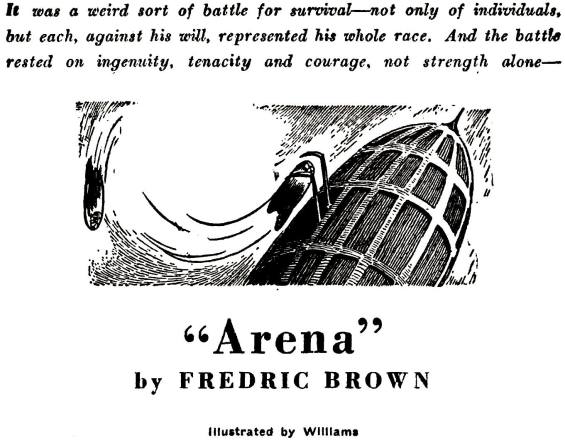
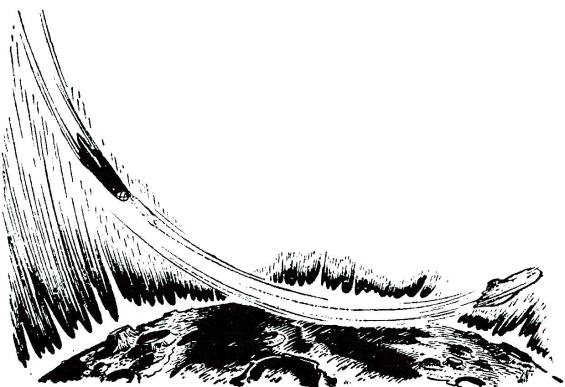
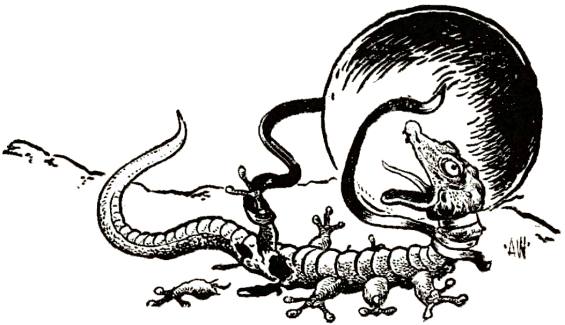
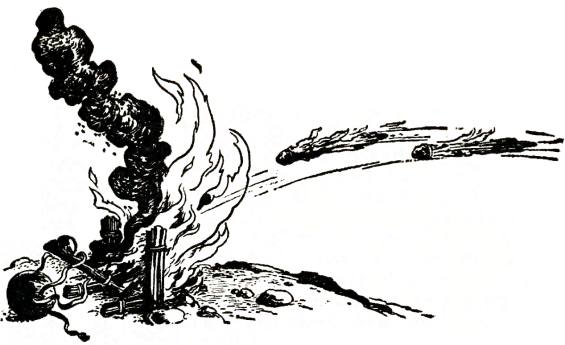
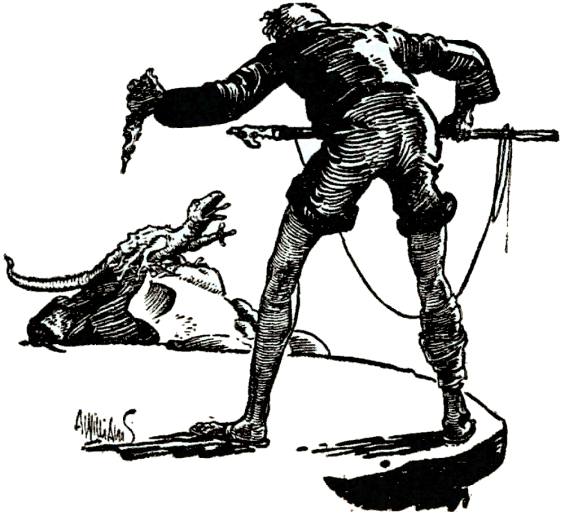
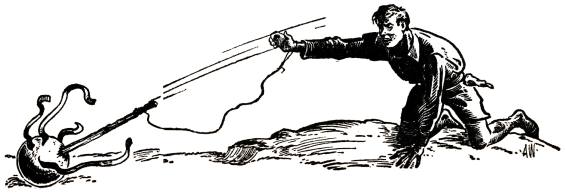
Fredric Brown's Arena - illustrated by Williams

In the comics department, there was a 1976 Marvel Comics magazine adaptation in Unknown Worlds of Science Fiction. Of it, Pete Doree (Of The Bronze Age Of Blogs) sez:

Arena is one of my all-time favourite one-off comic stories, from Roy Thomas’ short-lived Worlds Unknown. Rascally Roy obviously liked it as much as me, as he reprinted it in the last issue of his b/w follow up Unknown Worlds Of Science Fiction. What I like about it is that it’s storytelling pared right down to the bone: One man. One monster. Winner takes all. It’s that simple, and that elegant. The set up is so primal that you’re practically dealing in archetypes. Plus you get the amazing pairing of John Buscema & Dick Giordano on art. It was adapted from a story by Frederic Brown, a great old school sci-fi writer.”
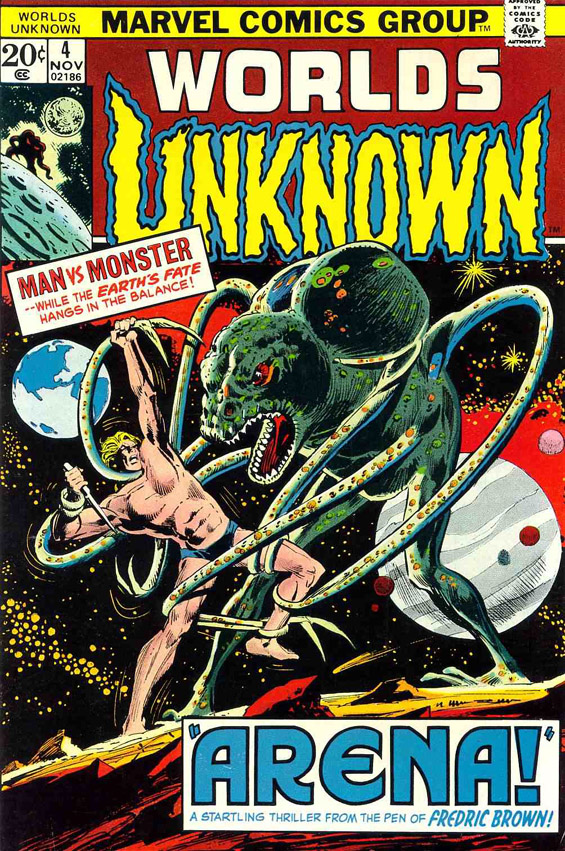
Marvel Comics - Worlds Unknown - Issue 4 - Arena by Fredric Brown

And, check out this editorial from Marvel Comics issue 4 of Unknown Worlds:
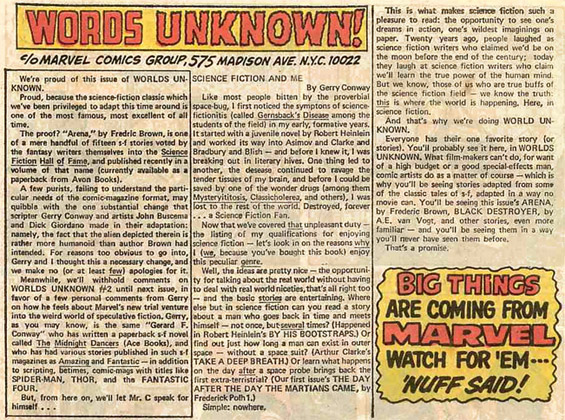
Worlds Unknown (#4) Editorial - Science Fiction And Me by Gerry Conway

Keeping with the art theme, there’s Boris Vallejo’s depiction from the March 1977 Starlog Magazine printing of Arena (more on that |HERE|):
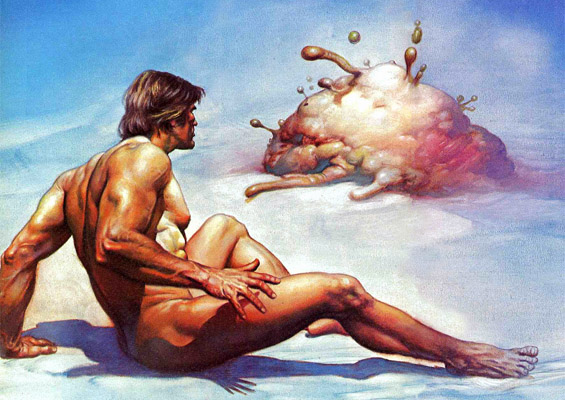
Starlog Magazine - March 1977- Arena - Illustration by Boris Vallejo

TV, movies and other SF authors also seem to have taken inspiration or paralleled Fredric Brown’s Arena too:

Star Trek: Arena:

Outer Limits: Fun And Games:

The one man against one man theme, as developed in Arena, departed the SF genre entirely with the 1968 film Hell In The Pacific. The movie stars Lee Marvin and Tishiro Mifune as shot down American and Japanese fighter pilots who make WWII more personal.

The meme sunk to its lowest low with the frighteningly awful (and least faithful) variation in “The Rules Of Luton” episode of Space 1999.
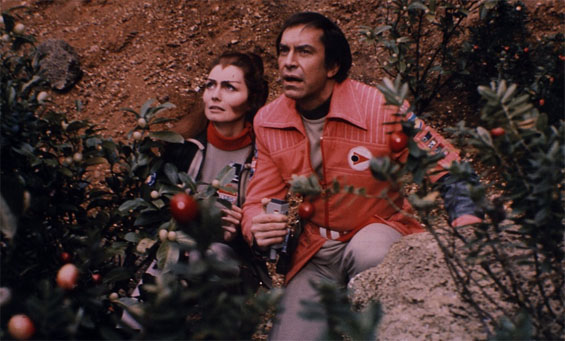
Space: 1999 - The Rules Of Luton

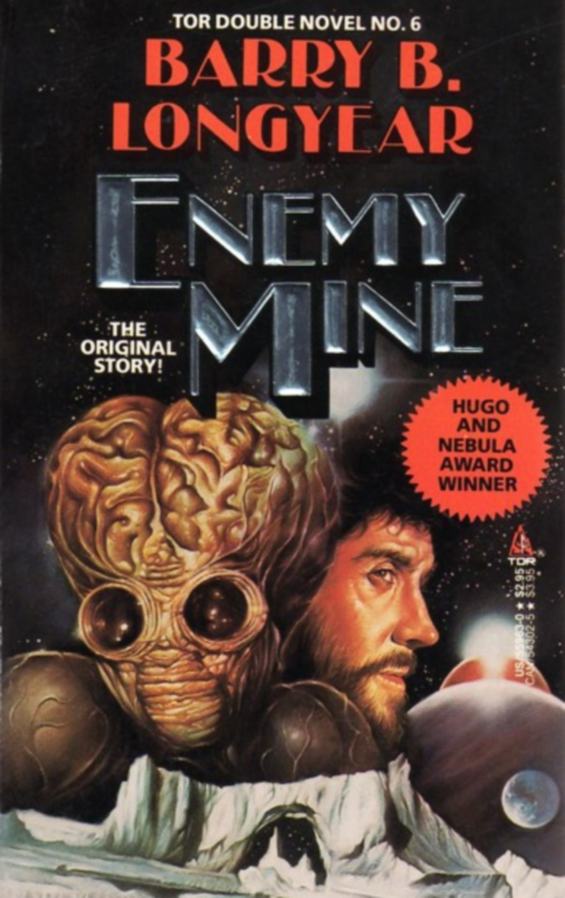
The meme transmogrified back into a man vs. alien confrontation for Barry B. Longyear’s 1979 novella Enemy Mine. Willis Davidge, a human fighter pilot, is stranded along with Jeriba Shigan, a Drac, on a hostile alien planet foreign to them both.
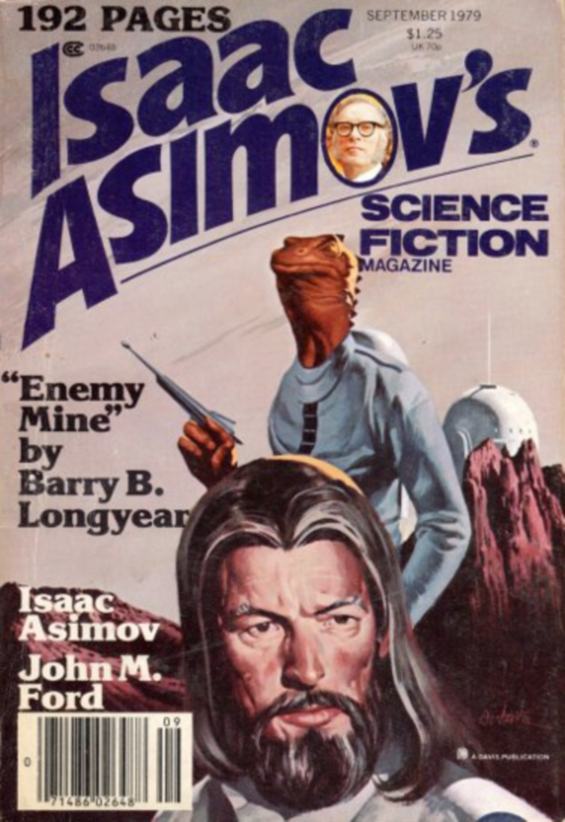
Isaac Asimov's Science Fiction Magazine - September 1979

TOR DOUBLE #6 - Enemy Mine by Barry B. Longyear

The movie version of Enemy Mine, 1985, magnified the allegory with a theme of racial brotherhood.

In 1989, Star Trek: The Next Generation first adopted the idea for an episode entitled “The Enemy“.

Another variation, in 1991, in an episode of Star Trek: The Next Generation called “Darmok” nearly eliminates the physical conflict, replacing it with an intellectual puzzle on the difficulties of communication.

Star Trek: Enterprise, in an attempt to recycle every previous Star Trek series plot, did their own take with the 2003 episode entitled Dawn:

Update:

David Schleinkofer illustrated the Reader’s Digest Edition of Arena in the early 1980s:
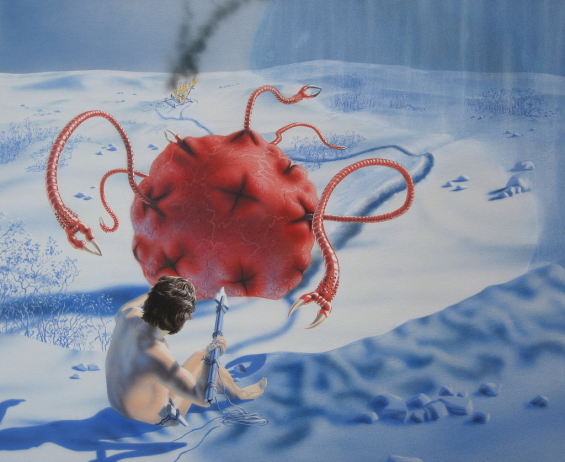
Arena as illustrated by David Schleinkofer for Reader's Digest

Posted by Jesse Willis

Today In Canadian History

SFFaudio Online Audio

Today In Canadian HistoryI love history, it’s news for people who want to know what really happened (and are willing to wait for it). For years I’d been waiting for someone to start a podcast just like Today In Canadian History. After more than six-months I can declare it a total success. Today In Canadian History is the perfect length for a daily podcast, running about ten minutes per episode. It uses concise interviews with enthusiastic experts to spectacular effect. Unlike some other history podcasts, Today In Canadian History is a true generalist history podcast – it covers everything – historical figures and events, natural disasters (and phenomena), military adventures and important legislation and social policy. I could recommend a dozen episodes to any history enthusiast, but for starters I’ll point you to just three:

|MP3| -July 7th: Dr. Norman Bethune arrives in Ontario, back from the Spanish Civil War, only to find that Japan has invaded China
|MP3| -February 17th: the “Mad Trapper” (Albert Johnson) is killed after a massive 49 day manhunt across Northwest Territories and Yukon
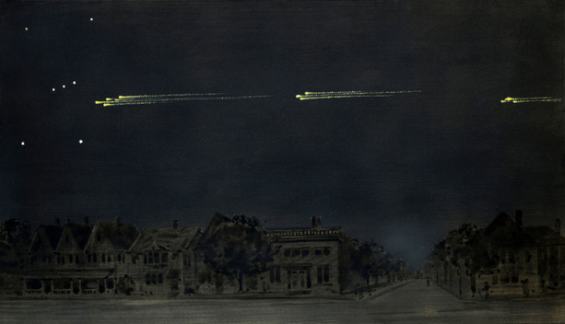
|MP3| -February 9th: a stupendous meteor procession occurs (in 1913), perhaps caused by the de-orbit of a short-lived natural satellite of the Earth.

Podcast feed: http://feeds.feedburner.com/TodayInCanadianHistory

iTunes 1-Click |SUBSCRIBE|

Meteoric Display of February 9, 1913 by Gustav Hahn

Posted by Jesse Willis

Review of Podcaster 3.7.3 (iTunes App)

SFFaudio Review

PodcasterPodcaster (iTunes App)
OS Environment: Apple iPhone / Apple iPod Touch / Apple iPad
Manufacturer: Alex Sokirynsky
Version: 3.73

“Over the Air” podcast manager.  Subscript, download and play audio & video podcasts without having to sync with a computer.

Here’s the app that I use to download podcasts to my iphone/ipod/ipad.  You can keep track of all your subscriptions, unlike in the iTunes app on the phone.  It can download an over 10-meg podcast over the 3g phone network, if you wanted to.  It can use the Apple ‘push’ technology to notify you when a new episode is up;  but if you want to keep an eye on over 10 different podcasts, it costs extra.  You can download ‘in the background’ and switch to other apps, although there’s a 10 minute limit (set by Apple?).  Often, I hit refresh on the ‘Favorites’ screen, hit start in the ‘Downloads’ screen, and then go to the ‘Unplayed Downloads’ playlist to play them.  Here’s a link to an opml file backup of the 10 podcasts I normally listen to (they’re all somewhat sff related).  You can copy & import this url in the Podcaster app ‘Directory’ screen, and edit out the ones you don’t want.  (The io9 one is Geek’s Guide to the Galaxy, and tDP/C2C is Dragon Page, Cover to Cover)  http://www.sffaudio.com/images11/PodcasterFeeds.opml

Podcaster

Posted by Tamahome

Review of Earthbound by Richard Matheson

SFFaudio Review

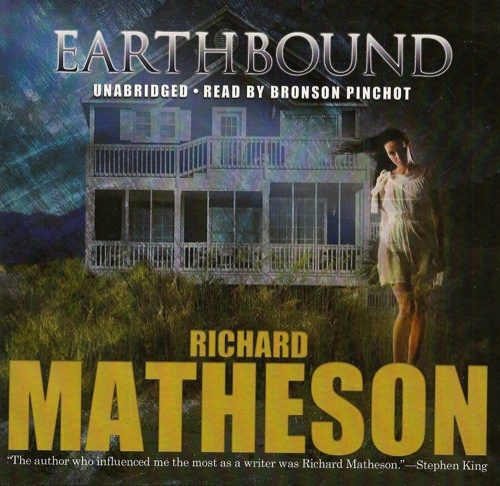
Blackstone Audio - Earthbound by Richard MathesonEarthbound
By Richard Matheson; Read by Bronson Pinchot
6 CDs – Approx. 6.5 Hours [UNABRIDGED]
Publisher: Blackstone Audio
Published: September 2010
ISBN: 1441756886
Themes: / Fantasy / Horror / Gothic Horror / Haunted House / Ghosts / Succubi / Marriage / Sex /

David and Ellen Cooper came to the lonely beach-side cottage in hopes of rekindling their troubled marriage. Yet they are not alone on their second honeymoon. Marianna, a beautiful and enigmatic stranger, comes to visit David whenever Ellen is away. Who is Marianna, and where has she come from? Even as he succumbs to her seductive charms, David realizes that Marianna is far more than a threat to his marriage, for her secrets lie deep in the past and beyond the grave. And her unholy desires endanger the life and soul of everyone she touches.

TV writer David Cooper is trying to revitalize his shaky marriage by returning with his wife to their original honeymoon location. While the Coopers do end up in the same sea-side resort, they find their original digs are unavailable and have to stay in a disused beach cottage. There, every time Ellen steps out, or goes to sleep, a sexy woman named Marianna appears and quickly seduces David. She fucks him harder than he’s ever been fucked and that’s the entirety of Earthbound‘s simple setup. The plot from there is but a dance between David’s realization of it and his doing something.

There are essentially four characters in Earthbound. Approximately ninety-five percent of the novel is set within the confines of the haunted cottage. It’s all told in a tight third person, over the shoulder perspective. We get the thoughts of David’s mind in elaborate detail and hear the other two characters exclusively from his POV. It becomes immediately clear to the reader that Marianna is not only a ghost but also a quasi-succubus. Matheson never actually names the marriage-ruining ghost as a sexual vampire, instead the characters only describe Marianna as simply the ghost of a depraved woman. It takes nearly a half-dozen sex sessions with the vitality draining Marianna, and several visits from a helpful neighbor (who lives just up the beach) to point this out to David. It then takes several more for him to actually believe what he’s being told and experiencing. David wants to believe he’s just been cheating on his wife with a mysterious stranger – but the evidence he’s been presented with is fairly convincing. In the meantime David gets into several, what I would call, disappointment swaps with Ellen, they go out to dinner once and have some unsatisfying sex. About half way through the book I began expecting that Ellen’s many convenient absences would be explained by her being haunted by an incubus – I was wrong on that score.

I don’t think this book is really all that horrible. The storytelling flows quite smoothly and likely achieves the purpose intended. Unfortunately it carries no lasting impression. Being a confirmed bachelor, I guess I just don’t want to read about people fixing their marriages at haunted seaside cottages. And, as for it being one of the gothic novels of psychology, I far prefer the depths of ambiguity in Henry James’ The Turn Of The Screw to the shallows of Earthbound. This is the fourth Matheson novel I’ve read, the first being I Am Legend |READ OUR REVIEW| and the second being The Incredible Shrinking Man |READ OUR REVIEW|. Like the former, Earthbound lacks the one thing I really cared about: a haunting message to go with its competent psychological character study. Like the second, The Incredible Shrinking Man, I came away from Earthbound thinking it was absolutely the kind of book I never need read again, a story premise with a character who was too wrapped up in his own psychology for me to care what was happening to him. I guess I just want some ideas to go with my characters and not to simply see them interacting or responding to a set of unusual circumstances. Earthbound, therefore, is most similar to the third Matheson novel I read, A Stir Of Echoes |READ OUR REVIEW|. If you liked A Stir Of Echoes I suspect you will enjoy Earthbound. Myself, I can only recommend the earth-shatteringly good I Am Legend and Matheson’s truly amazing short story Born Of Man And Woman.

Speaking of short stories, when Earthbound was first published (by Playboy Paperbacks in 1982) Richard Matheson used a pseudonym, “Logan Swanson.” Reading around the internet, I got the impression that he’d balked at some editorial changes in the Playboy Paperbacks edition – and so declined to have his real name put on the cover. But, the story is probably a little more complicated than that. After doing some more digging I noted that one Amazon reviewer had this to say: “…not a lot of people realize this, but this book started out as a short story written very early in Matheson’s career.” Noting that the succubi in fiction article on Wikipedia includes one Matheson story, called The Likeness Of Julie. I dug up my copy of Shock II (it’s also collected in Hot Blood: Tales Of Erotic Horror) and read it. The Likeness Of Julie, which is just 9 or 10 pages, has a bit more of a punch than Earthbound, and is clearly the predecessor to a novelized re-working. Interestingly, it too was first published “as written by Logan Swanson” in a 1962 anthology called Alone By Night. And the pseudonym there was not likely due to a protest, but rather the fact that there was another story by Matheson in the collection. In any case, this Blackstone Audio edition uses the author’s full text version of Earthbound.

Bronson Pinchot, has been recording up a storm for Blackstone Audio of late (there are currently 44 titles with him as a narrator). For Earthbound he does little extraordinary other than voicing three females, two carnal women and one ethereal succubus. Surprisingly, he doesn’t have to stretch very much for in this small scale novel; he pretty much makes himself invisible in the text. I’d like to see him tackle some more meaty material.

Posted by Jesse Willis

Clip from Horror Hotel, Roger Gregg!

SFFaudio News

The extraordinary Roger Gregg says:

Hi Radio Dramatists…

We’ve just put up a short clip from 2010’s radio play ‘ Horror Hotel Episode
One’ produced as part of our Radio Drama/Acting In Audio course at The Gaiety School of Acting.

The scene features wonderful performances by Margaret McAuliffe and Genevieve Hulme-Beaman.

For location realism, Margaret got in her bathing suit and we filled the bath to record this scene.

The scene was recorded with a portable HD recorder and a Rode Stereo Microphone.

Draining the bath was recorded wild in situ. The other bath sounds were created naturally by the actors in the scene, rising from the bath and so forth. The scripts were taped to the walls of the bathroom to faciliate maximum free movement.

And here it is in all its spooky goodness:


Posted by Scott D. Danielson