ABC Radio National: Wake In Fright by Kenneth Cook

SFFaudio Online Audio

ABC Radio National - Book ReadingSo Canada’s public radio book reading program Between The Covers is podcast. One whole channel (BBC Radio 4) for the U.K. is available through Radio Downloader subscription. So what about our friends in Australia? Are they making their shows available?

Yes, they sure aren’t!

ABC Radio National is still in bad shape podcasting wise. They’ve got their terrific non-fiction programs like The Philosopher’s Zone and All In The Mind pleasing everyone all over the world but their book reading program, called Book Reading, isn’t available except via 20th century tech called “streaming audio” (RealAudio or Windows Media). This is really bad.

I’ve said it before, and before and before and before, and most assuredly before – when oh when will ABC Radio National join the 21st century?

I bring this up because they’ve got a terrific sounding novel being broadcast right now:

Wake In Fright is an open-eyed nightmare played out under a scorching outback sun. On one level it’s a great, mad, hallucinatory yarn about landing yourself in the ultimate geographical cul-de-sac – a place without exit. But underneath its compulsively readable surface lurks another, even darker story; a sort of ‘bush existentialist’ tale about the nature of self-entrapment, and the way in which we are often the architects of our own worst dreams.

ABC Radio National - Wake In Fright by Kenneth CookWake In Fright
By Kenneth Cook; Read by Gabriel Andrews
15 Broadcasts – Approx. 3 Hours 45 Minutes [ABRIDGED]
Broadcaster: ABC Radio National / The Book Reading
Broadcast: 2006 / 2009
An open-eyed nightmare played out under a scorching outback sun, Wake in Fright is on one level a great, mad hallucinatory yarn about landing yourself in the ultimate geographical cul-de-sac, a place without exit. But underneath its compulsively readable surface lurks another, even darker story; a sort of ‘bush existentialist’ tale about the nature of self-entrapment, and the way in which we are often the architects of our own worst dreams.

Sounds great don’t it? Too bad almost no-one will listen to 3.75 hours of story sitting in front of their monitors.

Posted by Jesse Willis

LibriVox: Short Science Fiction Collection Vol. 023

SFFaudio Online Audio

LibriVoxIn addition to the readers, this audiobook was produced by:

Book Coordinator: Gregg Margarite
Dedicated Proof-Listener: Wendel Topper
Meta-Coordinator/Cataloging: Lucy Burgoyne

Thanks guys!

I haven’t had a chance to listen to half of these yet but I did get a chance to enjoy the final tale in this collection. It’s by Fritz Leiber and is super-funny. It’s the tale of an alien invasion — of privacy. See when a Martian visitor lands on Earth he has the good sense to make his first contact with a professor of anthropology. The only question is, will the formalities actually start after the naturally necessary bodily functions finish?

If you find another good one in this collection put in a comment. I’d be much obliged!

LibriVox - Short Science Fiction Collection Vol. 023Short Science Fiction Collection 23
By various; Read by various
10 Zipped MP3 Files or Podcast – Approx. 4 Hours 22 Minutes [UNABRIDGED
Publisher: LibirVox.org
Published: August 4, 2009
Science Fiction is speculative literature that generally explores the consequences of ideas which are roughly consistent with nature and scientific method, but are not facts of the author’s contemporary world. The stories often represent philosophical thought experiments presented in entertaining ways. Protagonists typically “think” rather than “shoot” their way out of problems, but the definition is flexible because there are no limits on an author’s imagination. The reader-selected stories presented here were written prior to 1962 and became US public domain texts when their copyrights expired.

Podcast feed:

http://librivox.org/bookfeeds/short-science-fiction-collection-23.xml

iTunes 1-Click |SUBSCRIBE|

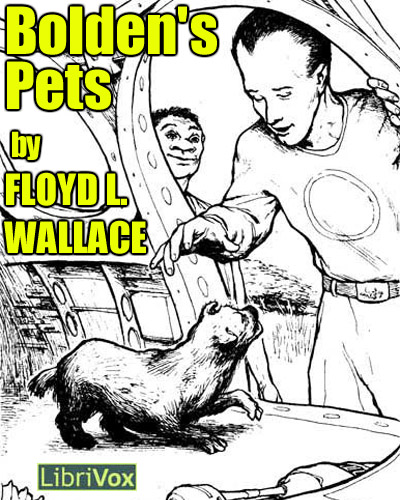
LibriVox - Bolden's Pets by Floyd L. WallaceBolden’s Pets
By Floyd L. Wallace; Read by Bev J. Stevens
1 |MP3| – Approx. 45 Minutes [UNABRIDGED]
Publisher: LibirVox.org
Published: August 4, 2009
The price of life was a life for a life—which was all the reward the victim looked for! From Galaxy Science Fiction, October, 1955.


LibriVox - A Filbert Is A Nut by Rick RaphaelA Filbert Is A Nut
By Rick Raphael; Read by Linda Dodge
1 |MP3| – Approx. 20 Minutes [UNABRIDGED]
Publisher: LibirVox.org
Published: August 4, 2009
That the gentleman in question was a nut was beyond question. He was an institutionalized psychotic. He was nutty enough to think he could make an atom bomb out of modeling clay! From Astounding Science Fiction November 1959.

LibriVox - The Hated by Frederik PohlThe Hated
By Frederik Pohl; Read by Gregg Margarite
1 |MP3| – Approx. 23 Minutes [UNABRIDGED]
Publisher: LibirVox.org
Published: August 4, 2009
After space, there was always one more river to cross … the far side of hatred and murder! From Galaxy Science Fiction January 1958.


The Plattner Story
By H.G. Wells; Read by Gregg Margarite
1 |MP3| – Approx. 46 Minutes [UNABRIDGED]
Publisher: LibirVox.org
Published: August 4, 2009

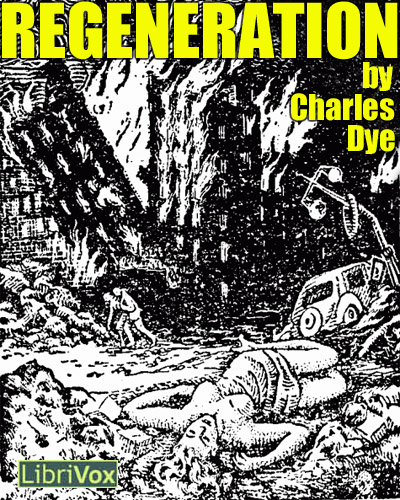
LibriVox - Regeneration by Charles DyeRegeneration
By Charles Dye; Read by Wendel Topper
1 |MP3| – Approx. 24 Minutes [UNABRIDGED]
Publisher: LibirVox.org
Published: August 4, 2009
So long as there are men and women alive, in a livable environment, then a new beginning is possible. From Future combined with Science Fiction stories September 1951.

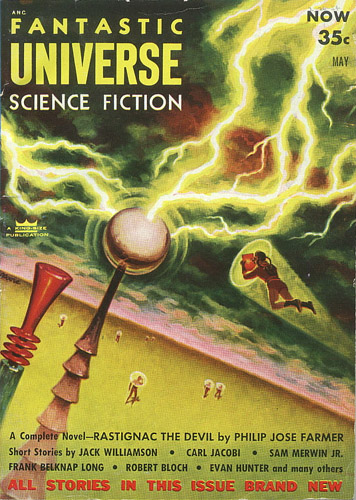
Fantastic Universe May 1954Rex Ex Machina
By Frederic Max; Read by Synergy
1 |MP3| – Approx. 6 Minutes [UNABRIDGED]
Publisher: LibirVox.org
Published: August 4, 2009
The domination of the minds of tractable Man is not new. Many men have dreamed of it. Certainly some of them have tried. This man succeeded. A science fictional letter from a father to a son. From Fantastic Universe May 1954.

Tales of Space and Time; The Star
By H.G. Wells; Read by Linda Dodge
1 |MP3| – Approx. 32 Minutes [UNABRIDGED]
Publisher: LibirVox.org
Published: August 4, 2009

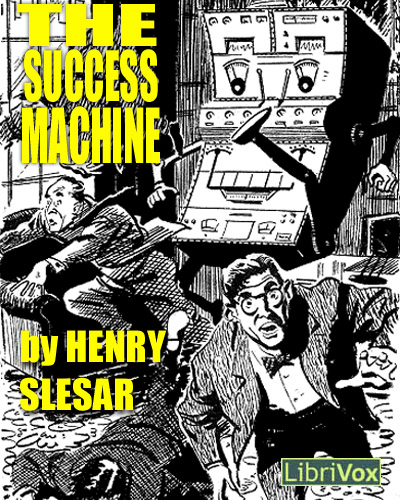
LibriVox - The Success Machine by Henry SlesarThe Success Machine
By Henry Slesar; Read by Troy Bond
1 |MP3| – Approx. 25 Minutes [UNABRIDGED]
Publisher: LibirVox.org
Published: August 4, 2009
Mechanical brains are all the rage these days, so General Products just had to have one. But the blamed thing almost put them out of business. Why? It had no tact. It insisted upon telling the truth! From Amazing Science Fiction Stories January 1960.

LibiVox - Unspecialist by Murray F. YacoUnspecialist
By Murray F. Yaco; Read by Wendel Topper
1 |MP3| – Approx. 29 Minutes [UNABRIDGED]
Publisher: LibirVox.org
Published: August 4, 2009
A machine can be built to do any accurately described job better than any man. The superiority of a man is that he can do an unexpected, undescribed, and emergency job … provided he hasn’t been especially trained to be a machine. From Astounding Science Fiction, January, 1960.

LibriVox - What's He Doing In There? by Fritz LeiberWhat’s He Doing In There?
By Fritz Leiber; Read by Gregg Margarite
1 |MP3| – Approx. 12 Minutes [UNABRIDGED]
Publisher: LibirVox.org
Published: August 4, 2009
He went where no Martian ever went before—but would he come out—or had he gone for good? From Galaxy Science Fiction December 1957.

Posted by Jesse Willis

BBC4 & RA.cc: Stephen Fry – In The Beginning Was The Nerd

SFFaudio Online Audio

BBC Radio 4RadioArchive.ccI’ve been enjoying quite a lot of Stephen Fry on television lately. He’s been following in the footsteps of Douglas Adams in the recent series Last Chance To See, doing an autobiographical examination of a fascinating disorder in Stephen Fry: The Secret Life of the Manic Depressive and criss-crossing the USA in Stephen Fry in America. But the programme that I’ll draw your attention to is a very nice hour long documentary that aired on BBC Radio 4 a couple weeks back. I picked it up through RadioArchive.cc, and I recommend you do the same.

Fry brings quite a bit to the show, delving back into computer history, talking about Alan Turing (and how that connects to where the Apple company’s logo came from), sliding tangentially into Mary Shelley’s Frankenstein, Karel Čapek’s Rossum’s Universal Robots, E.M. Forster’s The Machine Stops and plenty more besides. The “Y2K disaster” seems more and more relevant these days, not because of the disaster itsel (which didn’t happen) but rather because the fixity of poorly informed media opinion is more and more likely despite our increasing ability to digitally record and rehash our poor predictions. We just don’t do it – except with programmes like this!

Stephen FryStephen Fry – In The Beginning Was The Nerd
By Stephen Fry
1 Broadcast – Approx. 56 Minutes [DOCUMENTARY]
Broadcaster: BBC Radio 4
Broadcast: October 5, 2009
The Western world, with a few notable exceptions, poured billions of dollars into electronic pesticides to defeat the Y2K bug. Only to find that for the most part it could have been defeated by turning the systems off then on again. So, why the silence when the bug didn’t bite? The answer’s in the programme. Politicians, experts and businessmen all profited in status or cash from the threat. In the media – to paraphrase the crime reporters – it bled so it led. In the USA, government brazenly claimed victory for its defeat. In reality, the enemy was almost totally imaginary. But it’s useless blaming the great and the good. It was inevitable. We’d been told repeatedly that this brilliant new technology would change the world. Then we were told it could all stop on the stroke of one spookily special midnight. We were the newly addicted, suddenly faced with the prospect that our supply was fatally endangered. There was only one thing we could do. Panic. Then spend millions fixing it. Sorry, that’s two things.

Here’s a 15 minute selection from the doc:

You can pick up the rest, via torrent, from RadioArchive.cc.

Posted by Jesse Willis

Review of Terminal Freeze by Lincoln Child

SFFaudio Review

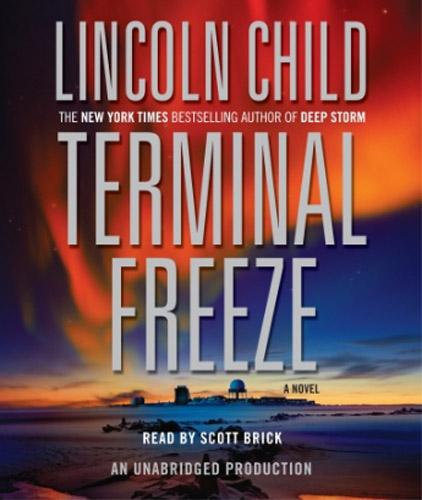
Random House Audio - Terminal Freeze by Lincoln ChildTerminal Freeze
By Lincoln Child; Read by Scott Brick
9 CDs – Approx. 10 Hours 30 Minutes [UNABRIDGED]
Publisher: Random House Audio
Published: February 2009
ISBN: 9780739382028
Themes: / Horror / Thriller / Techno-thriller / Science / Biology / Evolution / Paleoecology / Alaska / Ice / Ice Road Trucking /

Four hundred miles north of the Arctic Circle lies Alaska’s Federal Wilderness Zone, one of the most remote places on Earth. But for paleoecologist Evan Marshall and a small group of fellow scientists, an expedition to the Zone represents the opportunity of a lifetime to study the effects of global warming. The expedition changes suddenly, however, with an astonishing find. On a routine exploration of a glacial ice cave, the group discovers an enormous ancient animal encased in solid ice. The media conglomerate sponsoring their research immediately intervenes and arranges the ultimate spectacle—the animal will be cut from the ice, thawed, and revealed live on television. Despite dire warnings of a local Native American village, and the scientific concerns of Marshall and his team, the “docudrama” plows ahead—until the scientists make one more horrifying discovery. The beast is no regular specimen…it may be an ancient killing machine. And they may be wrong in presuming it dead.

Lincoln child begins Terminal Freeze by quoting all but the last couple sentences of THIS. It’s not exactly a scholarly article, more of a “fun science facts” story. But like Child there are plenty of other folks willing to proffer their own answers to this “mystery.” AboveTopSecret.com (a forum devoted to “conspiracies, UFO’s, paranormal, secret societies, political scandals, new world order, terrorism”) and AnswersInGenesis.org (a site about Young Earth creationism and a literal interpretation of the Book of Genesis) both have explanations for the seemingly flash frozen mammoth that fit into other “theories.” If Child’s solution to the mystery, this novel, wasn’t presented as fiction it’d be just as ridiculous.

So, this isn’t really a Science Fiction novel. At first I had a hard time figuring out what it was. I clued in about the time I started hearing the scientists protags talking about something called “the Callisto Effect” – it sounded like utter bunk – so I looked it up. Yup it is bunk, it’s a fictional theory first invented for the Lincon Child/Douglas Preston novel The Relic (which got turned into a pretty good horror movie). The Callisto Effect is a Child/Preston invention, a kind of a fictional spin-off of the saltation hypothesis. As one other reviewer of this book noted the Callisto Effect can be summed up like this:

“…when a species becomes too numerous or starts to lose evolutionary vigor a monstrous superpredator suddenly appears and kills until it can kill no more.”

So ya, like I was saying, there are scientists in Terminal Freeze, and they talk about pseudo-scientific ideas, but this is just window dressing for the plot of a monster hunt.

We might think of the “techno-thriller” as a kind of a modern gothic novel. Even as far back as the 19th century, Edgar Allan Poe and Jules Verne, were setting their “fantastic tales in the remaining unexplored regions of the world. By the early 20th the likes of H.P. Lovecraft, and John W. Campbell only had one unexplored continent: Antarctica. The same would be true for a modern audience but now that even Antarctica has been laregly de-mystified we’re having to place our monster horror stories in inaccessible caves and hidden military bases (at least that’s the route Terminal Freeze takes).

The story is rather drawn out, with a number of blandish stock characters brought in seemingly only to be picked off one by one (which surpringly both does and doesn’t happen). The scientists, none of whom are particularly interesting, end up working with a local native, who was also co-incidentally a former soldier at Fear Base, and also a former junior scientist there, and also a co-discoverer of the original monster (back in the 1950s). Given those credentials you’d think then that he’d be absolutely instrumental in solving the mystery of what the frozen monster is and how it escaped. But no, he just gives a highly ineffectual and unrealistically cryptic warning (at the beginning of the novel) is promptly ignored – shuffles off the stage only to be brought back later, like Chekhov’s gun, jumbling around a bag of religious artifacts – which do nothing. Apparently the gun on the mantle was just a prop. Child added in an absolutely unnecessary batch of TV documentary people. The only reason I can think they’re there for is that it’d make for some good visuals should they make a movie of this novel. They’re all there when the monster in the ice escapes from the mysteriously melted ice. And of course their there when people start dying grizzly deaths as they wander off alone. But they don’t do much with those cameras and they end up leaving before the end.

After finishing the novel I was kind of interested in finding out if any of the locations in this novel were real. In the book there is a mountain called “Mount Fear,” a glacier called “Fear Glacier,” and a “Fear Base” (a D.E.W. Line style military facility). It turns out that they all don’t really exist, they are all made up.

One thing I did like about the novel was the discussion about the different types of ice. When the scientist are sitting around trying to explain how the creature in the ice escaped they briefly discuss different ways water crystallizes into ice, how these different types of ice are formed, and their differing properties. This briefly re-invigorates the mystery – but it is ultimately thrown away – discarded and replaced with a less than satisfactory explanation.

Scott Brick, who probably reads more books than any other audiobook narrator working today, does his best with what he’s given. The baddies come off badish, the heroes come off goodish, the monster comes off monsterish. The most interesting portion of the novel is actually a bit, almost completely tangential to the monster plot when an “ice road trucker” has to drive the survivors to safety. Brick works hard to make the cracking of the ice and the freezing cold compelling. And that’s the part of the novel is more believable.

Posted by Jesse Willis

Marvellous Hairy – a podcast novel

SFFaudio Online Audio

The Marvellous Hairy PodcastWith the number of university professors talked about on SFFaudio I think we’ve got staff enough to fill almost every department in a virtual university! I’m adding one more to the roster. From the faculty of Information and Media Studies at the University of Western Ontario comes Mark A. Rayner and his second novel. This is simultaneous release with the print publication. Here’s the blurb:

So hair is sprouting in unspeakable places and you can no longer carry a tune, but if you’re a surrealistic artiste with an addiction to Freudian mythology and guilt-free sex, turning into a monkey has its upsides.

Nick Motbot may be evolving as a novelist, but his friends aren’t too sure about his DNA — at least, not since Gargantuan Enterprises started experimenting with it. And once they figure out what’s happening to him, they decide to set things right. MARVELLOUS HAIRY is a satirical novel about a group of friends sticking it to the man the only way they know how, with equal parts grain alcohol and applied Chaos Theory.

Part literary fun-ride, part fabulist satire, and part slapstick comedy, MARVELLOUS HAIRY is about the power of friendship and love, the evils of power, and the dangers of letting corrupt CEOs run our world.

And here’s the podcast feed:

http://markarayner.com/feed/podcast/

Posted by Jesse Willis

Steampunk Scholar: Steampunk audiobooks

SFFaudio News

Steampunk Scholar
I’ve been half ready to board the steampunk train (or the metaphorical steam powered conveyance of your choice) for a while now. I’m not sure exactly why it is so appealing to me. I love airships, I love Sherlock Holmes, I love reading about Victorian and Edwardian eras – but is that it?

I remember when William Gibson and Bruce Sterling wrote The Difference Engine – I was digging the concept. I remember when the RPG game Space: 1889 came out – and I was digging the vibrations that was throwing off too. The only problem was, and is, I still haven’t played the game and still haven’t read the book. I’ve really been quite negligent in my steampunk studies. Luckily there’s a neighbour, over in Alberta, who’s set himself a five year mission, to blog about the genre in a scholarly way.

And his latest post is about steampunk audiobooks! Check it out. He makes a list of Audible.com available audiobooks with the steampunking theme.

Posted by Jesse Willis