
NPR Radio Drama: Summer Mystery Series – July and August 2009

Aural Noir: News

Radio drama has been effectively dead in the United States of America for some time now. Or perhaps it has just been sleeping? Perhaps it will wake mid-July 2009?


WNIN Mystery Writers Festival

WNIN-FM has a special treat for our listeners this summer! In conjunction with the International Mystery Writer’s Festival in Owensboro, WNIN will air four weeks of original, contemporary radio dramas produced during the festival last year. The drama series will be hosted by Angela Lansbury, star of Murder She Wrote and the current Broadway hit Blithe Spirit.

The series will start Saturday, July 18th at 7pm, right after “A Prairie Home Companion”. The nine, original radio dramas were written by such famous authors as Ray Bradbury and Mary Higgins Clark. Other writers also contributed to this fantastic lineup, including P.J. Woodside of Madisonville, Kentucky. The dramas were recorded during performances before a live audience in the manner of the old-time radio shows.

As a bonus, WNIN will host a live broadcast from the RiverPark Center in Owensboro on Saturday, August 15th during the 2009 International Mystery Writer’s Festival. The American premiere of four plays written by Dame Agatha Christie will be performed, including the famous “Three Blind Mice”, which was part of a May, 1947 BBC program in honor of the eightieth birthday of Queen Mary. The world’s longest running play; “The Mousetrap” was inspired by “Three Blind Mice”. Two never before published works by Ms. Christie will be part of the evening’s live performance.

WNIN-FM is excited about bringing original radio dramas back to public radio. The dramas were performed by professional actors, utilizing the best techniques of old-time radio, but done in a contemporary fashion. The series was produced under direction from the award-winning talents of Judith Walcott and David Ossman of Firesign Theater.

Summer Mystery Series Schedule:

July 18 – It Burns Me Up
By Ray Bradbury
A murdered man lies on the floor and his stunned wife sits nearby. A police detective and the coroner discuss the victim while other police do their jobs. Reporters and neighbors crowd in at the door… but, the dead man on the floor tells the story before the ambulance arrives.

July 18 – My Gal Sunday
Adapted from Mary Higgins Clark’s best seller Crime of Passion
A delightful detective couple, the rich and handsome ex-president of the United States and his wife, an attractive Congresswoman, investigate the affair of a former Secretary of State and his murdered mistress.

July 25 – Hallie Bowers
By Harris Mack and Laura Campbell
War-time Christmas of 1941 leads a seasoned female private investigator and her younger brother from a nightclub dance floor to the tracks at L.A.’s Union Station when they take on a missing-girlfriend case from a handsome Navy Lieutenant.

Aug 1 – The Cajun P.I.
By P.J. Woodside
Former cop and now struggling Private Investigator John LeGrand is a junior college criminology instructor who begins a dangerous search for one of his own students who ends up missing during a class assignment. Some good-ol-boys – and not-so-good-ol-boys – and some attractive, but slightly dangerous, women round out the characters of this betrayal in the Bayou.

August 8 – Flemming: An American Thriller
By Sam Bobrick
A farce full of twists and turns that will leave you laughing as well as longing for a good drink. An unassuming middle-aged man decides to become a private detective in the midst of a mid-life crisis – but the life crisis is only beginning! Bobrick’s play is full of witty dialogue that fades in-and-out-of murders, madness, and many, many mixed drinks.

August 15 – Live Broadcast: American Premieres of FOUR “NEW” Thrillers
By Agatha Christie

* “Three Blind Mice” was part of a May 30, 1947 evening of program in honor of the eightieth birthday of Queen Mary. The BBC approached the Queen some months prior and asked for her special favorites. Amongst a selection of music and variety, she requested a new mystery by Agatha Christie, a writer the Queen deeply admired. The world’s longest running play “The Mousetrap” was inspired by “Three Blind Mice”.

* “Butter in a Lordly Dish” was first performed on the BBC on Tuesday, January 13, 1948 in a strand entitled Mystery Playhouse presents, “The Detection Club.” The play title comes from the Bible: Judges, 5:25: “He asked water, and she gave him milk; she brought forth butter in a lordly dish”. “He” refers to Sisera and “she” is Jael. (This work was never published before).

* “Yellow Iris” was first presented on the BBC National Program in 1937. The main part of the story takes place in a London restaurant. The play is unusual in that the producer interspersed the action with the performances of the cabaret artists who were supposedly on the stage at the restaurant during the murder. It features the famous Belgian Inspector Hercule Poirot, one of Christie’s audiences’ favorite detectives.

* “Personal Call”, the last thriller, was presented on the BBC Light Program on Monday, May 31, 1954. The play reuses the legendary character of Inspector Narracott from the 1931 novel “The Sittaford Mystery.” (This work was never published before)

Posted by Jesse Willis

LibriVox: Starman’s Quest by Robert Silverberg

SFFaudio Online Audio

LibriVoxHey now! Check out the FREE audiobook of Robert Silverberg’s second ever novel, a “juvenile” written by a juvenile…

“This was my second novel, which I wrote when I was 19, in my junior year at Columbia. I’ve written better ones since. But readers interested in the archaeology of a writing career will probably find much to explore here.”
-Robert Silverberg 17 May 2008

Starman’s Quest is probably most famously remembered for employing the “twin paradox.” Other elements included in the book include a dystopian/utopian earth of the 37th century. Earth overpopulated and jobs are few and far between for anyone who isn’t in a hereditary guild. There’s also “a kind of enforced consumerism” in which it is considered immoral to save money – “everyone must buy, buy, buy.” The only legal profession open to those without a guild is gambling.


LibriVox - Starman's Quest by Robert Silverberg
Starman’s Quest
By Robert Silverberg; Read by Dawn Larsen
20 Zipped MP3 Files or Podcast – Approx. 5 Hours 17 Minutes [UNABRIDGED]
Publisher: LibriVox.org
Published: June 12, 2009
Traveling at speeds close to that of light, spacemen lived at an accelerated pace. When one of the twin boys left the starship, he grew older while his twin in space barely aged. So the starship twin left the ship to find what happened to his brother who was aging away on earth.

Podcast feed: http://librivox.org/bookfeeds/starmans-quest-by-robert-silverberg.xml

iTunes 1-Click |SUBSCRIBE|

Posted by Jesse Willis

Futurama audio: interview and comic book

SFFaudio Online Audio

BBC Radio 6The news just reached me that Futurama (so long confined to the briar patch of straight to DVD sales) is being renewed by Fox – I guess that old saw about when pigs fly and the recent h1n1 pandemic (swine flu) promoted the renewal eh?

Is Firefly next?

To celebrate Futurama‘s revival here’s a 2008 BBC Radio 6 interview with John Di Maggio (Bender) |MP3|.

And…

Did you know there is a Futurama quasi-audiobook (it’s a fan reading of issue #1 of Futurama Comics)!

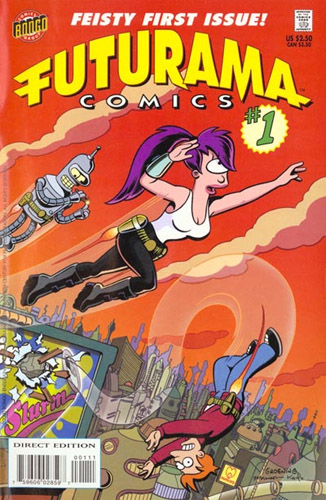
Futurama Comics #1: Monkey Sea, Monkey DOOM!Futurama Comics #1: Monkey Sea, Monkey Doom!
Written by Eric Rogers; Read by Philbot
24 Zipped MP3 Files – Approx. 18 Minutes [UNABRIDGED]
Provider: Futurama Madhouse
While digging a large hole to hide one of Professor Farnsworth’s inventions that he’s hiding from the police, Fry, Bender and Leela find a time capsule from the 20th century. This capsule has loads of old junk in it, and Fry, seeing this, begins to miss all the things he used to have. While reading an old comic, he finds an ad for some sea monkeys, and purchases some from an old store that sells 20th century stuff. Unfortunately, the sea monkeys don’t impress his friends as much as he wanted them to; at least not until they come into contact with the professor’s gamma radiation, and begin to grow, and grow, and grow!

[via Futurama Madhouse]

Posted by Jesse Willis

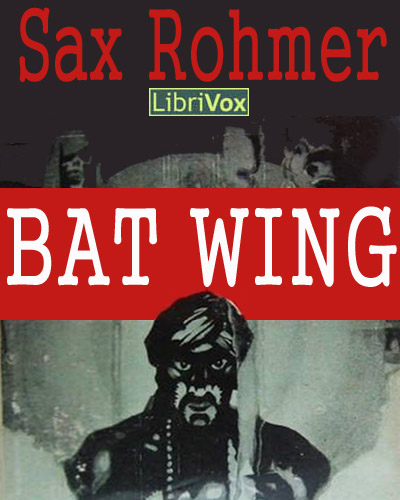
LibriVox: Bat Wing by Sax Rohmer

Aural Noir: Online Audio

“A crime thriller with a voodoo twist, from the creator of Fu Manchu.”

Is this the first great summer audiobook from LibriVox? I think it may very well be. Just image listening to this tale in on a summer evening, a tall glass of cold beverage in hand, the sun setting, the bats flying out of their belfries. So cool.

LibriVox - Bat Wing by Sax RohmerBat Wing
By Sax Rohmer; Read by Mark Douglas Nelson
12 Zipped MP3 Files or Podcast – Approx. 9 Hours 14 Minutes [UNABRIDGED]
Publisher: LibriVox.org
Published: June 12, 2009
Private detective Paul Harley investigates a mysterious case involving voodoo, vampirism, and macabre murder in the heart of London. The first book in the Paul Harley series, written by Sax Rohmer, author of The Insidious Dr. Fu Manchu. Originally published in 1921.

Podcast feed:

http://librivox.org/bookfeeds/bat-wing-by-sax-rohmer.xml

iTunes 1-Click |SUBSCRIBE|

Posted by Jesse Willis

Review of The Strain by Guillermo del Toro and Chuck Hogan

SFFaudio Review

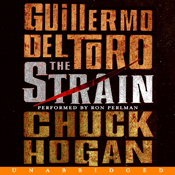
The Strain by Guillermo del Toro and Chuck HoganThe Strain
By Guillermo del Toro and Chuck Hogan; Read by Ron Perlman
Audible Download – 13 hours 36 mins [UNABRIDGED]
Publisher: Harper Audio
Published: 2009
Themes: / vampires / scientific thriller / horror / New York / mythology / medical mystery

Yes, it’s another book about vampires. But wait, don’t shrug it off just yet. Several things set The Strain apart from the glut of vampire novels flooding the market of late. First, it’s co-written by movie director Guillermo del Toro, whose past film successes include the vampire flick Blade II, the comic-book adaptation of Hellboy, and the mythological Pan’s Labyrinth. He’s also heading up the forthcoming film adaptation of J.R.R. Tolkien’s The Hobbit. Furthermore, The Strain takes a more sobering view of the undead, divorced from the romanticism weighing down the vampire genre.

The Strain begins when a plane lands at JFK airport with almost all its passengers struck dead. The Center for Disease Control calls in its chief investigator Ephraim Goodwether, newly divorced and newly sober, to look into the matter. Mysteries abound when the passengers’ bodies go missing from the morgue, the few survivors begin acting strangely, and a coffin-like trunk inexplicably vanishes from the plane’s cargo hold. Ephraim and his partner Nora, with whom he’s had some past romantic involvement, find unlikely aid in the guise of pawn shop owner Abraham Setrakian, an aged Holocaust survivor who carries an odd staff with a silver wolf’s-head handle. The old man explains that a centuries-old conflict between vampire tribes is about to burst forth onto the streets of New York.

And indeed it does. The narrative frequently shifts away from the main storyline to tell the stories of men and women infected with a strange virus, whose vector is a disgustingly pulsating capillary worm. Initial side effects resemble a mild flu and include sore throat and slight disorientation. But this is only the beginning. The sore throat, it turns out, heralds the growth of a new sinister organ, a long tendril-like apparatus under the tongue tipped with a deadly stinger, which in turn infects other humans. Other vampiric characteristics soon manifest, including the whitening of gums, an aversion to sunlight, and immunity to most forms of attack.

The premise is intriguing, especially since it presents a more scientific approach to the undead than most other vampire novels, except perhaps Richard Mathesen’s superior I Am Legend. Unfortunately, the actual story unfolds too slowly and spasmodically, and lacks evidence of any real structural forethought on the part of the authors. Del Toro originally pitched the idea as a TV show, and evidence of his screenwriting background can be found in the scene headings affixed to each section and in the many entertaining but ultimately superfluous vignettes of violence. The suspense sequences are spine-tingling and the action scenes hair-raising, but most of them do little to further the story.

The book’s shining gem is the character of Abraham Setrakian, whose harrowing escape from Nazis and forces even more sinister we learn throughout the book in flashback sequences. Del Toro’s interest in mythology and folklore take center stage, and provide the most compelling moments of the book.

It’s difficult to know how the division of labor fell between Guillermo del Toro and Chuck Hogan in writing The Strain, but my impression is that del Toro provided the concept and perhaps wrote some of the pivotal scenes, while Hogan did the heavy lifting of filling in the gaps and pulling the whole thing together. This should have been a good thing, since Chuck Hogan is an acclaimed best-selling author. However, writing good speculative fiction requires a certain sensitivity and perspective that I believe Hogan lacks, although this is only a guess on my part since I’ve read none of his other work. Del Toro has keener vision as a storyteller, at least as seen in his films, though these skills don’t necessarily translate to the written word. Since the cover bears both their names, both del Toro and Hogan must bear some blame for crafting a less-than-stellar novel.

The Strain is narrated by actor Ron Perlman, who incidentally also played a role in del Toro’s Blade II. Particularly in works of suspense and horror, a good voice actor can make the difference between scenes that leave you gripping the arms of your chair and scenes that make you laugh out loud by virtue of their inadvertent cheesiness. I’m pleased to report that Perlman’s voice work in The Strain had the former impact on me. His intonations are pitch-perfect, and he snarls out the vampiric growls and moans with enough force and feeling to chill the blood.

The Strain is the first in a trilogy of the same name, as can be seen in the novel’s grim and hurried ending. As Dante Hicks says of The Empire Strikes Back in Clerks, “it ends on such a downer.” That said, the ending brought significant changes to the lives of several pivotal characters who, despite the spotty storytelling, I’ve grown to care about, and I’ll probably read the sequel when it hits the audio airwaves next year.

Posted by Seth Wilson

Masters Of Horror – the original stories in audio

SFFaudio Online Audio

Masters Of HorrorOver the past few years I’ve bought more than a dozen of DVDs featuring episodes of Masters Of Horror. MOH was a cable TV show that brought together Horror stories and Horror filmmakers in hour-long formats. Several of these shows were rather lame – but a few were very good or even excellent.

Three episodes that were rather good were adapted from public domain stories…

Weird Tales July 1933The Dreams In The Witch House
By H.P. Lovecraft; Read by MorganScorpion
2 MP3 Files – Approx. 90 Minutes [UNABRIDGED]
Provider: Archive.org
Part 1 |MP3| Part 2 |MP3|
Written in January/February 1932, it was first published in the July 1933 issue of Weird Tales. Apparently this story was “heavily influenced by Nathaniel Hawthorne’s unfinished novel Septimius Felton.”

The Damned Thing
By Ambrose Bierce; Read by Greg Elmensdorp
1 |MP3| – Approx. 21 Minutes
Publisher: LibriVox.org
Published: September 4, 2006
First published in 1893.

The Black Cat
By Edgar Allan Poe; Read by Ralph Snelson
1 |MP3| – Approx. 27 Minutes [UNABRIDGED]
Publisher: LibriVox.org
Published: April 11, 2008
First published in the August 19th, 1843, issue of The Saturday Evening Post.

Posted by Jesse Willis