The SFFaudio Podcast #189 – AUDIO DRAMA: Tim Prasil’s MARVELLOUS BOXES

Podcast

The SFFaudio PodcastDecoder Ring TheatreMarvellous BoxesThe SFFaudio Podcast #189 – Jesse, Tamahome, Jenny, and Tim Prasil talk about the six episode anthology series Marvellous Boxes, recorded and podcast by Decoder Ring Theatre. But first we play an episode, Facing Cydonia.

Talked about on today’s show:
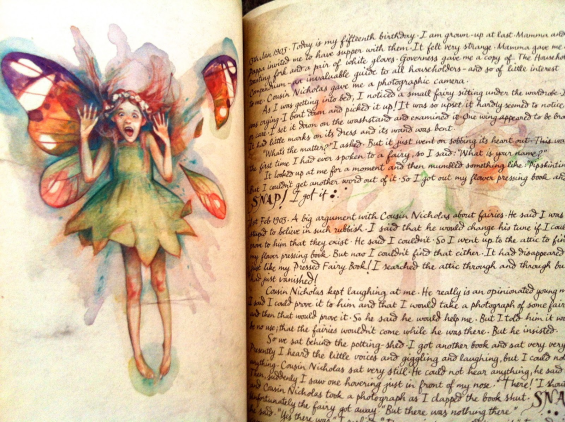
The Magic Of The Movies, The Crasher, horror, stage play (post Meridian Radio Players), Thinking In Trinary, Decoder Ring Theatre, Gregg Taylor, the Cobol Club, OTR, radio commercials, flash fiction, CBC, The Age Of Persuasion, “Sunday! Sunday! Sunday!”, Plotting For Perfection (the short story), stage play, the Vera Van Slyke stories, occult detectives, Fitz-James O’Brien, audio dramatizations of the Vera Van Slyke stories, Black Jack Justice, The Red Panda Adventures, why be locked into the 1/2 hour audio drama format?, A Demon Once Removed, a one set one act play, Nicole (the peripheral character with a personality), Chekhov’s Gun, an alternate history, “Gregg Taylor need not be played by Gregg Taylor”, Orson Welles, history, Frozen Words Thawed, Remembering The Martians, an all black cast of MacBeth, The War Of The Worlds, H.G. Wells, The Tempest (as an alien contact story), William Shakespeare, a controversy over the character names in Facing Cydonia, Jenny will sing us a song, the boxes, “are there more boxes in you?”, ghosts, the button, the wax cylinder recorder, the Piltdown Man hoax, Sir Arthur Conan Doyle, an authentic hoax, Conan Doyle is the most gullible, the Cottingley Fairies, FairyTale: A True Story, Harry Houdini, Terry Jones, Lady Cottington’s Pressed Fairy Book, the EULA on wax cylinders, Thomas Edison, the most science-fictiony story, Plotting For Perfection, a femme fatale story without the femme fatale, “talk about your retro-causality”, “a box with a hole in it”, Andrea Lyons?, Scene Of The Crime, Remembering The Martians, racism, difference, tolerance, Doctor Who – The Power Of Three, fish people, are the Martians really dead?, binary fission, fruitful names, Jacob, Jason, Easter eggs, Finbar, The Silver Tongued Devil, The Sonic Society, Roger Gregg, it’s a pseudo-documentary, a joke/haiku, “conclusions should be drawn with a pencil not a pen”, Aliens Are Like Mirages, “it’s an indictment I’m just not sure what it’s an indictment of”, “if we had this power would we use it?”, the curiousness of the chaplaincy, prequels are for readers not writers, the miracle, the yup, human history in a nutshell, To Serve Man, narrative structure, why is X-Minus One a good name?, Marvellous Boxes as a name doesn’t have a super-punch, steampunky, “steamy contraptions”, Murdoch Mysteries (CBC TV), “a little less steam and a little more electricity”, Netflix in Canada sucks, Weeds, Walk Off The Earth.

Lady Cottington's Pressed Fairy Book

Posted by Jesse Willis

LibriVox: The Horla by Guy de Maupassant

SFFaudio Online Audio

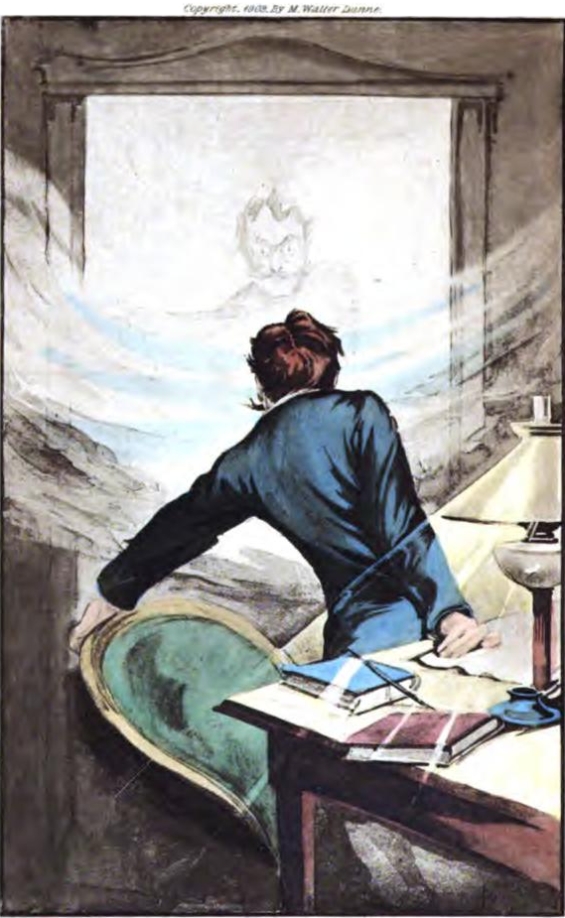
If I had to name the one story that’s influenced my reading, and thinking, most in last couple of years I’d name The Horla by Guy de Maupassant. It possesses my mind like a dark and deep tunnel running through my imaginative landscape – if you haven’t heard it yet you should. Below you’ll find my preferred version, but there are more readings, and adaptations HERE – and we did a whole podcast about it, that’s HERE.

One new thing though is this |PDF| which I made from a scan of an issue of Famous Fantastic Mysteries – it features the 1911 George Allan England translation.

LibriVoxThe Horla
By Guy de Maupassant; Read by Gregg Margarite
1 |MP3| – Approx. 57 Minutes [UNABRIDGED]
Publisher: LibriVox.org
Published: July 11, 2009
First published in Gil Blas; Oct 26, 1886.

The Horla by Guy de Maupassant

The Horla by Guy de Maupassant

The Horla by Guy de Maupassant

Posted by Jesse Willis

The SFFaudio Podcast #183 – AUDIOBOOK/READALONG: Out Of The Storm by William Hope Hodgson

Podcast

The SFFaudio PodcastThe SFFaudio Podcast #183 – An unabridged reading of Out Of The Storm by William Hope Hodgson (10 minutes), read by Brian Murphy) followed by a discussion of it. Participants in the discussion include Jesse, Tamahome, and Brian Murphy.

Talked about on today’s show:
Stefan Rudnicki, Brian Murphy should peruse audiobook narration, Julie Hoverson (of 19 Nocturne Boulevard), The Frost Giant’s Daughter (aka Gods Of The North) by Robert E. Howard, William Hope Hodgson, the dragon, Gustav Dore, Leviathan, naturalistic vs. super-naturalistic, anthropomorphism, literal vs. metaphorical readings of the Bible, Thomas Hobbes, Behemoth, The Book Of Job, H.P. Lovecraft, The Statement Of Randolph Carter, wireless telegraphy, Supernatural Horror In Literature, Hodgson’s career in the merchant seaman, physical culture, photography, nautical phenomena, Edgar Allan Poe, like a nautical version of H.P. Lovecraft, Sargasso sea stories, is it merely madness?, a previously unreportable phenomenon, why doesn’t the scientist (John) respond?, an audio dramatization would be interesting, an extremely disturbing message, cosmic horror, the mother and the child, “like a foul beast”, contemplating the unimaginable, “God is not He, but It”, the universe is either cruel (Hodgson) or indifferent (Lovecraft), “her soul hideous with the breath of the thing”, spirit as breath, “this is the most horrific thing ever”, uncontrollable laughter, unstoppable, an undignified death in the face of an indifferent, the Titanic disaster, Schindler’s List, a greater good calculation, unconscionable selfishness, “to talk of foul things to a child”, the evil in itself and the evil of sharing the knowledge of that evil, Jaws, if this was a true account…, did Jaws cause Shark Week?, this guy is a little bit off, putting on a King James accent, skies the colour of mud, a sky monster?, aliens, Cthulhu, tentacles or waterspouts?, flotsam or an iceberg or a shark or just the waves themselves, “oh crap I’m nuts”, “tell her how it was”, is it like telling or not telling war stories?, clarity before death, so many ideas per square centimeter, Murf plays the Call Of Cthulhu RPG, sanity points, everybody loses, investigation vs. hack and slash, the Big Cypress Swamp, will acquaintance with Lovecraft’s stories harm or enhance your enjoyment of the game?, The Miskatonic University Podcast, “actual play” podcast, Skype of Cthulhu podcast, dice rolls on the honour system, Paranoia, Chaosium, The Horror On The Orient Express Kickstarter project, single player computer RPGs vs. pen and paper RPGs with real people, would Lovecraft play the Call Of Cthulhu RPG?, MMOs, World Of Warcraft, Dungeons & Dragons.

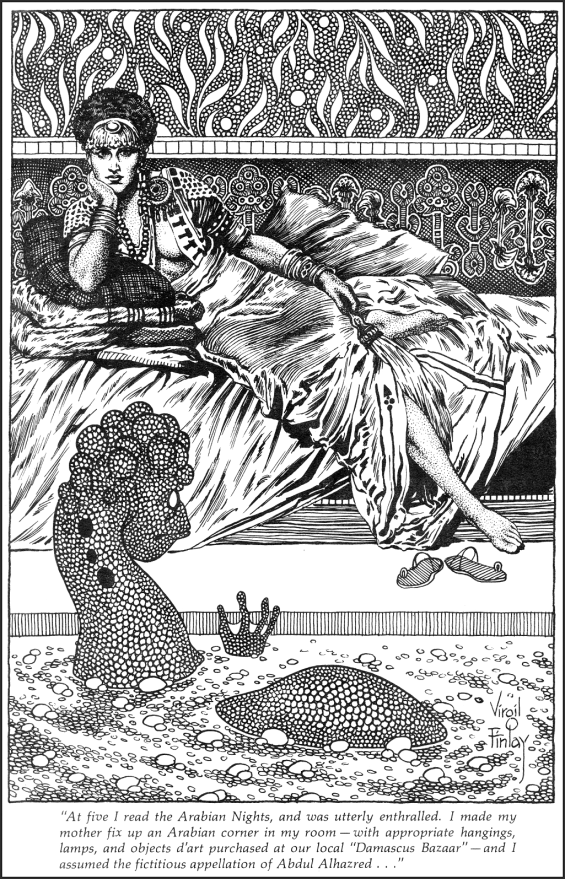
H.P. Lovecraft as Abdul Alhazred - Virgil Finlay illustration

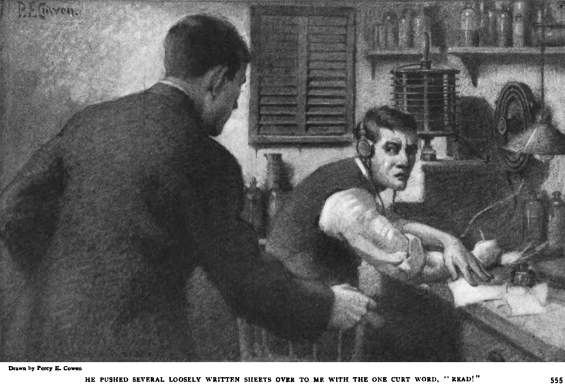
Out Of The Storm by William Hope Hodgson - illustration by Percy E. Cowen

Posted by Jesse Willis

Review of Earth Unaware by Orson Scott Card and Aaron Johnston

SFFaudio Review

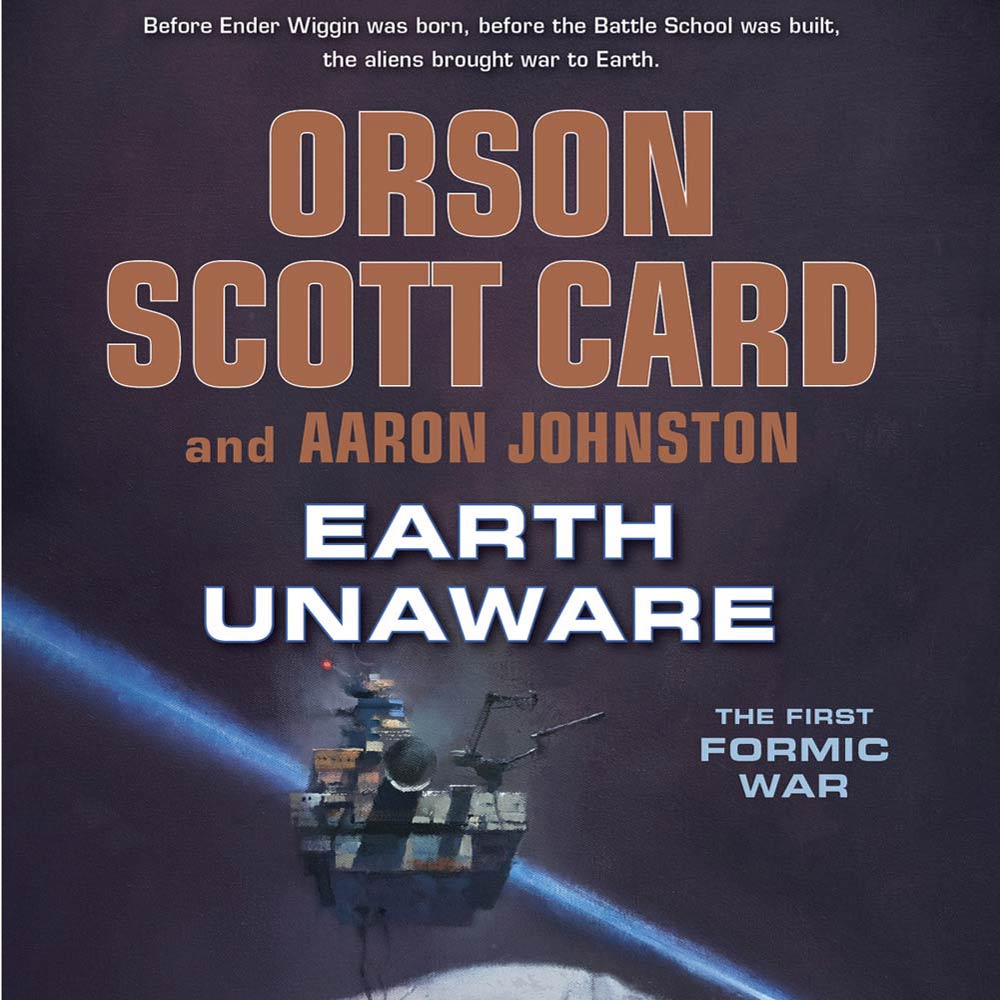
Science Fiction Audiobook - Earth Unaware by Orson Scott Card and Aaron JohnstonEarth Unaware
By Orson Scott Card and Aaron Johnston
Read by Stefan Rudnicki, Stephen Hoye, Arthur Morey, Vikas Adam, Emily Janice Card, Gabrielle de Cuir, and Roxanne Hernandez
14 Hours – [UNABRIDGED]
Publisher: Macmillan Audio
Published: 2012
Themes: / Science Fiction / Solar System / Asteroids / Mining / Gravity / Aliens / Alien invasion /

One of the pleasures of listening to science fiction audiobooks over the years has been hearing Orson Scott Card’s Ender series. Besides being expertly narrated by an ensemble led by Stefan Rudnicki, these audiobooks are entertaining because Card isn’t delivering the same book over and over. In Earth Unaware, Orson Scott Card and Aaron Johnston take the series in yet another direction.

I know, I know. It’s been proven time after time. When a book series gets to the point where [Original Author] picks up [Insert new author here (often a relative)], the results are just… not good. I’m happy to report that Earth Unaware is an excellent novel. I thoroughly enjoyed it.

Aaron Johnston and Orson Scott Card created and are telling the story of the First Formic War in the comic format. I haven’t read those, so I can’t say how similar this novel is, but Aaron Johnston says in the Afterword that Earth Unaware draws from the characters and events in those comics.

The subtitle (First Formic War) implies that we’re in for a military SF novel, but that’s not what this is. This novel is a tense near-space adventure set in the not too distant future and peopled with characters I cared about. The opening reveals the thoughts and feelings of teenager on the El Calvador, a mining ship in the Kuiper Belt. Close by, on a different ship, is a man who has invested much time and effort into the invention of a gravity laser. He needs to prove his worth to his corporate employer. And back on Earth, an elite military unit is being formed. These lives, some entwined, move forward as normal until all interests are altered in the face of the arrival of an alien ship in the solar system.

Even though the cover doesn’t say it, this is Book 1 of at least a few. I look forward to the continued development of the concept of difference. On Valentine Wiggin’s Hierarchy of Foreignness is Varelse. True aliens, aliens so alien that we can’t even communicate with them or even hope to understand them. How could war with such a race be avoided? Difference also extends to human beings, who seem so content to drop their conflicts in the face of greater danger. Why is that what it takes?

The audiobook is performed by multiple narrators in the style that fits Orson Scott Card’s stories so incredibly well. The narrators (all excellent) change with the POV of the story. Reading the story were: Stefan Rudnicki, Stephen Hoye, Arthur Morey, Vikas Adam, Emily Janice Card, Gabrielle de Cuir, and Roxanne Hernandez. Top notch!


Posted by Scott D. Danielson

Review of The Engines of God by Jack McDevitt

SFFaudio Review

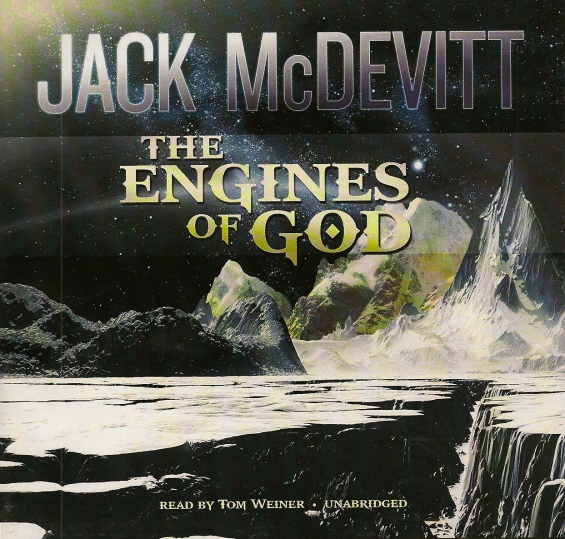
Science Fiction Audiobooks - The Engines of God by Jack McDevittThe Engines of God
By Jack McDevitt; Read by Tom Weiner
14 Hours – [UNABRIDGED]
Publisher: Blackstone Audio
Published: 2012
Themes: / Science Fiction / Archaeology / Climate Change / Aliens / Space / Space Exploration /

Climate change has Earth on the brink of disaster. The only viable solution is terraforming other planets to ensure survival. For a small group of archaeologists, however, terraforming is the worst possible solution. The only suitable planet is also the one planet with the most promising artifacts of an unknown alien race. Known as the Monument Makers, the aliens’ buildings feature a seemingly uncrackable code on them. The team is looking for the alien equivalent of the Rosetta Stone and must race against time to finish excavations before terraforming begins.

Despite the fact that the book begins by talking about climate change, which always gives me a sinking feeling, that is just the pretext for launching readers into a mystery. The team’s quest takes them to outer space, other planets, and into extreme danger as they follow the Monument Makers’ trail to discover their whereabouts and why every alien civilization has been abandoned.

This book reads as if it were a series of four novellas strung together with the common thread of tracking the Monument Makers. Each of the completed stories gives Jack McDevitt the opportunity to take the reader a bit further into archaeological mysteries while also examining different planets, space travel, and alien beings. Transitions between “novellas” are minimal at best and character development is weak. Still McDevitt wove a mystery that kept me listening at a red-hot pace. This is surprising because the author revealed his story in a very straight forward manner with plenty of foreshadowing. In McDevitt’s case, however, the telling itself was so compelling that I was fascinated to hear what would happen next.

In short, I enjoyed this very much, although at the end the story suddenly threw off narrative and resorted to bullet points to finish things off. “In audio, it was an abrupt ending that startled me, however, that didn’t spoil it as the story itself was done. In fact, I didn’t care about the “[insert name here] went on to do this” summary and it could have been left out without hurting anything.

Tom Weiner did a fine job of narrating the book. His reading was not something that stood out for any reason but which carried the story along very well. It left me with the memory of story rather than reader, which is surely what good narration should accomplish.

McDevitt tells a very good mystery that gives answers to some questions and leaves others to the readers’ speculation. Engines of God is ultimately a satisfying adventure which introduces us to a universe that he went on to write other novels about and which I will be seeking out.

Posted by Julie D.

Review of The Red Panda Adventures – Season 7

SFFaudio Review

If you haven’t already started listening to The Red Panda Adventures you’re doing yourself a grave disservice. Go back to the beginning and start with Season 1 (that’s HERE).

Superhero Audio Drama - The Red Panda Adventures - Season SevenThe Red Panda Adventures – Season 7
By Gregg Taylor; Performed by a full cast
12 MP3 Files via podcast – Approx. 6 Hours [AUDIO DRAMA]
Podcaster: Decoder Ring Theatre
Podcast: August 2011 – July 2012
Themes: / Fantasy / Superheroes / Mystery / Crime / Nazis / War / WWII / Adventure / Toronto / Androids / Espionage / Zombies / Magic / Aliens / Poetry / Astral Projection / Hypnosis / France / Germany / Berlin / Dinosaurs / Identity / Forgery / Romance /

The Red Panda Adventures is a comic book superhero series with a world, now in it’s seventh season, that is only comparable in scale to the entire Marvel or DC universes. But unlike either DC and Marvel, the Red Panda universe has all been written by one man, Greg Taylor. Because of that it has a consistency like the best seasons of Babylon 5.

The first episode of Season 7 follows right on the heels of last season’s final episode. In the season opener, From the Ashes, Kit Baxter gets a visit from the highest power in the land. And what with the Red Panda being presumed dead there’s only one thing to do – find a replacement for Canada’s greatest superhero. The government suggests that an unkillable machine, bent on vengeance, become the new Red Panda. And Kit, is fairly forced to accept the government’s choice. Now I won’t summarize any more of the plot. But, I will say this – Season 7 is a very different season than the previous six seasons.

What isn’t different is Taylor’s scripting. It’s still great, in fact its almost unbelievably great. Taylor has one of those highly distinctive writing styles, one that’s instantly recognizable – he’s like an Aaron Sorkin, a David Mamet, or an Ian Mackintosh. And with Taylor’s style comes a whole lot of substance too. He does incredible things with each half-hour script. Each standalone tale features a carefully measured combination of snappy repartee, genuine mystery, thrilling suspense, and clever action. And he does it all within a expanded universe so consistent so as to have become a kind of complete alternate history. His seven year series, and running, has created an image so vivid as to be completely realized. Taylor’s 1930s-1940s Toronto is far realer to me than any Gotham or Metropolis offered up in comics or movies. In fact to find anything comparable you’d have to go to the Springfield of The Simpsons!

Indeed, for the last seven years I’ve followed The Red Panda Adventures rather avidly and with each season I’ve become more engrossed in the show. The release of a new episode has become so inextricably linked to my listening habits so as to become like a good a visit from an old friend. It’s truly wonderful.

In my re-listening to the first eleven episodes of this Season 7 I picked up dozens and dozens of minor details in dialogue and plot that I’d missed the first time around. Take one point, early in the season, as an example – a character quotes the tagline of the CBS Radio series Suspense as a part of her dialogue.

How wonderful to find that!

And of course there are all the usual line echoes that we know from all past seasons (if you’re curious there’s a whole thread of Taylorisms over on AudioDramaTalk).

As for Season 7 as a whole, it has a sense of deep loss, very much in keeping with the times in which the story is set and the fallout from Season 6. Earlier I mentioned that Season 7 was unlike previous seasons, that’s because it features two overarching, and eventually intersecting, plots. The first, set in Toronto, deals with Kit Baxter, her new sidekick, her new job as associate editor of the Chronicle, and her developing pregnancy. The other plotline, set in Europe introduces us to a new character, a Lieutenant Flynn, a man in a deep denial, and his attempts to fight the Nazis behind their lines. It’s a radical change, and unforeseen change of pace, but not an unpleasant one.

The smaller scale stories from this season, like The Milk Run, work terrifically well too. As even the characters themselves will admit a plot about the forgery of rationing books doesn’t sound very dramatic next to the events unfolding in war torn France. But it’s a job that has to be done, and should be done, and done well it is. And that’s because the relatively harmless domestic crime of forgery is an important part of the story of WWII Toronto. The The Milk Run script tackles it in a way that makes it seem as if such a story could not not be told. In fact, this whole home-front end of the season’s story holds up very well next to the very dramatic later episodes.

One other such, The Case Of The Missing Muse, works very similairly. It’s a story in which we meet a super-villain, with a super-vocabulary, in a mystery that could have been set in any of the previous episodes. But what with the war time setting it of Season 7, and a new Red Panda running the show, it has a resolution that has its own unique wartime fit.

That replacement Red Panda, who in fact is a character from a previous season is still voiced by the wonderful Christopher Mott. The new Panda has a very different personality and temperament than our good friend August Fenwick. His goals as Red Panda are different, his methods are different, and it’s basically everything you like about when a hero regular superhero, from the comics gets, a replacement. It’s a new origins story – a fresh start – with all the promise that brings.

Some have argued that The Red Panda Adventures is really Kit Baxter’s story – and that certainly could be argued especially within the first arc of Season 7. Indeed, Kit Baxter, aka Flying Squirrel, does not get short shrift there. Besides her regular superhero duties, Kit’s also required to train the new Panda, fill in for the shattered Home Team (from last season) and somehow deal with the fact that her butler now knows she’s the Flying Squirrel! But that’s not all over at The Chronicle, the fictional Toronto newspaper that Kit works for, she, and we, get to visit with one of the best editor voices I’ve ever heard. Editor Pearly is your typical fatherly J. Jonah Jameson type caricature of an editor, but with a voice so crazily stressed out, a voice with lines so quickly delivered, you’ll barely understand a word he’s saying. It’s both fun and funny.

Then, just short of the midway point, a kind of focal transition takes place in between episodes 78 and 79, The Darkness Beyond and Flying Blind. The second arc begins slowly but soon ramps up. The aforementioned “Lieutenant Flynn”, and a team of commandos lead by one Captain Parker must escape from a Nazi stalag prison. Once achieved they spend much of the rest of the season either on the run or doing Special Operations Executive style missions in Nazi occupied France or in Berlin itself! And long time fans of the series will recognize the return of a certain Australian accented commando in one episode.

This new military aspect of the show is actually rather remarkable, being like a kind of Canadian version of WWII Captain America. It features a large male cast, allied soldiers, that act like something like a hybrid of the comics like Sgt. Rock, Sgt. Fury And His Howling Commandos, and The Unknown Soldier. Indeed, in the final episode of Season 7, The Black Heart, the show even gives a nice tip of the hat towards the later Nick Fury (the one who’s an agent for S.H.I.E.L.D.). That final season episode, incidentally, is set to be podcast later this month and features several other reveals, and dare I say reunions, which fans will be sure to love – I know I sure did. Suffice it to say, the Season 7 season-ender is definitely not a cliffhanger.

Here’s the podcast feed:

http://decoderring.libsyn.com/rss

Happy Canada Day everybody, go celebrate with some RED PANDA!

Posted by Jesse Willis