A half-vampire’s work is never done…
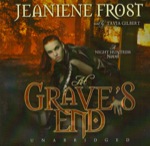 At Grave’s End (Book 3 in the Night Huntress series)
By Jeaniene Frost; Read by Tavia Gilbert
8 CDs – Approx. 9.3 Hours [UNABRIDGED]
Publisher: Blackstone Audio
Published: December 2010
ISBN: 9781441768988
Some things won’t stay buried … at grave’s end. It should be the best time of half-vampire Cat Crawfield’s life. With her undead lover Bones at her side, she’s successfully protected mortals from the rogue undead. But though Cat’s worn disguise after disguise to keep her true identity a secret from the brazen bloodsuckers, her cover’s finally been blown, placing her in terrible danger. As if that wasn’t enough, a woman from Bones’ past is determined to bury him once and for all. Caught in the crosshairs of a vengeful vamp, yet determined to help Bones stop a lethal magic from being unleashed, Cat’s about to learn the true meaning of bad blood. And the tricks she’s learned as a special agent won’t help her. She will need to fully embrace her vampire instincts in order to save herself—and Bones—from a fate worse than the grave.
Look no further for unknowable, inimical insectiles than…
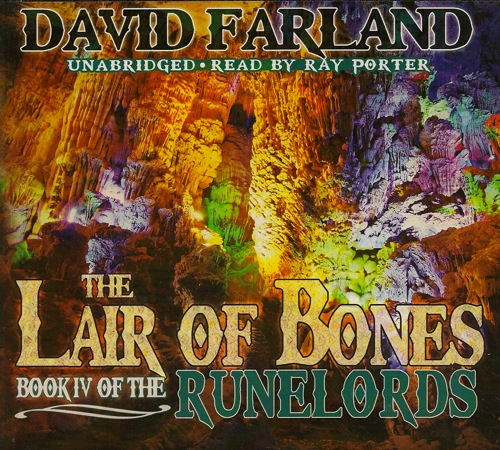
 The Lair of Bones (Book 4 of The Runelords series)
By David Farland; Read by Ray Porter
13 CDs – Approx. 15.4 Hours [UNABRIDGED]
Publisher: Blackstone Audio
Published: December 2010
ISBN: 9781441753120
Prince Gaborn, the Earth King, has defeated the forces arrayed against him each time before: the magical and human forces marshaled by Raj Ahten, who seeks immortality at any cost and has given up his humanity in trade; and the inhuman, innumerable, insectile hordes of the giant Reavers from under the Earth, whose unknowable motives are inimical to human life. Now there must be final confrontations, both on the field of battle, with the supernatural creature that Raj Ahten has become, and underground, in the cavernous homeland of the Reavers, where the sorcerous One True Master who rules them all lies in wait—in the Lair of Bones. The survival of the human race on Earth is at stake.
Like a few other titles in this list this one was discussed at the beginning of SFFaudio Podcast #088…
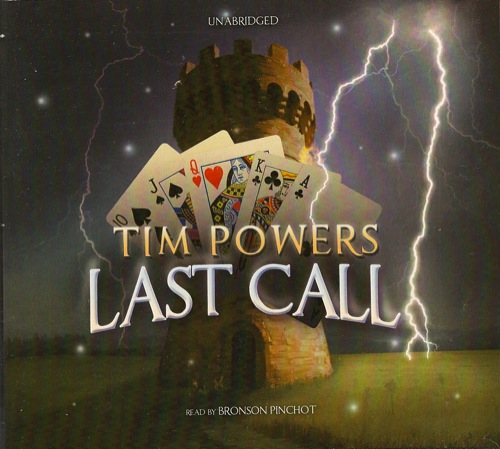
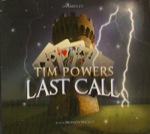 Last Call
By Tim Powers; Read by Bronson Pinchot
16 CDs – Approx. 19.1 Hours [UNABRIDGED]
Publisher: Blackstone Audio
Published: December 2010
ISBN: 9781441757364
Scott Crane abandoned his career as a professional poker player twenty years ago and hasn’t returned to Las Vegas, or held a hand of cards, in ten years. But troubling nightmares about a strange poker game he once attended on a houseboat on Lake Mead are drawing him back to the magical city. For the mythic game he believed he won did not end that night in 1969—and the price of his winnings was his soul. Now, a pot far more strange and perilous than he ever could imagine depends on the turning of a card. Enchantingly dark and compellingly real, this World Fantasy Award–winning novel is a masterpiece of magic realism set in the gritty, dazzling underworld known as Las Vegas.
To me, the word UFO illustrates both the magic and the deficiency of language. The gap between the “U” (UNKNOWN) and “alien spacecraft” is the slippage between word, reality, and fantasy in the black box of the brain. There’s a website for the book |HERE|…
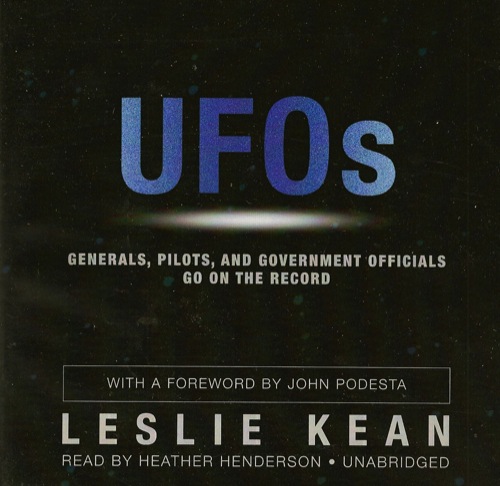
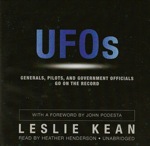 UFOs: Generals, Pilots, and Government Officials Go On the Record
By Leslie Kean; Read by Heather Henderson
11 CDs – Approx. 13 Hours [UNABRIDGED]
Publisher: Blackstone Audio
Published: October 2010
ISBN: 9781441776150
An Air Force major is ordered to approach a brilliant UFO in his Phantom jet over Tehran. He repeatedly attempts to engage and fire on unusual objects heading right toward his aircraft, but his missile control is locked and disabled. Witnessed from the ground, this dogfight becomes the subject of a secret report by the U.S. Defense Intelligence Agency. In Belgium, an Air Force colonel investigates a series of widespread sightings of unidentified triangular objects, sending F-16s to attempt a closer look. Hundreds of eyewitnesses, including on-duty police officers, file reports about the incident, and a spectacular photograph of an unidentifiable craft is retrieved and analyzed. Here at home, a retired chief of the Federal Aviation Administration’s Accidents and Investigations Division reveals the agency’s response to a thirty-minute encounter between an aircraft and a gigantic UFO over Alaska, which occurred during his watch and is documented on radar. Now all three of these distinguished men have written breathtaking, firsthand accounts about these extraordinary incidents. They are joined by Air Force generals and a host of high-level sources who have agreed to write their own detailed, personal stories about UFO encounters and investigations for the first time. They are coming forward now because of Leslie Kean, an investigative reporter who has spent the last ten years studying the still unexplained UFO phenomenon. Kean reviewed hundreds of government documents, aviation reports, radar data, and case studies with corroborating physical evidence. With the support of former White House Chief of Staff John Podesta, Kean draws on her research to separate fact from fiction and to lift the veil on decades of U.S. government misinformation. Throughout, she presents irrefutable evidence that unknown flying objects—metallic, luminous, and seemingly able to maneuver in ways that defy the laws of physics—actually exist.
Dare you learn the lost secrets of the meow’in Mauan civilization?
 Catacombs: A Tale of the Barque Cats
By Anne McCaffrey and Elizabeth Ann Scarborough; Read by Laural Merlington
7 CDs – Approx. 8 Hours [UNABRIDGED]
Publisher: Brilliance Audio
Published: December 2010
ISBN: 9781441838339
In Catalyst, award-winning authors Anne McCaffrey and Elizabeth Ann Scarborough introduced listeners to the beguiling Barque Cats: spacefaring felines who serve aboard starships as full-fledged members of the crew. Highly evolved, the cats share an almost telepathic bond with their minders, or Cat Persons — until, suddenly, there is no “almost” about it, and a particular Barque Cat, Chester, learns to ex- change thoughts with his human friend, Jubal. Other cats soon gain the same ability. Behind the seeming miracle is a mysterious cat named Pshaw-Ra, who possesses knowledge and technology far beyond anything the Barque Cats — or their humans — have ever seen. When fear of a virulent plague leads the government first to quarantine and then to kill all animals suspected of infection, Pshaw-Ra—with the help of Chester, Jubal, and the crew of the starship Ranzo — activates a “mousehole” in space that carries the refugees to a place of safety: Pshaw-Ra’s home planet of Mau, where godlike cats are worshiped by human slaves. But Pshaw-Ra’s actions are less noble than they appear. The scheming cat plans to mate the Barque Cats with his own feline stock, creating a hybrid race of superior cats — a race destined to conquer the universe. Yet right from the start, his plans go awry. For one thing, there’s a new queen on Mau: Pshaw-Ra’s daughter Nefure, a spoiled brat — er, cat — with a temper as short as her attention span. Pshaw-Ra’s other daughter, the rightful queen Renpet, is exiled, running for her life in the only direction available to her — down into the vast catacombs beneath the Mauan desert. Far from receiving the hero’s welcome he expected, Pshaw-Ra must use every bit of his considerable cleverness just to survive. Meanwhile, as usual, Chester and Jubal stumble right into the middle of things, in the process uncovering the lost secrets of the Mauan civilization. But that’s not all they uncover. In the forgotten catacombs deep below the Mauan capital, something has awakened. Something as old as the universe. Something that hungers to devour all light and life — and that bears an undying hatred for cats.
An Epic Fantasy that’s only 4 hours long? That’s an epic I can get behind!
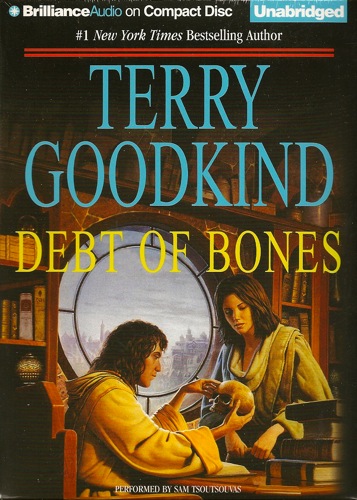
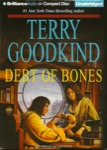 Debt Of Bones (a book in the Sword Of Truth series)
By Terry Goodkind; Read by Sam Tsoutsouvas
3 CDs – Approx. 4 Hours [UNABRIDGED]
Publisher: Brilliance Audio
Published: December 2010
ISBN: 9781441886699
A milestone of storytelling set in the world of The Sword Of Truth, Debt Of Bones is the story of young Abby’s struggle to win the aid of the wizard Zedd Zorander, the most important man alive. Abby is trapped, not only between both sides of the war, but in a mortal conflict between two powerful men. For Zedd, who commands power most men can only imagine, granting Abby’s request would mean forsaking his sacred duty. With the storm of the final battle about to save the life of a child…but neither can escape the shadow of an ancient betrayal. With time running out, their only choice may be a debt of bones. The world – for Zedd, for Abby, for everyone – will never again be the same.
I feel kind of bad that I haven’t read any Bacigalupi other than The Fluted Girl. Is this my chance to atone?
 Pump Six and Other Stories
By Paolo Bacigalupi; Read by Jonathan Davis, James Chen, and Eileen Stevens
11 CDs – Approx. 13 Hours [UNABRIDGED]
Publisher: Brilliance Audio
Published: December 2010
ISBN: 9781441892201
The eleven stories in Pump Six chart the evolution of Paolo Bacigalupi’s work, including the Hugo nominated “Yellow Card Man,” and the Sturgeon Award-winning story “The Calorie Man,” both set in the world of his novel The Windup Girl. This collection also demonstrates the power and reach of the science fiction short story. Social criticism, political parable, and environmental advocacy lie at the center of Bacigalupi’s work. Each of the stories herein is at once a warning and a celebration of the tragic comedy of the human experience.
This audiobook is getting very mixed reviews over on Amazon.com, many high, many low, but it’s length means I think it’ll be reviewed here soon…
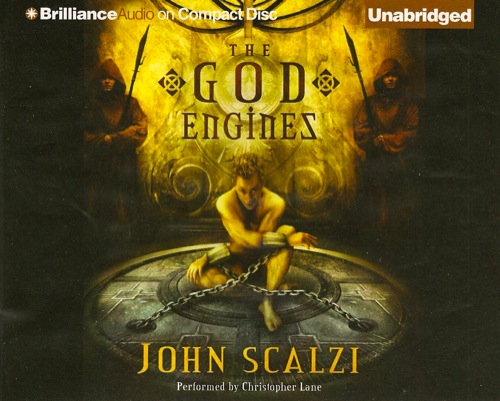
 The God Engines
By John Scalzi; Read by Christopher Lane
3 CDs – Approx. 3 Hours [UNABRIDGED]
Publisher: Brilliance Audio
Published: December 2010
ISBN: 9781441890795
Captain Ean Tephe is a man of faith, whose allegiance to his lord and to his ship is uncontested. The Bishopry Militant knows this — and so, when it needs a ship and crew to undertake a secret, sacred mission to a hidden land, Tephe is the captain to whom the task is given. Tephe knows from the start that his mission will be a test of his skill as a leader of men and as a devout follower of his god. It’s what he doesn’t know that matters: to what ends his faith and his ship will ultimately be put — and that the tests he will face will come not only from his god and the Bishopry Militant, but from another, more malevolent source entirely… Author John Scalzi has ascended to the top ranks of modern science fiction with the best-selling, Hugo-nominated novels Old Man’s War and Zoe’s Tale. Now he tries his hand at fantasy, with a dark and different novella that takes your expectations of what fantasy is and does, and sends them tumbling. Say your prayers… and behold The God Engines.
I am sooo looking forward to hearing this…
 The Stainless Steel Rat Wants You (book 4 in the Stainless Steel Rat series)
By Harry Harrison; Read by Phil Gigante
5 CDs – Approx. 5 Hours [UNABRIDGED]
Publisher: Brilliance Audio
Published: December 2010
ISBN: 9781441881267
After saving the world, diGriz is called on to save the universe. Liberating his two, now teenage, twin’ sons from a military boarding school and penitentiary, diGriz sets out to free his wife, who has been arrested by the tax men. But the family is soon fighting an enemy of a different sort, when the humans-only galaxy of the League is invaded by all manner of hideous aliens. The Rat, disguised in the most hideous combination of alien physical features, is sent into the centre of the aliens’ stronghold, where he finds himself the object of desire among the aliens. His task is to stop the aliens, who plan to wipe out every human in the universe.
John DeNardo, over on SFSignal.com, thought this audiobook worthy of 4/5 stars…
 Starship Vectors
Edited by Allan Kaster; Read by Nicola Barber and Tom Dheere
8 CDs – Approx. 9 Hours [UNABRIDGED]
Publisher: Infinivox
Published: December 2010
ISBN: 1884612946
Starships come in many shapes and sizes. Their crews and passengers are an eclectic lot. They venture into the deep voids of space on their assigned missions. Sometimes they succeed and sometimes they do not. This collection tells the stories of the crews and passengers aboard six of these starships. Those aboard the Mayflower II are determined to be the first generation ship to successfully reach another galaxy in a story (Mayflower II ) by Stephen Baxter that takes place in the Xeelee universe. In Boojum, by Elizabeth Bear and Sarah Monette, space pirates are on the prowl for booty aboard the living starship, Lavinia Whateley. In The Political Officer, by Charles Coleman Finlay, the crew aboard a military starship must contend with both the enemy and a political officer. In The Tomb Wife, by Gwyneth Jones, the navigator of the interstellar freighter, Pirate Jenny, hears a ghost from an alien tomb in its cargo hold. Two competitive physicists aboard the Kepler use uploads of themselves to probe the scientific mysteries of radiation-rich space in Shiva in Shadow by Nancy Kress. A wealthy woman explores the lives of the less fortunate aboard a starship larger than Earth in Robert Reed s The Remoras, part of the author s ongoing Marrow series.
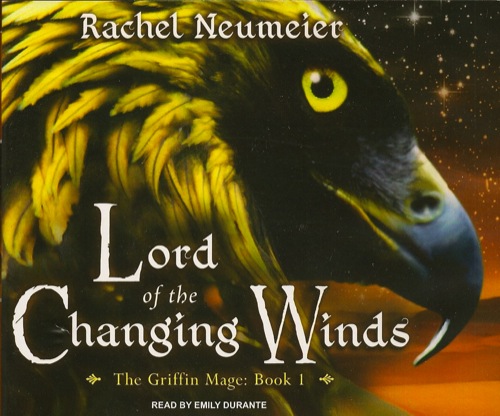
The first book in a new “epic fantasy” trilogy about a war between men and griffins…
 Lord Of The Changing Winds (book 1 in the Griffin Mage series)
By Rachel Neumeier; Read by Emily Durante
9 CDs – Approx. 11 Hours 30 Minutes [UNABRIDGED]
Publisher: Tantor Media
Published: October 2010
ISBN: 9781400119714
Griffins lounged all around them, inscrutable as cats, brazen as summer. They turned their heads to look at Kes out of fierce, inhuman eyes. Their feathers, ruffled by the wind that came down the mountain, looked like they had been poured out of light; their lion haunches like they had been fashioned out of gold. A white griffin, close at hand, looked like it had been made of alabaster and white marble and then lit from within by white fire. Its eyes were the pitiless blue-white of the desert sky. Little ever happens in the quiet villages of peaceful Feierabiand. The course of Kes’s life seems set: she’ll grow up to be an herb-woman and healer for the village of Minas Ford, never quite fitting in but always more or less accepted. And she’s content with that path—or she thinks she is. Until the day the griffins come down from the mountains, bringing with them the fiery wind of their desert and a desperate need for a healer. But what the griffins need is a healer who is not quite human…or a healer who can be made into something not quite human.
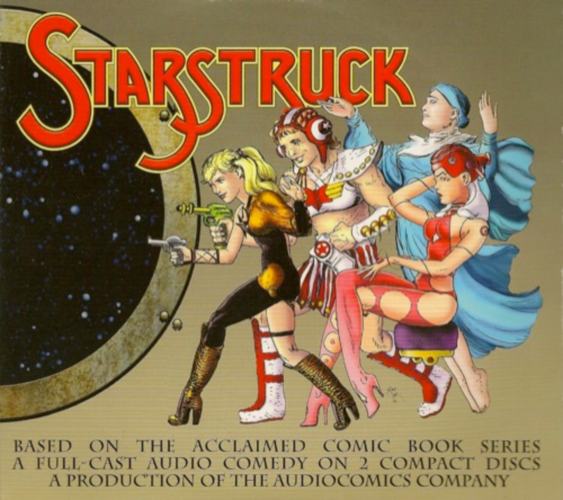
Described as “‘Buck Rogers‘ meets ‘Barbarella‘ meets ‘The Hitchhiker’s Guide to the Galaxy‘”…
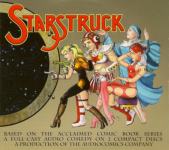 Starstruck
Based on the comic series and the play by Elaine Lee and Mike Kaluta; Adapted by Elaine Lee, Susan Norfleet and Dale Place; Performed by a full cast
2 CDs – Approx. 2 Hours 11 Minutes
Publisher: The Audio Comics Company
Published: 2010
ISBN: 9780615411439
The basis for the critically acclaimed comic book series, Starstruck was first presented off-off-Broadway in 1980, and again off-Broadway in 1983. In a far-flung and very alternative future, Captain Galatia 9 and the crew of the Harpy and on a mission for the United Federation of Female Freedom Fighters. When the Harpy runs into a living ship inhabited by a team of galactic evildoers, including Galatia’s insidious sister Verloona Ti, the outcome of the battle may well decide the fate of the free universe. The AudioComics Company is proud to present the audio adaptation of the play script as its inaugural production! Often hilarious, always surprising, Starstruck is a spine-tingling joy-ride to the far side of the spiral arm!
Posted by Jesse Willis

 Around The World In Eighty Days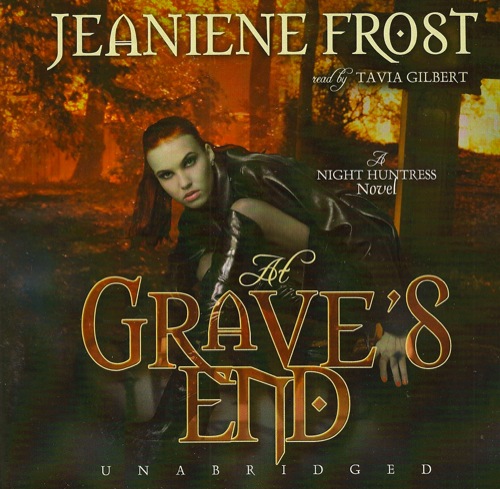







 The Stainless Steel Rat





 Tales Of Tomorrow – Watchbird
 2000X – The Watchbird