

LibriVox: The Valley Of Fear by Sir Arthur Conan Doyle

Aural Noir: Online Audio

LibriVoxI’ve previously written about the Sherlock Holmes novel called The Valley Of Fear. It feels like a rather unusual Holmes novel given that Holmes isn’t actually present in the majority of the narrative. But, if you think about the most famous Holmes story of them all (also a novel) The Hound Of The Baskervilles, you may also recall that Sherlock Holmes wasn’t in that one much either. Unlike The Hound Of The Baskervilles, where most of the action stems from a local English legend, most of plot of The Valley Of Fear takes places in the United States – taking inspiration from a real life criminal conspiracy. Still, Conan Doyle isn’t importing everything. We get lots of details about master-criminal Professor Moriarty and his non-fiction inspiration (Jonathan Wild) too.

This newly released version, available free from LibriVox.org, is a complete narration by a single reader, Katie Riley. While she hasn’t given us the definitive FREE edition, there are several mispronunciations in the first few chapters, her reading is serviceable.

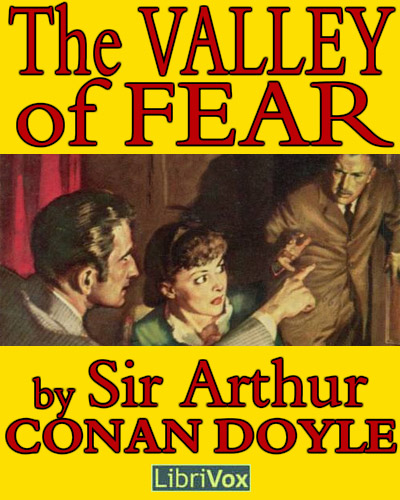
LIBRIVOX - The Valley Of Fear by Sir Arthur Conan DoyleThe Valley Of Fear
By Sir Arthur Conan Doyle; Read by Katie Riley
15 Zipped MP3 Files or Podcast – Approx. 6 Hours 23 Minutes [UNABRIDGED]
Publisher: LibriVox.org
Published: February 8, 2010
Doyle’s final novel featuring the beloved sleuth, Sherlock Holmes, brings the detective and his friend to a country manor where they are preceded by either a murder or a suicide. A secretive organization lies culprit and an infiltration of it is in order.

Podcast feed: http://librivox.org/rss/3664

iTunes 1-Click |SUBSCRIBE|

[Thanks also to Diana Majlinger and Leni]

Posted by Jesse Willis

Review of The Invisible Man by H.G. Wells

SFFaudio Review

Science Fiction Audiobook - The Invisible Man by H.G. WellsThe Invisible Man
By H.G. Wells; Read by James Adams
5 CDs – Approx. 5.5 Hours [UNABRIDGED]
Publisher: Blackstone Audio
Published: 2009
ISBN: 9781433277528
Themes: / Science Fiction / Invisibility / Chemistry / Biology / Crime / 19th Century / Sussex / Morality / Personal Responsibility /

On a freezing February day, a stranger emerges from out of the gray to request a room at a local provincial inn. Who is this out-of-season traveler? More confounding is the thick mask of bandages obscuring his face. Why does he disguise himself in this manner and keep himself hidden away in his room? Aroused by trepidation and curiosity, the local villagers bring it upon themselves to find the answers. What they discover is a man trapped in a terror of his own creation, and a chilling reflection of the unsolvable mysteries of their own souls.

While nobody could really deny H.G. Wells was an amazing and talented Science Fiction author I think we can all agree that some of his fictions are superior to others. Among those that are not superior is The Invisible Man. This is not from any serious defect in the novel’s writing. Indeed, I cannot see anything that H.G. Wells has really done badly or that he could have done better. So, if it couldn’t have been done better then why isn’t it better? I think the problem stems from two interrelated factors: One is a serious technical gripe, something in the book and unavoidable, and the other being the smallness of that idea. Taken together they make it difficult to fully engage with. What holds back The Invisible Man from an utter perfection is at the weak premise at the very core of the novel, invisibility. Invisibility is both impossible and small. I’ve expanded on its impossibility in another essay. Its smallness is a problem I will tackle here.

Invisibility is a long standing meme in human culture: Plato describes invisibility in the legend of The Ring Of Gyges, Tolkien used a similarly endowed ring in The Lord Of The Rings, and even modern scientific versions of invisibility (the invisible-like camouflage in Predator) are still with us. The problem is invisibility isn’t a story, its barely a half of an idea in terms of ideas – its a place to take a story, but it isn’t a very fruitful one. I felt the same way when I read Richard Matheson’s The Incredible Shrinking Man |READ OUR REVIEW|READ OUR REVIEW|. I though: “A man shrinking, that’s new!” It was new and completely unfruitful. See the fallout from the idea of a man shirking inexorably towards nothingness is a feeling of emptiness. The man shrinks, the world gets bigger. A man shrinks, everyday objects become like mountains and house pets like dragons. Its interesting, to be sure, but it isn’t a story. Like invisibility, no amount of hand-waving can make the explanation scientifically plausible. Unlike, the The Incredible Shrinking Man however I can still recommend The Invisible Man – Wells is the master of Science Fiction. In The Invisible Man he takes a fatally flawed concept, invisibility, and writes the shit out of it. When Griffin, the scientist and anti-hero of the title goes about explaining his methodological reasoning in a Socratic dialogue, he is fully persuasive. Check this passage out:

“Phew!” said Kemp. “That’s odd! But still I don’t see quite … I can understand that thereby you could spoil a valuable stone, but personal invisibility is a far cry.”

“Precisely,” said Griffin. “But consider, visibility depends on the action of the visible bodies on light. Either a body absorbs light, or it reflects or refracts it, or does all these things. If it neither reflects nor refracts nor absorbs light, it cannot of itself be visible. You see an opaque red box, for instance, because the colour absorbs some of the light and reflects the rest, all the red part of the light, to you. If it did not absorb any particular part of the light, but reflected it all, then it would be a shining white box. Silver! A diamond box would neither absorb much of the light nor reflect much from the general surface, but just here and there where the surfaces were favourable the light would be reflected and refracted, so that you would get a brilliant appearance of flashing reflections and translucencies—a sort of skeleton of light. A glass box would not be so brilliant, not so clearly visible, as a diamond box, because there would be less refraction and reflection. See that? From certain points of view you would see quite clearly through it. Some kinds of glass would be more visible than others, a box of flint glass would be brighter than a box of ordinary window glass. A box of very thin common glass would be hard to see in a bad light, because it would absorb hardly any light and refract and reflect very little. And if you put a sheet of common white glass in water, still more if you put it in some denser liquid than water, it would vanish almost altogether, because light passing from water to glass is only slightly refracted or reflected or indeed affected in any way. It is almost as invisible as a jet of coal gas or hydrogen is in air. And for precisely the same reason!”

“Yes,” said Kemp, “that is pretty plain sailing.”

So, I’m of two minds on The Invisible Man. It derives its heart from a weak concept – and like the phlogiston theory of combustion it is discredited, and undeserving of serious consideration. Despite all this I still find myself willing to recommend you read the novella. The psychological rigor that Wells brings to the novel makes The Invisible Man quite possibly the first and last straight Science Fiction story worthy of our attentions.

Narrator James Adams is a capable reader, he reads the third person perspective text with what sounds like an authentic English accent. The clam-shell style case, for the library CD edition that I received, features a bit of fading text on the cover, a design inspired by the invisibility of the title. Unfortunately this makes the details hard to make out in anything other than a bright light environment. Blackstone Audio has four other formats available too: Cassette, MP3-CD, digital download (via Audible.com) and playaway (a kind of disposable MP3 player that can only play one book). Given the widespread availability of The Invisible Man by other audiobook publishers I’d like to have seen some value added materials, perhaps a specially commisioned introduction by Professor Eric Rabkin and or an afterward by Professor Michael D.C. Drout.

One thing I like about paperbooks that rarely (if ever) gets included in an audiobook is a map. Maps are fun and informative. One of the funnest paperback series ever was the old Dell Mapbacks. Here’s the Map from the back of Dell’s edition of The Invisible Man:

The Invisible Man by H.G. Wells - A Dell Book (MAPBACK)

Posted by Jesse Willis

BBCR4 + RA.cc: Double Indemnity

Aural Noir: Online Audio

BBC Radio 4RadioArchives.ccFor me Double Indemnity is the best of Film Noir. It takes the filmic art form to the highest of the black and white heights. It faithfully captures James M. Cain’s novella like no other film has done with any novel.

When I read about this BBC radio dramatization of Double Indemnity I kept my expectations low – that probably helped me enjoy it all the more – but I can’t imagine any fan of either the novel or the film being disappointed by this rare gem. It is more than terrific! Theresa Russell as Phyllis Deitrichson is superior to Barbara Stanwyck‘s iconic role. Her performance has me wanting to watch Black Widow again.

James M. Cain's Double IndemnityDouble Indemnity
Based on the novella by James M. Cain;
Adapted by John Fletcher; Performed by a full cast
1 MP3 (via torrent) – 1 Hour 29 Minutes [RADIO DRAMA]
Broadcaster: BBC Radio 4 / Saturday Night Theatre
Broadcast: 1993

Cast:
Walter Huff …. Frederic Forrest
Lola …. Molly Ringwald
Phyllis …. Theresa Russell
Keyes …. John Wood
Nerdlinger …. Michael Drew
Norton …. John Goraczio
Jackson …. John Baddeley
Nettie …. Geraldine Fitzgerald
Zachetti …. Roger May

Original Music by Barrington Pheloung
Technical presentation by Graham Hoyland, Dave Parkinson, Andrew Lawrence, Fiona Baker, Christine Hall, Mark Decker
Directed at Christchurch Studios in Bristol by Andy Jordan

You can get Double Indemnity via TORRENT at RadioArchive.cc.

And speaking of FILM NOIR, has anybody got room for a hitchhiker? I’d really like to be in San Fransisco by tomorrow afternoon…

NOIR CITY 2010 - The 8th Annual San Fransisco Film Noir Festival

NOIR CITY from Film Noir Foundation on Vimeo.

Posted by Jesse Willis

SFPRP: Smoke by Donald E. Westlake and more invisible men

SFFaudio Online Audio

Luke Burrage, in the second of two consecutive shows with me as a guest on Science Fiction Book Review Podcast, is talking about Smoke by Donald E. Westlake and other stories about invisibility. We thoughrouly examine the invsiblity meme, discuss its strengths and weaknesses and chat about possible upcoming topics of conversation!

The Science Fiction Book Review Podcast SFBRP #079 – Smoke and more invisible men
1 |MP3| – Approx. 58 Minutes [UNABRIDGED]
Podcaster: SFBRP.com
Podcast: Monday, January 18, 2010

Here’s what we talked about:
Luke’s The Invisible Man podcast (SFBRP#78), The Invisible Man by H.G. Wells, Donald E. Westlake’s Smoke, invisibility, Freddie Urban Noon, crime, Smoke is an invisible man story done right, Memoirs Of An Invisible Man by H.F. Saint, Memoirs Of An Invisible Man (the 1992 film), invisibility in Fantasy (J.R.R. Tolkien’s The Lord Of The Rings), invisibility in Science Fiction (The Invisible Man by H.G. Wells), invisibility in a comic crime story, what are the problems with being an invisible thief?, humor, New York, Richard Stark, hard boiled crime, 5 Writing Lessons Learned from Donald Westlake, “When the phone rang Parker was in the garage killing a man.”, The Writing Excuses Podcast, Luke’s review of Makers by Cory Doctorow (SFBRP #74), big tobacco, Westlake’s way of telling a story “he went into the unspeakable kitchen.”, Westlake is a masterful writer of sentences, Peg Briscoe (Freddie’s girlfriend) is a competent confederate, how do you steal things when you’re invisible? (people will see the stolen goods floating down the street!), how do you sell stolen goods when you’re invisible? (you’ll need a confederate), invisibility is a small but well known meme, comparing the memes of invisibility and time travel, nailing small coffins and flogging tiny horses, The Man With The Getaway Face by Richard Stark, the Stark novels are faced paced and utterly absorbing, the differences between Stark novels and Westlake novels, The Hunter by Richard Stark, Payback (the 1999 film), more invisible men, Hollow Man (the 2000 film), Sony used a fake reviewer to shill its movies, unlikeable characters in novels vs. film, the concept of invisibility is a human concept and not a worldly phenomenon (and what that does to our perception of possibility), negating a phenomenon doesn’t create a new phenomenon, invisibility in The Hitch-Hiker’s Guide To The Galaxy series, Jack Ward, The Sonic Society, Superman, why Superman is impossible, invisible men cannot smoke or drink or eat if they want to remain wholly invisible, Neil Morrisey, The Vanishing Man (1998), future memes and themes for podcasts: THE YELLOW PERIL, when will China take over the world? (soon), David Wingrove’s Chung Kuo series, The Insidious Dr. Fu-Manchu by Sax Rohmer, the Judge Dee mysteries, Starship: Flagship by Mike Resnick, Kirinyaga by Mike Resnick |READ OUR REVIEW|, ***watch out for the false ending*** Alan Moore‘s The League Of Extraordinary Gentlemen, Captain Nemo, Mina Harker, Allan Quatermain, the National Treasure series, Indiana Jones,
6 Insane Fan Theories That Actually Make Great Movies Better, the best television show ever made: The Adventures Of Young Indiana Jones, doing something with a television show that no-one has ever done on TV before or since, automating your podcast with Audacity, python.

http://www.sfbrp.com/?feed=podcast

iTunes 1-Click |SUBSCRIBE|

Posted by Jesse Willis

The SFFaudio Podcast #046

Podcast

The SFFaudio PodcastThe SFFaudio Podcast #046 – Jesse and Scott talk audiobooks, hard SF, current theatrical movies, Kenneth Oppel‘s Skybreaker and the new Gene Wolfe audiobooks at Audible.com! We also debut a new feature (boldly stolen from the late lamented Sofanauts Podcast). RIP.

Talked about on today’s show:
bananas, Smoke by Donald E. Westlake, invisibility, humor, the Richard Stark novels are only funny to psychopaths, crime, Don’t Call Us, We’ll Call You by Donald Westlake (Westlake’s open letter to Science Fiction on why he’s not writing SF anymore), Philip K. Dick’s interview on Hour 25, Those Sexy Vintage Sleaze Books: A Blog About Vintage Soft Core Paperbacks, Robert Silverberg, Lawrence Block, paperbackswap.com, The Ax and The Hook by Donald E. Westlake, The Engines Of God by Jack McDevitt, Rendezvous With Rama by Arthur C. Clarke, aliens, xenoarcheology, terraforming, Tom Weiner, hard SF, 2010: Odyssey Two by Arthur C. Clarke, exoplanets, social science fiction, soft SF, The Windup Girl by Paulo Bacigalupi, androids, first contact, Calculating God by Robert J. Sawyer |READ OUR REVIEW|, how to win any argument about modern SF: bring up Ted Chiang, The Story Of Your Life by Ted Chiang, The Invisible Man by H.G. Wells, Starship: Flagship by Mike Resnick, hero characters doing villainous things, Island Of The Blue Dolphins by Scott O’Dell, Summer Of The Monkeys by Wilson Rawls, Dolphin Island by Arthur C. Clarke, hovercraft, Australia, 2010: The Year We Make Contact, marine biology, District 9, the MacGuffin in District 9 is stupid, Avatar, Sharlto Copley, Star Trek, Skybreaker by Kenneth Oppel, Full Cast Audio, audio drama, Science Fiction, alternate history, Fantasy, airships, pirates, lifting gasses, phrenology, Howard Hughes, Thomas Edison, Graphic Audio, Brandon Sanderson‘s Warbreaker, Elizabeth Moon‘s Serrano Legacy series, audio drama is for truckers!, Jesse’s pick of the week: William Friedkin‘s Sorcerer (1977), laserdiscs, the great thing about laserdiscs!, VHSrips!, The Wages Of Fear (1953), Scott’s Pick of the week: Gene Wolfe’s The Book Of The New Sun (a novel in four parts), narrated by Jonathan Davis, the SFFaudio Yahoo! Group, Audible.com, Blake’s 7 The Early Years – Jenna: The Trial / The Dust Run (Vol. 1.5), Carrie Dobro, Babylon 5: Crusade, the Blake’s 7 television series, Blake’s 7 is the best audio drama space opera series ever!, Brian AldissHelleconia series, Non-Stop by Brian Aldiss, Best SF Stories of Brian W. Aldiss, the fix-up novel, Dreamsongs by George R.R. Martin |READ OUR REVIEW|, Maps In A Mirror by Orson Scott Card, short stories turned into novels, Karen Makes Out (a short story), Out Of Sight (a novel) by Elmore Leonard, Out Of Sight (the film), Karen Sisco, Meatball Fulton‘s Ruby The Galactic Gumshoe, NPR, Recorded Books, The Atrocity Archives by Charles Stross, what Jesse wants for his birthday: the complete fiction of Ted Chiang in audio, The Bishop’s Heir by Katherine Kurtz, the Deryni series, David Weber, series should end!

Posted by Jesse Willis

Blackstone Audio’s $5 audiobook sale – STUNNING DEALS

SFFaudio News

Blackstone Audio Five Dollar Overstock SaleBlackstone AudiobooksCan anyone resist Blackstone Audio’s just announced $5.00 clearance sale?

This comes not a month after they announced their $9.99 overstock sale!

$5 for an audiobook.

That’s the deal of the year people!

Admittedly, not all of the available titles in this sale are unabridged, but they mostly are. There are a dozen SFF titles, plenty of crime, mystery and noir as well as a shelfload of history audiobooks. There are even a couple of audio dramas in there.

Here’s just a smattering of what excited me:

THE ADVENTURES OF SHERLOCK HOLMES by Sir Arthur Conan Doyle; read by Ben Kingsley
THE AENEID by Virgil; read by Frederick Davidson
BABYLON BABIES by Maurice G. Dantec; read by Joe Barrett
THE CALL OF THE WILD by Jack London; read by Ethan Hawke
CASINO ROYALE by Ian Fleming; read by Simon Vance
CHRISTOPHER’S GHOSTS by Charles McCarry; read by Stefan Rudnicki
A CONNECTICUT YANKEE IN KING ARTHUR’S COURT by Mark Twain; read by Carl Reiner
CRIMINAL PARADISE by Steven M. Thomas; read by Patrick Lawlor
THE DEAL by Peter Lefcourt; read by William H. Macy
DEATH MATCH by Lincoln Child; read by Barrett Whitener |READ OUR REVIEW|
DON QUIXOTE DE LA MANCHA by Miguel de Cervantes; read by Robert Whitfield
EVIL, INC. by Glenn Kaplan; read by Glenn Kaplan
THE FLIGHT OF THE PHOENIX by Elleston Trevor; read by Grover Gardner
FRANKENSTEIN by Mary Shelley; read by Julie Harris
FRANKENSTEIN, OR THE MODERN PROMETHEUS by Mary Shelley; read by Simon Templeman, Anthony Heald, and Stefan Rudnicki
HOW TO SURVIVE A ROBOT UPRISING by Daniel H. Wilson; read by Stefan Rudnicki |READ OUR REVIEW|
HUCK FINN AND TOM SAWYER AMONG THE INDIANS by Mark Twain and Lee Nelson; read by Grover Gardner
I AM LEGEND by Richard Matheson; read by Robertson Dean |READ OUR REVIEW|
I, CLAUDIUS by Robert Graves; read by Frederick Davidson
THE INVASION OF THE BODY SNATCHERS by Jack Finney; read by Kristoffer Tabori
IT’S SUPERMAN! by Tom De Haven; read by Scott Brick
JAMES BOND BOXED SET by Ian Fleming; read by Simon Vance
KING KONG by Edgar Wallace and Merian C. Cooper; novelization by Delos W. Lovelace; read by Stefan Rudnicki |READ OUR REVIEW|
THE MANCHURIAN CANDIDATE by Richard Condon; read by Christopher Hurt
THE MARTIAN CHILD by David Gerrold; read by Scott Brick
MARTIAN TIME-SLIP AND THE GOLDEN MAN by Philip K. Dick; read by Grover Gardner
MILDRED PIERCE by James M. Cain; read by Christine Williams
MYSTIC WARRIOR by Tracy and Laura Hickman; read by Lloyd James
PETER PAN by J.M. Barrie; read by Roe Kendall
THE PICTURE OF DORIAN GRAY by Oscar Wilde; read by Simon Vance
THE PRESTIGE by Christopher Priest; read by Simon Vance
QUANTUM OF SOLACE by Ian Fleming; read by Simon Vance
RINGWORLD’S CHILDREN by Larry Niven; read by Barrett Whitener |READ OUR REVIEW|
ROCKET SHIP GALILEO by Robert A Heinlein; read by Spider Robinson |READ OUR REVIEW|
SUPERMAN RETURNS by Marv Wolfman; read by Scott Brick |READ OUR REVIEW|
SWEENEY TODD AND THE STRING OF PEARLS by Yuri Rasovsky; read by a full cast
TARZAN OF THE APES by Edgar Rice Burroughs; read by Ben Kingsley
THE TEN-CENT PLAGUE by David Hajdu; read by Stefan Rudnicki
THERMOPYLAE by Paul Cartledge; read by John Lee
THE THREE MUSKETEERS by Alexandre Dumas; read by Michael York
THE TIME MACHINE by H.G. Wells; read by Ben Kingsley
THE TRIAL by Franz Kafka; read by Geoffrey Howard
UTOPIA by Sir Thomas More; read by James Adams
V FOR VENDETTA by Steve Moore; read by Simon Vance |READ OUR REVIEW|
THE WAR OF THE WORLDS by H.G. Wells; read by Christopher Hurt
WHERE’S MY JETPACK? by Daniel H. Wilson; read by Stefan Rudnicki |READ OUR REVIEW|
THE WINTER OF FRANKIE MACHINE by Don Winslow; read by Dennis Boutsikaris
THE WORLD ACCORDING TO NARNIA by Jonathan Rogers; read by Brian Emerson

Posted by Jesse Willis