News, Reviews, and Commentary on all forms of science fiction, fantasy, and horror audio. Audiobooks, audio drama, podcasts; we discuss all of it here. Mystery, crime, and noir audio are also fair game.
Proving that Twitter is good for more than fomenting revolutions and letting people know what you’re having for lunch, BBC Audiobooks America has assembled a collaborative audiobook written by Neil Gaiman and the “Twitterverse.” It’s available for FREE |HERE| and I’ve assembled the disparate MP3 files into a HuffDuffer podcast feed too.
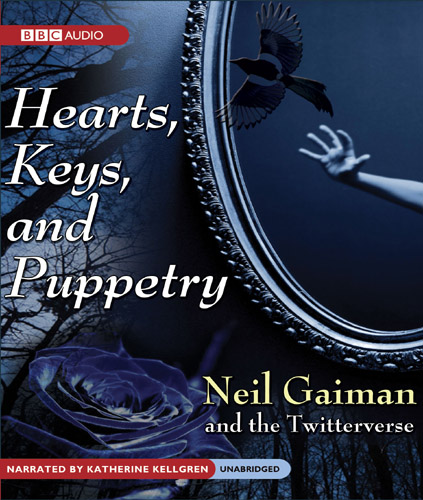
Hearts, Keys, and Puppetry
By Neil Gaiman and the Twitterverse; Read by Katherine Kellgren
9 MP3 Files or HuffDuffer Podcast – Approx. 1 Hour 45 Minutes [UNABRIDGED]
Publisher: BBC Audio
Published: December 1, 2009 So began the Twitter Audio project, with a dazzling first line penned by New York Times bestselling author Neil Gaiman. What followed was an epic tale of imaginary lands, magical objects, haunting melodies, plucky sidekicks, menacing villains and much more. From mystical blue roses to enchanted mirrors to pesky puppets, this classic fable was born from the collective creativity of more than one hundred contributors via the social network Twitter.com in a groundbreaking literary experiment. Together, virtual strangers crafted a rollicking story of a young girl’s journey with love, forgiveness, and acceptance.
The SFFaudio Podcast #043 – Jesse and Scott talk about all the Recent Arrivals and New Releases that have been piling up while Scott’s been away fiddling on a roof.
They are still “recent arrivals” when I borrow them from my local public library right?
Yeah, I thought so.
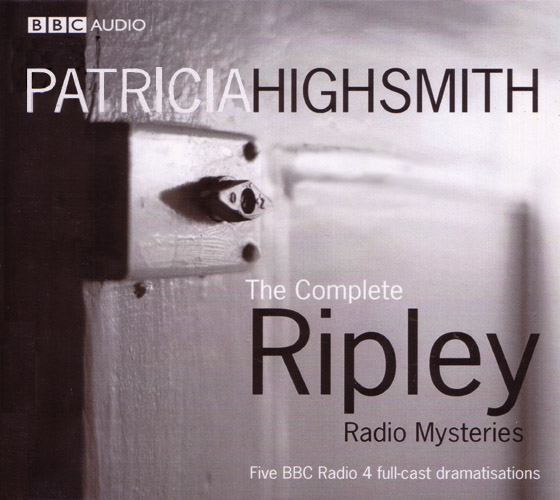
The Complete Ripley Radio Mysteries
Based on the novels by Patricia Highsmith; Performed by a full cast
4 CDs – Approx. 5 Hours [RADIO DRAMA]
Publisher: BBC Audio
Published: 2009
ISBN: 9781408409473 Ian Hart stars in these BBC Radio 4 dramatisations of Patricia Highsmith’s five Ripley novels. Tom Ripley detests murder unless it is absolutely necessary. He prefers someone else to do the dirty work. But if he’s called on to act there is no one more cool, calculating and clever. In these dramatisations, BBC Radio 4 brings all Patricia Highsmith’s Ripley novels together in one thrilling series. In The Talented Mr Ripley, Tom makes a bid for another man’s inheritance and succeeds, but has he really got away with it? Ripley Under Ground is set a few years later, when Tom is living in luxury in a French chateau with his beautiful wife Heloise – but the clever art forgery which funds Tom’s expensive tastes is about to be uncovered. In Ripley’s Game,Tom sets up a man he dislikes to carry out two perfect murders, while in The Boy Who Followed Ripley, a rich young stalker arrives at Belle Ombre and he and Tom end up fighting for their lives. Finally, in Ripley Under Water, strange new neighbours show an overdeveloped interest in Ripley’s past. Will Tom’s shady dealings be exposed? Tense, thrilling and atmospheric, these dramatisations are perfect evocations of Highsmith’s unique, complex and brilliantly twisted crime novels.
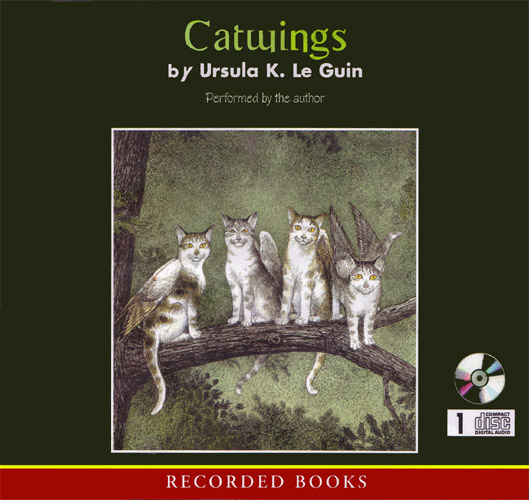
Catwings
By Ursula K. Le Guin; Read by Ursula K. Le Guin
1 CD – Approx. 30 Minutes [UNABRIDGED]
Publisher: Recorded Books
Published: September 2008
ISBN: 9781428174375 Le Guin wrote this highly acclaimed novel about a very special litter of kittens. Mrs. Jane Tabby has always longed to get away from the cramped alleys of the city. She knows it is too late for her, but she thinks her longing may be the reason her litter of kittens was born with wings. When they are old enough to fly, she sends the four kittens, who become known as catwings, out into the world to find their home. But they find that danger does not lurk only in city alleyways.
“Just wanted to let you know about the radio play recently made of my short story, The Resident Member. It’s a steampunky sort of humorous Victorian ghost story.”
Indeed, good show old boy! My heartiest congratulations. Hear hear and wot-ho.
Though… I will point out that the Something Wicked gentlemen have a podcast feed that’s even less substantial than the poltergeist in your story. Being as I am a gentleman myself I shall add it to my personal HuffDuffer feed. That way those for whom a podcast feed is desirous can place it in their podcatcher properly.
The Resident Member
Based on a story by Paul Marlowe; adapted by Digby Young; Performed by a full cast
1 |MP3| – Approx. [AUDIO DRAMA]
Publisher: Something Wicked Presents…
Published: November 20, 2009 …Poltergeists, death, and romance interrupt a quiet dinner at the Etheric Explorers Club… On any given day, the intrepid members of the Etheric Explorers Club can be found frustrating prophesies, wrestling with ancient evils, and generally striding boldly down the dark alleys of life, in order to fill in those portions of man’s map of reality that are, perhaps, better left blank. As with any club, though, there are always members who stay behind so as not to miss a second helping of pudding. This is their story. First published in Something Wicked Issue 7.
Stars:
Gideon Emery
Joe Vaz
Digby Young
Damon Berry
Christa Schamberger Young
Talked about on today’s show: The Hyena by Robert E. Howard, racism, racism in Robert E. Howard’s fiction, Jack London, H.P. Lovecraft, Solomon Kane, Crom, By This Axe I Rule, Howard/Lovecraft correspondence, plot vs. mood, pessimism, writers who kill themselves, Philip K. Dick, defining chaos, Dark Valley Destiny by L. Sprague de Camp, Blood And Thunder by Mark Finn, Howard’s life and death, The Whole Wide World, Howards’ westerns and historical stories, “with gigantic melancholies and gigantic mirth”: was Howard or Conan bipolar?, Texas in the early 20th century, Conan’s intellect, The Tower Of The Elephant, Barbarian vs. Cimmerian, Conan’s philosophy (Epicureanism?), fantasy, Howard’s use of magic, The Frost Giant’s Daughter (aka Gods Of The North), magic doesn’t trump steel, existentialism, nihilism, Ymir, The Prisoner, Howard’s animal similes, The God in the Bowl is a murder mystery and a locked room mystery and a detective story!, Yag-Kosha isn’t a great alien design, The Hyborian Age, Marvel’s Conan The Barbarian, The Savage Sword Of Conan, Dark Horse’s Conan, Curtis Magazines, The Scarlet Citadel, big battles and giant snakes, Marvel’s King Conan (Conan The King), The Hour Of The Dragon, Queen Of The Black Coast, barbarian love, Oliver Stone, John Milius, The Howard Conan:
“Let me live deep while I live; let me know the rich juices of red meat and stinging wine on my palate, the hot embrace of white arms, the mad exultation of battle when the blue blades flame and crimson, and I am content. Let teachers and priests and philosophers brood over questions of reality and illusion. I know this: if life is illusion, then I am no less an illusion, and being thus, the illusion is real to me. I live, I burn with life, I love, I slay, and am content.”
The Stone/Milius Conan:
“Crush your enemies, see them driven before you, and hear the lamentation of their women.”
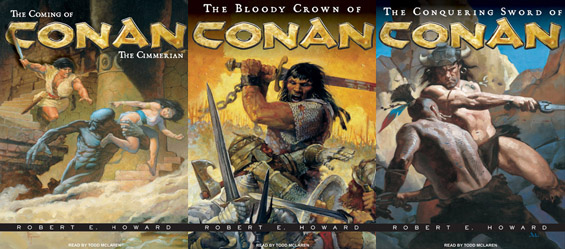
How do you pronounce names like Cimmeria and Bêlit?, Clark Ashton Smith, Bêlit’s character, Conan the Daoist, Conan’s character, Conan’s morality, Black Colossus, who the hell is Mitra?, The Cimmerian blog, Rogues In The House, Iron Shadows In The Moon, the Vilayet Sea, A Probable Outline Of Conan’s Career, Red Nails, The Pool of the Black One, Rogues In The House, people are animals, Charles Darwin and Robert E. Howard, Clifford D. Simak, man’s successor (intelligent dogs) take over, Thak is a great character name, writing (or just saying that you are), Fantasy seems to be a novel length genre, The Bloody Crown Of Conan, The Conquering Sword Of Conan, narrator Todd McLaren, character voices, bite the wax tadpole, Roy Thomas.
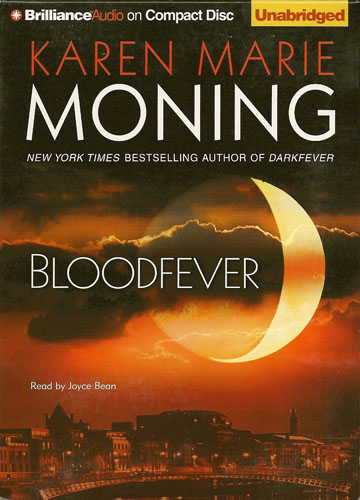
Bloodfever
By Karen Marie Moning; Read by Joyce Bean
8 CDs – 9 hours – [UNABRIDGED]
Publisher: Brilliance Audio
Published: 2008
ISBN: 9781423341932
Themes: / Fantasy / Supernatural romance / Fairies / Fae / Sex /
I first encountered Moning’s Fever series when the first book, Darkfever, was made available on Podiobooks.com. Tales about the realms of fairies, from Midsummer Nights Dream to Butcher’s Summer Knight, always fascinate me. Particularly their darker, inhuman nature. These are not Elves, nor are they little diaphanous dragonflies at the bottom of the garden. They are something entirely much less human.
The series is told from the point of view of MacKayla Lane. Mac. The younger of two sisters that have grown up in the south. She describes herself as a modern southern belle. Her life is uncomplicated until her sister is murdered while studying on Dublin, Ireland. Mac had found a strange message on her cell phone from her sister, and travels to Dublin herself to put pressure on the police to solve the case.
Once there she finds that this isn’t something that the police are going to be able to deal with. In a pub she encounters a Fae which seduces a young woman, feeding upon her youth and vitality. Many of the Fae weave very attractive illusions around themselves to hide their true nature. Mac learns that she is a sidhe seer, one of the few who can see the Fae as they really are. With the help of Jericho Barrens, a mysterious figure who has his own agenda, she is searching for the ancient book Sinsar Dubh, that contains the most foul black magic. Capable of granting power over both our world and that of the Fae. Mac and Barrens really don’t get on, but are forced to rely upon each other, with Barrens saving Mac’s life several times. Mac has also drawn the attention of a death-by-sex Fae, Vlane-an. Ancient and inhuman, his interest and motives aren’t clear. Even to Mac’s sidhe seer sight, Vlane-an is hard to resist, and she has already found herself stripping naked in public under the influence of his powers.
Mac has managed to identified her sister’s killer, The Lord Master, and has partially thwarted some of his plans. But now, the Fae are coming through into our world in greater and greater numbers. Murders and disappearances are on the increase as a consequence. The other sidhe seers don’t know if they can trust Mac, and nor does she know if she can trust them. Yet they could answer many of the questions she has about who she is, and where her powers came from. Now Mac and Barrens must find the Sinsar Dubh, before the Lord Master.
Bloodfever is the second book in the series and starts with a good, in-character, recap of events from Mac herself. Her need for revenge against her sister’s killer is growing as she learns more. Mac’s focus on her situation is more intense as she becomes more self-aware of her own failings and how she must change to survive in the world with the Fae. Mac’s narration of often humorous and irreverent, but always in keeping with her character.
The same narrator carries on from book one, Audie Award winner Joyce Bean. Joyce captures Mac’s personality with it’s lingering threads of naivety and growing ruthlessness. An excellent performance. The sexy southern accent doesn’t hurt either.
Moning has matured Mac a little more throughout this book, as she is forced to change by her experiences. She is still petulant, indignant, naive, and stubborn at times, but she is also introspective and sees that she has changed, and must continue to do so to survive. Mac still hasn’t achieved her independence yet, but she is becoming stronger. From the perspective of a strong female character, Mac isn’t quite there yet. She had power and can and will use it, but she is growing into one. The journey towards becoming the Hero is more interesting than simply being one. Mac is faced with temptations and other hard decisions that make that journey harder.
Have a listen to the first book for free over at Podiobooks.com, and then dive into this one.


 Hearts, Keys, and Puppetry