
Colin‘s reading of The Nine Billion Names Of God by Arthur C. Clarke is not nearly popular enough.
As of this post it’s only received a mere 17 viewings (or hearings).
Posted by Jesse Willis
News, Reviews, and Commentary on all forms of science fiction, fantasy, and horror audio. Audiobooks, audio drama, podcasts; we discuss all of it here. Mystery, crime, and noir audio are also fair game.
Colin‘s reading of The Nine Billion Names Of God by Arthur C. Clarke is not nearly popular enough.
As of this post it’s only received a mere 17 viewings (or hearings).
Posted by Jesse Willis
This recording of Arthur C. Clarke’s The Nine Billion Names Of God was produced by Dercum Audio – it’s that signature opening, that terrific, haunting music that begins at the ten second mark – that’s the giveaway. Produced in 1991, it is long out of print and a real treasure.
Part 1 of 2:
Part 2 of 2:
Posted by Jesse Willis

Pygmalion’s Spectacles was first published in 1935 in the aptly named Wonder Stories magazine. Four years after it’s first publication it was reprinted in Startling Stories as a “classic” and it was placed in their “Scientifiction Hall Of Fame.” It was reprinted again in Fantastic Story magazine in the Spring 1955 issue. Three magazine publications is a rare occurrence for any SF story. So, what makes this story special?
Well, this tale of utopia, immortality, and romance, is also, most probably, the very first story to feature the concept of virtual reality.
Here’s the description from the Wikipedia entry:
A comprehensive and specific fictional model for virtual reality was published in 1935 in the short story Pygmalion’s Spectacles by Stanley G. Weinbaum. In the story, the main character, Dan Burke, meets an elfin professor, Albert Ludwig, who has invented a pair of goggles which enable “a movie that gives one sight and sound […] taste, smell, and touch. […] You are in the story, you speak to the shadows (characters) and they reply, and instead of being on a screen, the story is all about you, and you are in it.”
And though the ideas may be pioneering, the plot of Pygmalion’s Spectacles is very similar to Fitz-James O’Brien’s The Diamond Lens, itself an excellent SF tale. The tone of their respective endings differs, but their plot, in which a man falls in love with an intangible woman, is straight out of the Greek mythology that Weinbaum alludes to. And they both use science, rather than magic to get to their respective endings.
There is, I should also point out, a LibriVox |MP3| recording of the Metamorphoses by Ovid, a 2,000 year old poem featuring the myth of Pygmalion.
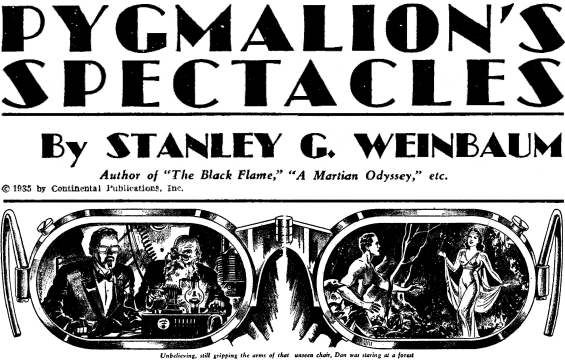
Here is a |PDF| made from the Pygmalion’s Spectacles publication in Fantastic Story. And here are two LibriVox versions (my advice, go for the first one):
 Pygmalion’s Spectacles
By Stanley G. Weinbaum; Read by Gregg Margarite
1 |MP3| – Approx. 43 Minutes [UNABRIDGED]
Publisher: LibriVox.org
Published: January 13,2009
He put on the glasses and fell in love with a dream… First published in Wonder Stories, June 1935.
Pygmalion’s Spectacles
By Stanley G. Weinbaum; Read by Chrystal Layton
1 |MP3| – Approx. 45 Minutes [UNABRIDGED]
Publisher: LibriVox.org
Published: November 17, 2007
He put on the glasses and fell in love with a dream… First published in Wonder Stories, June 1935.
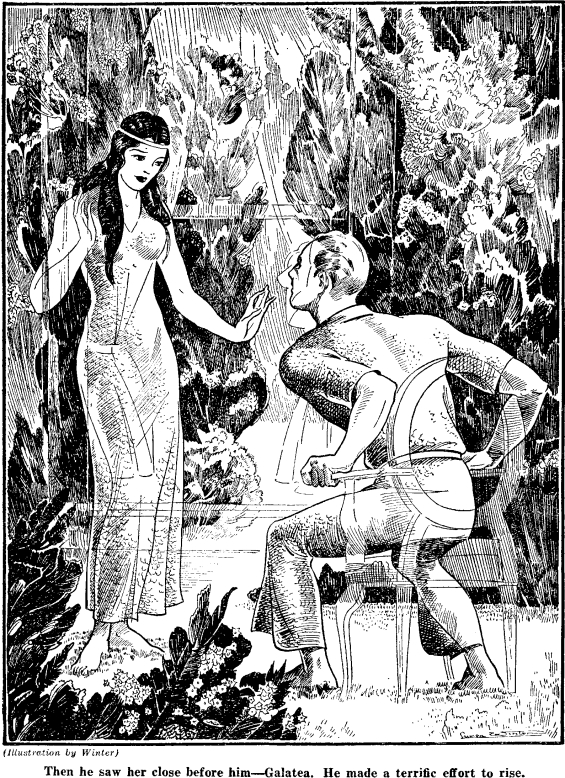
Pygmalion’s Spectacles illustration by Lumen Winter (from Wonder Stories, June 1935):
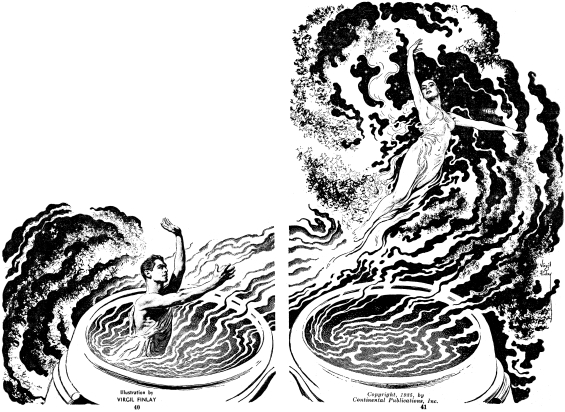
Pygmalion’s Spectacles illustration by Virgil Finlay (from Fantastic Story Magazine, Spring 1955):
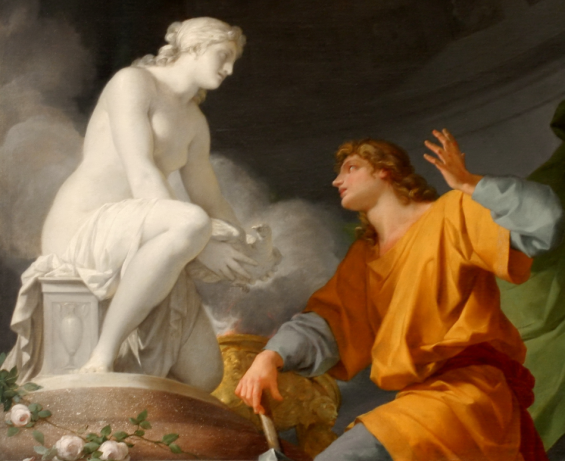
Painting of Pygmalion and the statue by Jean-Baptiste Regnault:
[Thanks to Tim at The Drama Pod for the reminder]
Posted by Jesse Willis

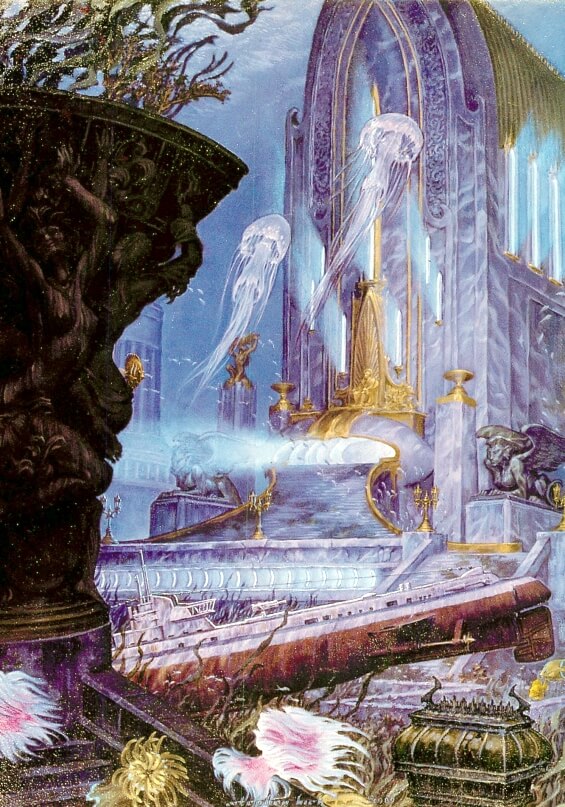
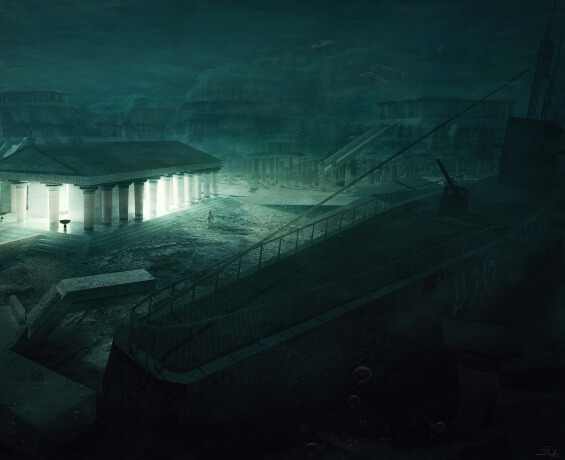
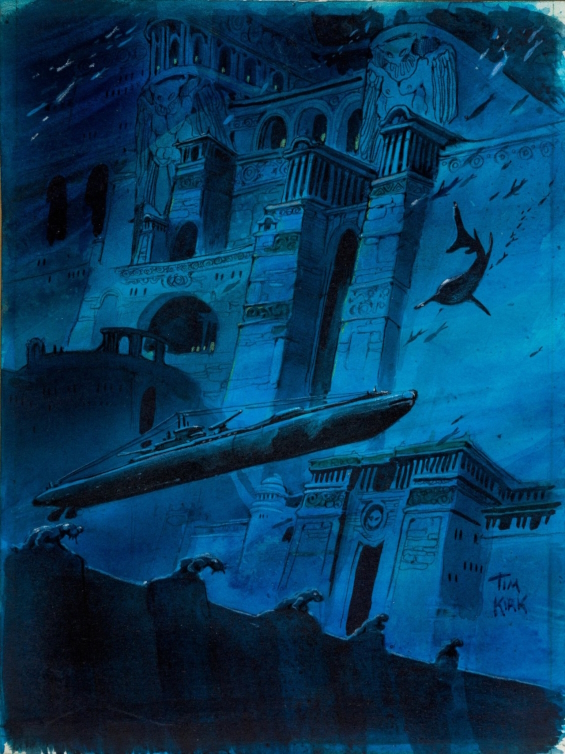
 The SFFaudio Podcast #174 – The Temple by H.P. Lovecraft, read by Mirko Stauch. This is a complete and unabridged reading of the short story (37 minutes) followed by a discussion of it. Participants in the discussion include Jesse, Mirko, and Julie Hoverson.
Talked about on today’s show:
who’s the womanish Rhinelander?, Rhinelanders are manly(!), superstitious swine, Julie has a transsexual voice in the morning, Julie’s reading of The Temple, renaissance fairs, big crazy hats, Julie’s audio dramatization, the explanation, what’s with the curse, the practical and science-minded captain, insanity, The Call Of Cthulhu RPG, “panzaism”, WWI, unrestricted submarine warfare, The Crime Of Crimes by H.P. Lovecraft (a poem written in response to the sinking of the Lusitania), The Abyss, supernatural dolphins?, a heroic action villain, The Horror At Red Hook by H.P. Lovecraft, Herbert West: Re-animator, The Call Of Cthulhu, Cool Air vs. Sunset Boulevard, a consistent philosophy, WWI vs. WWII, Kaiserliche Marine, Portland, New York, a proto-nazi, an “iron German will”, unrestricted submarine warfare, submarines don’t have windows, “stop hitting yourself”, the laurel wreathed figure, Atlantis, The City In The Sea by Edgar Allan Poe, Below (2002), Zach Galifianakis, cosmic horror vs. karmic punishment, teasing the insane, creepy sped up dolphin laughter, […UNTRANSLATABLE…], The Island Of Doctor Moreau by H.G. Wells, nautical tales, William Hope Hodgson, 20° North, 35° West, Yucatan, S.T. Joshi, Mu and Lemuria, wrong ocean(!), the cousin of Cthulhu, Dagon by H.P. Lovecraft, a collection of short stories, poems, and propagandistic essays.
Posted by Jesse Willis


 Tony Smith, of StarShipSofa, was telling me, a few months ago, that he was working on a new podcast. I’m not much for plans. I don’t like to be disappointed. I don’t want to know what’s coming out next month or next year. Instead, I look backwards into what I see as the ever settling waters of history.
Tony had said the show was going to be crime fiction themed. He was excited. I was non-committal. But, now I’m excited.
That show he mentioned has come to fruition and is perfectly wonderful.
The first episode of Crime City Central features a short story by one of the world’s all-time best crime fiction writers, Lawrence Block. Keller The Dog-Killer was first published in the May 2008 issue of Ellery Queen’s Mystery Magazine – but it was originally a part of a novel, called Hit Parade, which itself was a part of a series of short stories that were fix’d-up into another novel (and then spawned more novels, which themselves were fairly episodic – and which included Hit Parade) – hence this short story. The “Keller” series features the adventures of Keller. He’s a shy stamp collector and curiously amiable freelance hit man who operates out of New York. You’d probably not want to know Keller in real life – he’s rather dangerous. But as a fictional character, he’s very fun to hang out with.

Aficionados know that Lawrence Block often narrates his own audiobooks, and he does a great job at it. But the narration here by reader Ray Sizemore is top shelf too. He does a seamless back and forth between Keller and Dot (his agent) and the story flows very smoothly.
I highly recommend giving it a listen. |MP3|
Here’s the podcast feed:
http://crimecitycentral.com/feed/
Posted by Jesse Willis
The SFFaudio Podcast #169 – Jesse and Luke Burrage (from the Science Fiction Book Review Podcast) talk to audiobook narrator Jonathan Davis.
Talked about on today’s show:
Not the Jonathan Davis of Korn, favourite audiobook narrators, Luke’s real job (juggling), how to become an audiobook narrator (or a professional juggler), acting, theatrical acting, voice over, New York, Testament by John Grisham, Brazil, Portuguese vs. Brazilian Portuguese, Gone For Soldiers by Jeff Shaara, long form narration, Snow Crash by Neal Stephenson, urban samurais and Aleutian assassins, binaural recording, The Shadow Of The Torturer by Gene Wolfe, The Windup Girl by Paolo Bacigalupi, London, Paris, Iowa City, Thailand, genetic engineering, Japan, accessory dogs, GMO food, graphic sex scenes in mid-juggle, Glamorama by Bret Easton Ellis, Zoolander, American Psycho, a 12 page sex scene, Star Wars, Genghis Khan And The Making Of The Modern World by Jack Weatherford, straight readings vs. impersonations, Yoda, Ewan McGregor, Liam Neeson, Luke re-edits Star Wars, alien languages, Calculating God by Robert J. Sawyer, When Gravity Fails by George Alec Effinger, Ian Mcdonald, North Africa, Egypt, Arab Spring, Bedouin, narration styles, straight narration vs. theatrical performance vs. cinematic narration, Michael Caine, scalpel vs. laser, Mike Resnick’s Starship series, voice based books, Star Trek, David Copperfield, Oliver Sacks, The Watchers by Jon Steele, Kirinyaga, The Scar by Sergey Dyachenko and Marina Dyachenko, Starship: Mutiny, Elinor Huntington, existential resonance, Harry Potter, conspiracy, dystopia, Ray Bradbury, Cool Air by H.P. Lovecraft, Starship: Rebel, no research, just fun, language, audiobooks as a collaboration between an author, a narrator and a listener, Walking Dead by Greg Rucka, espionage, comics, Neil Gaiman, Catch And Release by Lawrence Block, Hex Appeal, Jim Butcher, The Dresden Files, studio time, The Book Of The New Sun, “do your homework”, “suddenly revealed to be a Texan”, an Aleutian Rastafarian, Hiro Protagonist, Minding Tomorrow, revealing voices, American Gods, George Guidall, “the perfect audiobook experience”, Woden (aka Odin aka Mr. Wednesday), The Stand by Stephen King, reading with your ears, preferred narration styles, The Hundred Thousand Kingdoms by N.K. Jemisin, racism, Dune, Zoo City by Lauren Beukes, Johannesburg, South Africa, fantasy fiction shouldn’t have an American accent, Luke’s SFBRP review of The Scar, House Of Suns by Alastair Reynolds, an Arkansas accent, inner monologue vs. dialogue, the Sling Blade voice, Casaundra Freeman, audiobook narration is difficult, learning the characters over a series, George R.R. Martin, A.J. Hartley, Act Of Will, Will Power, working with authors, Cyteen by C.J. Cherryh, Book Of The Road, male and female narration, Gabra Zackman, Jonathan is the infodumper, Full Cast Audio, a one man show vs. theatrical collaboration, Scott Brick, Feyd-Rautha, a Jamaican brogue?, The Brief Wondrous Life of Oscar Wao, do you like computer games?, Max Payne 3, Tron, “that’s my neck fat”, Vladamir Lem, Armando Becker.
Posted by Jesse Willis