LibriVox: We Are Seven by William Wordsworth

SFFaudio Online Audio

I’m a shy visitor to the world of poetry. I find myself unable to even consider an approach to any given poem without some sort of tour guide, as it were. The latest such guide was an episode of BBC Radio 4’s In Our Time in which Lyrical Ballads, a famous and influential collection of poems by Samuel Taylor Coleridge and William Wordsworth, was discussed.

Of the many poems mentioned, one was entirely new to me – and that was We Are Seven by William Wordsworth. The guests’ discussion of it somehow reminded me of something – of what I’m not exactly sure – was it Harlan Ellison’s Jeffty Is Five? I don’t know – but I was reminded of something nonetheless. I think you may be too.

Here’s a snippet from the Wikipedia description of it:

“[We Are Seven] describes a discussion between an adult poetic speaker and a ‘little cottage girl’ about the number of brothers and sisters who dwell with her. The poem turns on the question of whether to count two dead siblings.”

Have a listen for yourself, I found it rather haunting:

LibriVoxWe Are Seven
By William Wordsworth; Read by Verity Kendall
1 |MP3| – Approx. 3 Minutes [POEM]
Publisher: LibriVox.org
Published: April 27, 2012
First published in Lyrical Ballads, With A Few Other Poems.

Here’s the text itself:

We Are Seven by William Wordsworth

A simple child, dear brother Jim,
That lightly draws its breath,
And feels its life in every limb,
What should it know of death?

I met a little cottage girl,
She was eight years old, she said;
Her hair was thick with many a curl
That cluster’d round her head.

She had a rustic, woodland air,
And she was wildly clad;
Her eyes were fair, and very fair,
—Her beauty made me glad.

“Sisters and brothers, little maid,
“How many may you be?”
“How many? seven in all,” she said,
And wondering looked at me.

“And where are they, I pray you tell?”
She answered, “Seven are we,
“And two of us at Conway dwell,
“And two are gone to sea.

“Two of us in the church-yard lie,
“My sister and my brother,
“And in the church-yard cottage, I
“Dwell near them with my mother.”

“You say that two at Conway dwell,
“And two are gone to sea,
“Yet you are seven; I pray you tell
“Sweet Maid, how this may be?”

Then did the little Maid reply,
“Seven boys and girls are we;
“Two of us in the church-yard lie,
“Beneath the church-yard tree.”

“You run about, my little maid,
“Your limbs they are alive;
“If two are in the church-yard laid,
“Then ye are only five.”

“Their graves are green, they may be seen,”
The little Maid replied,
“Twelve steps or more from my mother’s door,
“And they are side by side.

“My stockings there I often knit,
“My ‘kerchief there I hem;
“And there upon the ground I sit—
“I sit and sing to them.

“And often after sunset, Sir,
“When it is light and fair,
“I take my little porringer,
“And eat my supper there.

“The first that died was little Jane;
“In bed she moaning lay,
“Till God released her of her pain,
“And then she went away.

“So in the church-yard she was laid,
“And all the summer dry,
“Together round her grave we played,
“My brother John and I.

“And when the ground was white with snow,
“And I could run and slide,
“My brother John was forced to go,
“And he lies by her side.”

“How many are you then,” said I,
“If they two are in Heaven?”
The little Maiden did reply,
“O Master! we are seven.”

“But they are dead; those two are dead!
“Their spirits are in heaven!”
‘Twas throwing words away; for still
The little Maid would have her will,
And said, “Nay, we are seven!”

[Thanks also to Carmen H and Ruth Golding]

Posted by Jesse Willis

CBC: Ideas: The Swerve: How the World Became Modern by Stephen Greenblatt

SFFaudio Online Audio

CBC Radio One - IdeasThe Swerve: How the World Became Modern, and its author Stephen Greenblatt, are the subject of the latest CBC Ideas podcast. The Swerve is the story of the recovery of a lost epic Roman poem, by Titus Lucretius Carus, titled On The Nature Of Things – Greenblat makes the case for it being a work that changed the world, made it modern, by bringing ancient philosophy into an age ready for enlightenment. It’s an absolutely fascinating discussion. Host Paul Kennedy, as usual, shows that Canadian tax dollars can be used incredibly well when put in the right hands.

The poem in question is available as a LibriVox audiobook HERE.

And The Swerve: How the World Became Modern is available from Recorded Books (narrated by Edoardo Ballerini).

Here’s the book’s description:

Renowned historian Stephen Greenblatt’s works shoot to the top of the New York Times best-seller list. With The Swerve, Greenblatt transports listeners to the dawn of the Renaissance and chronicles the life of an intrepid book lover who rescued the Roman philosophical text On the Nature Of Things from certain oblivion.

Nearly six hundred years ago, a short, genial, cannily alert man in his late 30s took a very old manuscript off a library shelf, saw with excitement what he had discovered, and ordered that it be copied. That book was the last surviving manuscript of an ancient Roman philosophical epic by Lucretius – a beautiful poem containing the most dangerous ideas: that the universe functioned without the aid of gods, that religious fear was damaging to human life, and that matter was made up of very small particles in eternal motion, colliding and swerving in new directions.

The copying and translation of this ancient book – the greatest discovery of the greatest book-hunter of his age – fueled the Renaissance, inspiring artists such as Botticelli and thinkers such as Giordano Bruno; shaped the thought of Galileo and Freud, Darwin and Einstein; and had a revolutionary influence on writers such as Montaigne and Shakespeare, and even Thomas Jefferson.

Here’s the |MP3|

Podcast feed: http://www.cbc.ca/podcasting/includes/ideas.xml

Posted by Jesse Willis

LibriVox: Beside Still Waters by Robert Sheckley

SFFaudio Online Audio

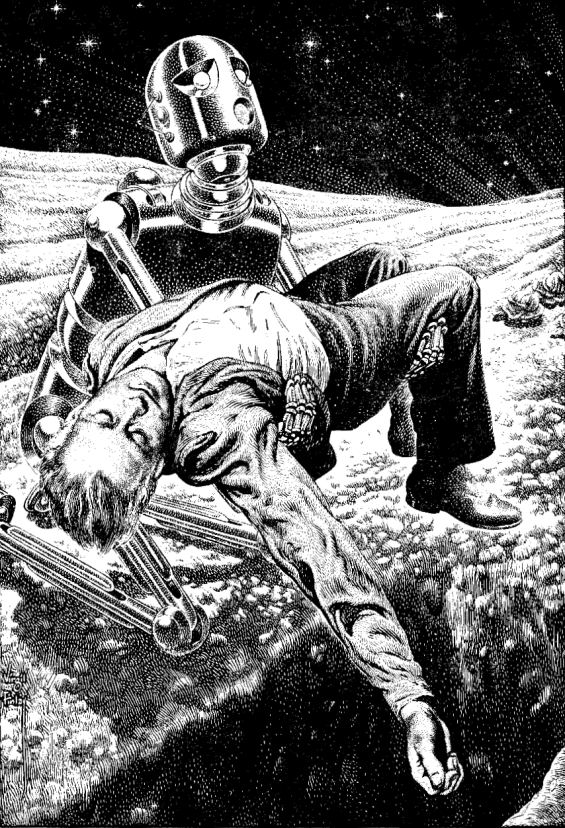
Robert Sheckley was a joker, a satirist, a poker of fun at all of the silliness in life. But there’s something more going on in this short short story from 1953. Sure there’s the existentialist angle, and of course there’s the requisite Sheckley humor, but it’s the other quality in Beside Still Waters that makes this Sheckley story a bit different. You can see it right there in the title (taken from Psalm 23 of the Hebrew Bible), and you can see it in the Virgil Finlay’s illustration for the story too:

Beside Still Waters by Robert Sheckley - Illustration by Virgil Finlay

Beside Still Waters is an elegiac tale, offering only a cup of sadness to the reader, it’s the sort of story that Clifford D. Simak might have written. And that should be recommendation enough.

LibriVoxBeside Still Waters
By Robert Sheckley; Read by Frank Malanga
1 |MP3| – Approx. 10 Minutes [UNABRIDGED]
Publisher: LibriVox.org
Published: November 28, 2010
When people talk about getting away from it all, they are usually thinking about our great open spaces out west. But to science fiction writers, that would be practically in the heart of Times Square. When a man of the future wants solitude he picks a slab of rock floating in space four light years east of Andromeda. Here is a gentle little story about a man who sought the solitude of such a location. And who did he take along for company? None other than Charles the Robot. First published in Amazing Stories Oct.-Nov. 1953.
|ETEXT|

And here’s the |PDF| I made from the original magazine publication.

Posted by Jesse Willis

LibriVox: The Logicians Refuted by Jonathan Swift – read by Gregg Margarite

SFFaudio Online Audio

Gregg Margarite recorded only one poem for LibriVox.org. I find it highly appropriate. It’s by one of his favourite authors, Jonathan Swift.

Here’s Gregg’s reading of The Logicians Refuted |MP3|.

Posted by Jesse Willis

Hypnobobs: Imaginary Friends (includes Thus I Refute Beelzy by John Collier and Mr. Lupescu by Anthony Boucher)

SFFaudio Online Audio

Hypnobobs PodcastMister Jesse has lots of friends, and they all do something you wouldn’t ever think of, not in a squillion years.

One of Mister Jesse’s friends is named Mister Jim Moon. He is one of Mister Jesse’s very good friends, though Mister Jesse has never really seen Mister Jim Moon.

Sometimes Mister Jesse thinks that Mister Jim Moon isn’t real. But because Mister Jim Moon is so fun to play with Mister Jesse doesn’t want to think too hard about it. He doesn’t want Mister Jim Moon to disappear!

Mister Jim Moon’s podcast, Hypnobobs, is full of wonderfully terrible stories of the weird and the macabre.

Mister Jim Moon’s latest podcast is a short collection of weird poems. But the one before that, Hypnobobs #68, is entitled “Imaginary Fiends” and includes two short stories with imaginary friends at their center.

Here is the episode: |MP3|

Podcast feed: http://feeds.feedburner.com/Hypnobobs

One story is named Thus I Refute Beelzy. It was written by Mister John Collier. And the other is called Mr. Lupescu and was written by Mister Anthony Boucher.

It seems likely to Mister Jesse that Mister Anthony Boucher’s story inspired one of the characters in Mister Neil Gaiman’s The Graveyard Book.

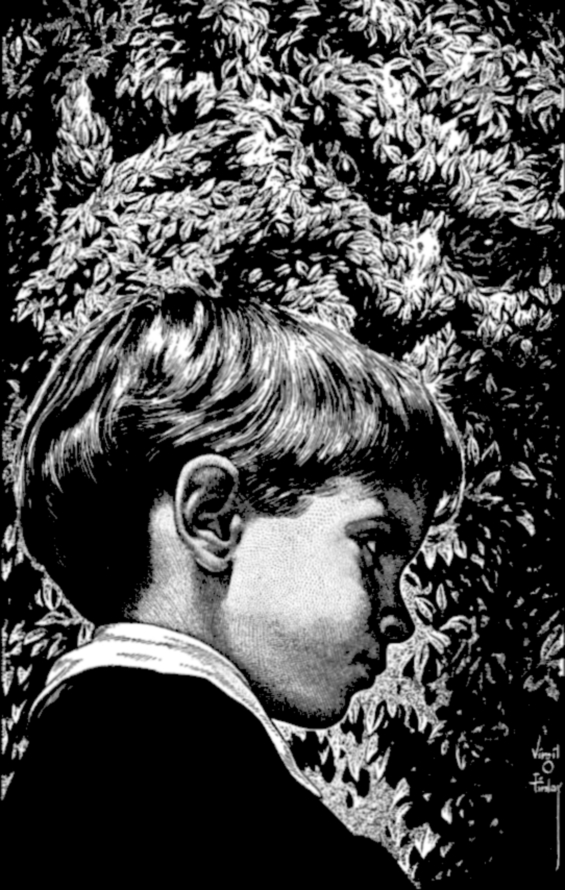
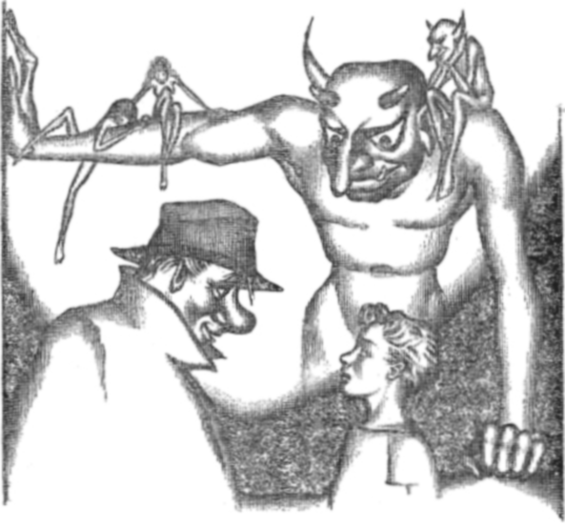
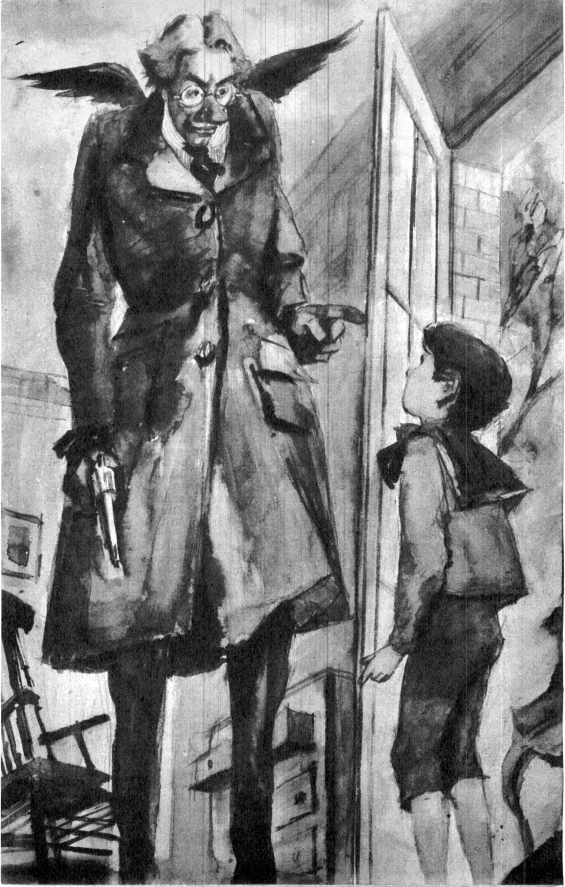
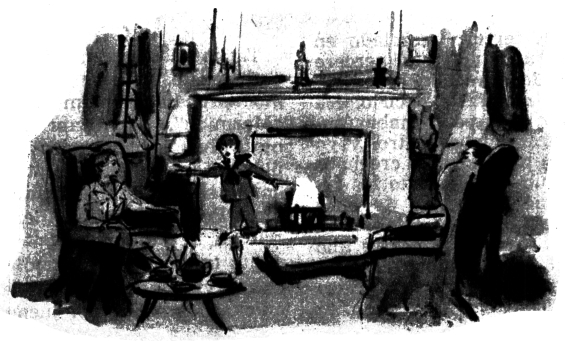
Mister Jesse has tracked down the accompanying illustrations from the print publications and made PDFs too!

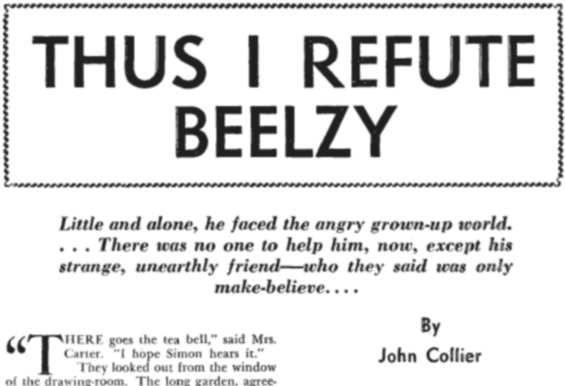
Thus I Refute Beelzy by John Collier |PDF|

Thus I Refute Beelzy by John Collier
Thus I Refute Beelzy illustration by Virgil Finlay

Mr. Lupescu by Anthony Boucher |PDF|
Señor Lupescu por Anthony Boucher |PDF| (a Spanish translation)

Mr. Lupescu by Anthony Boucher
Mr. Lupescu illustrated by Boris Doglov

Senor Lupescu - illustration by Lisa

Senor Lupescu - illustration by Lisa

Posted by Jesse Willis

To Virgil Finlay… by H.P. Lovecraft (narrated by Wayne June)

SFFaudio Online Audio

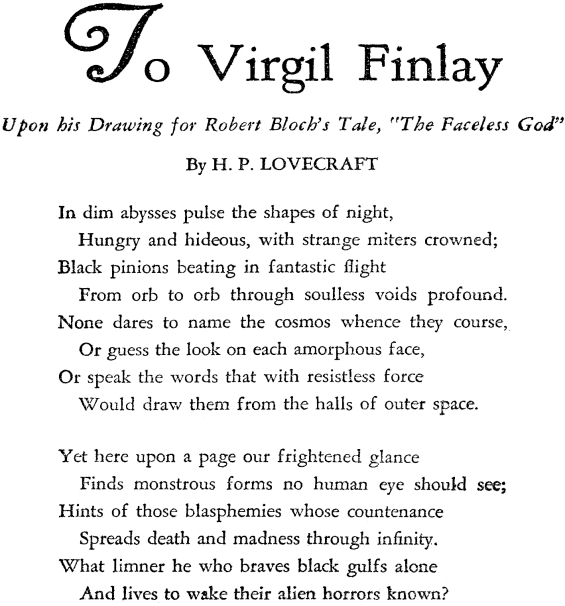
To Virgil Finlay by H.P. Lovecraft

I mentioned to Wayne June that I’d found the above poem in the July 1937 issue of Weird Tales. He hadn’t heard of it before. Then he went and narrated it for us!

|MP3|

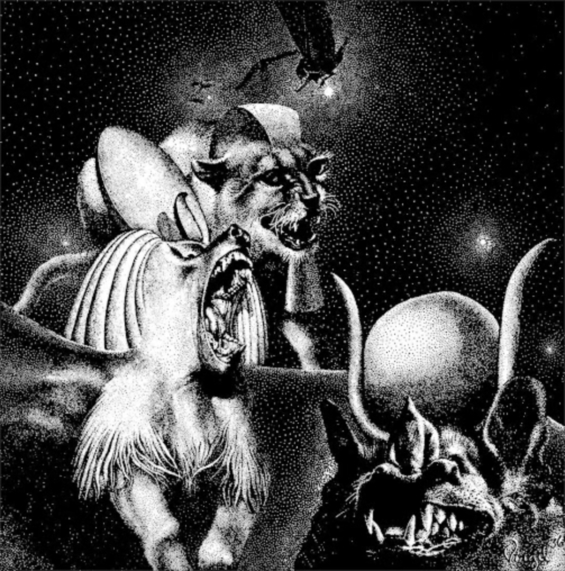
Written in a letter, dated November 30, 1937, it was sent from H.P. Lovecraft to Virgil Finlay. It was inspired by art drawn for a Robert Bloch story, published in the May 1936 issue of Weird Tales, and entitled The Faceless God. Here’s the illustration that inspired it:

The Faceless God - illustration by Virgil Finlay

Here’s at least part of the letter:

“I could easily scrawl a sonnet to one of your masterpieces if you weren’t too particular about quality. For example –

To Virgil Finlay Upon his Drawing Of Robert Bloch’s Tale “The Faceless God”
By H.P. LOVECRAFT

In dim abysses pulse the shapes of night,
Hungry and hideous, with strange miters crowned;
Black pinions beating in fantastic flight
From orb to orb through soulless voids profound.
None dares to name the cosmos whence they course,
Or guess the look on each amorphous face,
Or speak the words that with resistless force
Would draw them from the halls of outer space.

Yet here upon a page our frightened glance
Finds monstrous forms no human eye should see;
Hints of those blasphemies whose countenance
Spreads death and madness through infinity.
What limnner he who braves black gulfs alone
And lives to wake their alien horrors known?

Well well – quite in the Yuggoth tradition! I’ll have to keep a copy of this to try on one or another of the fan magazines!”

[Thanks Wayne!]

Posted by Jesse Willis