Review of Saturn’s Children by Charles Stross

SFFaudio Review

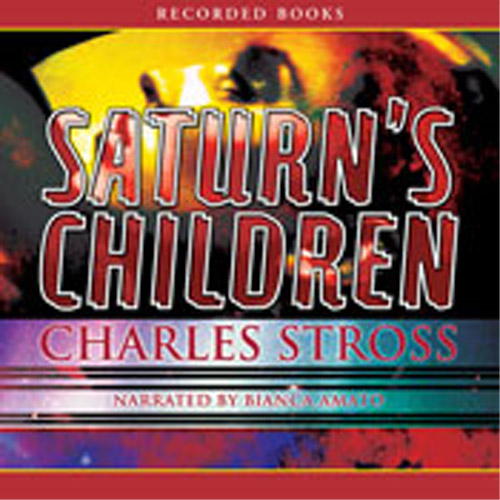
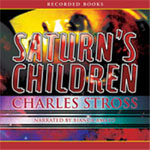
RECORDED BOOKS - Saturn's Children by Charles StrossSaturn’s Children
By Charles Stross; Read by Bianca Amato
11 CDs – Approx. 13 Hours 45 Minutes [UNABRIDGED]
Publisher: Recorded Books
Published: 2009
ISBN: 9781440750113, 9781440750106
Themes: / Science Fiction / Androids / Robots / Sex / Slavery / Identity / Venus / Mars / Mercury / Eris /

The Hugo Award-winning author of numerous best-sellers, Charles Stross crafts tales that push the limits of the genre. In Saturn’s Children, Freya is an obsolete android concubine in a society where humans haven’t existed for hundreds of years. A rigid caste system keeps the Aristos, a vindictive group of humanoids, well in control of the lower, slave-chipped classes. So when Freya offends one particularly nasty Aristo, she’s forced to take a dangerous courier job off-planet.

This novel’s title comes from the myth that Saturn (the Roman god of agriculture and harvest), ate his children at birth for fear of them usurping him. Its an apt starting point for a tale about robots More interesting is that Saturn’s Children opens with a reading of Asimov’s three laws of robotics

1. A robot may not injure a human being or, through inaction, allow a human being to come to harm.
2. A robot must obey any orders given to it by human beings, except where such orders would conflict with the First Law.
3. A robot must protect its own existence as long as such protection does not conflict with the First or Second Law.

…and then informs us that there are no humans left alive. There is, however, a whole solar system full of robots, all willing and able to obey all three laws. So what happened to all those humans? The novel is the answer to that question.

Saturn’s Children is told from the point of view of Freya Nakamichi-47 a gynoid (that’s a female android). She was activated (born) long after the last human had died. Freya, despite never having met one, still longs for her lost love (any human). Indeed, even the mere thought a human being makes her sexually excited. This is because, as a self described grande horizontale, Freya’s destiny was to be a sexual companion to any human that owned her. Now, without a master, she finds work where and when she can. But after a nasty run-in with an Aristo, a wealthy robot that owns other robots (called Arbiters), Freya will take any work that gets her off planet. Soon she’s employed by Jeeves, a masculine android who is more like her in shape and purpose than most robots. Freya’s first assignment is to transport a bio-engineered package across the solar system. But the pink police (a kind of anti biological proliferation organization), and another, more shadowy, organization are determined to stop her. Along the way Freya visits Cinnabar (a city on rails) that’s perpetually in Mercury’s shadow, drawing power from the temperature difference between Mercury’s light and dark sides), has sex with a rocket ship and grows some new hair.

Freya does a whole lot more than that too. She has a lot more sex for one. But beyond the sex there is some more fully cerebral stimulation going on in Saturn’s Children. The idea of a post-human solar system is an interesting one, and Stross plays with it quite effectively. This is a theme that I think hasn’t been done often enough in SF. The closest novel, in scope, if not in tone, is perhaps Clifford D. Simak’s City (in which intelligent dogs and robots have inherited a humanless Earth). This humanless solar system is, as I mentioned, quite vividly explored, with floating cities (like Bespin’s Cloud City) on Venus, waste heated bio-labs on the frozen dwarf planet of Eris, and a truly frightening description of what’s happened to poor old Earth. Stross has quite a lot of fun playing with the world he’s created here, naming a city Heinleingrad, naming a robot butler character after P.G. Wodehouse’s famous “gentleman’s personal gentleman.” It all mostly works with Saturn’s Children seeming to take most of its inspiration though from Heinlein’s novel Friday. Both novels feature artificial female persons as secret couriers, both tell their own stories, both secrete their smuggled cargos in their abdomens. Later on in Saturn’s Children there is some playing with the ideas promulgated in Heinlein’s 1970 novel I Will Fear No Evil. And, identity, in a world where brain data, and brain states, are easily and quickly copyable, isn’t as simple as it is with us meatbags. On the whole I enjoyed Saturn’s Children and found it full of interestingness. It was as most novels are these days, too long, and in need of a critical editor. The worst sin here is that the ending is rather weak, and features an afterword that leaves open the possibility of a sequel or seven.

Narrator Bianca Amato, a South African accented “ALIEN OF EXTRAORDINARY ABILITY” (according to her resume), mispronounces a couple of the more obscure words but the general gist of her reading is highly competent. It helps a whole lot that Freya’s story is told in first person. I’m not sure what the present tense adds to the narrative other than being a little noticeable and not particularly harmful. Also, as I mentioned in a recent podcast, the Recorded Books cover art is boring, whereas the Ace Books paperbook edition is fabulous!

Check out the dust jacket from the paperbook edition:
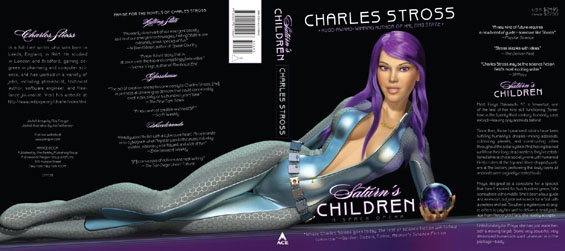
Saturn's Children by Charles Stross - The PAPERBOOK's Dustjacket

Posted by Jesse Willis

The SFFaudio Podcast #056 – READALONG: The Status Civilization by Robert Sheckley

Podcast

The SFFaudio PodcastThe SFFaudio Podcast #056 – Jesse and Scott talk with Rick Jackson, Gregg Margarite, Jerry Stearns and Julie Davis about Robert Sheckley’s The Status Civilization!

Talked about on today’s show:
Wonder Publishing Group (Wonder Audio and Wonder Ebooks), LibriVox.org, Acoustic Pulp, Sound Affects, Great Northern Audio Theatre, Doctor Who, The Prisoner, Riverworld by Philip Jose Farmer, deep Science Fiction, Deathworld by Harry Harrison, The Space Merchants (aka Gravy Planet) by Frederik Pohl and Cyril M. Kornbluth, Preferred Risk by Frederik Pohl and Lester del Rey, Gladiator At Law by Frederik Pohl and Cyril M. Kornbluth, Anarchaos by Donald E. Westlake, a religion based on evil, satire, Friedrich Nietzsche‘s “master-slave morality,” good and evil, David Hume‘, the naturalistic fallacy, cognitive dissonance, original sin (aka atavistic guilt), Skulking Permit by Robert Sheckley, Breaking Point by James Gunn |READ OUR REVIEW|, psychology, society, robots, This Perfect Day by Ira Levin, utopia, dystopia, libertarianism, rebellion, “a benign evil,” narrating audiobooks, Mark Douglas Nelson, This Crowded Earth by Robert Bloch, Deathworld 2 by Harry Harrison, Watchbird by Robert Sheckley, Second Variety by Philip K. Dick, Tunnel Under The World by Frederik Pohl, Bellona Times, X-Minus One, Mark Time , Yuri Rasovsky, Raymond Z. Gallun, Bing, Seeing Ear Theatre, Orson And The Alien, The SFFaudio Challenge, turning modern public domain books into audio drama, Night Of The Cooters by Howard Waldrop, Jack J. Ward, The Sonic Society, Brian Price, Alfred Bester‘s review of The Status Civilization (from The Magazine Of Fantasy And Science Fiction, December 1960), the naming of “Tetrahyde”, a readalong on The Stars My Destination by Alfred Bester, the “amazing” audio drama version from BBC Tiger Tiger, The Count Of Monte Cristo by Alexandre Dumas, Frederik Pohl’s review of The Status Civilization (from January 1961 issue of Worlds Of If), the competition between the LibriVox and the commercial versions of audiobooks, Plato’s Cave, precognition, John W. Campbell, skrenning, scrying, Icelandic cook books!

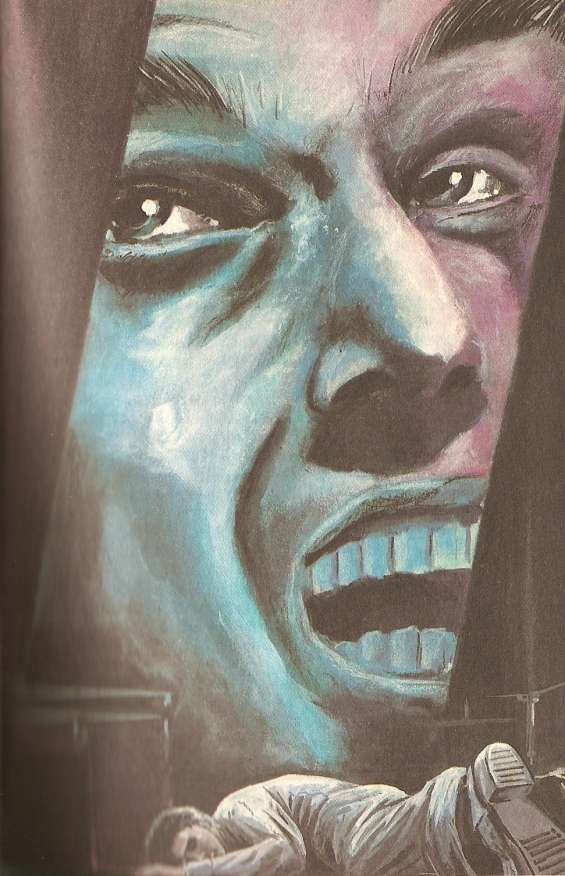
The Status Civilzation (Planet Of The Criminals) GERMAN INTERIOR
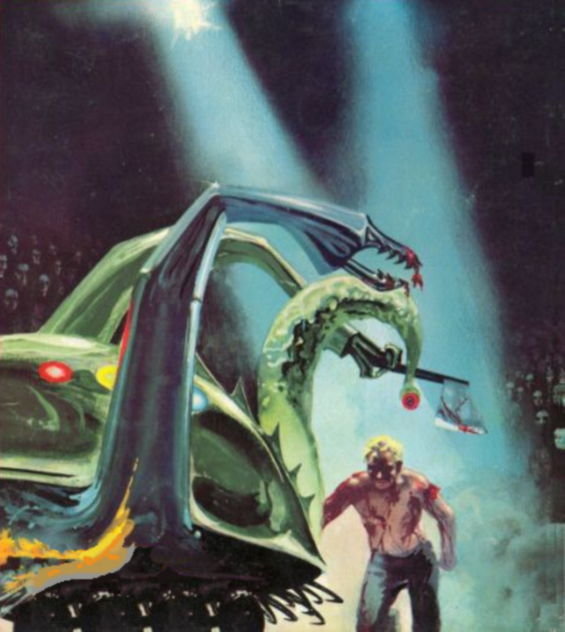
The Status Civilization (Planet Of The Criminals) GERMAN INTERIOR
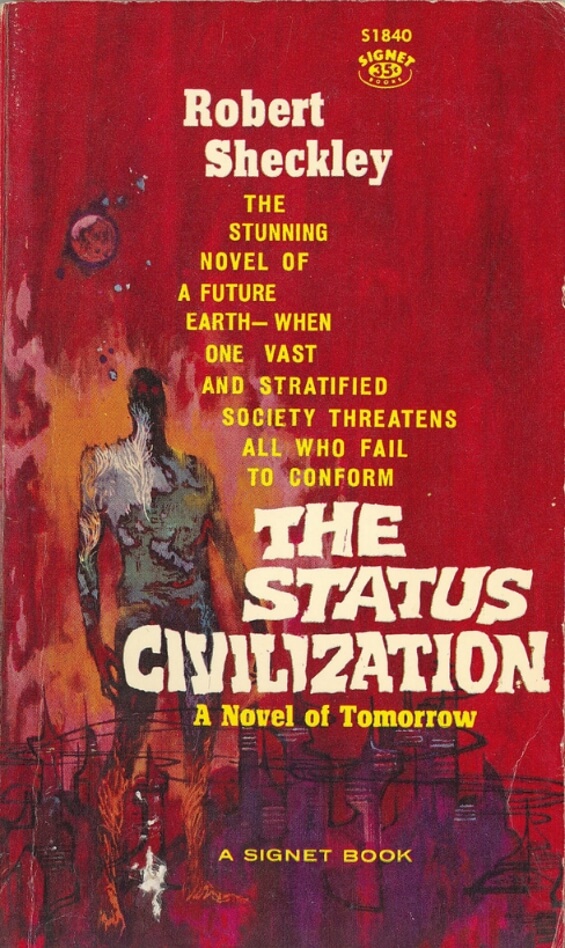
The Status Civilization by Robert Sheckley
Signet - The Status Civilization by Robert Sheckley

Posted by Jesse Willis

New Releases: Blake’s 7, Sum, Greater Good

New Releases

The back-story of an artificial intelligence begins…

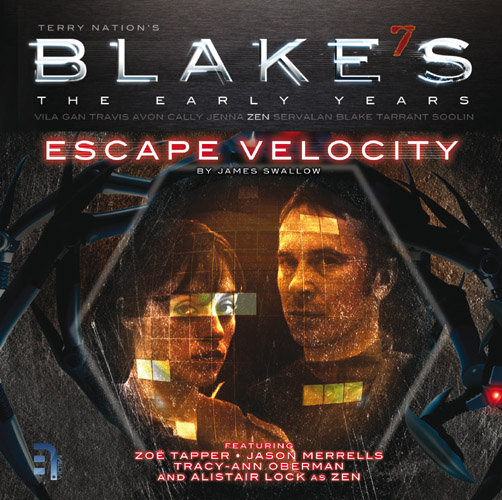
B7 PRODUCTIONS - Blake's 7: The Early Years: Zen: Escape VelocityBlake’s 7: The Early Years: Zen: Escape Velocity (Volume 2.1)
By James Swallow; Directed by Andrew Mark Sewell; Performed by a full cast
1 CD – Approx. 1 Hour [AUDIO DRAMA]
Publisher: B7 Productions
Published: April 26, 2010
ISBN: 978190657709
Based on Terry Nation’s seminal 70s science fiction TV series, The Early Years is a prequel series of audio stories that explores the origins of key Blake’s 7 characters prior to them meeting rebel leader Roj Blake. This latest entry to the ever-expanding series takes a new twist, concentrating on a character that doesn’t breathe or have any parents, the synthetic intelligence known only as Zen. When Roj Blake first stepped on board the mysterious, derelict alien spaceship Liberator, his every movement was monitored by the ship’s controlling intelligence, Zen Luckily, Blake and his rebel crew managed to gain the ‘confidence’ of this creation from an alien world and so he was able to use the Liberator in their quest for justice against the Federation. But the origins of Zen have remained a mystery, until now. What terrible catastrophe left the Liberator drifting and shattered? What drove the ship’s intelligence to murder its original crew? What dark secrets lie at the heart of this alien machine? And are Blake and his crew really safe on board the Liberator? Featuring Zoë Tapper, Jason Merrells, Tracy-Ann Oberman and Alistair Lock as Zen.

An audiobook by a neuroscientist…

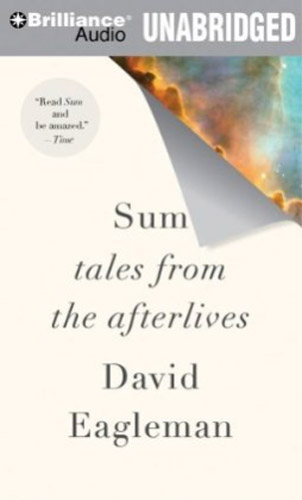
Canongate Books - Sum: Tales From The Afterlives by David EaglemanBRILLIANCE AUDIO - Sum: Tales From The Afterlives by David EaglemanSum: Forty Tales From The Afterlives
By David Eagleman; Read by Gillian Anderson, Emily Blunt, Nick Cave, Jarvis Cocker, Noel Fielding and Stephen Fry
Audible Download or CDs – Approx. 2 Hours 42 Minutes [UNABRIDGED]
Publisher: Canongate Books / Brilliance Audio
Published: March 31, 2010 / June 2010
In this astounding book, David Eagleman entertains 40 fictional possibilities of life beyond death. With wit and humanity he asks the key questions about existence, hope, technology and love. These stories are full of big ideas and bold imagination.This audiobook assembles a stellar cast of readers who bring the scenarios of SUM brilliantly alive: Gillian Anderson, Emily Blunt, Nick Cave, Jarvis Cocker, Jack Davenport, Lisa Dwan, David Eagleman, Noel Fielding, Kerry Fox, Stephen Fry, Clarke Peters, Lemn Sissay and Harriet Walter.

After spotting a glowing review, I had to add this to the list…

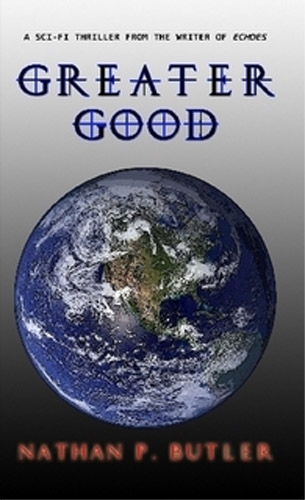
PODIOBOOKS - Greater Good by Nathan P. ButlerGreater Good
By Nathan P. Butler; Read by Nathan P. Butler
34 Zipped MP3 Files or Podcast – [UNABRIDGED]
Publisher: Podiobooks.com
Published: November 2009
In the world of tomorrow, the American Regime dominates our hemisphere, ruled by a new nobility: telepaths. While this powerful new minority rules over the normal human majority, society enjoys stability and security. However, with this new world comes new prejudices and oppression. Now, a powerful telepathic killer from the future has come to our present to eliminate this new world – a serial killer today, a genocide for tomorrow. It is up to a law enforcement officer from the future and an unwitting FBI agent to stop him before he can act in the name of the… Greater Good.

Posted by Jesse Willis

SFFaudio Readalong: a reminder

SFFaudio News

SFFaudio MetaAs I mentioned last Thursday an upcoming SFFaudio podcast, scheduled for an April 26 release, will be on the topic of Robert Sheckley’s novel The Status Civilization.

If you’re like me, you like doing the homework you’ve assigned yourself, so you’re probably furiously riffling through the pages of any and all SF reference books that you can get your grubby mitts on.

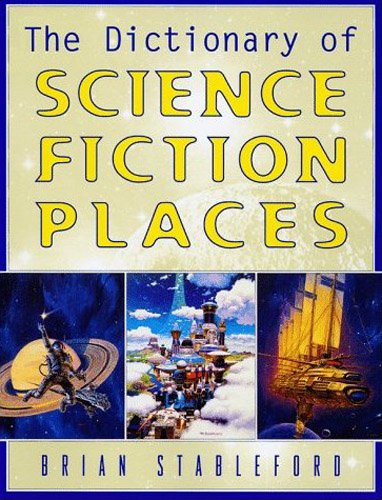
The Dictionary Of Science Fiction Places by Brian StablefordHere’s a relevant passage from one of my reference books, a sketched briefing on the planet Omega, and the city of Tetrahyde. These are the setting of The Status Civilization:

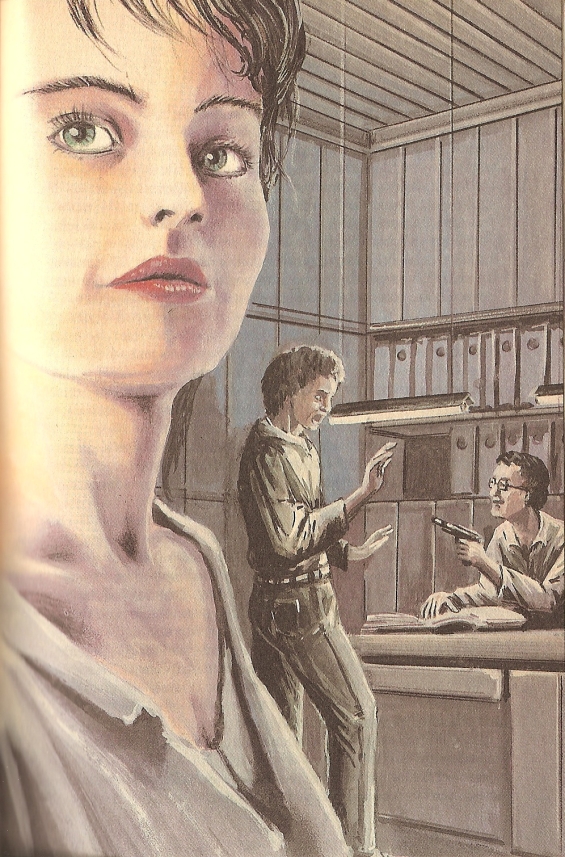
OMEGA – An EARTH -clone prison planet patrolled by guardships armed with, beam-weapons, which were programmed to annihilate anything rising above an altitude of five hundred feet. Its only city was Tetrahyde, located on a narrow peninsula whose landward side was bounded by a high stone wall.

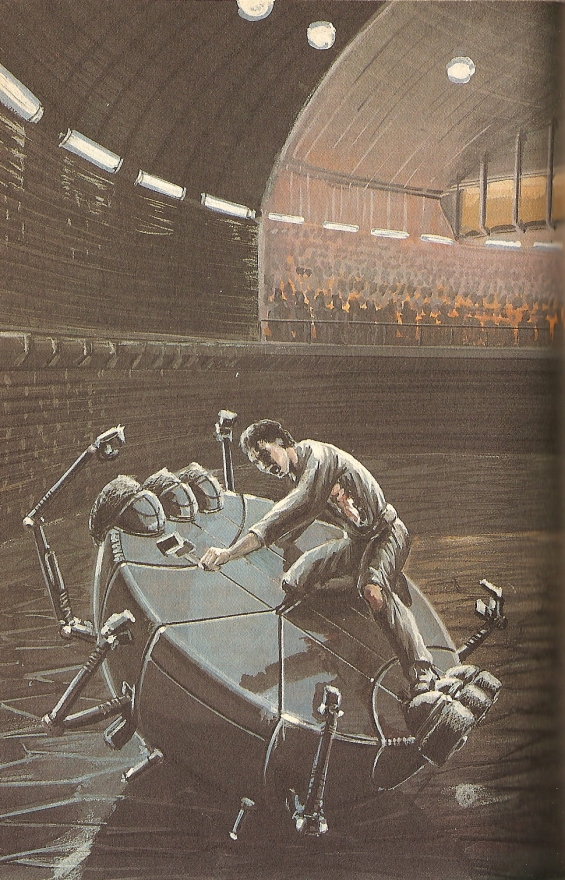
Tetrahyde’s largest building was the Arena, site of the annual gladiatorial games. The Mutant Quarter – which was nasty and dangerous even by Omegan standards – was virtually a city within the city.

Prisoners deported to Omega were stripped of their specific memories but left with the knowledge that they had somehow proved themselves incapable of following the rules of civilized society. In consequence, they established a society of their own whose customs and mores were formed in frank opposition to those whose violation had resulted in their condemnation.

This rigidly stratified society relegated new arrivals to the bottom rank, below established Residents, who were themselves inferior to Free Citizens and Privileged Classes. Order was strictly and sternly maintained by armed Free Citizens known as Quaestors but rapid social advancement was available to those who demonstrated their prowess as killers.

Omega’s established religion was Satanism and its legal establishment was the Kangaroo Court, which administered Trials by Ordeal as well as handing down arbitrary judgments. Pleasure-seekers, ever-careful to avoid prosecution for non-addiction to drugs patronised the Dream Shop, the Euphoriatorium and the vacation resort at the Lake of Clouds, whose Satyr’s Grotto hosted an orgy every Saturday night. Average life-expectancy in Tetrahyde was about three years- a figure whose low value was maintained by such institutions as Hunt Day as well as the Lottery and the Games- but remained in spite of all its best efforts merely a distorted mirror image of the society that had spawned it.

(The Status Civilization, Robert Sheckley. 1960; Omega was also one of the alternative names of COLMAR; other locations harboring calculatedly oppositional cultures include TRANAI, Satirev (see VERITAS) and WALPURGIS III.)

-From The Dictionary Of Science Fiction Places by Brian Stableford (page 222)

Posted by Jesse Willis

LibriVox: The Status Civilization by Robert Sheckley

SFFaudio Online Audio

LibriVoxIf you follow SFFaudio at all closely you’ll know we’re going to be recording a podcast talking about Robert Sheckley’s The Status Civilization. And while we’re all making plans to read a book and record a podcast about it Gregg Margarite, one of LibriVox’s finest narrators, has actually recorded the book and made it available as a podcast! Now if you’re a fan of Gregg Margarite’s narration (and the audiobooks he records) you’ll probably appreciate what he has to say about his recording. Namely, he’d prefer you listen to the commercial release or, at the very least, consider purchasing another audiobook from the same company. Sez Gregg:

“My version of The Status Civilization is now available at LibriVox.org.

I do not wish it to compete with the commercial version, which I believe to be superior to my proletarian alternative. I am a fan of both Mark Douglas Nelson [the commercial release’s narrator] and Wonder Audio, and I want to see both prosper. So if you are going to listen to my version I request you to pledge the purchase of another title from Wonder. We need the professionals…”

LIBRIVOX - The Status Civilization by Robert SheckleyThe Status Civilization
By Robert Sheckley; Read by Gregg Margarite
6 Zipped MP3 Files or Podcast – Approx. 4 Hours 55 Minutes [UNABRIDGED]
Publisher: LibriVox.org
Published: April 2010
Will Barrent awakes without memories just before being deposited on Omega, a planet for criminals where the average life expectancy is 3 years. He’s listed as a murderer and released into the illicit society as a “peon” the lowest class imaginable. A mysterious girl gives him a weapon that starts him on his path to status, a path that requires constant brutality. But it must be borne if our hero is to discover the reason for his imprisonment; A reason that pits him against himself, and involves the sardonically similar but devoutly different creeds of Omega and Earth. – The Status Civilization was first published as “Omega!” in the August and September 1960 issues of Amazing Science Fiction Stories Magazine.

Podcast feed: http://librivox.org/rss/4220

iTunes 1-Click |SUBSCRIBE|

[Thanks also to Betty M. and Annise]

Posted by Jesse Willis

Review of Red Planet by Robert A. Heinlein

SFFaudio Review

Science Fiction Audiobook - Red Planet by Robert A. HeinleinSFFaudio EssentialRed Planet
By Robert A. Heinlein; Read by a full cast
6 CDs – 7 Hours [UNABRIDGED]
Publisher: Full Cast Audio
Published: 2009
ISBN: 9781934180518
Themes: / Science Fiction / Mars / Politics / Gender /
Sample |MP3|
Jim Marlowe’s Martian pet, Willis, seems like nothing more than an adorable ball of fur with an astonishing ability to mimic the human voice. But when Jim takes the creature to academy and runs afoul of a militantly rigid headmaster, his devotion to his pet launches the young man on a death-defying trek across Mars. Accompanied by his buddy, Frank, Jim must battle the dangers of a hostile planet. But it is not only the boys’ lives that are at stake: They have discovered explosive information about a threat to the survival of the entire colony—information that may mean life or death for their families.

Listening to Heinlein’s stories brought to life is a wonderful experience. One of the things I enjoy most about Heinlein’s quirky novels is that the politics are never fully aligned with any conventional ideology. There are repeated themes, to be sure, but they play out fairly differently in each story. I had read Red Planet at least once before and upon listening to this terrific audiobook version I was actually quite surprised by the relevance to modern politics and social phenomena. First published in 1949, and set on a Mars that is surprisingly believable, it has some very modern protagonists teenagers. Jim Marlowe and Frank Sutton get into some rather exciting adventures. They spend chilly days outside on Mars suited up in mechanical counter-pressure suits, with supercharging helmets that provide a suitable pressurized oxygen from the wispy (but oxygenated) atmosphere of Heinlein’s Mars. These suits, are much lighter than conventional air pressure suits and allow the extreme mobility needed for their skating down the frozen canals of Mars. When not outside fighting off water seekers Jim, Frank, and almost every other colonist on Mars dresses like they live on a tropical beach (they live, go to school, and work in pressurized domes). Virtually no one goes outdoors during the Martian nights (or winters) as they are cold enough to freeze even a stolid martian kid solid. Indeed, part of the excitement of the novel comes when Jim, and Frank find themselves trapped in the Martian desert far from any habitable shelter just as sunset is approaching. Heinlein’s solution is both ingenious and original.

Unlike some previous Heinlein novels produced by Full Cast Audio, Red Planet is not told in first person by the main character. Instead the voice talent of William Dufris is employed to narrate. I’m a big fan of Dufris’ narrative abilities, and he does a terrific job with Red Planet. Jacob Coppola as Jim Marlowe, and Christopher Reiling as Frank Frank Sutton are both vigorous and youthful but also distinct enough to tell apart. The rest of the cast supports the story with an assortment of villainous, larcenous good humor, and stubborn contrariness – in other words nearly the full Heinleinian character spectrum. One other note, the voice of Willis is often performed by whichever actor Willis is imitating and this works just fine! Finally, check out the gorgeous cover art by Jerry Russell, it’s absolutely fantastic!

Posted by Jesse Willis