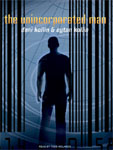
 The Unincorporated Man
By Dani Kollin and Eytan Kollin; Read by Todd McLaren
2 MP3-CDs – Approx. 24 Hours 30 Minutes [UNABRIDGED]
Publisher: Tantor Media
Published: May 2009
ISBN: 9781400161720
Themes: / Science Fiction / Utopia / Dystopia / Time Travel / Slavery / Economics / Business / Cryonics / Immortality / Virtual Reality / Philosophy / Law / Alaska / Colorado / Los Angeles / Switzerland / Nanotechnology / Space Elevator /
The Unincorporated Man is a provocative social/political/economic novel that takes place in the future, after civilization has fallen into complete economic collapse. This reborn civilization is one in which every individual is incorporated at birth and spends many years trying to attain control over his or her own life by getting a majority of his or her own shares. Life extension has made life very long indeed. Now the incredible has happened: a billionaire businessman from our time, frozen in secret in the early twenty-first century, is discovered and resurrected, given health and a vigorous younger body. Justin Cord is the only unincorporated man in the world, a true stranger in this strange land. Justin survived because he is tough and smart. He cannot accept only part ownership of himself, even if that places him in conflict with a civilization that extends outside the solar system to the Oort Cloud. People will be arguing about this novel and this world for decades.
Even though I had never heard of the authors I like this book right from the start. The title reminded me of a Philip K. Dick novel called The Unteleported Man. There are probably a whole bunch of SF books following the formula “The (negative attribution) Man”, with The Invisible Man perhaps being the first of them. But there’s a lot more to like about this novel than the title alone. Among the pleasures it brings is good, old-fashioned idea based SF. It has been quite a while since I was so intellectually engaged by a novel’s central premise. And The Unincorporated Man has one. Set on a future Earth The Unincorporated Man is fundamentally different in both tone and scope than most SF novels I’ve read recently. Authors Dani and Eytan Kollin have envisioned a future in which the institution known as “the corporation” has replaced the convention of “person.” When born each child has stock of 1000 shares issued in his or her name. 10 percent of these stocks are held by each parent, the government gets another 5 percent and the rest is held in trust until the age of majority after which the balance of the stock is given to the child-cum-adult. He or she can then sell, or keep his or her stocks as they so desire. Holding a majority of your own stock insures relative autonomy (based on the amount above 50% you hold). The primary difficulty comes when you realize that you’ll need to invest in yourself. If you want an education you’ll need to pay for it. But without an education the pay won’t be much. So, you can either get education money by working at a low-wage job, and deriving whatever profit percentage your current stock level allows, or by selling your stock off for cash. This typically manifests itself in the majority of humanity not owning majority in themselves. With the possibility of living for centuries, thanks to the ubiquitous nanotechnology, you’d be wise to invest in an education. But in so doing you’ll loose control of your majority, and thus perhaps have to work at jobs that your shareholders choose, take vacations when your shareholders agree and generally have your life dictated to you by those that hold your stock. Why not just take the money and loaf? Who cares what the shareholders say? They can’t make you work can they? Well, yes they can. The corporate system is enforced by a forced mental audit that is applicable whenever shareholders think a corporation, who they hold stock in, is committing malfeasance (shirking their job, deliberately getting fired, etc.). Every corporation is trackable, thanks to GPS-like implants, and is thus ultimately accountable to his or her shareholders. It is the ultimate invasive tyranny, a slavery to the bottom line, a profit motive enforced by an invisible hand that you shook a deal with.
But things aren’t all doom and gloom. Those who are lucky enough to have been born with enough money, drive, intelligence, talent or beauty are able to do pretty much whatever they like with their time – that is assuming they don’t loose too much of their stock in luxuries or in judgments rendered against them in civil lawsuits. You can live like a king, wear any kind of clothing you like, read the newsies and travel the world in an endless party. But, as the centuries have rolled past it seems that fewer and fewer people have found it fashionable (or is the correct word possible?) to retain or even re-seek their majority stock. After all, in their nanotechnological society material abundance sees that no-one starves, no-one remains un-housed. Freedom, it seems, is just out of fashion. Enter Justin Cord and his unincorporated status.
I really liked this novel, but it isn’t without a few caveats. I found the fascinating society portrayed to be the most interesting thing about The Unincorporated Man. The characters are all pretty stiff and the problems facing Jason Cord, our hero, were far less interesting than they were useful in exploring this strange new society. Like many novels I review this one suffers most greatly from excessive page count. At 480 pages the novel takes 24.5 hours to listen to. I’d have preferred the novel with a steadier editorial hand. The editor could have done two relatively easy things. First he or she could have cut out a lot of the filler. I’m not just talking about empty sentences, there are many scenes that could have been eliminated or described in just a sentence or two. There are, for instance, two big court cases in this nove. Would it have been impossible to tell this story in one? Second, there was a useless detour along the way. I enjoyed it, but don’t see any reason it was needed in this novel. It could have been easily explored separately, in another novel. Dani Kollin and Eytan Kollin wanted to talk about the relatively unexplored idea, a social scourge in the form of really vivid virtual reality. Larry Niven did something similar with his idea of the “tasp,” but that wasn’t exactly VR. If you could live your whole life in an artificial reality that was extremely cheap why wouldn’t you? The answer, cooked up by Kollins, is less persuasive than I’d have hoped. And again it doesn’t really need to be in this particular novel. They foresee a coming global catastrophe created not by ecological destruction, but rather by an addictive technological neuropathology. That’s great, but like I said it doesn’t need to be in this novel. When a false reality is far more enjoyable than a real one why should we care about the real one? Good question. Just don’t ask it here.
Narrator Todd McLaren, who I first encountered in Richard K. Morgan’s Altered Carbon |READ OUR REVIEW|, is very talented. He mispronounce one or two words. “Concomitant.” being one of them. McLaren isn’t called to do many accents here, but he gives voice to a fairly large cast of characters. There are also several scenes in which he is required to portray a man giving impassioned speeches to crowds. These don’t sound like shouts, thankfully, but instead give the impression of a strained voice, speaking so as to be heard.
Posted by Jesse Willis


 Cory Doctorow writes plenty of stories which mine the title and themes of old and famous SF stories. Here’s a similar one from Mike Resnick. It is, as typical with Resnick, emotional, literate and sentimental. Those are words applicable only in the positive sense. The story is narrated by the Dunesteef podcast’s hosts, Rish Outfield and Big Anklevich. They don’t do too bad a job with the reading.
  A Princess Of Earth


 Here’s a new audiobook from LibriVox that I am eager to hear. Eric S. Rabkin, who we had as a guest on the SFFaudio Podcast last year, had some fascinating insights about this story in his Teaching Company lecture series