
The SFFaudio Podcast #339 – READALONG: Vulcan’s Hammer by Philip K. Dick

Podcast

The SFFaudio PodcastThe SFFaudio Podcast #339 – Jesse, Paul, and Marissa talk about Vulcan’s Hammer by Philip K. Dick

Talked about on today’s show:
1960 novel, 1956 novella, the Goddreads reviews, Reddit, re-listening, very visual, John Mcclane at the end of Die Hard, conference room scenes, vague characters, awesome ideas, three Philip K. Dick stories that could have inspired The Terminator movies, no time travel, Doctor Futurity, Skynet, the drones (the hammers), UAV style drones vs. terminators, drone technology, there were drones in WWII, remote controlled bombers [ex. Operation Aphrodite], almost nothing “invented in SF” was actually invented in SF, infiltrators, Jesse has become a Terminator geek, Terminator: The Sarah Connor Chronicles, Screamers (adapted from Second Variety by Philip K. Dick), two battling computers, humans as pawns, both computers are in the same building!, proxies, the Internet is missing, Vulcan 3 is building the Internet, Skynet’s drones, Skynet doesn’t have central control, when Vulcan 3 is controlled, Vulcan 3 as a baby, creepy, at the periphery of the plot, the education sub-theme, a little red headed girl, being raised by a terminator, such a fanny show, the movies are recycling scene and catchphrases, at the school, a non-conformist school, Philip K. Dick’s kid is in school, regular school crushes creativity, meritocracy, nepotism, an unfinished thought, cronyism, technocratic government, getting through by hard work, was he an A.I. controlled by Vulcan 3, “hey the system works!”, sociological ideas, how un-Dickian this novel is, a relatively straightforward mystery, no weird obsessions (like with infidelity), the obligatory black haired girl, the president of the world comes into the world takes a little girl out of school and takes her home?, WTF?, the teacher’s okay with this?, the classroom, the concentration camp in Atlanta is a psychology camp, the conformist world in A Wrinkle In Time, Marissa learns Science Fiction, a planet of complete conformism, “you let them play an unstructured game?”, stifling of independent thought and creativity, why was the teacher killed?, reading Lolita, secretly reading forbidden books, is Philip K. Dick improving the books when he re-writes them (consensus is NO), two cults, a cult of reason and rationality, why is that rebellion group called the “Healers”, like alternative medicine, the worship of the computer, Greys, blue collars against the white collars, “we shouldn’t undervalue people just because their skills are in their hands and in their fingers”, vaxxers vs. the anti-vaxxers, back to Dr. Futurity, Vulcan 2 in the novella, piecing Vulcan 2 back together like a damaged hard-drive, the data is recovered aurally, listening to the broken thoughts of Vulcan 2, not just white noise in between the broken sentences, a groaning of ghosts, psychology, weird and interesting, absolutely NOT what anyone else does in Science Fiction, the Butlerian Jihad, because… Skynet, nobody says actually technology is really quite useful, 43% of the Earth’s resources?, the paragraph, maintaining the computer, the “lesser order of human needs”, some sort of metaphor 43 percent of calories go to the brain?, a biological parallel, making the decisions, making the policy, a subtle allusion to Plato, the greys the technician class are “guardians”, denying a brain data (big mistake), The Just City by Jo Walton, Athena sets up Plato’s Republic, automatons for physical labour, seeing the connections, The Republic, Socrates, like the old Atlanteans, the Gold the Silver and the Bronze (ditch diggers and truck drivers), the Silver (the police, functionaries, tax-collectors), the Gold (the enlightened, the philosophers), Vulcan 3 is the Gold, the T-class (experts and specialists), these books are all being suppressed (due to copyright), a pretty good title, Hammer shaped robots?, Vulcan (aka Hephaestus), the ancient Greeks and Romans, Hephaestus built a robot for Athena, the Greeks were really into automata, metal beings, the Talos of Crete, Vulcan as the wizard of metal, a Philip K. Dick conference lecture, when the Greeks thought of gods they thought of A.I. (sort of), these atoms over here have desires, intelligence in non-living things, a little bit under cooked, what about Vulcan 1?, or does it?, maybe Vulcan 1 is hiding, in a degenerate state, Deus Irae and The Last C., tactical nukes, a lot of weakness but it makes up for it, a bit of paranoia, that’s usually what causes the problem, self-preservation, when Saddam Hussein is threatened, the emotional computer, pleading only as a human could do, “We can come to an arrangement!”, shades of 2001: A Space Odyssey, 2001: A Space Odyssey is a microcosmic version of Vulcan’s Hammer, several Star Trek episodes, The Ultimate Computer, Star Trek as a metaphor for American foreign policy, The Apple, they kill the computer that regulates their society, they killed the snake but…, vegetarians are now hunting, put some controls on this, as a metaphor for society, a rebellion against pain in the body, the mind as the government, living in a post-WWIII world, WarGames, the Russians had a battle computer called “The Dead Hand“, a dead-man’s trigger, WWIII was looming in 1956 and 1960, so good even though its not that good, Dick loves blue collar workers, Father Fields, making something out of the air-conditioner, a dropped thread, a completely weird metaphor, The Borderlands series, Scooter, a technopath, The Variable Man by Philip K. Dick, “he fixed things”, a great tagline, “I don’t got Philip K. Dick for action”, living in a disposable society, everything is disposable, is there a TV-repair shop left in North America?, modern cars, only 5.5 hours, zoning out, cool predictions, the paranoid artificial intelligence, Sam Harris and Joe Rogan, caging an A.I., setting up honey-traps, Jesse thinks that’s not going to be the issue, Neuromancer all A.I.’s have digital shotguns strapped to their heads, “the smartest man in the world”, Elon Musk and Stephen Hawking, worries, better as a metaphor than as a prediction, we shouldn’t be unconcerned, Colossus: The Forbin Project, it isn’t 1s and 0s on a screen, seeing inside a burned diary, The Moon Is A Harsh Mistress by Robert A. Heinlein, Mike the computer (aka Mycroft Homles), what’s missing from Vulcan’s 3‘s life is a friend, kids want to know, I think you guys are liars if…, kids are going to get into everything and that’s not a bad thing, more information is better, Vulcan 2’s decision, Occupy, Black Lives Matter, you are totally welcome to prosper if you are willing and able to play a certain kind of game, the push-back is caused by the masses rejecting stability, the adventurer class, “more concerned with gain than with stability”, the phrases: “life is cheap”, big gambles, the Netflix series Narcos, communist guerrillas living in the jungle, if you are living in a corrupt society you get a lot of gamblers, the striking opening scene, “can’t you get a better picture?”, they all wear the uniform of their class, another theme, destroying stability, going back to entropy, it is kind of Philip K. Dickian after-all, undercooked or maybe overcooked, the same with Time Pawn, this is my worst book, Dean Koontz’s 1973 novel of Demon Seed has a rapey robot computer, with the rewrite of Demon Seed Koontz has mellowed out, writing for the market, even after his death, Puttering About In A Small World by Philip K. Dick, everything’s always better with a robot wife.
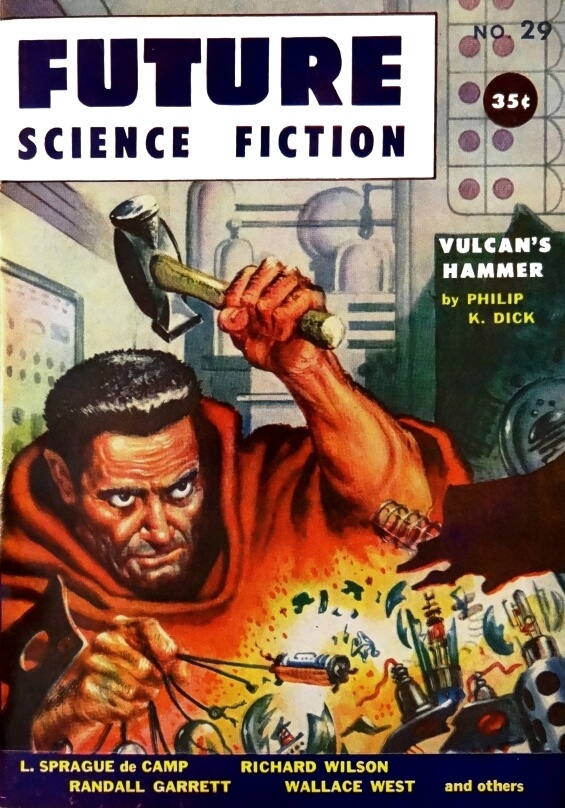
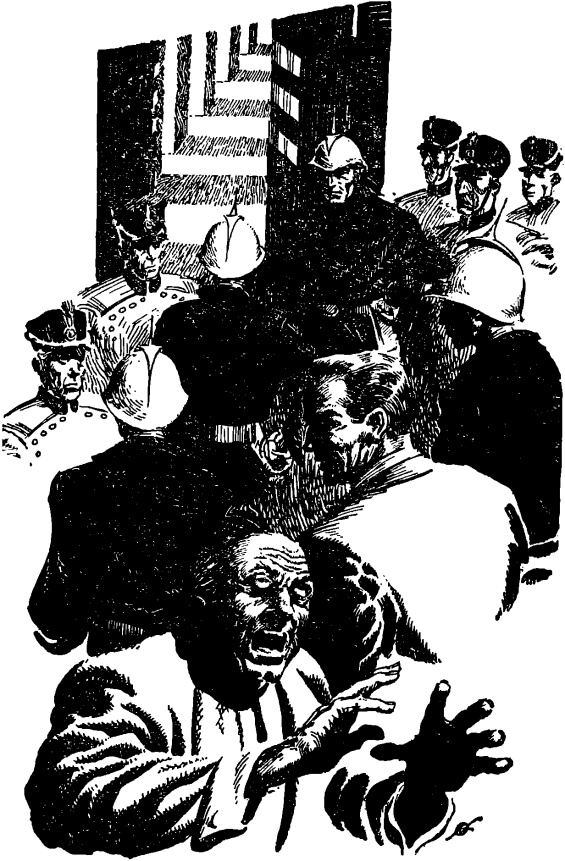
Future Science Fiction No. 29 (1956). Cover Art by Frank Kelly Freas
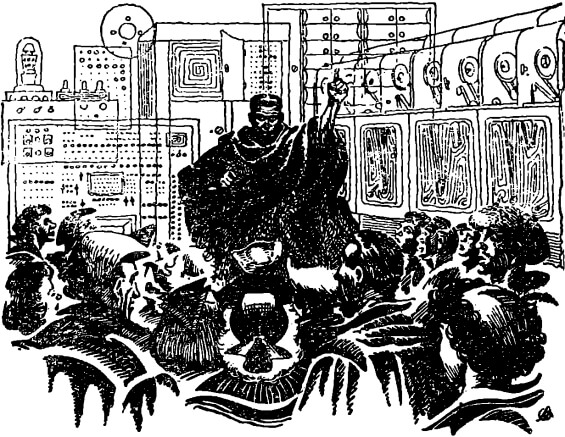
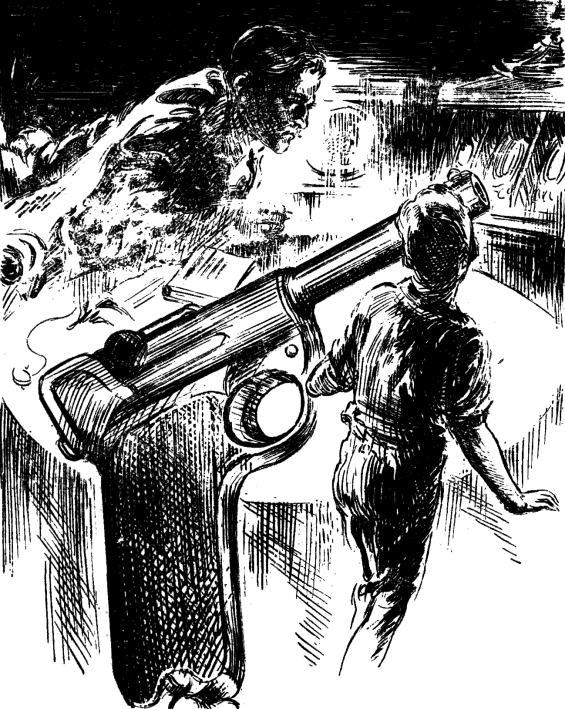
Vulcan's Hammer by Philip K. Dick interior art

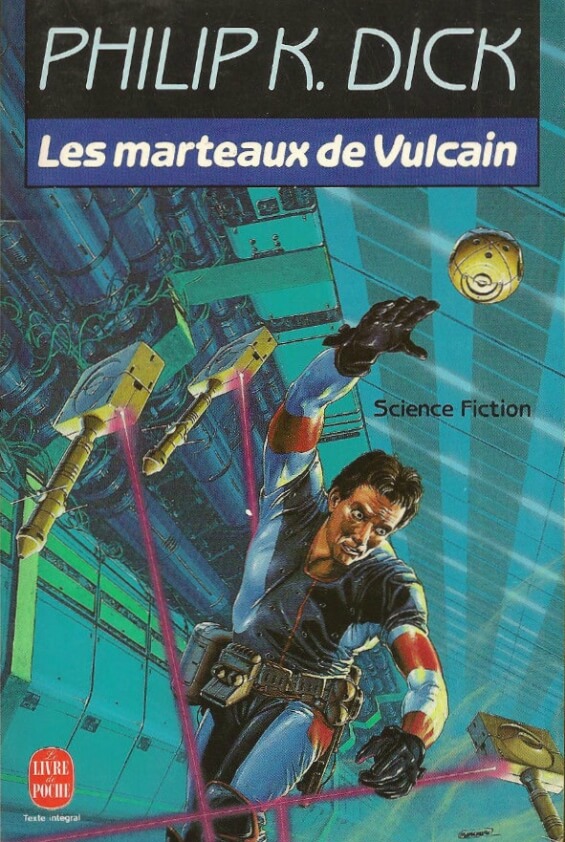
Vulcan's Hammer by Philip K. Dick - FRENCH

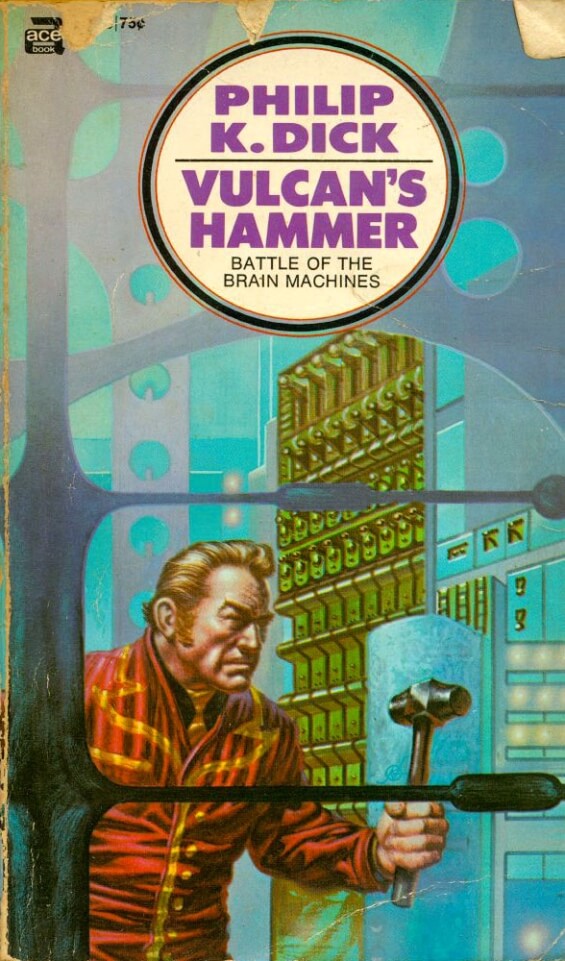
ACE - Vulcan's Hammer by Philip K. Dick

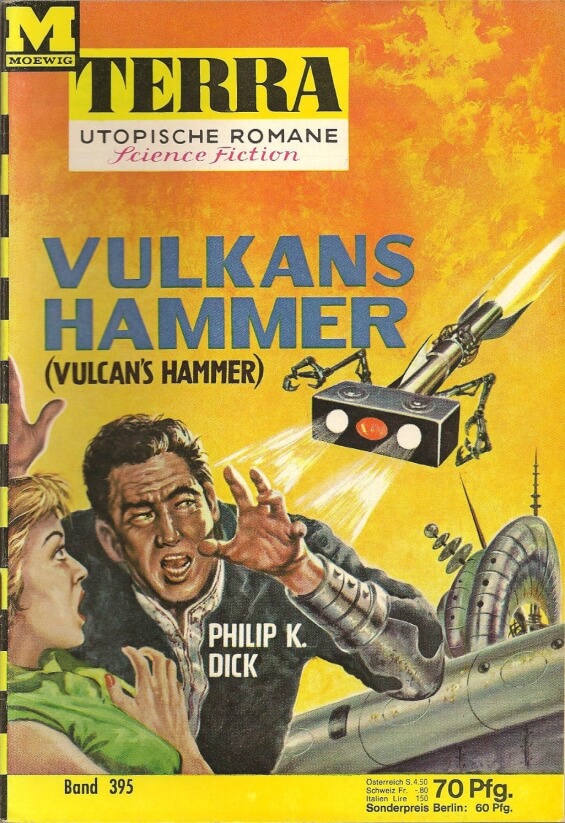
Vulcan's Hammer by Philip K. Dick - German

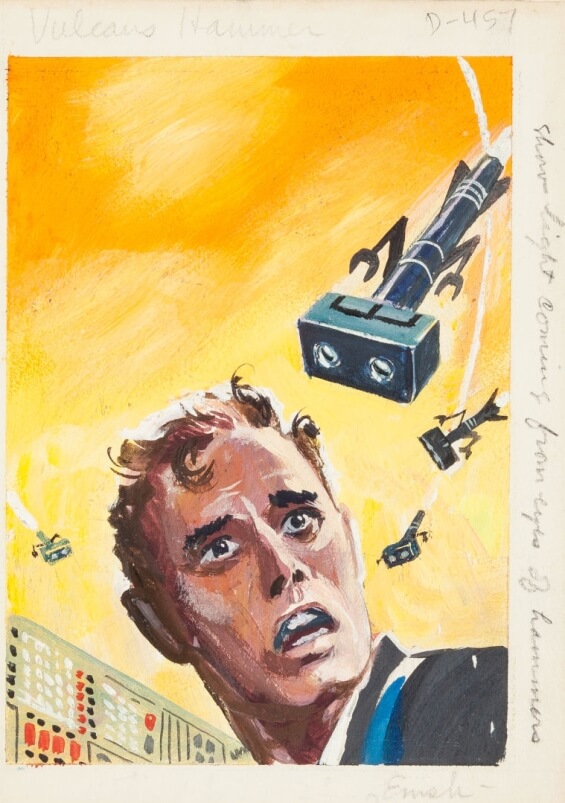
Vulcan's Hammer - preliminary art D-457

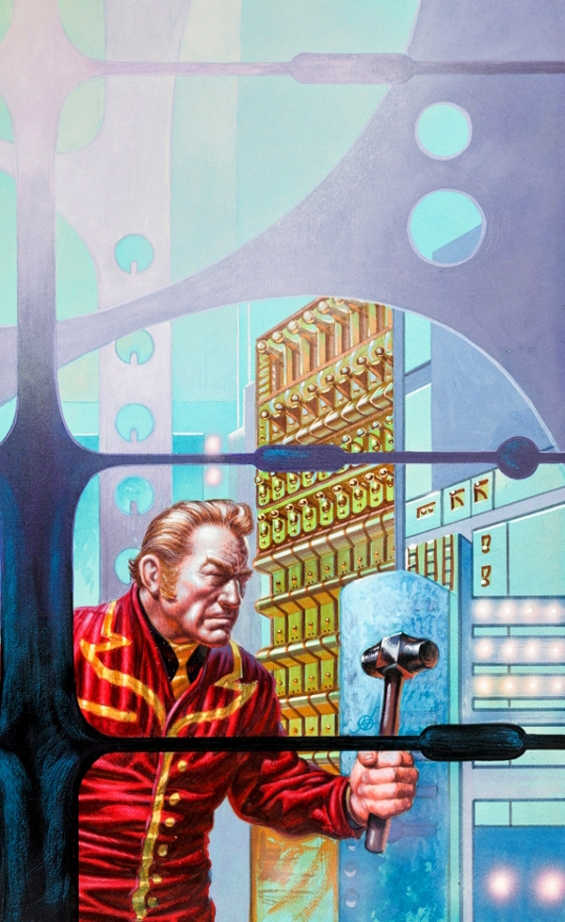
Kelly Freas cover art for Vulcan's Hammer by Philip K. Dick

Posted by Jesse Willis

The SFFaudio Podcast #224 – AUDIOBOOK/READALONG: Exhibit Piece by Philip K. Dick

Podcast

The SFFaudio PodcastThe SFFaudio Podcast #224 – Exhibit Piece by Philip K. Dick; read by Mark Turetsky. This is a complete and unabridged reading of the story (40 minutes) followed by a discussion of it. Participants in the discussion include Jesse, Jenny, Maissa Bessada, and Mark Turetsky.

Exhibit Piece was first published in the August 1954 issue of If: Worlds Of Science Fiction.

Talked about on today’s show:
“Hi, I’m the main character”, a pocket universe, a time portal, is the cold war a 22nd century office feud?, looking back at the 1950s, 1950s nostalgia in the 1950s, middle class white guy, cobalt bombs, the boogeyman, global warming?, Jesse needs to listen to the fear propaganda, a historical perspective, how to build a cobalt bomb, what was he doing in there?, was Miller herded into the 1950s world?, the authority figures, the TV, the newspaper, the dreamed are secure until the dreamer wakes?, Star Trek, Barbara Adams, talking to her hair?, Trekkies, is Miller delusional?, a crack in time, a nested world, living inside a museum exhibit with a confabulated wife and children, Berkeley, California, San Francisco, New York -> N’York, public transportation (the bus) -> pubtrans, the Wikipedia entry for Exhibit Piece, citation needed, does the entire story happen in the 1950s?, did Miller have a psychotic break after reading the newspaper?, TOTAL WORLD DESTRUCTION AHEAD, the missing newspaper, Philip K. Dick’s old house, dog food for dinner, the world of the neighborhood,a mistake the Oakland Daily, I didn’t get up until noon anyway, the newspaper as the binding point, is the psychiatrist right?, the names, Grunberg, Fleming, Carnap, the philosopher Rudolph Carnap, logical positivism, the slippage of words, natural deductive logic, death panels, a priori, philosophy, Newspeak in reverse, double plus good, “Dig me?”, the Eisenhower administration, Jazz cats, the 22nd century is pretty awful, the time when men were still men, Military–industrial complex, Eisenhower’s field rank, misplaced power, a golden age, the greying of the world, even the robot thinks he’s weird, how smokeable is two centuries old tobacco?, is the future the delusion?, was anti-hist a term at the time?, gorning!, transformed language, Russian River, incongruous authority figures, the highest ranking official in the world directorate doesn’t have anything better to do, delusions of grandeur, maybe history is just that important to them, Hampton Court Palace, who is the museum for?, what a weirdo, the business suit as a uniform, similar Philip K. Dick short stories, Upon The Dull Earth by Philip K. Dick, resurrection, The Commuter by Philip K. Dick, only the reader can see it, how are the worlds linked?, the version where Miller is crazy, Second Life, computer generate realities, World Of Warcraft grinding day and night, sorta-real gold, there’s no distinguishment between realities, Breakfast At Twilight by Philip K. Dick, time travel, the Cold War, idealized suburban lifestyle, a fleet of Russian robots (drones), fear of nuclear war 1950s – 1980s, Russian spy stories, fear of AIDS, AIDS education in Kindergarten!, blast radii, things are going to be great, Mark Turetsky has been narrating audiobooks since 2009, nerdy kids books, Pi In The Sky by Wendy Mass, a Recorded Books Book, Mark’s like a Kirby Heybourne type, the zombie books, Little Brother by Cory Doctorow, Cloud Atlas, Gone Girl, Ace Galaksi is a Canadian comedic audio drama miniseries.

Exhibit Piece by Philip K. Dick

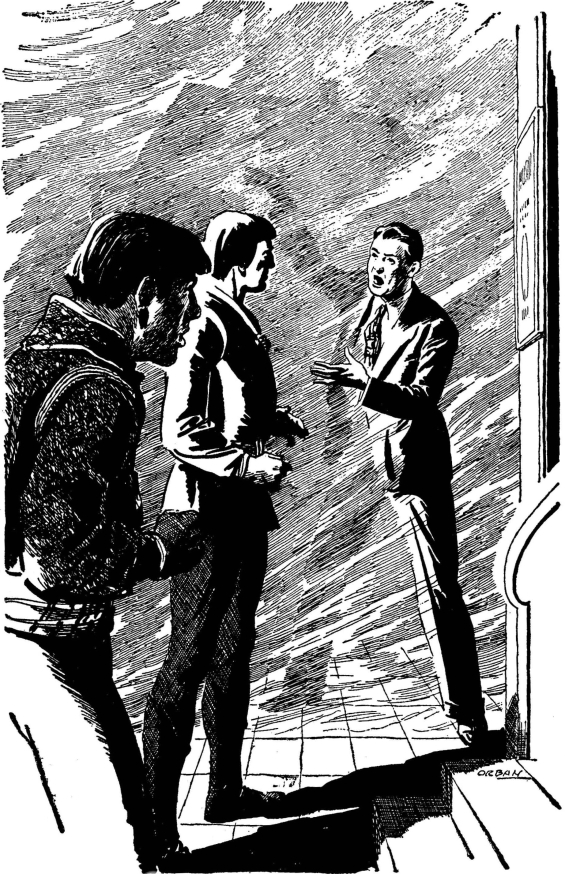
Exhibit Piece illustrated by Paul Orban

Posted by Jesse Willis
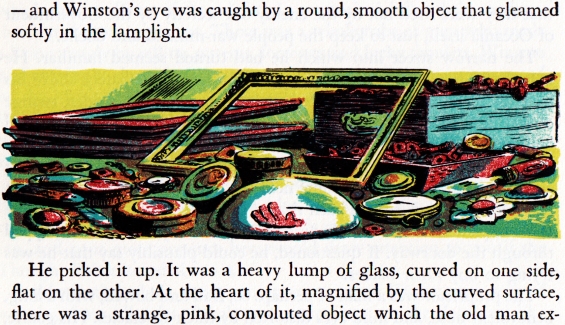
The SFFaudio Podcast #222 – READALONG: Nineteen Eighty-Four by George Orwell

Podcast

The SFFaudio PodcastThe SFFaudio Podcast #222 – Jesse, Jenny, Paul Weimer and Bryan Alexander discuss Nineteen Eighty-Four by George Orwell.

Talked about on today’s show:
The audiobook, Recorded Books, the appendix, The Lord Of The Rings, the feeling in your right hand, a dream-like book, Room 101, a disjointing of time, Infinite Jest by David Foster Wallace, Signet Classic, already a member of the Junior Anti-Sex League at 12, a 1971 sex drive, memory, Winston Smith’s obsession with the past, the three traitors, the Soviet Union as applied to Britain, show trials, it is so effective, The Running Man is a prole version of Nineteen Eighty-Four, “WHITMAN, PRICE, AND HADDAD!!! You remember them! There they are now, BASKING under the Maui sun.”, down the memory hole, the brutality of the movies and the applause of the audience, the crushing of weakness, the terrible children, the 1954 BBC TV version starring Peter Cushing, Winston’s own memories of his childhood, did Winston kill his sister, his bowels turn to water when he see a rat, the return of the mother, a bag of decay, the 1984 version of 1984, John Hurt looks like he was born to play Winston Smith, is it Science Fiction?, dystopia, does this feel like Science Fiction?, Social Science Fiction, If This Goes On… by Robert A. Heinlein, Animal Farm, Goldstein’s Book, the re-writing of history, collapsing the vocab, The Languages Of Pao by Jack Vance, Babel-17 by Samuel R. Delany, The Embedding by Ian Watson, Isaac Asimov’s review of Nineteen Eighty-Four, Orwell imagines no new vices, WWIII, in regular SF we get used to a lack of motifs, the coral, the memories, the place with no darkness, everything is recycled in a dream and people merge, in dream logic 2+2 can equal 5, reduction of the world and the self, Brave New World by Aldous Huxley, soma, The Hunger Games, Wool by Hugh Howey, cleaning day, grease, transformed language, a crudboard box, euphony, a greasy world, a comparison to We by Yevgeny Zamyatin, We The Living by Ayn Rand, Harcourt Brace, Politics And The English Language by George Orwell, V For Vendetta, Norsefire vs. IngSoc, a circuitous publishing history, crudpaper, prole dialect, part dialect, New Speak, military language, Generation Kill, military language is bureaucratic language, Dune by Frank Herbert, Battle Language, private language, Brazil, the thirteen’s hour, The Canterbury Tales by Geoffrey Chaucer, victory means shit, Airstrip One, speakwrite, Star Wars, careful worlding, a masterwork, a transformation and an inoculation, watch 1984 on your phone while the NSA watches you watch it, North Korea, “without getting to political”, 2600‘s editor is Emmanuel Goldstein, the traitor Snowden, that’s what this book is, it’s political, The Lives Of Others, hyper-competent, the bedroom scene, “We are the dead.”, how did the picture break off the wall, dream-logic, Jesse knows when he’s dreaming, if you dream a book you must generate the text, dreaming of books that don’t exist, a great sequel to Ringworld?, The Sandman, “We shall meet in the place where there is no darkness.”, O’Brien, Martin, the worst thing is you can’t control what you say when your sleeping, uncanny valley,

Whatever it was, you could be certain that every word of it was pure orthodoxy, pure IngSoc. As he watched the eyeless face with the jaw moving rapidly up and down, Winston had a curious feeling that this was not a real human being but some kind of dummy. It was not the man’s brain that was speaking, it was
his larynx. The stuff that was coming out of him consisted of words, but it was not speech in the true sense: it was a noise uttered in unconsciousness, like the quacking of a duck.

Polar Express, the book within the book, high end books, Fahrenheit 451 by Ray Bradbury, is London the capital of Oceania?, the value of the book, Stephen Fry’s character, a book that tells you only things you already knew, The Man In The High Castle by Philip K. Dick, the possibilities of other books, supercharged moments in movies, Twelve Monkeys, Dark City, Book Of Dreams, utopias within dystopias, reading in comfort and safety, the golden place, Julia is a pornosec writer, Robert Silverberg, Lawrence Block, Donald E. Westlake, Marion Zimmer Bradley, The Processed Word by John Varley, Russian humor, is there really a war?, power is the power to change reality, Stephen Colbert’s truthiness, doublethinking it, the proles seem to be happier, feeling contempt, lottery tickets depress Jesse, “renting the dream”, the proles are obsessed by lotteries, who is the newspaper for?, the chocolate ration, Larry Gonick’s The Cartoon History Of The Universe, how stable is Oceania?, guys and Guy, how stable is North Korea?, Christopher Hitchens, there’s no hope in 1984, the subversion mechanism has been subverted, changing human behavior, Walden Two by B.F. Skinner, Faith Of Our Fathers by Philip K. Dick, genocide, racial purity, are they bombing themselves?, where does Julia get all her treats?, utopia is a nice cup of coffee, The Principle Of Hope by Ernst Bloch, what’s missing from your life comrade?, is Julia playing a role?, she’s the catalyst for everything, misogyny vs. misanthropy, Nietzsche’s master morality slave morality, political excitement is transformed into sexual excitement, ‘I have a real body it occupies space (no you don’t you’re a fictional character)’, Julia’s punk aesthetic, I love you., she’s the dream girl, the romantic couple that brings down the bad order, The Revolt Of Islam by Percy Bysshe Shelley, Pacific Rim, The Matrix, Equilibrium, Mephistopheles, Mustapha Mond, Jesse thought she was in on it, the prole lady out the window, nature, ragged leafless shrubs, nature has been killed, the Byzantine Empire, the Catholic Church, cult of personality vs. an idoru Big Brother, Eurythmics, we’re nostalgic for the Cold War, the now iconic ironic 1984 Apple commercial, dems repubs NSA, has Britain been secretly controlling the world using America?, George Bernard Shaw, society and politics, SF about the Vietnam War, petition for and against the war, Judith Merril, The Forever War by Joe Haldeman, The Handmaid’s Tale by Margaret Atwood, China.

Nineteen Eighty-Four by George Orwell

Nineteen Eighty-Four by George Orwell

Reader's Digest 1984

Reader's Digest 1984

Reader's Digest 1984

Reader's Digest 1984

Reader's Digest 1984

Mori's 1984

Posted by Jesse Willis

Time And Time Again by H. Beam Piper

SFFaudio Online Audio

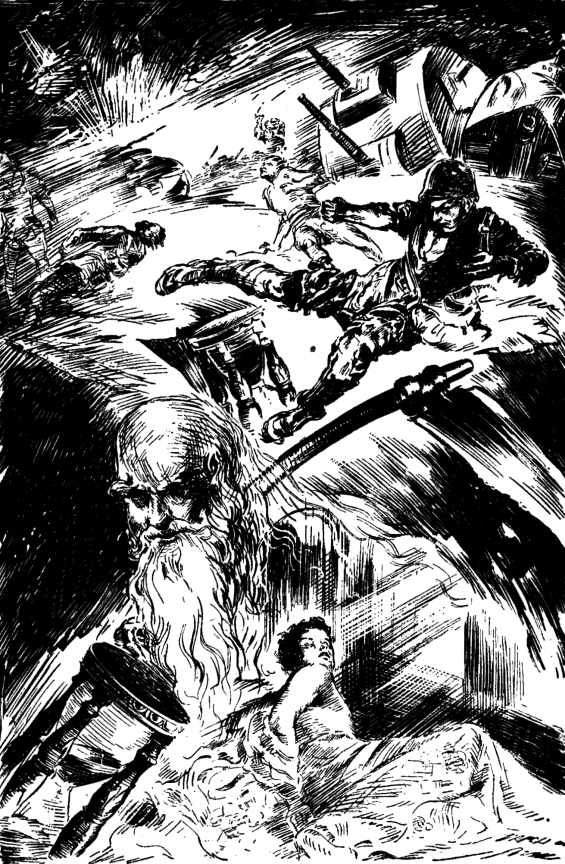
Time And Time Again by H. Beam Piper - illustrated by Vincent Napoli

Time and Time Again was H. Beam Piper’s first published story. It first appeared in the April 1947 issue of Astounding Science Fiction. Time and Time Again features many of the themes of Piper’s later writing, including time travel, evidence of his electric reading habits, and a love of firearms.

Set in part during both WWII and WWIII Time and Time Again features time travel of the type made famous in both Back To The Future and Quantum Leap.

LibriVoxTime And Time Again
By H. Beam Piper; Read by Bellona Times
1 |MP3| – Approx. 45 Minutes [UNABRIDGED]
Publisher: LibriVox.org
Published: August 09, 2010
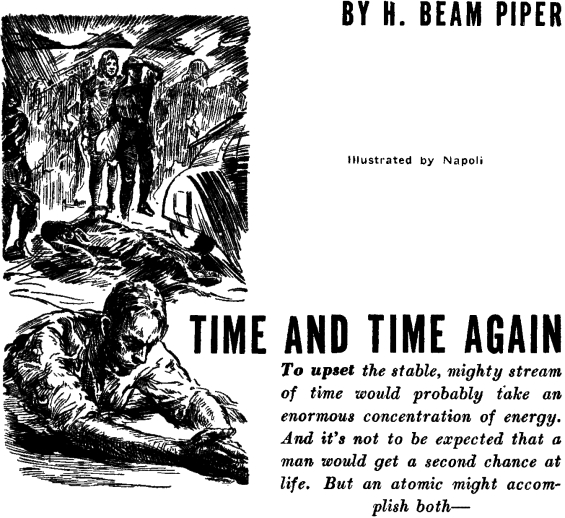
To upset the stable, mighty stream of time would probably take an enormous concentration of energy. And it’s not to be expected that a man would get a second chance at life. But an atomic might accomplish both— First published in Astounding, April 1947.

For some reason the ending to the X-Minus One version has been changed – to it’s determent in my view.

X-Minus OneX-Minus One – Time And Time Again
Adapted from the story by H. Beam Piper; Performed by a full cast
1 |MP3| – Approx. 30 Minutes [RADIO DRAMA]
Broadcaster: NBC
Broadcast: January 11, 1956
A soldier is wounded in a future war and is transported back to 1945 when he was thirteen years-old with his future memory and past memory intact.

Here’s a |PDF| made from its appearance in Astounding.

Time And Time Again by H. Beam Piper - illustrated by Vincent Napoli

One other interesting bit from the original story is the mention of a B-25 bomber crash into the Empire State Building, here’s a contemporary newsreel about that:

Posted by Jesse Willis

I, Mars by Ray Bradbury

SFFaudio Online Audio

Barton’s younger selves lived on, tormenting him for his living proof that their hopes were dead!

I, Mars by Ray Bradbury
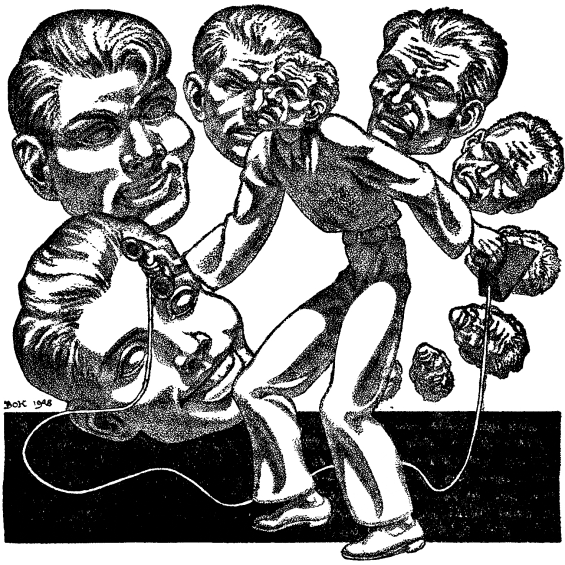
I, Mars by Ray Bradbury - illustration by Hannes Bok
First published in Super Science Stories, April 1949, here’s Jim Moon’s 26 minute unabridged reading of I, Mars by Ray Bradbury. I first encountered this story under it’s alternative title, Night Call, Collect.

|MP3|
|PDF| made from its publication in Super Science Stories.

[Thanks to WonderEbooks!]

Posted by Jesse Willis
LibriVox: The City At World’s End by Edmond Hamilton

SFFaudio Online Audio

Produced for SFFaudio Challenge #6, The City At World’s End is terrific audiobook. Part of that’s because Mark Nelson’s narration is super-listenable and the other part is because the novel itself is very keen Science Fiction.

If you’re a Superman fan the plot may remind you of a particular issue of Action Comics (#300) – that’s the one in which Superman travels to the distant future of Earth only discover it emptied of life and with a giant red Sun in its sky. Indeed, the similarities between the two tales would be very eerie were it not for the fact that both were written by Edmond Hamilton!

I’m halfway through The City At World’s End and am really enjoying it. The prejudices, assumptions, and attitudes of the townsfolk are all vintage 1950, but the idea quotient is very high. Hamilton has thought through a lot of the problems he makes his characters face. If you’re familiar with Robert A. Heinlein’s Farnham’s Freehold, in which a family is transported into Earth’s future, you’ll find The City At World’s End to be a kind of macroscopic version of that – and both novels start with a really big, and highly unnatural, bang.

Or, if you’re looking more contemporaneously, you could think of The City At World’s End as a kind of highly inverse version of Terra Nova (because they go forward in time not back, and what was bad on TV is actually good in the audiobook). I highly recommend you give The City At World’s End a listen!

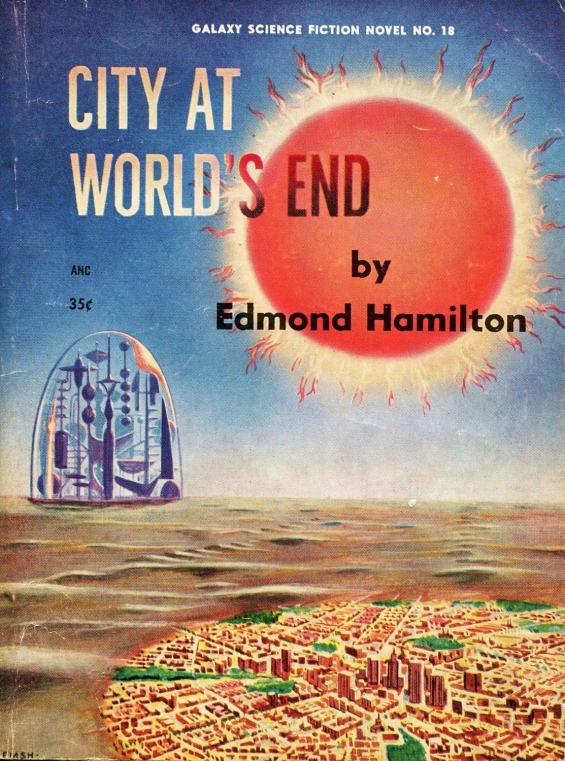
Galaxy Novel - City At World's End by Edmond Hamilton

The City At World’s End
By Edmond Hamilton; Read by Mark Nelson
21 Zipped MP3 Files or Podcast – Approx. 7 Hours 6 Minutes [UNABRIDGED]
Publisher: LibriVox.org
Published: March 20, 2012
The pleasant little American city of Middletown is the first target in an atomic war – but instead of blowing Middletown to smithereens, the super-hydrogen bomb blows it right off the map – to somewhere else! First there is the new thin coldness of the air, the blazing corona and dullness of the sun, the visibility of the stars in high daylight. Then comes the inhabitant’s terrifying discovery that Middletown is a twentieth-century oasis of paved streets and houses in a desolate brown world without trees, without water, apparently without life, in the unimaginably far-distant future.

Podcast feed: http://librivox.org/rss/6121

iTunes 1-Click |SUBSCRIBE|

Here’s the |PDF|.

And for people like me I’ve also made a single giant 7 hour |MP3| version – which you can download from our server. It’ll be especially useful for iPod users as it has art, is tagged “Audiobook”, and is also checked with “remember playback position.” Even better it has been volume adjusted. Let me know if you like it!

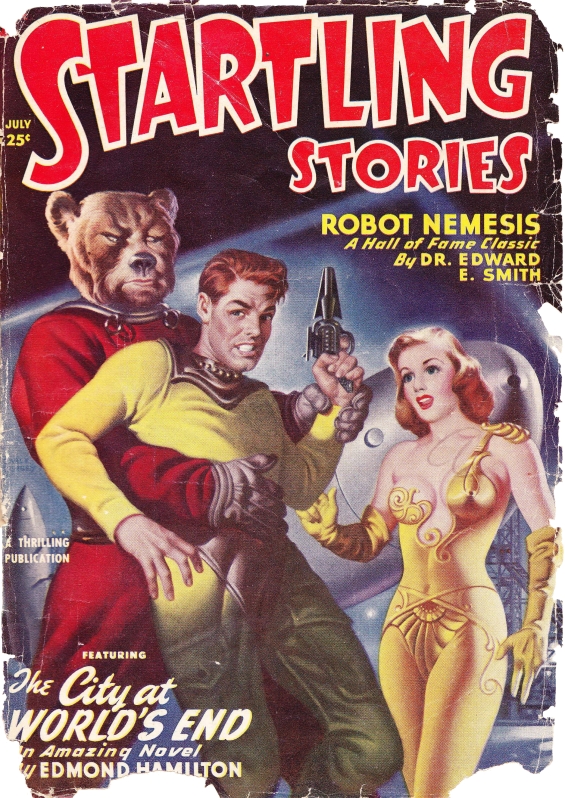
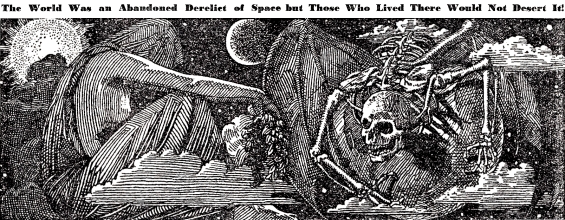
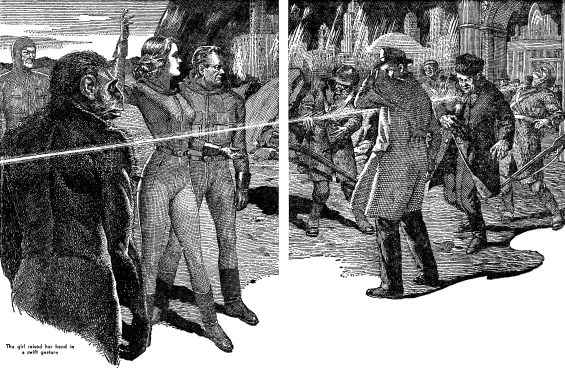
Cover and illustrations from the appearance of The City At World’s End in Startling Stories, July 1950:

Startling Stories, July1950 COVER - The City At World's End by Edmond Hamilton

Startling Stories, July 1950 Table Of Contents (includes The City At World's End)

The City At World's End - from Startling Stories, July 1950 - Page 11

The City At World's End - from Startling Stories, July 1950 - Page 13 and 14 combined

The City At World's End - from Startling Stories, July 1950 - Page 13 and 14 combined

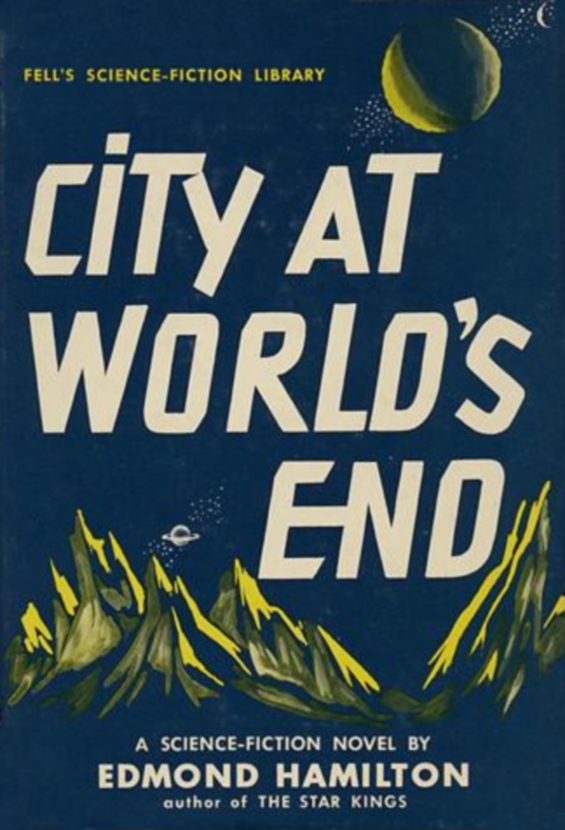
More covers:

Fells - City At World's End by Edmond Hamilton

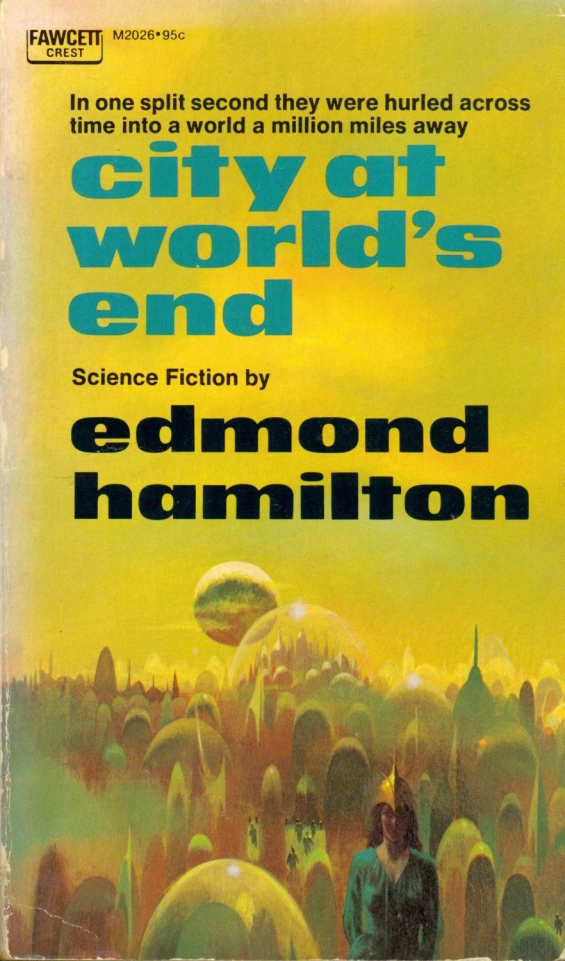
Fawcett - City At World's End by Edmond Hamilton

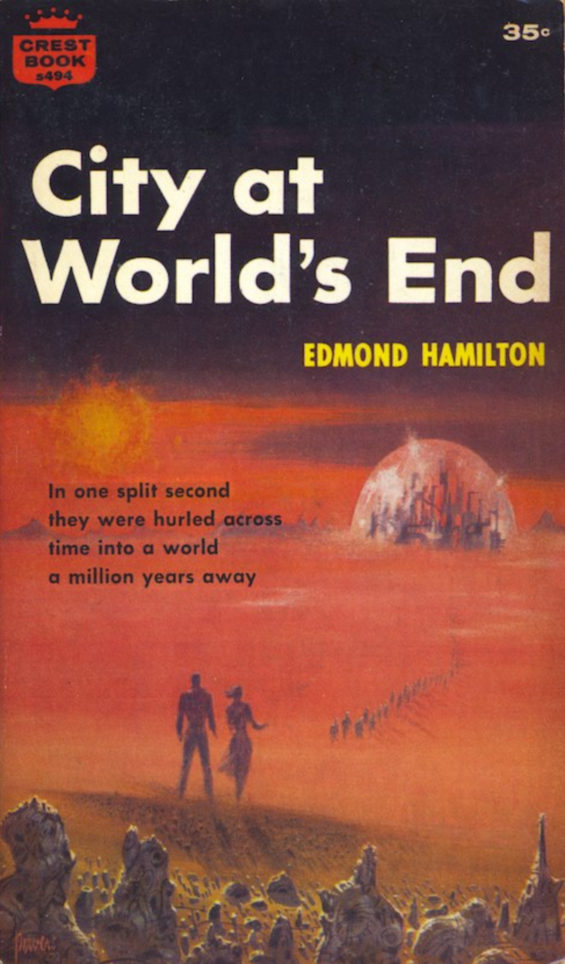
CREST - City At World's End by Edmond Hamilton

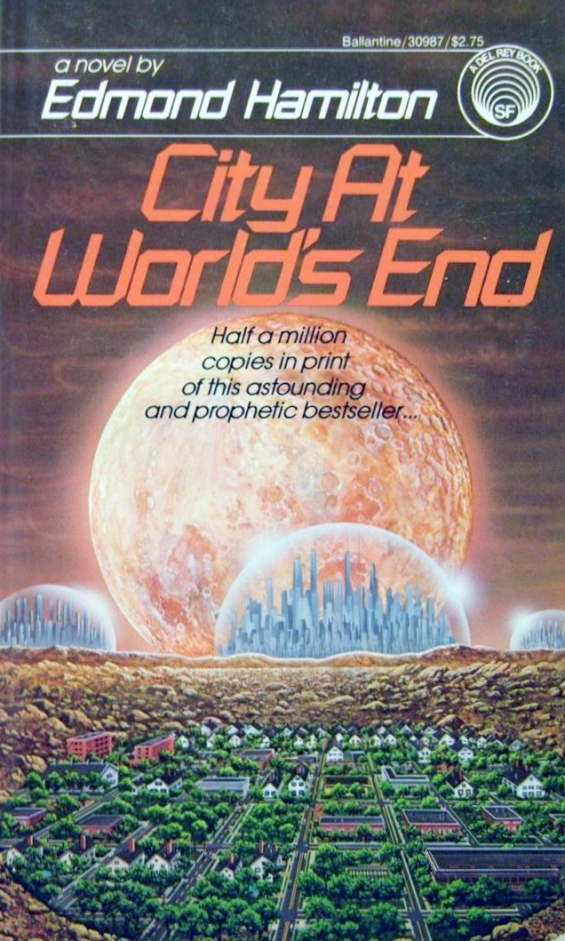
Ballantine - City At World's End by Edmond Hamilton

And one more image, from the cover of Urania:

Urania #386

[Thanks also to DaveC, Barry Eads, and Gerard Arthus]

Posted by Jesse Willis