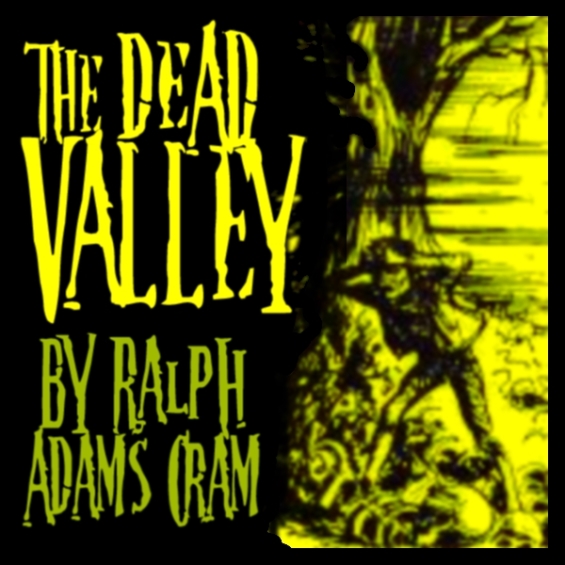
The Dead Valley by Ralph Adams Cram

SFFaudio Online Audio

“In The Dead Valley the eminent architect and mediævalist Ralph Adams Cram achieves a memorably potent degree of vague regional horror through subtleties of atmosphere and description.”

-H.P. Lovecraft, Supernatural Horror In Literature

The story is chilling, and as performed with passion by my friend John Feaster, you’ll feel the eerie events surrounding The Dead Valley all the more.

The Dead Valley by Ralph Adams Cram

LibriVoxThe Dead Valley
By Ralph Adams Cram; Read by John Feaster
1 |MP3| – Approx. 21 Minutes [UNABRIDGED]
Publisher: LibriVox.org
Published: 2010
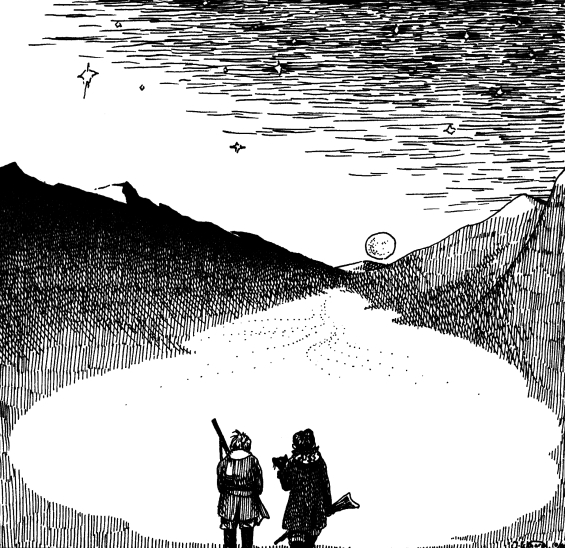
Two boys walk overland through the Swedish mountains at night. There they encounter something inexplicably evil. First published in 1895.

And here’s an 18 page |PDF| version.

NECRONOMICON PRESS - The Dead Valley

Posted by Jesse Willis

The SFFaudio Podcast #243 – READALONG: Herland by Charlotte Perkins Gilman

Podcast

The SFFaudio PodcastThe SFFaudio Podcast #243 – Jesse, Jenny, Bryan Alexander, Terpkristin, and Maissa Bessada discuss the 1915 novel Herland by Charlotte Perkins Gilman.

Talked about on today’s show: [Note: references to the novel are in bold, while references to the eponymous country are not.] “Lost utopian novel”; first appeared in book form in 1979 as part of an effort to rediscover works by female authors; was it suppressed by patriarchy?; the novel launches with action; features Heinlein-esque; the story feels very alien despite transpiring on Earth, takes place in an unnamed jungle region presumed to be either South America or Africa; Herland grouped as part of a trilogy along with an unrelated novel Moving the Mountain and the direct sequel With Her in Ourland; the book originally appeared in serialized form in Charlotte Perkins Gilman’s own magazine; grounded in “utopian” and “lost race” tradition of the period which pick apart aspects of society; Heinlein’s and Gilman’s sexism compared and contrasted; “virgin impregnation” compared with conception of Christ; foundation of Herland as a Roman-style slave revolt; “what a world of slaves it was” Goslings quote echoed in Herland; utopian ecology (plants, animals); Jesse calls it “Mother Knows Best totalitarianism”; “intentional Darwinism”; eugenics foreshadowing World War II; Bryan brings up The King in Yellow again; protagonists give threefold approach to women; punishment in Herland more akin to child-rearing foregoing execution; Leviticus does advocate execution; both the male protagonists and the Herland women are archetypical; The Yellow Wallpaper; utopia or dystopia; unreliable narrator and narrative; Jesse argues that there’s “no drama in a perfect society” and the book has a terrible plot; eighteenth-century feminist utopia Millennium Hall; Jenny says the sequel’s plot is even worse; immortality and living in Heaven; no dogs in Herland, only cats; subservience of aesthetics to productivity; “their country was as neat as a Dutch kitchen”; childhood Jesse conflated cats and dogs; cats and dogs emblematic of gender relations in Herland; Herland is a baby-proof world; more about narrator bias in the novel; Gilman projecting her own views on mental disorder into the book; 1984 parallels; The Mysterious Doctor Fu Manchu; comparison to Goslings; why does Herland want to integrate men?; sexual dynamics in marriage; Castle Waiting by Linda Medley, a medieval utopia about bearded women; Y: The Last Man series by Brian K. Vaughan; female politicians behaving like men e.g. Margaret Thatcher; Barbara W. Tuchman and the “fallen tower” of World War I era society; utopian societies lack practical advice for the here-and-now; Origin of Species debated as source of eugenics; education in Finland; education as driving force in Herland; “only our best become teachers”; Montesori; No Child Left Behind; the perils of individualism in a utopia; “fashion and women go together” says Jesse; Jenny shares insights on potential contributions from women in the sequel; a debate on why Herland never took off; patriotism and its linguistic roots; more on the novel’s World War I context; Willa Cather’s WWI novel One of Ours; “trilogy” of novels packaged as e-book.

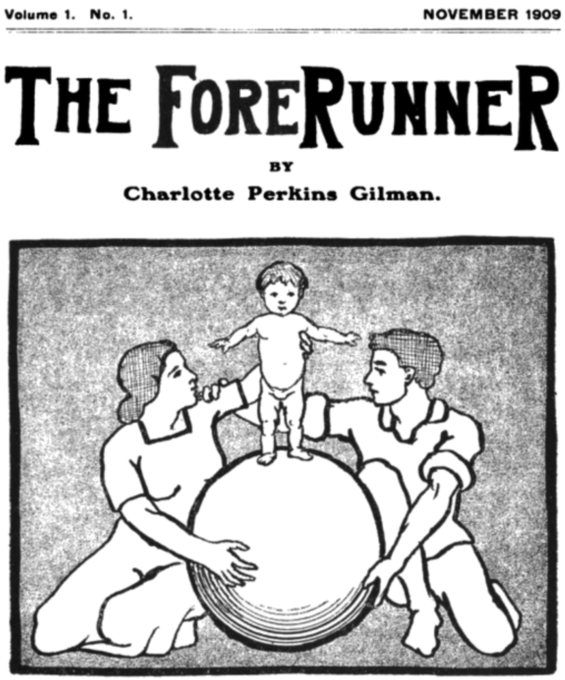
The ForeRunner by Charlotte Perkins Gilman

Posted by Jesse Willis

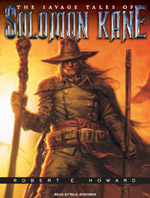
Review of The Savage Tales of Solomon Kane

SFFaudio Review

The Savage Tales of Solomon KaneThe Savage Tales of Solomon Kane
By Robert E. Howard; Narrated by Paul Boehmer
Publisher: Tantor Audio
[UNABRIDGED] – 12 hours, 30 minutesThemes: / pulp / fantasy / hero / short stories / Publisher summary:

With Conan the Cimmerian, Robert E. Howard created more than the greatest action hero of the twentieth century—he also launched a genre that came to be known as sword and sorcery. But Conan was not the first archetypal adventurer to spring from Howard’s fertile imagination.

He was…a strange blending of Puritan and Cavalier, with a touch of the ancient philosopher, and more than a touch of the pagan…. A hunger in his soul drove him on and on, an urge to right all wrongs, protect all weaker things…. Wayward and restless as the wind, he was consistent in only one respect—he was true to his ideals of justice and right. Such was Solomon Kane.

Collected in this volume are all of the stories that make up the thrilling saga of the dour and deadly Puritan: “Skulls in the Stars,” “The Right Hand of Doom,” “Red Shadows,” “Rattle of Bones,” “The Castle of the Devil,” “Death’s Black Riders,” “The Moon of Skulls,” “The One Black Stain,” “The Blue Flame of Vengeance,” “The Hills of the Dead,” “Hawk of Basti,” “The Return of Sir Richard Grenville,” “Wings in the Night,” “The Footfalls Within,” “The Children of Asshur,” and “Solomon Kane’s Homecoming.”

I don’t normally seem to enjoy older works of Sci-Fi and Fantasy, and unfortunately, things were no different here. I was never a Conan fan growing, so I’d never read any of Mr. Howard before. The audiobook collection stars with an obituary or memorium written by H.P. Lovecraft with whom Mr. Howard apparently corresponded.

Mr. Howard is probably best known for his character Conan, but Solomon Kane is often credited as the first “Sword & Sorcery” character.

In this collection of stories Solomon Kane fights Pirates, Ghosts, Vampires, Sorcerors, Harpies and more. Solomon Kane wields daggers, pistols a sword, and in later stories, a magical staff. Sounds like it would be great! Unfortunately I was mostly bored. The best story of the bunch for me was The Children of Asshur, which was only a fragment and therefore ends somewhat abruptly. I would have liked to see where Mr. Howard intended to go with that story.

There are certainly things to like here. The writing isn’t bad and the adventures are certainly varied enough, but it just seemed like not much really happens most of the time. And then there is the racism. You can pull out the usual excuses, when the book what written, or the fact that the racism portrayed is probably accurate to the characters themselves. That doesn’t change the fact for me that it kept pulling me out of the stories.  It’s not in every story, but is present in most, especially those where Solomon Kane travels to Africa. Many times it seemed like an unnecessary aside, rather than an important plot point for or character motivation.

All in all, as I believe these stories are in public domain you might be better off picking one or two to check out rather than the whole collection. I think the best complete story was The Hills of the Dead, where Kane first gets his magic staff and fights a horde of vampires.

Review by Rob Zak.

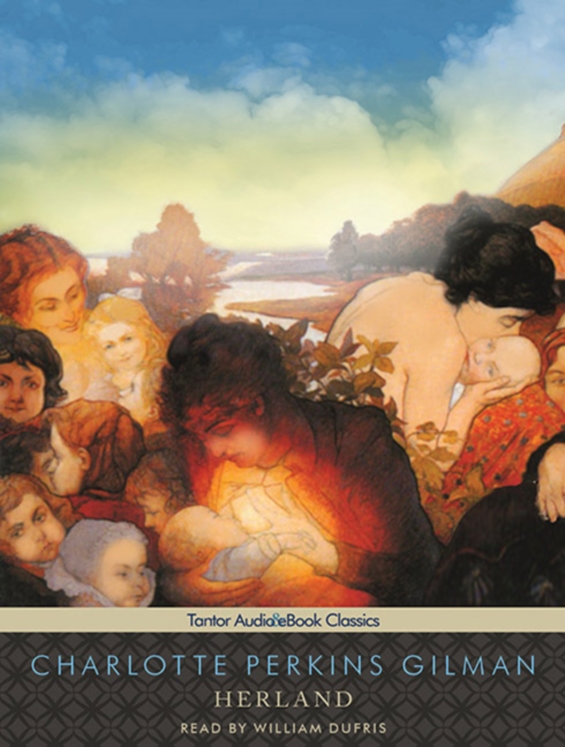
The SFFaudio Podcast #242 – AUDIOBOOK: Herland by Charlotte Perkins Gilman

Podcast

The SFFaudio PodcastThe SFFaudio Podcast #242 – Herland by Charlotte Perkins Gilman, read by William Dufris.

First published serially from January to December 1915 in The ForeRunner, this UNABRIDGED AUDIOBOOK (7 Hours 2 Minutes) comes to us courtesy of Tantor Media and their collection of “Unabridged Classics”.

Thanks Tantor!

Three American young men discover a country inhabited solely by women.

Come back for our next episode (SFFaudio Podcast #243) to hear our discussion of Herland.

TANTOR MEDIA - Herland by Charlotte Perkins Gilman

Posted by Jesse Willis

James P. Crow by Philip K. Dick is PUBLIC DOMAIN

SFFaudio News

James P. Crow, a 1954 short story by Philip K. Dick, is PUBLIC DOMAIN.

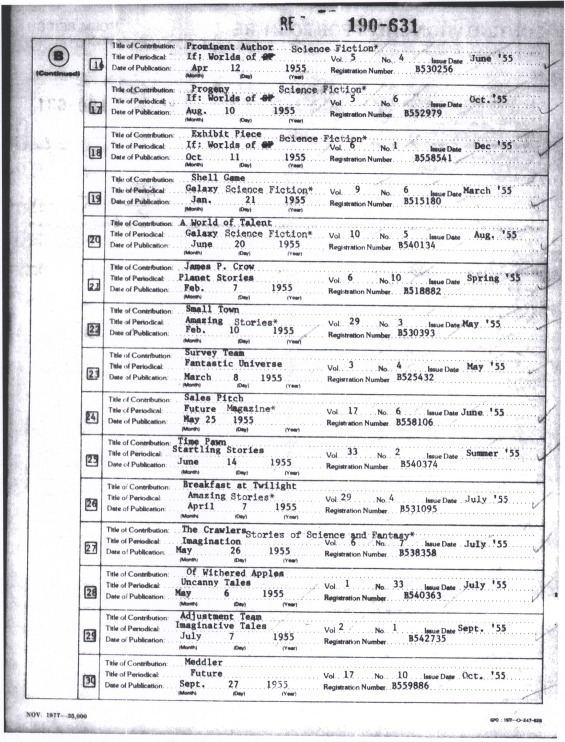
Like many other stories by Philip K. Dick of this era, James P. Crow was thought to have had its copyright renewed. Indeed, a search of the copyright.gov records reveals a renewal claim on document “RE0000190631.”

But, this renewal is fraudulent. It has James P. Crow having been published in “Planet stories, spring 1955”.

At the time of the filing of “RE0000190631” James P. Crow was already in the public domain because it was not renewed in its 28th year.

See for yourself.

Here is all the evidence.

A photocopy of the actual renewal as filled out “Laura Coelho, Christopher Dick & Isa Dick”:
RE190631 Page 2 (back) Prominent Author, Progeny, Exhibit Piece, Shell Game, A World Of Talent, James P. Crow, Small Town, Survey Team, Sales Pitch, Time Pawn, Breakfast At Twilight, The Crawlers, Of Withered Apples, Adjustment Team, Meddler

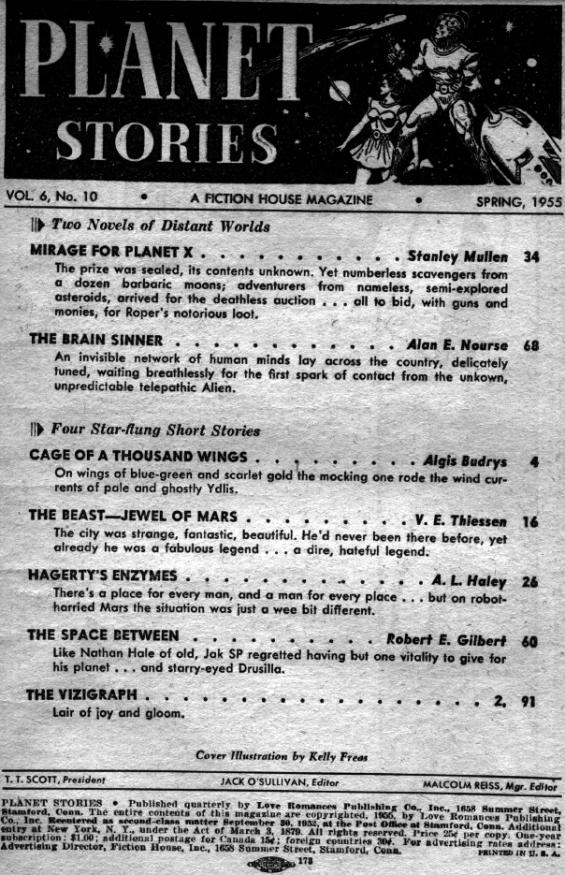
Here is the table of contents for the issue of the magazine that the estate of Philip K. Dick claimed that James P. Crow was first published:

Planet Stories, Spring 1955 - table of contents

As you can see there is no Philip K. Dick story even in that issue.

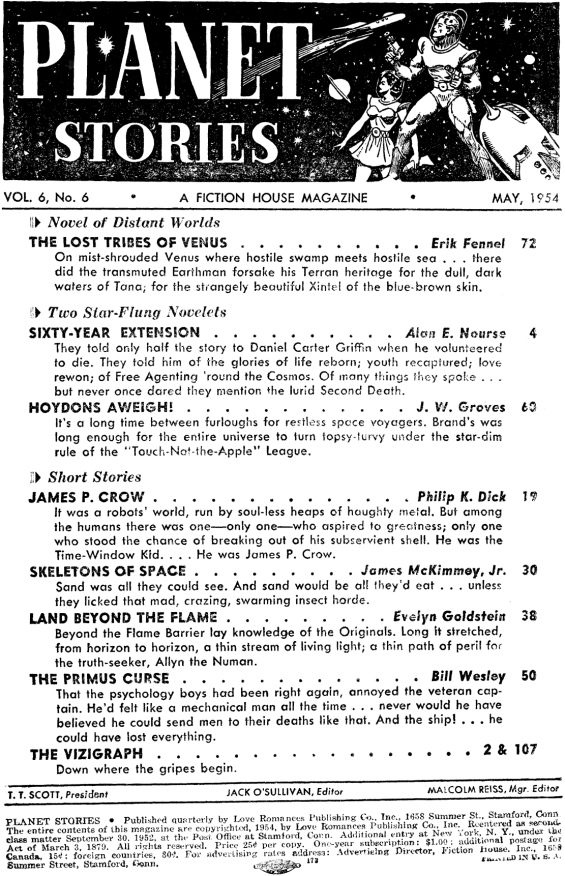
Here is the table of contents from the original place of publication, Planet Stories, May 1954:
Planet Stories, May 1954 - table of contents (includes James P. Crow by Philip K. Dick)

James P. Crow by Philip K. Dick is therefore PUBLIC DOMAIN.

Here is a |PDF| of James P. Crow.

Posted by Jesse Willis

Review of the BFG by Roald Dahl

SFFaudio Review

The BFG by Roald DahlThe BFG
By Roald Dahl; Read by David Walliams
Publisher: Penguin Audio
Publication Date: 24 June 2013
[UNABRIDGED] – 4 hours, 25 minutes

Themes: / fantasy / giants / children /

Publisher summary:

The BFG is no ordinary bone-crunching giant. He is far too nice and jumbly. It’s lucky for Sophie that he is. Had she been carried off in the middle of the night by the Bloodbottler, or any of the other giants – rather than the BFG – she would have soon become breakfast. When Sophie hears that the giants are flush-bunking off to England to swollomp a few nice little chiddlers, she decides she must stop them once and for all. And the BFG is going to help her!

The BFG is classic Roald Dahl: a blend of lighthearted playfulness and bone-crunching, child-munching wickedness.

The story is about a gentle 20-foot-tall giant who lives in Giant Country with a bunch of other giants. The BFG taught himself English by reading Charles Dickens, and he mangles language in beautiful ways: “What I mean and what I say is two different things.”

The other giants, who have adorable names like Bloodbottler, Meatdripper, Childchewer, and Bonecruncher, are all much bigger than the BFG (“at least two times my wideness and double my royal highness!”) and bully him for being vegetarian. While they eat humans of various nationalities (like people from Turkey, who apparently taste like turkey, or people from Jersey, who taste of cardigans), the BFG eats only a disgusting vegetable called a snozzcumber. As he says, “I squoggle it! I mispise it! I dispunge it! But because I is refusing to gobble up human beans like the other giants, I must spend my life guzzling up icky-poo snozzcumbers instead! If I don’t, I will be nothing but skin and groans.”

The story starts when the BFG befriends a little human girl named Sophie, who he takes home with him to Giant Country, where he must hide her from the meaner giants who would eat her on sight. Together, the BFG and Sophie decide to try putting a stop to the terrible child-guzzling that’s been going on.

The narrator David Walliams did such an awesome job with the voices, from Sophie’s soft feminine inflections to the BFG’s indignant horror and naive befuddlement with humankind’s weird ways. It must have been difficult to perform the BFG’s dialogue with all the backwards idioms and inside-out clichés and weird pronunciations, but somehow Williams makes it all flow seamlessly and naturally.

The audio production is also something special, with all kinds of sound effects in the background: bubbling and burping and scraping and gurgling. These special effects didn’t seem intrusive to me at all (despite preferring straight readings usually), and seem to fit perfectly with Roald Dahl’s storytelling style.

Everything else aside, the BFG character alone makes this story worth listening to. How can you not love a creature whose ears are so sensitive he can hear the faraway music of the stars, and who desperately wants to learn how to “make an elephant” so he can ride it around, picking peachy fruits off the trees all day long!

Posted by Marissa van Uden