Sci Fi Dimensions: Interview with Richard K. Morgan

SFFaudio Online Audio

There is an excellent interview with Richard K. Morgan over on the Sci-Fi Dimensions podcast. Morgan and his new novel The Steel Remains are rubbing a lot of people the wrong way. His provocative essay on Tolkien’s The Lord Of The Rings drew charges of rabble-rousing and worse. As a shit-disturber myself I thought it was very cool, and though I could definitely see why the rabble might be roused. Morgan is calling things as he sees them – his vision has a dark tinge (but only in comparison to the vision of most) – he definitely sees our world with a jaded eye. His fictional worlds too are full of fallible humans. Everything he’s written seems happily noir. I really dig his ideas, and am very much enjoying the audiobook of The Steel Remains . If you’re not sure if you will enjoy it, have a listen to this interview, it will help you decide.

Sci-Fi Dimensions PodcastInterview with Richard K. Morgan
Interviewed by John C. Snider
1 |MP3| – Approx. 80 Minutes [INTERVIEW]
Podcaster: Sci-Fi Dimensions Podcast
Podcast: August 2008

Posted by Jesse Willis

Review of Witchling by Yasmine Galenorn

SFFaudio Review

Greetings fellow SFFaudio readers! I just thought I’d introduce myself as one of the new geeks slated to post reviews for the site. I’m legally blind, and have relied on SFFaudio for years to direct me to fantasy and SF audio, from new blockbuster releases to hidden diamonds in the rough scattered around the Interwebs. I’m therefore thrilled to be contributing to the site, and look forward to giving something back to this awesome community. Okay, that should suffice for an introduction–now on to the review!
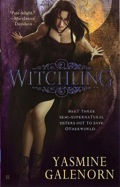
Witchling by Yasmine GalenornWitchling
By Yasmine Galenorn; Read by Cassandra Campbell
Audible Download – 10 Hours [UNABRIDGED]
Publisher: Tantor Media
Published: 2008
Themes: / Supernatural Romance / Urban Fantasy / Vampires / Dragons / Faeries / Seattle /

I was a little hesitant to delve into Yasmine Galenorn’s Sisters of the Moon series, since it’s generally categorized as “supernatural romance”. Yes, this shows contempt prior to investigation on my part. I’ve never read any “paranormal romance”, or much “romance” at all, for that matter. Yet from the first page, I found myself enjoying the world and characters of Witchling. The book reaffirms my belief that genre labels like “paranormal romance” have more to do with marketing convenience than actual substance.

“Urban fantasy” hits nearer the mark. The events of Witchling unfold in Seattle and the surrounding countryside, including the stunning Mount Rainier. The story follows the three D’Artigo sisters, half-human half-faerie beings from Otherworld who conduct work for the Otherworld Intelligence Agency (OIA) to keep their homeland safe. The murder of Jocko the gentle giant by a demon sets the detective-story plot in motion, told through the voice of witch Camille D’Artigo.

For the most part, the pages of Witchling are populated with fantasy staples. Delilah D’Artigo is a changeling able to transform into a tabby cat, and the third sister Menolly was changed into a vampire. Dragons, demons, and sprites also lumber, skulk, and flit about. Though these might seem trite and cliché, Galenorn lends them all enough life and originality that they seldom detract from the story. More inventive figures also make appearances, most notably the Japanese kitsune (fox) demon Morio.

Like other first-person urban fantasy books I’ve read, Witchling’s style is contemporary, witty, and laced with humor. Despite hailing from Otherworld, Camille has apparently spent enough time on Earth to learn its ways, its slang, and its pop culture references, which she uses to good effect in her speech and exposition. The sprightly writing more than makes up for the slow pacing in the book’s first half. In fact, I really enjoyed the dialogue-driven, character-based opening chapters.

While at its heart Witchling is a fun trans-dimensional detective story, it does touch, in a desultory way, on some more serious themes. Since the D’Artigo sisters are half-bloods, born of a human mother and faerie father, they face prejudice and discrimination from both sides of the race divide. Sadly, this dynamic seldom crops up in the plot, but Camille does occasionally reflect on its ramifications for her family.

And, yes, there is romance. Throughout the novel, Camille is preoccupied to some degree with her love life, and this subplot moves apace with the main narrative thread. I found Camille’s libidinous mental musings distracting from the story at times, but overall the romantic scenes and trajectory fit the book’s tone.

Likable characters, an engrossing plot, and smart, snazzy, sexy writing make Witchling an enticing read. Hints throughout the novel and especially during its conclusion reveal that the events depicted are but the tip of the iceberg in an impending battle between faeries and demons, a battle in which it’s likely that humanity will become embroiled. I look forward to exploring Galenorn’s universe further in the sequel Changeling, which it appears is told from the perspective of werecat Delilah D’Artigo.

Cassandra Campbell’s narration of Witchling is solid but uninspired. She imbues a real sense of emotion into the characters, especially the three D’Artigo sisters. The novel’s contemporary style and numerous pop culture references flow naturally into her narration. Campbell sometimes has a tendency to drift into melodrama, however, and the male villains seem particularly overdrawn. On the whole, though, Campbell handles the material well.

For more information on Sisters of the Moon and Yasmine Galenorn’s other projects you can follow her on Twitter.

Posted by Seth Wilson
Maria Lectrix: The Worm Ouroboros by E.R. Eddison

SFFaudio Online Audio

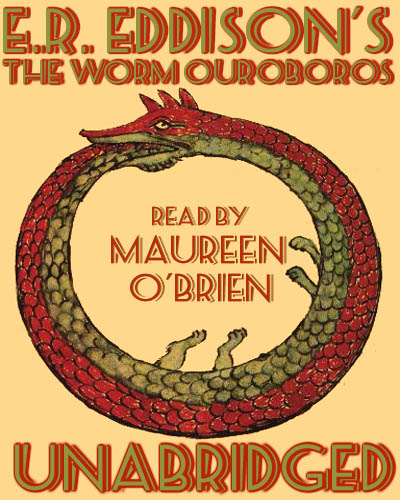
Scott A. Cupp called The Worm Ouroboros “a fantasy that is as fascinating as Tolkien and much more brilliant.” Tolkien himself had read The Worm Ouroboros before writing The Lord Of The Rings. Tolkien’s Middle Earth books use a more grounded prose style than Eddison. Bear in mind that Eddison’s archaic language makes his High Fantasy far less accessible than Tolkien. Maureen Obrien has released her reading of it under a Creative Commons license.

The Worm Ouroboros by E.R. EddisonThe Worm Ouroboros
By E.R. Eddison; Read by Maureen O’Brien
56 MP3 Files – Approx. 22 Hours [UNABRIDGED]
Podcaster: Maria Lectrix
Podcast: May 2007 – May 2008
Provider: Internet Archive
This classic 1922 fantasy novel brings you to a strange and lovely world where a young lord wrestles King Gorice for his land’s freedom, where unscalable mountains can only be conquered by stubbornness and hippogriffs, where the great explorer Lord Gro finds himself continually driven to betrayal, where sweet young women occasionally fall for evil wizards, and where the heroes actually win their hearts’ desire.

Ouroboros Map by David Bedell

Posted by Jesse Willis

Commentary: “Best of” and “Book of” books

SFFaudio Commentary

SFSignal.com recently asked me to participate in another of their “Mind Melds.” The topic:

Q: What are the “Forgotten Books” of science fiction/fantasy/horror?

Here was my answer:

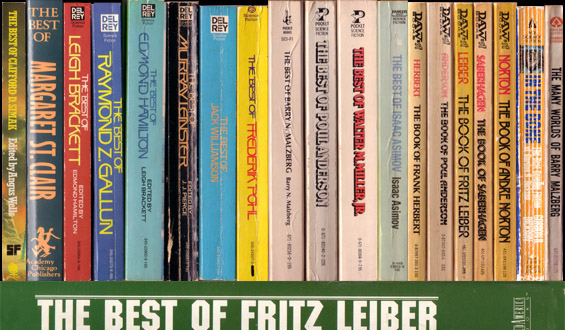
Best Of/Book Of/Many Worlds Of books (spines)

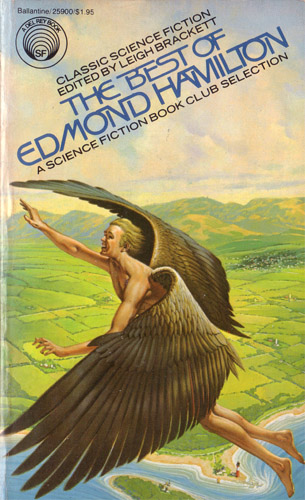
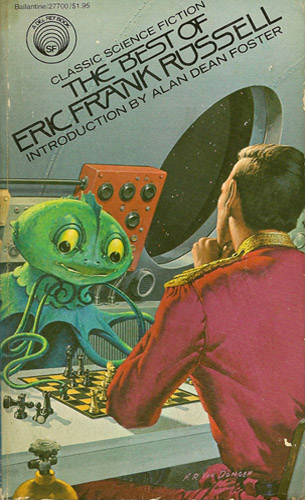
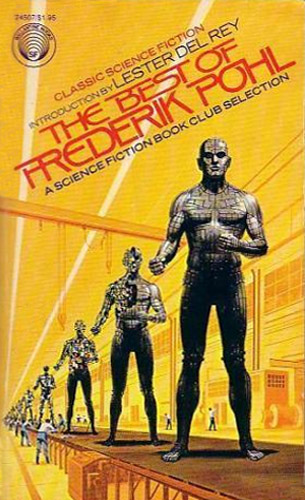
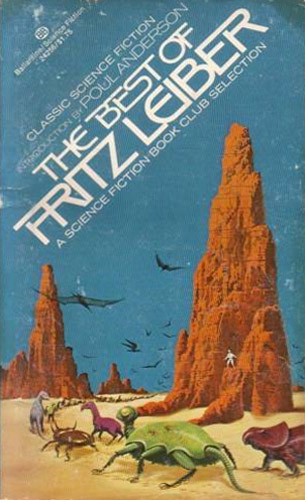
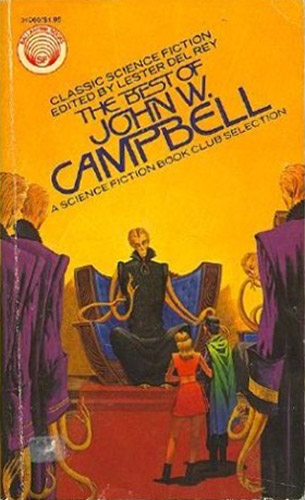
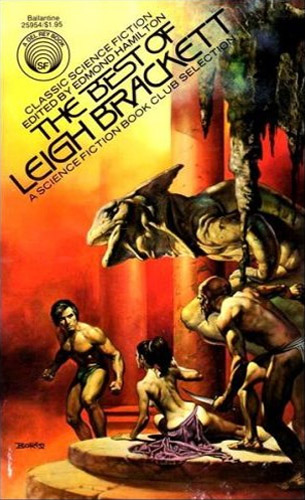
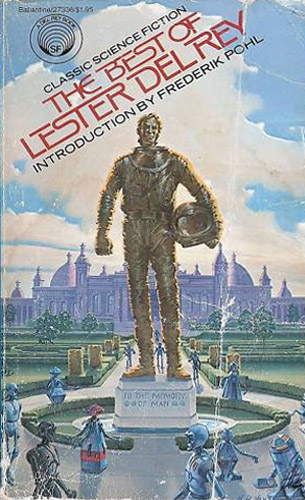
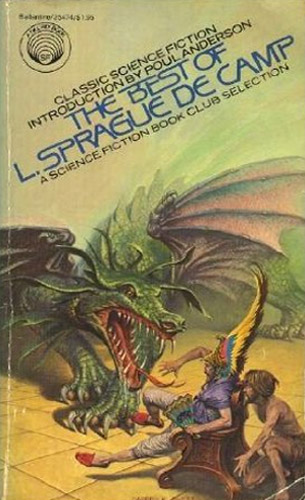
I spend most of my time worrying about which lost gems deserve audiobook editions. But, there are quite a paperbooks I’d like to be able to lay my grubby mitts on too. Just lately I’d been thinking about the “Best Of AUTHOR NAME” and “Book of AUTHOR NAME” books that I’ve collected and cherished over the last twenty years or so. There was a big wave of them in the 1970s but most have been out of print forever. These are seriously in need of reprints. I’m a sucker for a carefully edited short story and novella collections with introduction by another SF author (and often an afterward by the author himself). Maybe it is a conservative streak in me. I don’t love these books because they’re old, though that doesn’t hurt. I love them because they’ve collected stories by authors who’ve had a chance to stand the test of time. It’s hard to judge the recent crop of SF authors and say exactly who’ll be the next grandmaster of SF, a grand old man of the genre – someone worth reading a “best of” collection without even having read a page of their work before. Innovation, style, a few solid hits is great, but to stand the burning acid of just a few years of history is by far a greater test. A good new book only wins you a second chance with me but a “best of” or “book of” book is the proof that you’ve stuck around long enough that you’ve been shown to be the genuine article – an author whose work is to be remembered.

If some publisher does pick up the idea of printing “best of/book of” collections again they can always throw in a “Best of Charlie Stross” and a “Book of Ted Chiang” into the mix too. In fact I’d love to read The Book Of Ted Chiang with an introduction by Charlie Stross and a Best Of Charlie Stross with an introduction by Ted Chiang.

To read everyone else’s check out the ORIGINAL POST.

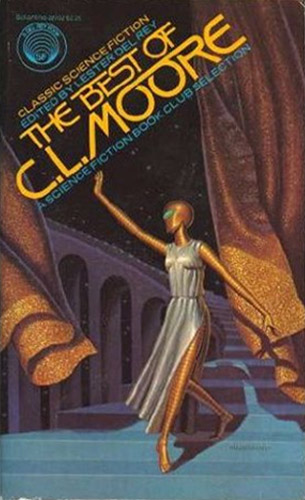
And here are more images of these notable paperbooks:

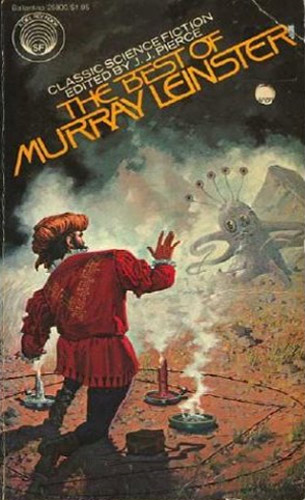
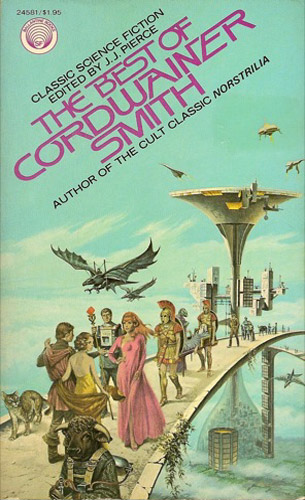
The Best Of C.L. MooreThe Best Of C.M. KornbluthThe Best Of Edmond HamiltonThe Best Of Eric Frank RussellThe Best Of Frederik PohlThe Best Of Fritz LeiberThe Best Of Hal ClementThe Best Of Henry KuttnerThe Best Of John W. CampbellThe Best Of Leigh BrackettThe Best Of Lester Del ReyThe Best Of L. Sprague De CampThe Best Of Murray LeinsterThe Best Of Cordwainer SmithThe Best Of Raymond Z. Gallun


Posted by Jesse Willis

SFFaudio is looking for contributors

SFFaudio News

SFFaudio MetaBLOGGERS NEEDED! SFFaudio.com is looking for a few good bloggers.
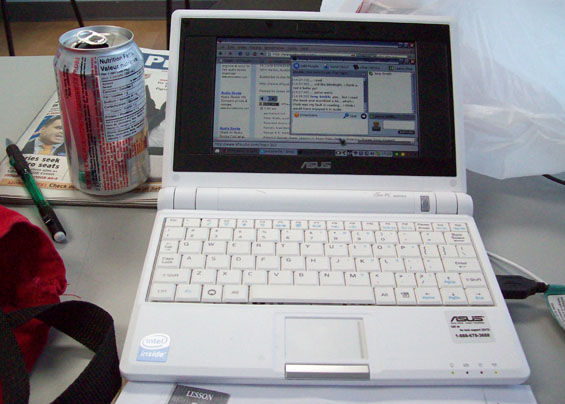
With more than 300,000 unique visitors in 2008, 1,000 downloads per show on our podcast, having been BoingBoinged, written up in Asimov’s magazine and having had one of our contributors been named a John W. Campbell Award winner we think we’re doing pretty awesome. But, we think we can do more and be awesomer. FREE audiobooks and audio dramas are just the beginning, all positions at SFFaudio come with fancy job titles and as much street-cred as the SFFaudio name will get you (I’ve been told it may garner you as much as a fresh ginger snap and a cup of tea in some places).

We are looking for:

1. At least one voracious reviewer for Paranormal Romance audiobooks (we get tons of these).

2. A podcast producer for our show (can you host, record, edit and run our podcast?).

3. At least one podiobook/podcast novel reviewer (there are so many great free podcast novels coming out we want to cover more of them).

4. Cool hunters (do you have psycho-crazy-web-searching-spider skills? Can you find the coolest audio out there? If so we want you).

5. Other positions (if you have some other skill or interest you’d like to bring to the SFFaudio table, let us know, we’ll have a serious look at it).

Bloggers Needed

Posted by Jesse Willis

LibriVox: The Lost Continent by Edgar Rice Burroughs

SFFaudio Online Audio

LibriVoxHere’s another Edgar Rice Burroughs novel that I hadn’t heard of prior to its release on LibriVox. For fans like me who are daunted by the prospect of trundling through one of the many series books by Burroughs this is a good place to start as this is a standalone novel. First published in the February 1916 issue of “All Around Magazine.”
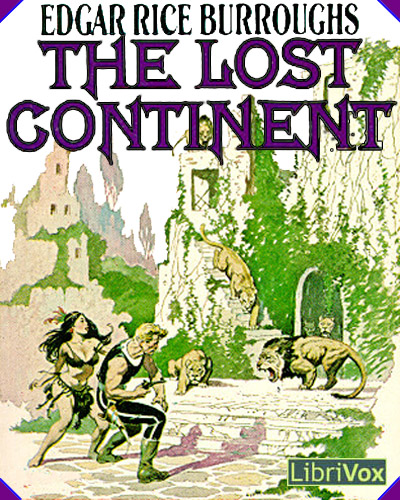

LibriVox Science Fiction - The Lost Continent by Edgar Rice BurroughsThe Lost Continent
By Edgar Rice Burroughs; Read by Lucy Lo Faro
9 Zipped MP3 Files or Podcast – Approx. 4.5 Hours [UNABRIDGED]
Publisher: LibriVox.org
Published: April 2009
Originally published under the title Beyond Thirty. The novel, set in the year 2137, was heavily influenced by the events of World War I. In the future world depicted in the novel, Europe has descended into barbarism while an isolationist Western Hemisphere remains sheltered from the destruction. The title Beyond Thirty refers to the degree of longitude that inhabitants of the Western Hemisphere are forbidden to pass.

Podcast feed:

http://librivox.org/bookfeeds/the-lost-continent-by-edgar-rice-burroughs.xml

iTunes 1-Click |SUBSCRIBE|

Posted by Jesse Willis