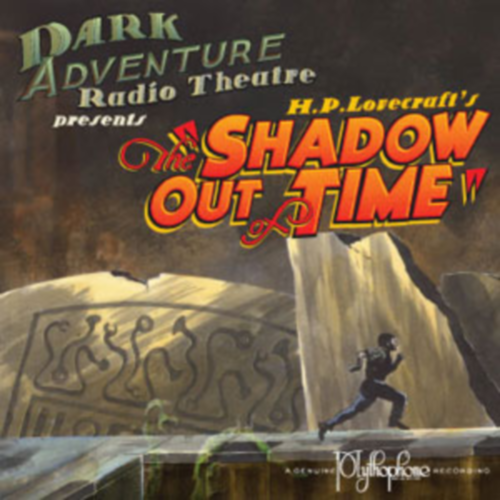
Review of Dark Adventure Radio Theatre: H.P. Lovecraft’s The Shadow Out Of Time

SFFaudio Review

HPLHS - Dark Adventure Radio Theatre - H.P. Lovecraft's The Shadow Out Of Time SFFaudio EssentialDark Adventure Radio Theatre: H.P. Lovecraft’s The Shadow Out Of Time
Adapted from the novella by H.P. Lovecraft; Performed by a full cast
1 CD – Approx. 77 Minutes [AUDIO DRAMA]
Publisher: HPLHS
Published: October 27, 2009
Themes: / Horror / Science Fiction / Aliens / Consciousness Swapping /

It their line of faux Old Time Radio shows the H.P. Lovecraft Historical Society has also adapted the old master’s The Shadow out of Time. After the slightly disappointing At the Mountains of Madness and the great Dunwich Horror we now look the The Shadow Out Of Time – not quite what I would have expected for an audio drama treatment.

As usual you can get the audio both as a download and in the physical CD form, the latter is enhanced with certain goodies. The HPLHS started off as a supplier of props for Lovecraftian role-playing games (both pen-and-paper, and live action). This CD is no exception and so you can find a cutout from the fictitious Arkham Advertiser printed on real newspaper paper, a sealed Marconigram (a telegram), torn pages from a psychological journal detailing the case of Nathaniel Peaslee, and finally a very well made faux facsimile page from the infamous “Von Unaussprechlichen Kulten“. The latter being in absolutely perfect German. Not that you will actually need any of these things but they are fun to look add and just add to the impression that this is a quality product.
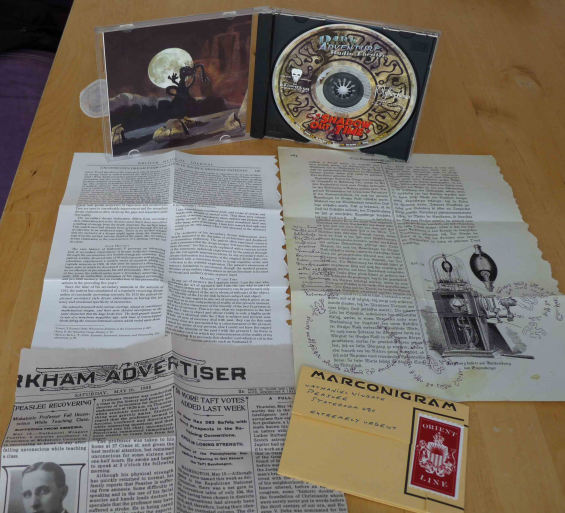
HPLHS - The Shadow Out Of Time - Ephemera

But what about the audio?

The story tells of Nathaniel Peaslee, Professor of Political Economics whose mind gets exchanged by an alien entity from the Great Rave of Yith who are time travelers from earth’s distant past. The strange behavior of the entity in his body alienates Peaslee from his family and friends, and he becomes a celebrity patient among psychologists.

When the real Peaslee is being sent back into his body with no memories of his experience he is shocked to find his life in shambles and is soon confronted with nightmarish visions of his life as a captive of the Yithians. Eventually he becomes involved in an archeological dig in Australia that is about to uncover the remnants of the ancient pre-human city along with the Yithian arch-enemies that still dwell there.

Lovecraft’s usual topic, of showing the insignificance of human kind in light of some alien being or race who could eradicate it in the blink of an eye, is emphasized by the fact that even these powerful beings can be overcome by some more powerful than they are.

Let’s face it, you don’t read an individual Lovecraft story for the action or suspense. It’s more the joy of unveiling the cosmology that connects most of his literary works. The Shadow Out Of Time is no exception, if anything it is an even more than typical example. I mean it starts with an alien hijacking a professor of *Political Economics* of all things! (Dear students of Economics, this is nothing personal but you must admit that the discipline does not quite come to mind as the starter for a horror story of cosmic dimensions) A sizable part of the story consists one massive infodump detailing the culture and society of the Great Race of Yith. In it Lovecraft even goes so far as to classify the economic and political system (I can see a pattern evolving) of the Yithians, which he dubs some form of “socialist fascism”. All of this is delivered in the form of a letter to Peaslee’s son and the world at large.

Not an easy thing to turn into an audio drama.

However, the HPLHS managed surprisingly well to create a more dynamic form of presentation. First of all, when the story starts on the ship bringing Peaslee home from Australia the audio drama introduces the ship’s doctor as a counterfoil so that Peaslee can actually tell his story to someone. Peaslee’s research into the lost years of his amnesia during which his hijacker traveled the world in search of arcane knowledge is made more vivid through a conversation with a Swedish librarian, and so are the flashbacks into his incarceration in Earth’s distant past together with fellow prisoners from other ages and places. These diversions from the original story all serve to liven up the dramaturgy without changing the essence of Lovecraft’s Shadow Out Of Time.

As usual, the production and voice acting are great, especially considering that this is not an entirely professional production. The HPLHS are hobbyists who, in spite of the love and attention to detail they pour into their products, have not lost their sense of humour. Thus, The Shadow Out Of Time is the first Lovecraft adaptation to my knowledge which features product placement (Fleurs de Lys anyone?). It is not least this tongue-in-cheek humour that helps to turn an slightly stuffy tale of pre-historical kidnapping with cosmic, nay, titanic dimensions into an enjoyable audio drama. Highly recommended.

Posted by Carsten Schmitt

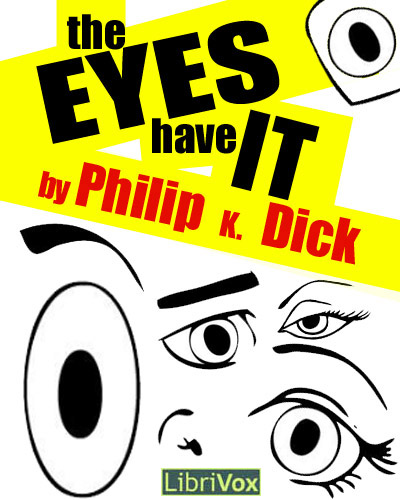
The Eyes Have It by Philip K. Dick

SFFaudio Online Audio

I posted last about Philip K. Dick’s shortest short story back in 2010. I’m reposting it because I’ve made a three page |PDF| to go with it (made from it’s first publication, Science Fiction Stories).

The Eyes Have It, is just a simple story about a literal man and the ridiculous alien invasion he imagines. It’s a silly little piece of fluff. A mere lighthearted thought experiment. Just a fun little story of no real account or import. In fact it’s barely …. wait one second … could it … ? …. what if … ? … HEY! That’s that just what they want you to think!!!

LIBRIVOX - The Eyes Have It by Philip K. DickThe Eyes Have It
By Philip K. Dick; Read by Gregg Margarite
1 |MP3| – Approx. 8 Minutes [UNABRIDGED]
Publisher: LibriVox.org
Published: March 20, 2010
|ETEXT|
A little whimsy, now and then, makes for good balance. Theoretically, you could find this type of humor anywhere. But only a topflight science-fictionist, we thought, could have written this story, in just this way…. First published in 1953 in Science Fiction Stories #1.

Posted by Jesse Willis

LibriVox: The Good Neighbors by Edgar Pangborn

SFFaudio Online Audio

LibriVoxA first contact story and a mystery story! When a massive alien, the size of a city, enters Earth’s atmosphere fighter jets are scrambled to meet it. The alien seems to be in search of something – but what it is won’t turn out to be what we expect. Here’s part of the description of the alien:
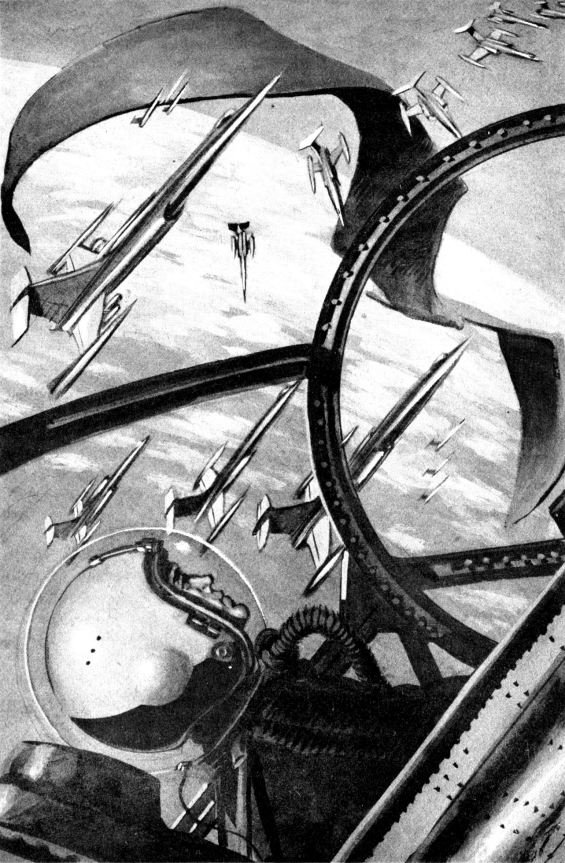
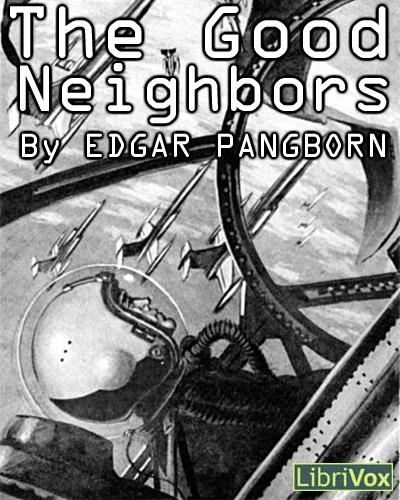
She had a head, drawn back most of the time into the bloated mass of the body but thrusting forward now and then on a short neck not more than three hundred feet in length. When she did that the blunt turtle-like head could be observed, the gaping, toothless, suffering mouth from which the thunder came, and the soft-shining purple eyes that searched the ground but found nothing answering her need. The skin-color was mud-brown with some dull iridescence and many peculiar marks resembling weals or blisters. Along the belly some observers saw half a mile of paired protuberances that looked like teats.

The Good Neighbors by Edgar Pangborn - illustrated by Wood

LibriVox - The Good Neighbors by Edgar PangbornThe Good Neighbors
By Edgar Pangborn; Read by Gregg Margarite
1 |MP3| – Approx. 12 Minutes [UNABRIDGED]
Publisher: LibriVox.org
Published: February 21, 2009
|ETEXT|
You can’t blame an alien for a little inconvenience—as long as he makes up for it! First published in Galaxy Science Fiction, June 1960.

And here is a |PDF| made from the original publication in Galaxy.

Posted by Jesse Willis

LibriVox: The City At World’s End by Edmond Hamilton

SFFaudio Online Audio

Produced for SFFaudio Challenge #6, The City At World’s End is terrific audiobook. Part of that’s because Mark Nelson’s narration is super-listenable and the other part is because the novel itself is very keen Science Fiction.

If you’re a Superman fan the plot may remind you of a particular issue of Action Comics (#300) – that’s the one in which Superman travels to the distant future of Earth only discover it emptied of life and with a giant red Sun in its sky. Indeed, the similarities between the two tales would be very eerie were it not for the fact that both were written by Edmond Hamilton!

I’m halfway through The City At World’s End and am really enjoying it. The prejudices, assumptions, and attitudes of the townsfolk are all vintage 1950, but the idea quotient is very high. Hamilton has thought through a lot of the problems he makes his characters face. If you’re familiar with Robert A. Heinlein’s Farnham’s Freehold, in which a family is transported into Earth’s future, you’ll find The City At World’s End to be a kind of macroscopic version of that – and both novels start with a really big, and highly unnatural, bang.

Or, if you’re looking more contemporaneously, you could think of The City At World’s End as a kind of highly inverse version of Terra Nova (because they go forward in time not back, and what was bad on TV is actually good in the audiobook). I highly recommend you give The City At World’s End a listen!

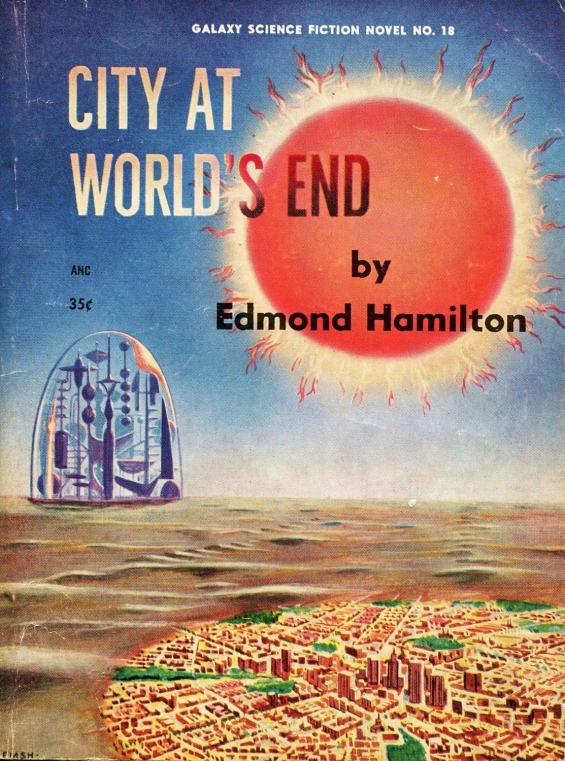
Galaxy Novel - City At World's End by Edmond Hamilton

The City At World’s End
By Edmond Hamilton; Read by Mark Nelson
21 Zipped MP3 Files or Podcast – Approx. 7 Hours 6 Minutes [UNABRIDGED]
Publisher: LibriVox.org
Published: March 20, 2012
The pleasant little American city of Middletown is the first target in an atomic war – but instead of blowing Middletown to smithereens, the super-hydrogen bomb blows it right off the map – to somewhere else! First there is the new thin coldness of the air, the blazing corona and dullness of the sun, the visibility of the stars in high daylight. Then comes the inhabitant’s terrifying discovery that Middletown is a twentieth-century oasis of paved streets and houses in a desolate brown world without trees, without water, apparently without life, in the unimaginably far-distant future.

Podcast feed: http://librivox.org/rss/6121

iTunes 1-Click |SUBSCRIBE|

Here’s the |PDF|.

And for people like me I’ve also made a single giant 7 hour |MP3| version – which you can download from our server. It’ll be especially useful for iPod users as it has art, is tagged “Audiobook”, and is also checked with “remember playback position.” Even better it has been volume adjusted. Let me know if you like it!

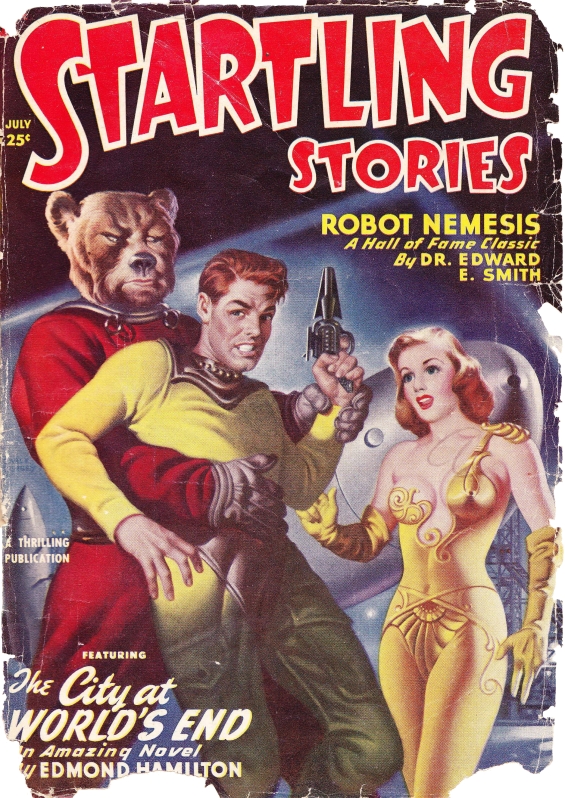
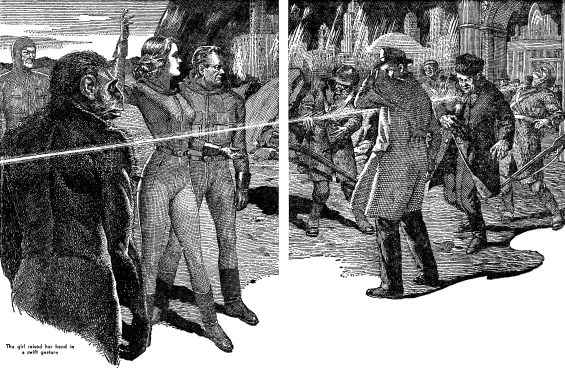
Cover and illustrations from the appearance of The City At World’s End in Startling Stories, July 1950:

Startling Stories, July1950 COVER - The City At World's End by Edmond Hamilton

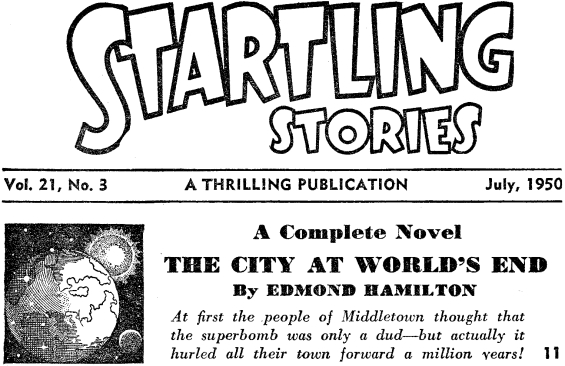
Startling Stories, July 1950 Table Of Contents (includes The City At World's End)

The City At World's End - from Startling Stories, July 1950 - Page 11

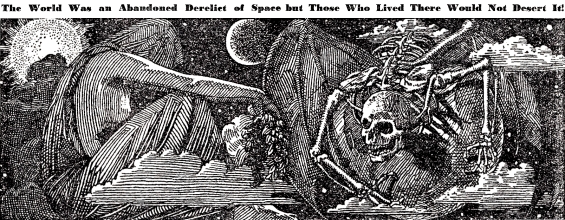
The City At World's End - from Startling Stories, July 1950 - Page 13 and 14 combined

The City At World's End - from Startling Stories, July 1950 - Page 13 and 14 combined

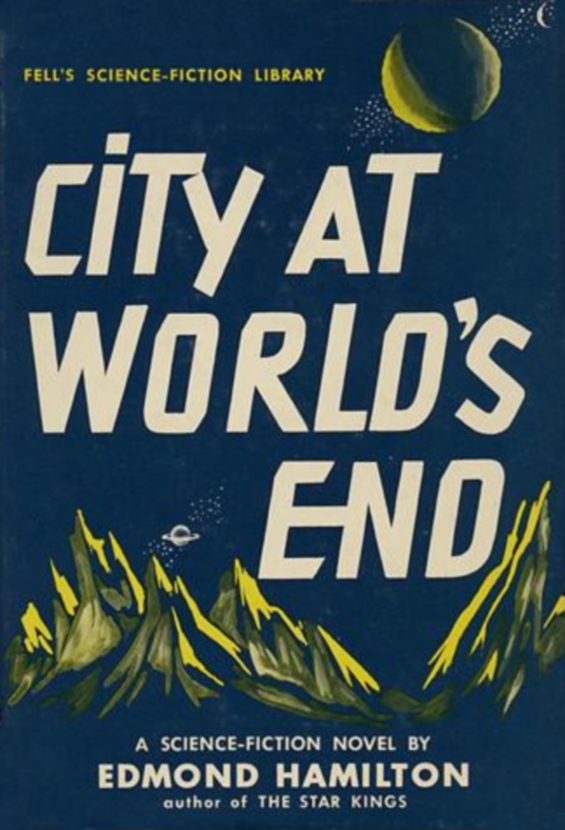
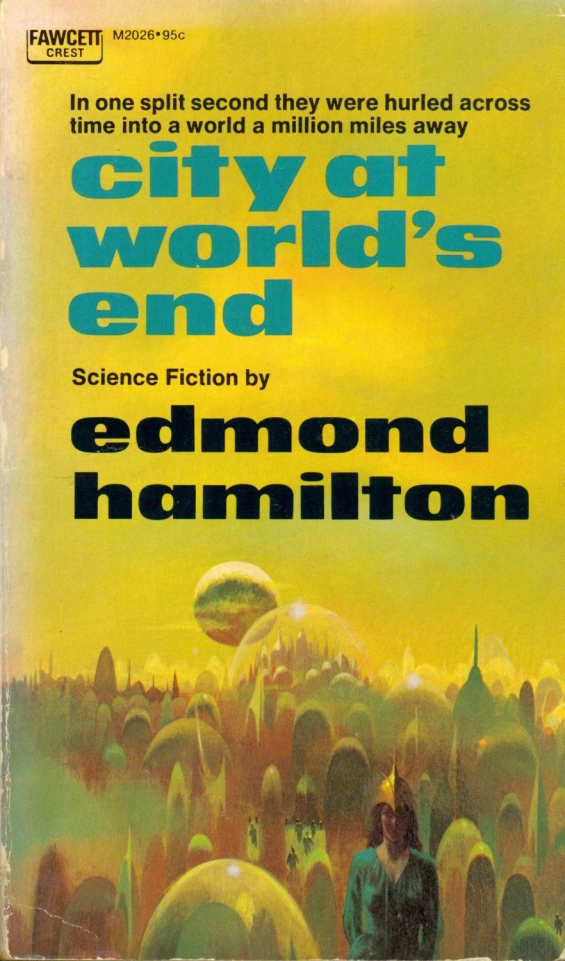
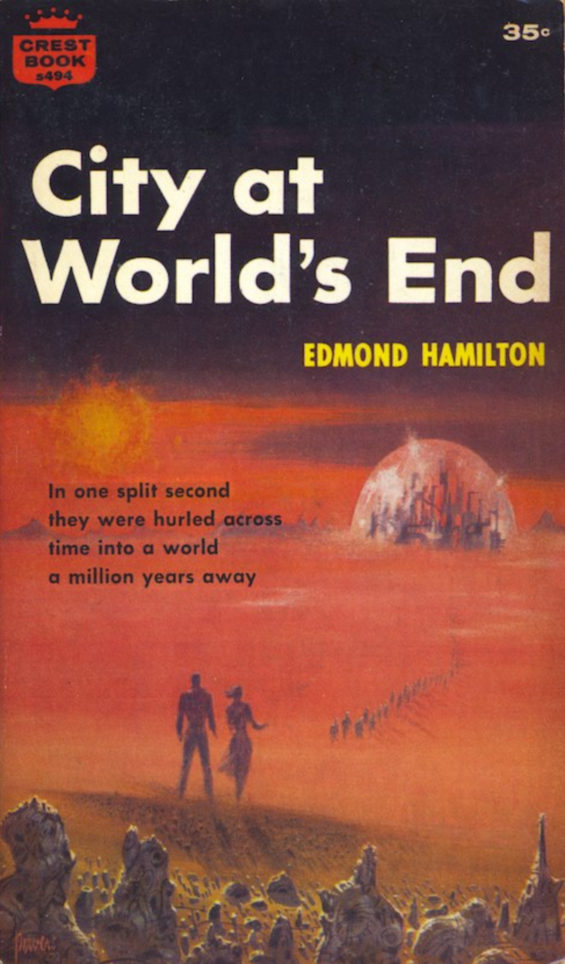
More covers:

Fells - City At World's End by Edmond Hamilton

Fawcett - City At World's End by Edmond Hamilton

CREST - City At World's End by Edmond Hamilton

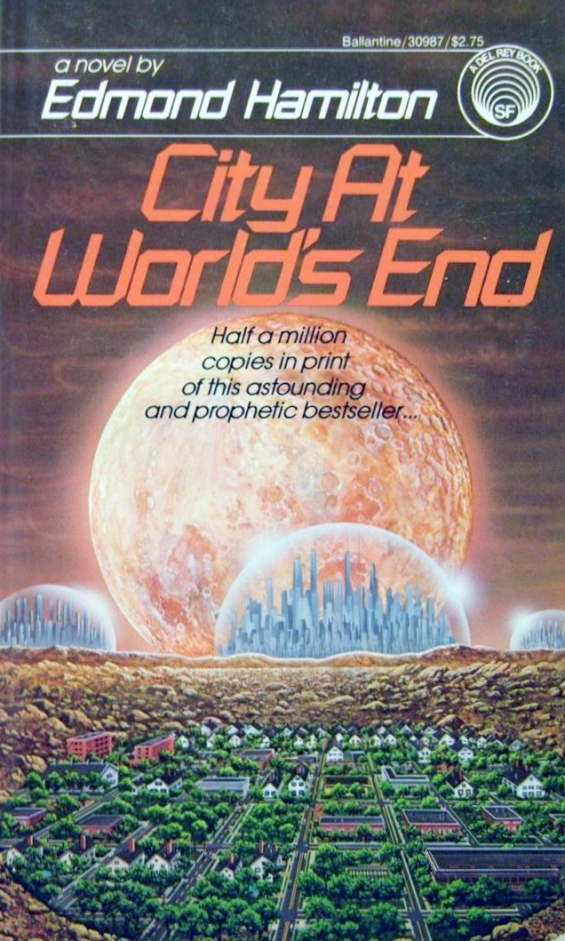
Ballantine - City At World's End by Edmond Hamilton

And one more image, from the cover of Urania:

Urania #386

[Thanks also to DaveC, Barry Eads, and Gerard Arthus]

Posted by Jesse Willis

BBC Radio 4: In Our Time – a new podcast for every subject with shows from the past 14 years

SFFaudio Online Audio

Our friend Anne has added a wonderful new post to his Anne Is A Man blog about podcasts. Says Anne:

“I used to write that one should always download the In Our Time podcasts and keep for ever. The BBC used to keep only the last episode in the feed. In case one had not kept the episode, the only option to listen was to go to the on-line archive and listen while streaming. While that has become less and less of a bother with WiFi all around and capable smartphones, it still was a pity you had no option. All of this now belongs to the past; the archive is also available for download and one can lay ones hands on any chapter ever.”

The archive has been categorized into five separate feeds, sorted by subject:

BBC Radio 4 - In Our Time - CultureIn Our Time Archive – Culture
Melvyn Bragg and his guests discuss the history of ideas. Topics in the Culture feed include: architecture, the Renaissance, writing forms (like the novel, the sonnett and biography), as well as a multitude of specific persons.

Podcast feed: http://downloads.bbc.co.uk/podcasts/radio4/iotc/rss.xml


BBC Radio 4 - In Our Time - HistoryIn Our Time Archive – History

Melvyn Bragg and his guests discuss the history of ideas. Topics in the History feed include: The Wars of the Roses, specific battles, a multitude of historical personages, as well as the history of tea.

Podcast feed: http://downloads.bbc.co.uk/podcasts/radio4/ioth/rss.xml


BBC Radio 4 - In Our Time - PhilosophyIn Our Time Archive – Philosophy

Melvyn Bragg and his guests discuss the history of ideas. Topics in the Philosophy feed include: just war, rhetoric, great thinkers (Confucius, Popper, Socrates) as well as specific works of philosophy.

Podcast feed: http://downloads.bbc.co.uk/podcasts/radio4/iotp/rss.xml


BBC Radio 4 - In Our Time - ReligionIn Our Time Archive – Religion

Melvyn Bragg and his guests discuss the history of ideas. Topics in the Religion feed include: fundamentalism, prayer, the Devil, paganism, the Holy Grail, and the Spanish Inquisition.

Podcast feed: http://downloads.bbc.co.uk/podcasts/radio4/iotr/rss.xml


BBC Radio 4 - In Our Time - ScienceIn Our Time Archive – Science

Melvyn Bragg and his guests discuss the history of ideas. Topics in the Religion feed include: genetic engineering, artificial intelligence (and regular intelligence), quantum gravity, oceanography, aliens and cryptography.

Podcast feed: http://downloads.bbc.co.uk/podcasts/radio4/iots/rss.xml

Posted by Jesse Willis

Review of Blake’s 7: The Early Years: Zen: Escape Velocity

SFFaudio Review

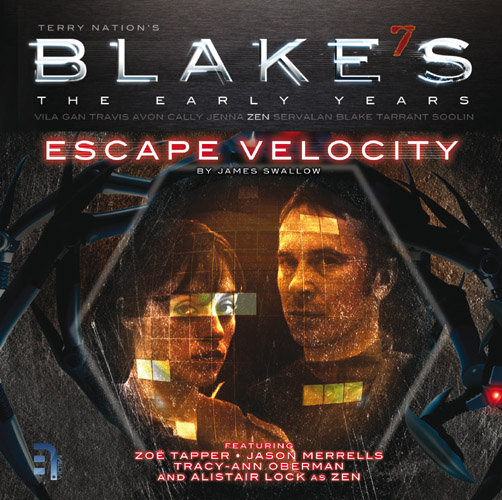
B7 PRODUCTIONS - Blake's 7: The Early Years: Zen: Escape VelocitySFFaudio EssentialBlake’s 7: The Early Years: Zen: Escape Velocity (Volume 2.1)
By James Swallow; Directed by Andrew Mark Sewell; Performed by a full cast
1 CD – Approx. 1 Hour [AUDIO DRAMA]
Publisher: B7 Productions
Published: April 26, 2010
ISBN: 978190657709
Themes: / Science Fiction / Artificial Intelligence / Cloning / War / Aliens /

Based on Terry Nation’s seminal 70s science fiction TV series, The Early Years is a prequel series of audio stories that explores the origins of key Blake’s 7 characters prior to them meeting rebel leader Roj Blake. This latest entry to the ever-expanding series takes a new twist, concentrating on a character that doesn’t breathe or have any parents, the synthetic intelligence known only as Zen. When Roj Blake first stepped on board the mysterious, derelict alien spaceship Liberator, his every movement was monitored by the ship’s controlling intelligence, Zen Luckily, Blake and his rebel crew managed to gain the ‘confidence’ of this creation from an alien world and so he was able to use the Liberator in their quest for justice against the Federation. But the origins of Zen have remained a mystery, until now. What terrible catastrophe left the Liberator drifting and shattered? What drove the ship’s intelligence to murder its original crew? What dark secrets lie at the heart of this alien machine? And are Blake and his crew really safe on board the Liberator?

Often, you’ll want to know somebody’s back-story, and then later, when you actually get it – in a prequel story – you’ll find that it is far, far, far less interesting than whatever was going on in your imagination. For me, the years between 1980 and 1999 were ones filled with near-reverence for a fascinating character, the ultimate baddie: Darth Vader. But no amount of apologetics can possibly remove the sickly saccharine story of a nine-year-old Darth Vader filled with “a high concentration” of midichlorians. Yuck. And yet “prequel” is not always a dirty word. I don’t feel that way about The Young Indiana Jones Chronicles, and likewise the Blake’s 7 prequel stories (1.1 |READ OUR REVIEW|, v.1.2 & 1.3 |READ OUR REVIEW|, 1.4 |READ OUR REVIEW|). By far the most mysterious character in the original TV series was Zen, the artificial intelligence. Zen was pretty closed-circuit about its past, not revealing much over the two years it appeared in the series (1978 – 1980). In life Zen “projected a dour, non-committal personality” and would “reply to certain questions with the phrase ‘That information is not available.'” This left left open the possibility that Zen was hiding secrets or “secretly executing its own agenda.” In this magnificent audio drama we are given a genuinely interesting explanation as to why Zen was so very melancholic, why the ship was found crew-less, seemingly abandoned and drifting near Cygnus Alpha.

Zen: Escape Velocity clearly reveals the frightening truth about all of Zen’s character quirks and its cryptic answers from the TV series. But it also shows more. Back in 2008 I reviewed the Blake’s 7 – Audio Adventures boxed set |READ OUR REVIEW| – the first three episodes of the new B7 audio drama series. One detail found within that review was that Zen was, unlike the original series, suicidal at the time of its discovery. Listening to Zen: Escape Velocity you will discovery exactly why that was so.

Six actors, Zoë Tapper, Jason Merrells, Tracy-Ann Oberman, Alastair Lock, Sam Woodward and Pamela Banks play different members of the original crew of the Liberator (back when it was still called “Deep Space Vehicle 2” and when Zen was called “SHIP-MIND”). The story, told by a careful cross-cutting backwards and forwards in time, shows the original crew welcoming their new PILOT, Zoë Tapper, aboard DSV2. Strangely, she is having memory problems and needs shepherding by the ship’s doctor. As the crew takes its positions and readies themselves for battle, we learn about their fascinating society. This is wonderful social Science Fiction like nothing exactly I’ve read or seen or heard before!

Zen (SHIP-MIND) only used the first-person, singular personal pronoun (“I”) once on the television series – it is used multiple times in this production. Zoë Tapper (who appeared in another Terry Nation re-imagined series) and Jason Merrells (playing the doctor), are the central sympathetic heroes of Zen: Escape Velocity. Alastair Lock, who also acts as a post-producer, musician and sound effects man for the CD, portrays SHIP-MIND (Zen). Sounds are rich, deep and best experienced in a quiet room. The stereo effect and a good set-of headphones,as I used, will bring an immense visual experience that belies the fifty-six minute running time. A five minute “Bonus Music Track” (original to this episode) rounds out the disc.

Posted by Jesse Willis