The Dog And The Horse by Voltaire

Aural Noir: Online Audio

One of the earliest detectives in history, or at least the history of literature, is Zadig. Zadig is the main character of Voltaire’s philosophical novel Zadig; Or The Book Of Fate – An Oriental History. I stumbled across it’s existence while reading an old issue of Ellery Queen’s Mystery Magazine in which one chapter was featured under the title The Dog And The Horse. The brief editorial introduction, and some further researches on my own, assert that Zadig in this chapter may have been the inspiration for Edgar Allan Poe’s C. August Dupin!

I can sort of see it too, for The Dog And The Horse shows a kind of giant first step in an evolutionary process of the detective – seeing his marriage turn sour Zadig turns to the study of nature for his joy. A kind of passionate interest in the world is necessary for both the scientific detective and the more Sherlockian sort of detective.

The story is damn funny too.

LibriVoxThe Dog And The Horse
By Voltaire; Read by Lucy Burgoyne
1 |MP3| – Approx. 13 Minutes [UNABRIDGED]
Publisher: LibriVox.org
Published: January 31, 2008
First published in 1747.

|ETEXT|
|PDF|

Posted by Jesse Willis

The Horror At Red Hook by H.P. Lovecraft

SFFaudio Online Audio

The Horror At Red Hook by H.P. Lovecraft

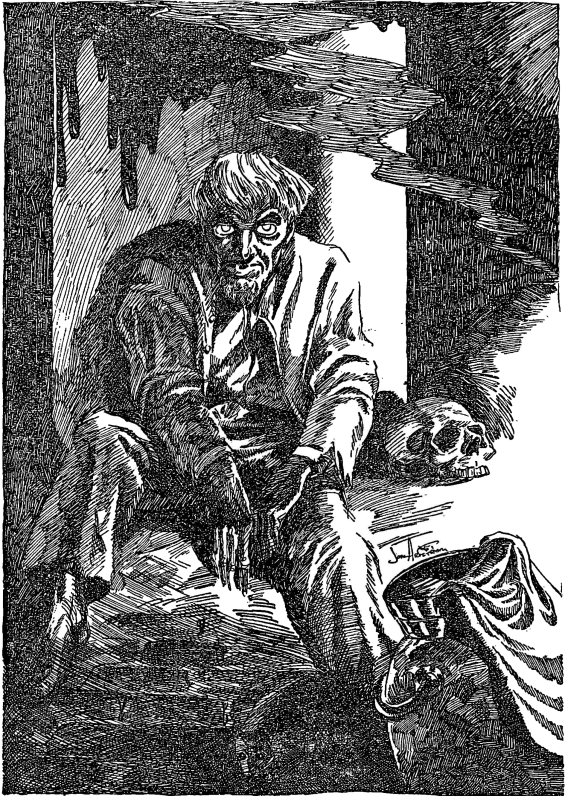
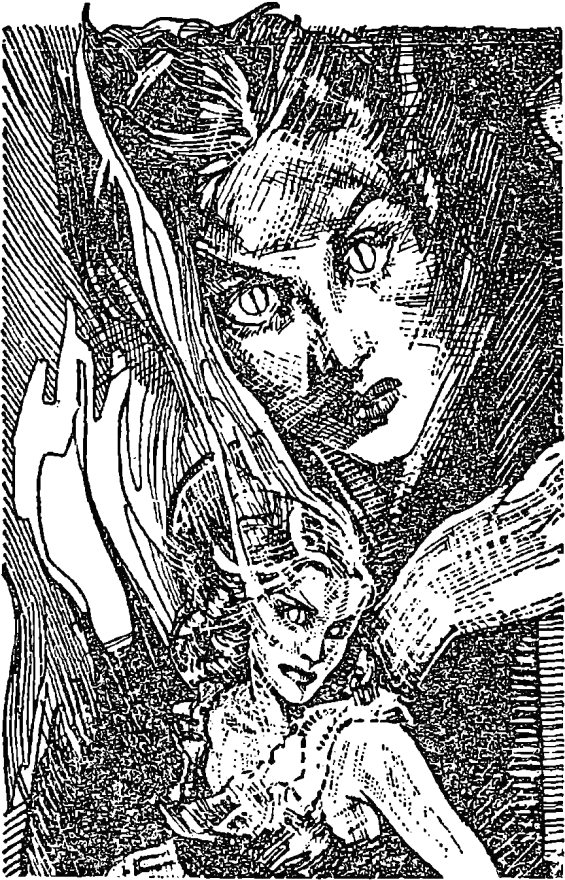
Here is H.P. Lovecraft’s novelette The Horror At Red Hook. The story was first published in the January 1927 issue of Weird Tales and later in the March 1952 issue (which is where I found the terrific Jon Arfstrom at the bottom of the post).

Red Hook is a mysterious slum in New York City, full of gangs, crime, and just perhaps a terrible cult. Detective Malone had a case that had tendrils extending into Red Hook. It seems that one Robert Suydam, a corpulent and scruffy recluse, has been looking younger, more radiant and prosperous. What does that have to do with the recent spate of kidnappings?

Lovecraft described his inspiration for the story in a letter written to Clark Ashton Smith:

“The idea that black magic exists in secret today, or that hellish antique rites still exist in obscurity, is one that I have used and shall use again. When you see my new tale “The Horror at Red Hook”, you will see what use I make of the idea in connexion with the gangs of young loafers & herds of evil-looking foreigners that one sees everywhere in New York.”

The When Elvis Died PodcastFirst up, as recorded in three parts for Quentin Lewis’ When Elvis Died podcast back in 2010.

Part 1 |MP3| Part 2 |MP3| Part 3 |MP3|

Podcast feed: http://www.quentinlewis.com/podcast/rss.xml


Cthulhu PodcastNext, a two part recording, for the Cthulhu Podcast, read by FNH. The first part begins at 14 minutes in and the second part begins at 34 minutes in.

Part 1 |MP3| Part 2 |MP3|

Podcast feed: http://feeds2.feedburner.com/cthulhupodcast


Finally, here are the text sources |WIKISOURCE ETEXT| and a |PDF|.

"Age old horror is a hydra with a thousand heads."
Weird Tales illustration by Jon Arfstrom for The Horror At Red Hook

Posted by Jesse Willis

The Necklace by Guy de Maupassant

Aural Noir: Online Audio

Sometimes titled “The Diamond Necklace” this story is a 3,000 word short story that is often upheld as a tale at, or very near, the pinnacle of ironic fiction. Guy de Maupassant’s short story La Parure is usually given the English title “The Necklace” – despite “La Parure” literally translating into English as “The Finery”.

The Necklace has been reprinted hundreds of times, in books, textbooks and newspapers. It has been collected volumes of “mystery or detective” stories – which is pretty damn odd considering that it has neither a detective nor a mystery in it. And stranger still, it has been anthologized in collections with titles like Masterpieces Of Terror And The Unknown and Isaac Asimov Presents The Best Horror And Supernatural Of The 19th Century.

How does this modest little tale, featuring a Parisian couple, and their acquaintances, a story with no supernatural elements at all qualify as a “supernatural” tale?

How can a story, like The Necklace, in which nobody dies, or is even physically injured, be considered ‘a tale of terror or horror’?

Perhaps the mystery lies not within such questions, but instead with one’s interpretation. Perhaps, just as with the translation from one language to another, there are kinds of horrors, kinds of terrors, indeed kinds of fates which can only be classified as a moral horror, a social terror, or one of life’s little mysteries that leaves us asking questions like the ones above.

Guy de Maupassant has created a story for the ages, a mystery story in which you, the reader, are the detective. Your job is to solve the case of…

LibriVoxThe Necklace (La Parure)
By Guy de Maupassant; Read by Patti Cunningham
1 |MP3| – Approx. 19 Minutes [UNABRIDGED]
Publisher: LibriVox.org
Published: November 21, 2009
|ETEXT|
Mathilde is a beautiful bride of a mid-level Parisian bureaucrat. Her natural elegance and grace seem somewhat out of place with her husband’s junior position. This is the story of a beautiful woman who works hard and gets everything she wants. First published in the February 17, 1884 issue of Le Gaulois (a French daily newspaper).

Here’s the cover illustration (artist unknown) for La Parure from the October 8, 1893 issue of Gil Blas (a Parisian literary magazine):
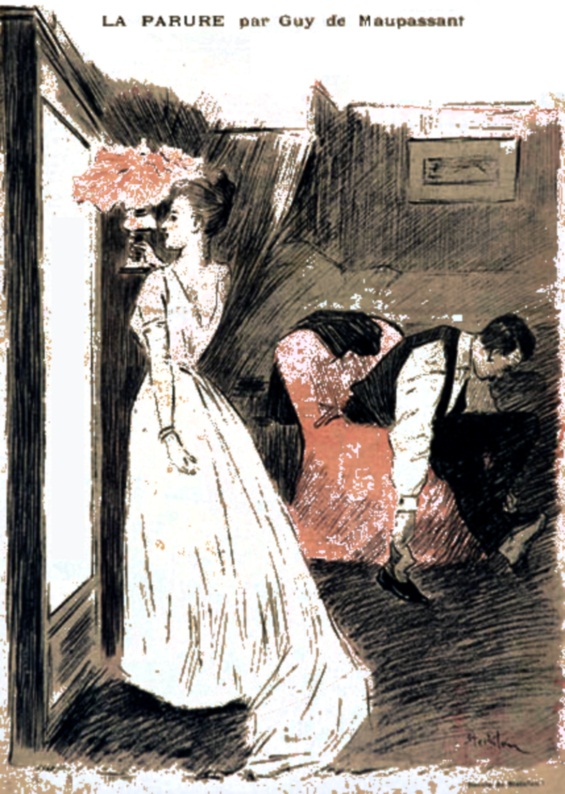
The Necklace (La Parure) illustration from Gil Blas, 1893

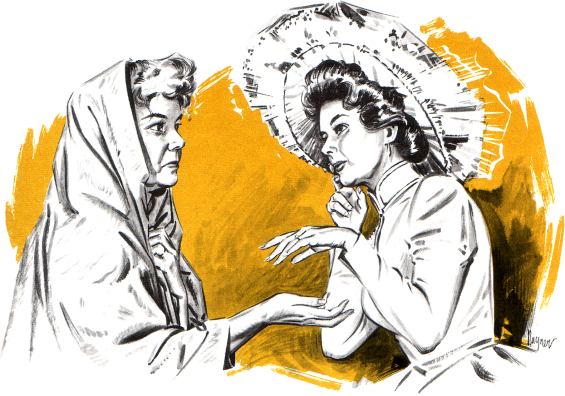
The most evocative illustrations I’ve seen for The Necklace are by Gord Rayner- they accompany an uncredited radio style play adaptation (for four actors) in the 1960s Canadian textbook entitled Sense And Feeling edited by R.J. Scott. Here’s the 12 page play |PDF| and here are the illustrations:
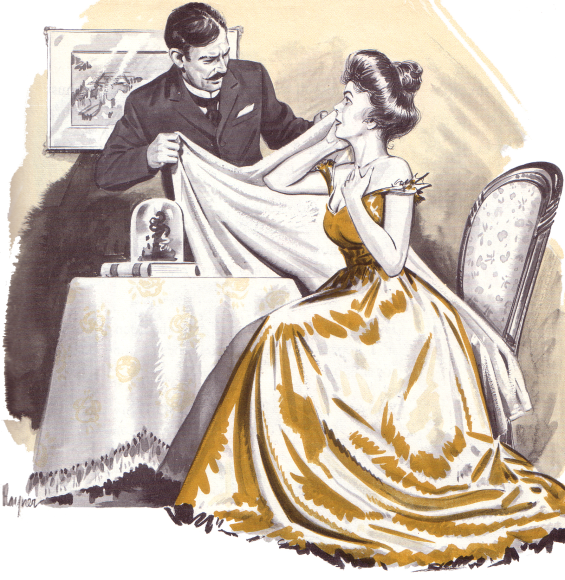
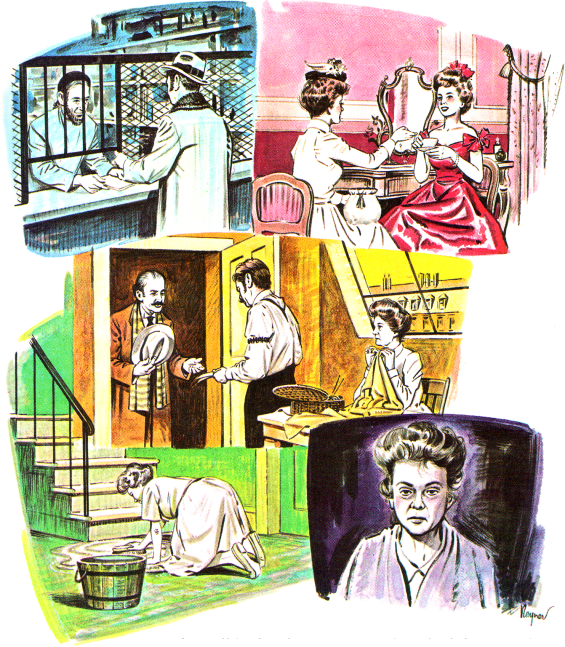
THE NECKLACE - Illustration by Gordon Rayner from SENSE AND FEELING

THE NECKLACE - Illustration by Gordon Rayner from SENSE AND FEELING

THE NECKLACE - Illustration by Gordon Rayner from SENSE AND FEELING

Update:

Here’s a wonderful radio dramatization that keeps most of the tale intact:

Favorite Story Favorite Story – The Necklace
Adapted from the story by Guy de Maupassant; Performed by a full cast
1 |MP3| – Approx. 27 Minutes [RADIO DRAMA]
Broadcaster: KFI
Broadcast: October 7, 1947
Cast:
Heather Angel … Mathilde Loisel
Hans Conried … Pierre Loisel

Posted by Jesse Willis

Coast To Coast AM interviews Paul Bishop

Aural Noir: News

A recent episode of the normally ludicrous Coast To Coast AM features a fascinating and lengthy interview with Paul Bishop. Bishop is known to us from his excellent Bish’s Beat blog. In the interview Bish talks about his careers (crime writer, screenwriter and police interrogator). He also talks about his role on a bizarrely watchable new unscripted TV series called Take The Money And Run. Take The Money And Run is a kind of surreal reality game show that pits two American civilians against four American police detectives in a 48 hour competition to win $100,000. Here’s the Wikipedia description:

The contestants are given a car, cell phone, and one hour to hide the case. At the end of the hour, the contestants are taken into custody and questioned by interrogators in an attempt to locate the case. The detectives are given the GPS recordings of the route that the contestants took in the car, as well as phone records of who they called. If the detectives can locate the case within 48 hours, they are awarded the $100,000. If not, the contestants win the prize.

Bishop is one of only three recurring players on the show. His role is to interrogate the detained civilian contestants, find out what they are lying about and thus help the episodes’ guest detectives win.

I’ve seen the show, and I feel very strange after watching it. Bish’s interrogations are psychologically frightening. With so many people out of work in the U.S. it feels almost like a real life precursor to The Running Man!

Here’s the three part interview:

Promo for the TV series:

[via Bish’s Beat]

Posted by Jesse Willis

Hugo Blick’s The Shadow Line

Aural Noir: Online Audio

The Shadow LineLets assume that each medium offers its own best format. If that’s true, then on TV it is the limited series programme that is the least respected and most underrated. Take The Shadow Line, a BBC 2 television series, created written and directed by Hugo Blick and starring Chewitel Ejifor. The UK paper reviewers seem to want to compare it to The Wire or the Danish series The Killing. But that’s wrong. The Shadow Line isn’t much like either. Really it is just good old fashioned thriller, something the BBC TV has done before. It’s more in the vein of House Of Cards or Edge Of Darkness. But this time it comes primarily from a single creator’s vision. This give it an extended metaphor, the “shadow line” of the title, a thread that pops up in new ways in each episode. It is both a point of dialogue and a mass of ideas. Here’s the show’s premise:

A homicide detective, with partial amnesia, returns to the job to investigate the murder of a recently pardoned heroin importer.

The Shadow Line was aimed high, and it achieved many of its goals. Where it works, it works stunningly well. Where it fails, it fails in small ways, and then moves on. In the end it is an utterly noir thriller, a highly stylized television poem and meditation on life, death and society. The methodically slow paced, cryptic, surprisingly ruthless plot delivers its message in a persuasive form, as a limited series. Most refreshing of all, it does not play, as seems does most TV, to the stupidest person in the room. One commenter put it succinctly:

“This series reminds me why it is worth paying a licence fee. Only the BBC makes drama as good as this. Drama that doesn’t treat the audience like morons.”

Another said this:

“Superb series, and the first time for an awfully long time that I’ve seen a drama on TV that’s made my brain work.”

A third, this:

A sheer joy from start to finish, even with the odd line of clunky dialogue. It was crisp and weird, and the odd, crystal-clear delivery and stylised speech of the characters, from the police to the gangsters, made it stand out from a host of dirge that has been on the screens lately. Yes it had flaws, but the complexity, the suspense, the tension, the labyrinthine plotting and the odd-ball cast of characters made it the best British drama for years.

I agree completely.

Discussion of the programme:
TV.com UK Podcast |MP3|
BBC Radio 4’s Saturday Review podcast |MP3|
British TV Podcast Show #89 |MP3|

Interviews:
Highlights From The Green Room (with Chewitel Ejifor) |MP3|

Posted by Jesse Willis

Podiobooks.com: See You At The Morgue by Lawrence G. Blochman

Aural Noir: Online Audio

Podiobooks.com Podiobooker PodcastThe admirable Mark Douglas Nelson has completed his SFFaudio Challenge #5 project…

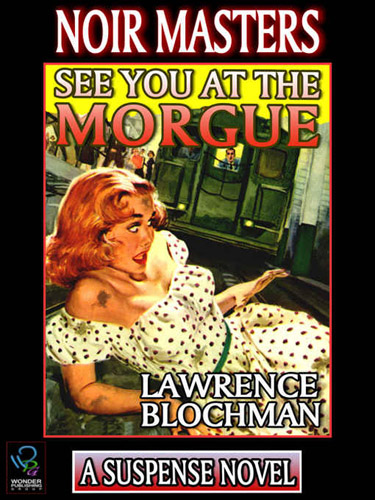
This Noir Masters series book is a “pseudo classic” was first published in 1941. It was later reprinted as a Penguin paperback and also as a Dell Mapback. The modern ebook edition comes courtesy of the Wonder Publishing (which has a great new Wonder Ebooks site). Here are the |PDF| and the |EPUB| editions.

WONDER EBOOKS - See You At The Morgue by Lawrence BlochmanSee You At The Morgue
By Lawrence G. Blochman; Read by Mark Douglas Nelson
14 MP3 Files (Podcast) – Approx. 6 Hours 57 Minutes [UNABRIDGED]
Publisher: Podiobooks.com
Published: August 15th, 2011
When a gigolo is shot to death in the bedroom of a beautiful girl, it raises some perplexing problems for Detective Kenny Kilkenny. Why, for example, would a man steal the license plates off his own car? Why should an innocent young professor come to the murder room … and then conceal a key to the crime? Why was a ‘phantom secretary’ hiding in the closet near the murdered man? Was there really money to be made selling glass eyes for stuffed ducks? Why would a beautiful girl ask her lover to kill her?

Podcast feed: http://www.podiobooks.com/title/see-you-at-the-morgue/feed/

iTunes 1-Click |SUBSCRIBE|

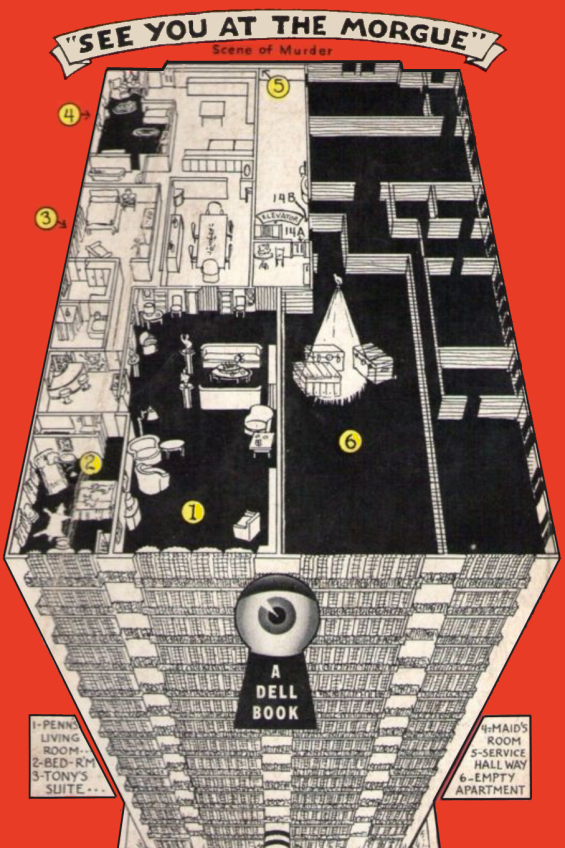
Here’s the illustration from the back of the Dell Mapback edition:

Dell Mapback - See You At The Morgue by Lawrence G. Blochman

Posted by Jesse Willis