19 Nocturne Boulevard: An adaptation of Robert Sheckley’s The Leech

SFFaudio Online Audio

19 Nocturne BoulevardJulie Hoverson’s long running and prolific anthology podcast, 19 Nocturne Boulevard, features original and adapted “strange stories.” Since it began back in 2009 I’ve pretty much ignored it completely. This is pretty odd considering that Hoverson’s output rivals that of the mighty Bill Hollweg and that she’s been doing something I’m always boosting (adapting public domain Science Fiction, Fantasy and Horror). To be fair though, I had heard a couple of shows, most recently Snafu, but every time I’d listened to a 19 Nocturne show I’d come away with nothing to say. It took a recent email from Hoverson to get me to write something. Hoverson pointed out her new adaptation of Phillips Barbee’s The Leech. That title stirred a vague memory, then piqued my interest greatly, as I recalled that Phillips Barbee was actually the great Robert Sheckley!

When it was first published, in the December 1952 issue of Galaxy magazine, The Leech was credited to “Phillips Barbee” – a one-off pseudonym, presumably it was only used at all because there were two Sheckley stories running in that issue. All subsequent publications have credited The Leech to Sheckley alone.

As one of the first ever Sheckley stories to be published, The Leech is interesting in itself. But as a kind of precursor to The Blob – which itself has an ancestor of sorts in H.P. Lovecraft’s The Colour Out of Space (which Hoverson has also read) it is even more interesting. The trope of a knowledgeable professor character investigating a dangerous object from space would be picked up for the 1953 BBC serial The Quatermass Experiment. In structure, however, The Leech more closely resembles the 1959 Manly Wade Wellman novel Giants From Eternity (look for a review of that soon). And it also bears some small resemblance to John W. Campbell’s 1938 novella Who Goes there? (and thus the movies The Thing and The Thing From Another World). Even Dean Koontz’s Phantoms |READ OUR REVIEW| has some sort of ancestry or parallel in The Leech. In short this is a kind of a subgenre’s subgenre that I don’t know the name of.

As for Hoverson’s adaptation of The Leech, it’s pretty darned slick, with good acting and sound effects. There’s even a theremin! It’s also fairly faithful to Sheckley’s story going with the humor, using much of the dialogue, the setting and the period. But, as with most audio drama, Hoverson’s script completely disposes with the third person omniscient narration, opting instead for to give the alien a voice – or voices in this case (the Leech seems to be performed as a kind of hive mind). This choice leaves the ending more open to interpretation than does the original text. The Leech is one of the best amateur audio drama adaptations of a public domain story yet! Highly recommended.

19 Nocturne Boulevard - The Leech19 Nocturne Boulevard – The Leech
Adapted by Julie Hoverson; From the story by Robert Sheckley; Performed by a full cast
1 |MP3| – Approx. 40 Minutes [AUDIO DRAMA]
Podcaster: 19 Nocturne Boulevard
Podcast: February 23, 2011
Classic era science fiction about a very odd visitor from outer space. The Leech was first published in the December 1952 issue of Galaxy Science Fiction.

Cast:
Professor Michaels … Grant Baciocco
Frank Connors … Bryan Hendrickson
Mrs. Jones … Kimberly Poole
Sheriff Flynn … Glen Hallstrom
General O’Donnell … Chuck Burke
Allenson, scientist … Cary Ayers
Moriarty, physicist … Eleiece Krawiec
Brigadier-General … H. Keith Lyons
Driver … Cary Ayers
Soldier1 … John Carroll
Soldier2 … Lothar Tuppan
Pilot … Mark Olson
The Leech … Suzanne Dunn, Will Watt, James Sedgwick, Julie Hoverson

Music by misterscott99
Editing and Sound: Julie Hoverson
Cover Design: Brett Coulstock

Podcast feed: http://nineteennocturne.libsyn.com/rss

And since we’re talking The Leech, I should also point out there is a new reading, found in the recently completed LibriVox Short Science Fiction Collection Vol. 042 collection…
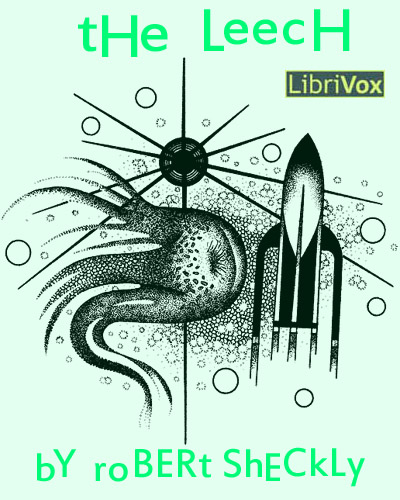
LibriVox - The Leech by Robert SheckleyThe Leech
By Robert Sheckley; Read by Gregg Margarite
1 |MP3| – Approx. 40 Minutes [UNABRIDGED]
Publisher: LibriVox.org
Published: November 28, 2010
Etext: Gutenberg.org
A visitor should be fed, but this one could eat you out of house and home … literally! From Galaxy Science Fiction December 1952.

Posted by Jesse Willis

The SFFaudio Podcast #094 – READALONG: Gulliver’s Travels by Jonathan Swift

Podcast

The SFFaudio PodcastThe SFFaudio Podcast #094 – Jesse talks with Julie Davis and Gregg Margarite about Audible.com’s audiobook of Gulliver’s Travels by Jonathan Swift (as narrated by David Hyde Pierce)

Talked about on today’s show:
MindSwap by Robert Sheckley (SFFaudio Podcast #076), Laputa, Lilliput, acting like a Fox News commentator, the new movie version of Gulliver’s Travels, scatological humor, Spark Notes on Gulliver’s Travels, the history of censoring Gulliver’s Travels, Gulliver’s Travels illustrations, essays about farts, high-heels and the low heels (are Tories and Whigs) vs. the big endians and the small endians (are protestants and Catholics), the definition of satire is that the story is so clever you don’t recognize it, comparing Mark Twain to Jonathan Swift, Mark Twain’s new/old autobiography, Grover Gardner, is there a biography of Jonathan Swift?, Jonathan Swift was a cleric?, too many atheist ministers in the Anglican church, The United Kingdom is a theocracy, A Modest Proposal, Swiftian sermons, Ireland, Queen Anne, Audible.com’s edition of Gulliver’s Travels, Jorge Luis Borges, he lies in all possible directions at once, difficulties with pronunciation, how long until the release of The Zombies Of Blefuscu?, Van Diemen’s Land (Tasmania), Brobdingnag (land of the giants), Gulliver in Lilliput is every little boy’s fantasy (Gulliver is like Godzilla), is there a uniting theme to each section?, “your massive manliness”, an inventory of contents of Gulliver’s pockets, Gulliver’s pocket-watch is his god, the most immediate way to go to prison is to act as if the time is not what the consensual hallucination that is Standard Time isn’t, time, the humor doesn’t translate well to video, the Ted Danson Gulliver’s Travels miniseries, The Scarlet Letter, Ten Things I Hate About You, The Taming Of The Shrew, Easy A, a visual/literary double entendre, a well shot bon mot, John Cassavetes, The Tempest, Hellen Mirren as Prospero, Ian McKellen’s Richard III, Forbidden Planet, Joseph Gordon-Levitt, Brick, Westerns, Firefly, remix culture = culture, Dante’s Inferno, Sergio Leone, virtuous pagans, Laputa (is Ireland), floating islands (and flying islands), Isaac Asimov’s annotated Gulliver’s Travels, science, the vaccine-autism link debacle, the proper procedures for science (ask questions don’t), marble pillows, “people are people are people”, Balnibarbi, Bangsian Fantasy, Luggnagg, Pushing Daisies, Torchwood, John Irving’s The World According To Garp (and the Robin Williams movie version), the unfortunately immortal Struldbrugs, the Struldbruggian mark reminds us of Logan’s Run, The Monkey’s Paw by W.W. Jacobs, Houyhnhnms, Edo Japan, Fumi-e, making fun of the travelogue, Stockholm syndrome, wearing yahoo skins, Gulliver is a cipher, existentialism, the waiter lives in bad faith, “don’t put down SparkNotes”, the romantics, who are the yahoos really?, “what you’re actually supposed to do in life”, “our faculties are fit like a horse’s are for running…”, “since we’re talking about finding the meaning of life…”, “and now the religious fanatic part starts to come out…”, pushing atheism on other people by denying their gods (like Zeus), Jehovah’s Witnesses, evangelical atheism is an oxymoron, ‘you can’t reason somebody out of something they weren’t reasoned into’, a misogynist’s club, the problem with polytheism, “people reading the astrology section of the newspaper are going to get us all killed”, rating the classics, dissecting a snowflake with a sledgehammer, books that teach you how to be seditious are extremely valuable, Dante Alhegeri’s Inferno, cognitive dissonance, why South Park is so important (it’s seditious), The Rocky and Bullwinkle Show, The Simpsons, “critical thinking” means it is really important that you think, Craftlit, The Turn Of The Screw, Earth Abides, The Reapers Are The Angels by Alden Bell |READ OUR REVIEW|, the Epic Of Gilgamesh, Gilgamesh The King by Robert Silverberg, Julie is appreciative of the Socratic SFFaudio style, A Good Story Is Hard To Find podcast, Black Cherry Blues by James Lee Burke, the meaning of catholic is universal, orthodox Catholic vs. unorthodox Catholic (cafeteria Catholic vs. conservative Catholic), an open source view of God (via mgfarrelly in a Boing Boing comment), Taylor Kent’s “if you don’t know Jesus you’re screwed” outro, Scientology, was the virgin Mary a surrogate mother?, Gregg expects to be in purgatory, The Book Of Eli, The Road, Mad Max, “the thing that is not” (lies), utopia, “words are the root of all problems as in we don’t match them to reality very well”, The Invention Of Lying, Ricky Gervais, Earth Abides, In Brouge, “that was the most moral extreme violence I’ve ever seen”, Belgium.

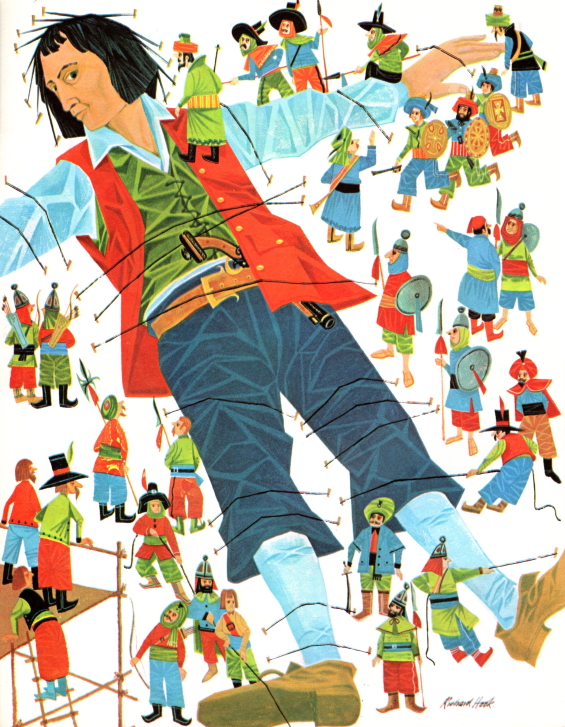
Gulliver's Travels by Jonathan Swift

P.A. Staynes' illustration of Gulliver's Travels

Gulliver's Travels

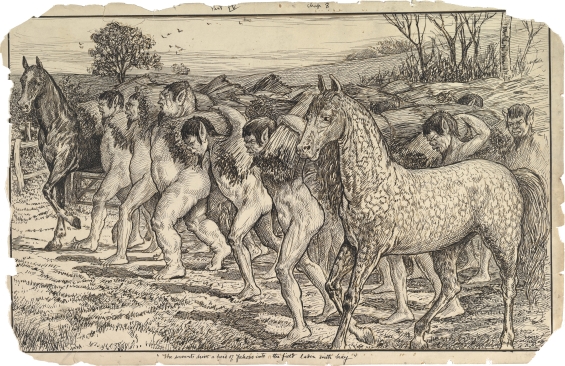
The Servants Drive A Herd Of Yahoos Into The Field

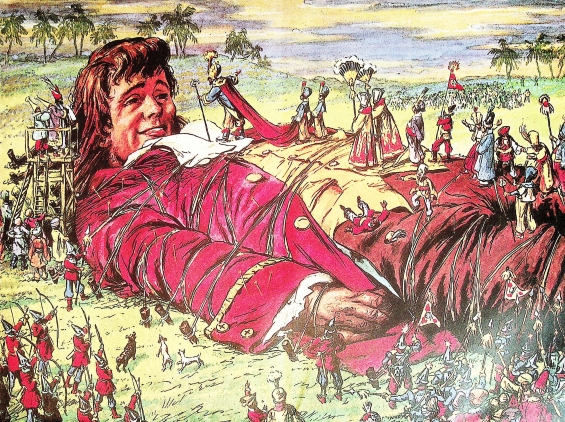
The Illustrated London News - Gulliver's Travels - Christmas 1929

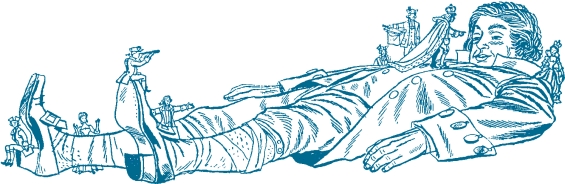
A Voyage To Lilliput

Posted by Jesse Willis

The SFFaudio Podcast #093 – TALK TO: Grover Gardner

Podcast

The SFFaudio PodcastThe SFFaudio Podcast #093 – Scott and Jesse talk to audiobook narrator Grover Gardner about his long career in audiobooks and his work as the studio director at Blackstone Audioboooks.

Talked about on today’s show:
Blackstone Audio, Ashland, Oregon, The Story Of Civilization by Will Durant and Ariel Durant, the Miles Vorkosigan saga, Lois McMaster Bujold, Cryoburn, space opera, the Library Of Congress’ talking book program, Tiger Beat, Alexander Scourby, George Guidall, Displaced Persons, YA, WWII, Flo Gibson, Brilliance Audio, Recorded Books, the early audiobook industry, James Patterson, Books On Tape, Michael Kramer, Barret Whitener, Kate Reading, Bernadette Dunn, Jonathan Marosz, Tanya Perez, Oregon Shakespeare Theatre Festival, Southern Oregon University, Ringworld by Larry Niven |READ OUR REVIEW|, recording audiobooks under pseudonyms (Tom Parker, Alexander Adams), Star Wars, Anthony Heald, the Young Jedi series, Jonathan Davis, recording an abridged novel with sound effects (Star Wars), “hard abridgments”, “in the age of mega companies that shall remain nameless”, do bad books turned into audiobooks harm the audiobook market?, casting an audiobook narrator slightly against the book, digitizing older audiobooks, history, narrating non-fiction, Ross Macdonald‘s Lew Archer series, The Hypnotist by Lars Kepler, The Girl With The Dragon Tattoo by Stieg Larsson |READ OUR REVIEW|, The Reapers Are The Angels by Alden Bell |READ OUR REVIEW|, Tai Simmons, using an iPad to read scripts, Blackstone Audio maintains an in-house pronunciation guide database, The Tin Drum by Günter Grass, Madame Bovary by Gustave Flaubert, Simon Vance, Galactic Pot-Healer by Philip K. Dick, Martian Time-Slip by Philip K. Dick |READ OUR REVIEW|, Tom Weiner loves science fiction, Brain Wave by Poul Anderson, a new recording of a Robert Sheckley book is coming, Random House still does abridgments, Shelby Foote, Donald Westlake, Grover Gardner’s blog post on Ross Macdonald, Raymond Chandler, Ross Macdonald wrote psychological mystery novels about families (he lets all the poisons that lurk in the mud hatch out), The Wycherley Woman, The Chill, John D. MacDonald, The Moving Target, The Galton Case, Black Money, the Travis McGee series, Darren McGavin, biography as a genre, Andrew Carnegie by David Nasaw, Gildan Media, the Wallander series, The Return Of The Dancing Master by Henning Mankell, Haila Williams, Grover Gardner loved narrating Elmore Leonard audiobook, Patrick Obrien’s, Bernard Cornwell, Maximum Bob by Elmore Leonard, “a slightly square guy”, Harper Audio, Pronto by Elmore Leonard, Justified, the Inspector Montalbano series is “enormously entertaining”, Andrea Camilleri, the Toby Peters series, Stuart M. Kaminsky, keeping track of the character voices (by visualization), “I lived those books”, Fools Die by Mario Puzo, Kristoffer Tabori, what is Grover Gardner’s favourite book?, The Kindly Ones by Jonathan Littell (it’s Grover Gardner’s masterwork).

Posted by Jesse Willis

Watching for Robert Sheckley’s Watchbird

SFFaudio Online Audio

Every time I read a Robert Sheckley story I become re-enamored with the cutting burn of his insights. The latest Sheckley tale that I’ve been reading is his 1953 futuristic fable Watchbird. It’s about a new policing tool, a device that can prevent murder at the point of action. It’s not funny exactly, but it is satirical, and quite beautiful in parts:

“Over the town, the watchbird soared in a long, lazy curve. Its aluminum hide glistened in the morning sun, and dots of light danced on its stiff wings. Silently it flew.

Silently, but with all senses functioning. Built-in kinesthetics told the watchbird where it was, and held it in a long search curve. Its eyes and ears operated as one unit, searching, seeking.”

The watchbirds of the title are flying robots equipped with the tools to do their jobs – they sniff out the “outpouring of certain glands” and “taste” the “deviant brain wave” of a murderer before he or she can strike. But the watchbirds have also been programmed with the knowledge that not all murderers are wrathful, some like one hit-man who shows up in the story, have no feelings about the murders they commit. And so, they must learn to watch out for these hidden murders, to look out for the precursors to cold killings. And that’s where I think Sheckley’s radical departure comes in.

Denotation is at the heart of human conflict.

I take this as the thesis of Robert Sheckley’s short story Watchbird. Like many of those classic Science Fiction stories, Watchbird is nothing like plausible. I can’t imagine that Galaxy’s editor, Horace Gold, accepted Sheckley’s tale on the grounds that it was a logical extrapolation of where technology was going. This, even despite the long history of unmanned aerial vehicles which I am sure both Sheckley and Gold were aware of. Indeed, though we now live in a world where the likes of the General Atomics MQ-9 Reaper, equipped with air-to-ground AGM-114 Hellfire missiles, can strike any target – the technology was never the issue. Sheckley’s concern is in what motivates their use. So the question then, as now, is: “What’s the difference between a killing and a murder?”

In answer to that question I think Watchbird should be better known, more read, and perhaps like Orwell’s novels Animal Farm and 1984, it should be read by those who would seek to govern. Sadly, I think this unlikely. I’m not convinced Watchbird‘s epistemological skepticism is as palatable as the simplicity of: a “boot stamping on a human face— forever” or that of a megalomaniacal pig.

Epistemology is a hard, hard sell, but as we strive for the moral conclusions we so desire, we must, if we are to be clever, first reconcile all the varied definitions that we think we know.

This kind of story is of history and humanity, written as with an exploded view. Words like “right” and “wrong”, “murder” and “kill” are used to map the world and as such they are the explanation of, and sometimes the reasons for, the actions we see all around us. As evidence I can only submit Watchbird:

Audiobooks:

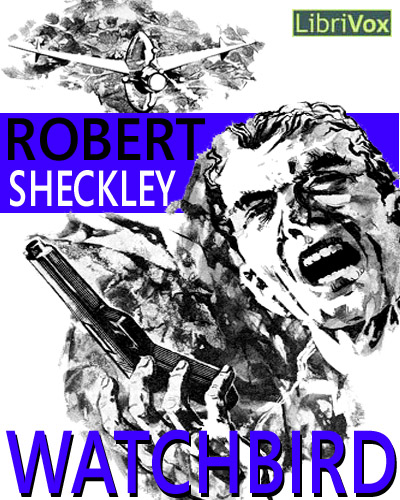
LIBRIVOX - Watchbird by Robert SheckleyWatchbird
By Robert Sheckley; Read by Gregg Margarite
1 |MP3| – Approx. 47 Minutes [UNABRIDGED]
Publisher: LibriVox.org
Published: May 16, 2010
Strange how often the Millennium has been at hand. The idea is peace on Earth, see, and the way to do it is by figuring out angles. First published in the February 1953 issue of Galaxy Science Fiction.

Audio Drama:

Tales Of TomorrowTales Of Tomorrow – Watchbird
Based on a story by Robert Sheckley; Performed by a full cast
1 |MP3| – Approx. 28 Minutes [RADIO DRAMA]
Broadcaster: ABC Radio (American Broadcasting Company)
Broadcast: 1953
Provider: OTR-Cat.com

2000X - Watchbird based on the story by Robert Sheckley2000X – The Watchbird
By Robert Sheckley; Performed by a full cast
Audible Download – Approx. 35 Minutes [RADIO DRAMA]
Publisher: The Hollywood Theater of the Ear / Audible
Published: 2000
Science invents a flying robot that prevents murder, but there’s a fateful glitch. Adapted for audio by William F. Nolan and Ytzhak Berle, with a cast featuring Newell Alexander, Janet Carroll, Jerry Castillo, Joe Greco, Melissa Greenspan, Allan Miller, Stefan Rudnicki, Hamilton Camp, Brian Finney, and Bradley Schreiber.

Springbok Radio - SF'68SF’68 – Watchbird
Based on the story by Robert Sheckley; Adapted by Michael McCabe; Performed by a full cast
1 |MP3|* – Approx. 30 Minutes [RADIO DRAMA]
Broadcaster: Springbok Radio
Broadcast: 1968
Provider: The Zombie Astronaut’s Frequency Of Fear #0.048
*The adaptation begins at approx. the 43 minute mark.
SF’68 was produced in Johannesburg, South Africa in 1968.

Other:

-The original publication in Galaxy Science Fiction |ETEXT|HTML|

-Video adaptation in The Masters Of Science Fiction TV series.

Posted by Jesse Willis

The SFFaudio Podcast #087 – READALONG: Hyperion by Dan Simmons

Podcast

The SFFaudio PodcastThe SFFaudio Podcast #087 – Jesse talks with Gregg Margarite and Mark Douglas Nelson (two terrific LibriVox and iambik audiobook narrators) about the Brilliance Audio (Audible Frontiers) audiobook Hyperion by Dan Simmons.

Talked about on today’s show:
SciPodBooks.com (Mark Douglas Nelson’s audiobooks), Mark’s double understanding of Hyperion, “make it internally consistent”, Jurassic Park, living in forward and backward time, “The Scholar’s Tale”, setting reality aside, “why can’t stories be written in less than 600 (or 1100) pages”, “the nomenclature was great”, Hyperion made Gregg sad (it reminded him of Walmart), The Canterbury Tales, The Decameron, was Hyperion a near miss?, “The Priest’s Tale”, Robert Sheckley, if they were self contained stories would it have worked better?, The Fall Of Hyperion, comparing the Hyperion Cantos to Philip Jose Farmer’s Riverworld series, “The Diplomat’s Tale”, the stories get worse as you go along, Kurt Vonnegut Jr.’s Slaughterhouse Five |READ OUR REVIEW|, “The Soldier’s Tale”, making a link between sex and violence, Starship Troopers, Colonel Fedmahn Kassad is a good character, “The Poet’s Tale”, Martin Silenus (the Satyr) and Sad King Billy (William XXIII of the Kingdom of Windsor-in-Exile), “The Detective’s Tale” (the long goodbye), cybrids are very cool, John Keats, Ezra Pound, combining a hardboiled/noir detective story with William Gibson’s Neuromancer, talking to dolphins, narrator duties, you don’t fall in love with the client!, “when a detective‘s partner is killed he’s supposed to do something about it”. The Hitchhiker’s Guide To The Galaxy, “The Scholar’s Tale”, Sol Weintraub, The Curious Case Of Benjamin Button, Merlin sickness (Merlin’s disease), David Hume‘s explanation of miracles: a miracle would be “a transgression of a law of nature”, if speculative fiction exists this is what they were talking about, time debt, if anything can happen then I don’t care what happens, the story of Abraham and Isaac (the binding of Isaac), is Hyperion a religious book?, Abraham’s ethics were childish compared to Sol, The river Lethe (was one of the rivers in Hades – it was river of unmindfulness, The Green Odyssey |READ OUR REVIEW|, why was the windwagon late?, Agatha Christie’s Murder On The Orient Express and Ten Little Indians, what happened to the Templar?, We’re Off To See The Wizard, The Wizard Of Oz, the confrontation with the Shrike, it’s a grab bag of everything, Simmons must have been inspired by all sorts of sources, the half-hour blender metaphor, Gregg is upset we all came to the same (and correct) conclusion, Simmons set himself a Titanic task with Hyperion, where was the editor?, listening to a multi-voiced audiobook, Full Cast Audio, Hyperion‘s narrators (Marc Vietor, Allyson Johnson, Kevin Pariseau, Jay Snyder, Victor Bevine), having to fend off the legions of audiobook groupies, Gregg gets emails about the pronunciation of “prestidigitation”, the generic American sitcom accent, Norse mythology, Yggdrasil (the world tree), Stephen King’s the Dark Tower series and Kevin J. Anderson’s Saga of Seven Suns series, Kevin J. Anderson‘s writing secret (he goes hiking with a voice recorder), Frank Herbert’s Dune, David Lynch’s Dune, Dune Messiah is a let-down but it has the Golah!, Gregg wants a copy of The Orange-Catholic Bible, “would you be a Bene Gesserit or a Mentat?”, Gregg would be a Morlock, look elsewhere for a cannibal podcast, Larry Niven and Jerry Pournelle‘s Oath Of Fealty, Jonathan Swift‘s Gulliver’s Travels, Julie Davis of Forgotten Classics, Gregg says Julie is really a horse!

Posted by Jesse Willis

The SFFaudio Podcast #076 – READALONG: Mindswap by Robert Sheckley

Podcast

The SFFaudio PodcastThe SFFaudio Podcast #076 – Jesse talks with Gregg Margarite, Julie Davis and Luke Burrage about Robert Sheckley’s 1966 novel Mindswap.

Talked about on today’s show:
Blackstone Audiobooks audiobook edition of Mindswap by Robert Sheckley, The Status Civilization by Robert Sheckley, Rick Jackson’s Wonder Audio version of The Status Civilization, Marvin, existentialism, Jean-Paul Sartre, Søren Kierkegaard and Martin Heidegger, Mars, swapping minds vs. swapping bodies, xenophiles, “metaphoric deformation”, one of the greatest scenes of comedy ever in a novel, mind vs. body, mind vs. brain, consciousnesses and memories, Mindswap is “a subversive ontological satire,” Gulliver’s Travels by Jonathan Swift, extracting sunlight from a cucumber, “theory of searches”, existentialism for a Science Fiction audience, Voltaire’s Candide, Douglas Adams, The Hitch-Hiker’s Guide To The Galaxy, balance is superfluous, “contemplation is the most direct form of involvement (and so it is avoided by everyone)”, Bertrand Russell, New York, solipsism, cognitive dissonance, Mark Twain, A Connecticut Yankee In King Arthur’s Court, Future Shock by Alvin Toffler, Chekhov’s gun, comedic soliloquies, speaking with a lisp, the twisted world, the interventionist fallacy, the authorial sting, “the ripe greenness of her ovipositors”, Luke defends the honour of the name Kathy, Marvin The Paranoid Android vs. Marvin The Martian, Roland Barthes, absurdity is funny, a pseudo-Gulliver’s Travels, the mechanics of the humor, Gregg’s top five written objects, Laputa, “the pinnacle of satire”, A Modest Proposal, “everything is bullshit”, Dr. Jeykll And Mr. Hyde by Robert Louis Stevenson (our next readalong), Dracula, Lair Of The White Worm, Ken Russell, Gothic, On The Buses, Africa, “Africa? Where do you mean in Africa?”, Namibia vs. South Africa, Kilimanjaro vs. Everest, a set can’t be a member of itself, “it’s all a big giant steaming pile of absurdity” vs. “the glory and excitement of being alive”, monsignors vs. bishops, “you’re just not in our target market”, “I don’t believe what someone believes has to be true or not”, spiritual experiences vs. explanations of them, there’s a helmet for that (spiritual experiences), the charismatic formula, true vs. honest, Luke’s blog post on spiritual experiences and atheism, Thomas Aquinas, “truth is relative”, Gregg has big sets!, Julie is completely talk-able, Margaret Atwood history denier, the Apollo missions, making stupid easier, The Daily Show with Jon Stewart is a great aggregator , Glenn Beck’s snakedance, smart people are making the universe complex, “the enemy of nuance” vs. “the enemy of history”, rejecting reality, why they argued with Jefferson, their totally alienable, “this is why I watch 30 Rock“, Kids In The Hall, you have the potential of niche markets, ‘the United States is the greatest country in the world (with the greatest failures and great achievements)’, nobody cares about Africa (or South America), not knowing the Prime Minister of Canada vs. not knowing the Governor of Guam, Peter F. Hamilton’s latest book, a bunch of fun loving existentialists, Sheckley’s short stories, City by Clifford D. Simak (it has conflict), Sheckley at his best is Voltaire and soda (or Voltaire and tonic), Flannery O’Connor, the keyword game, Earth Abides by George R. Stewart, art and craft are the same thing, craftsmen aren’t artists, I Hate Music, “I’m NOT tone deaf!”, Charlie Parker, iTunes=music, mp3=music, “it’s like I’m gay and I’m the only one”, This Is Your Brain On Music, Gregg is too emphatic (?), “I – do not – sound – like – William Shatner.”, Weird Al Yankovic, “my guitar is the best girlfriend I ever had.”

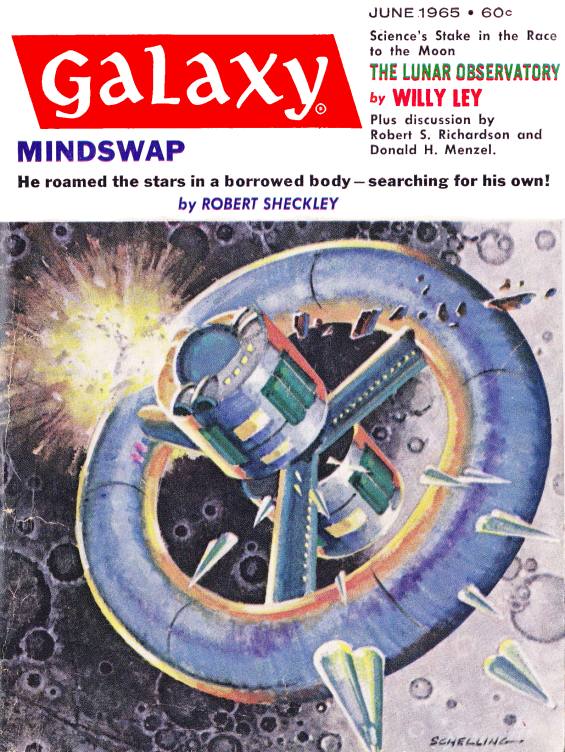
Galaxy June 1965 - MINDSWAP by Robert Sheckley - Cover

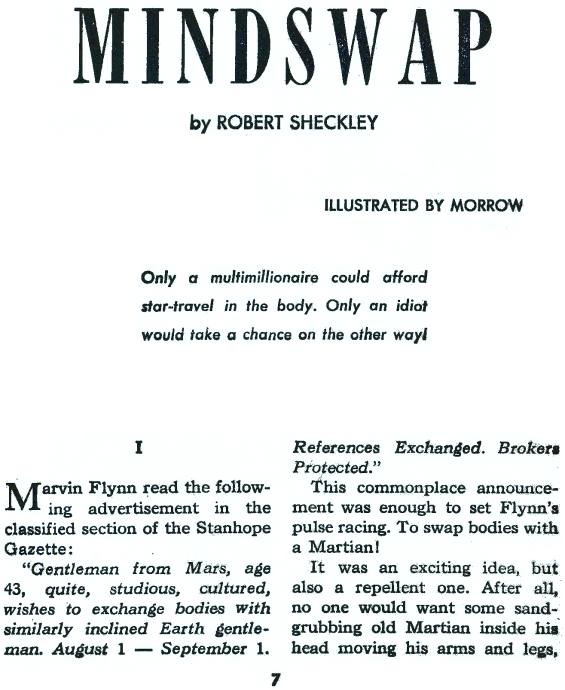
Galaxy June 1965 - MINDSWAP by Robert Sheckley - Page 7

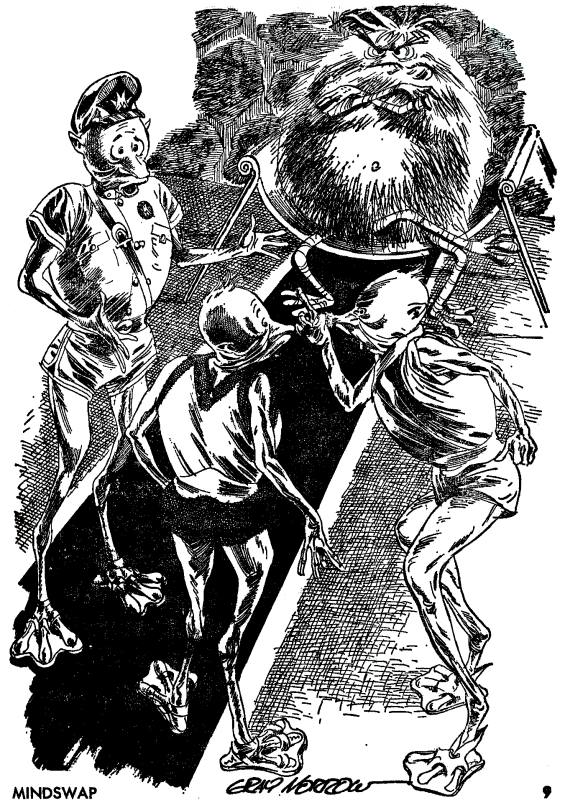
Galaxy June 1965 - MINDSWAP - Page 9

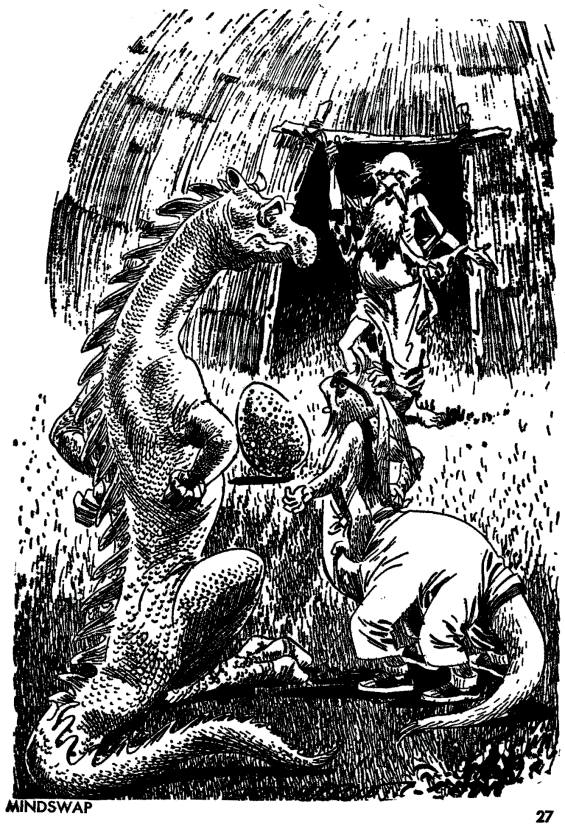
Galaxy June 1965 - MINDSWAP by Robert Sheckley - Page 27

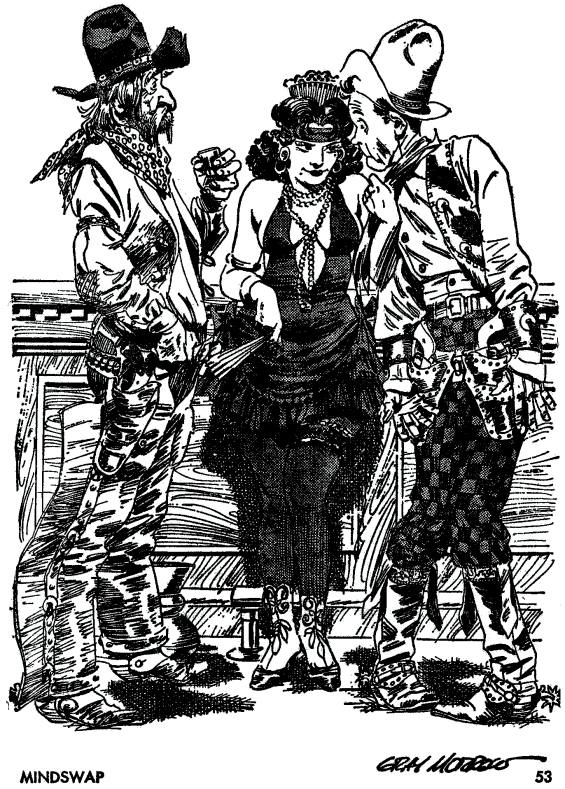
Galaxy June 1965 - MINDSWAP by Robert Sheckley - Page 53

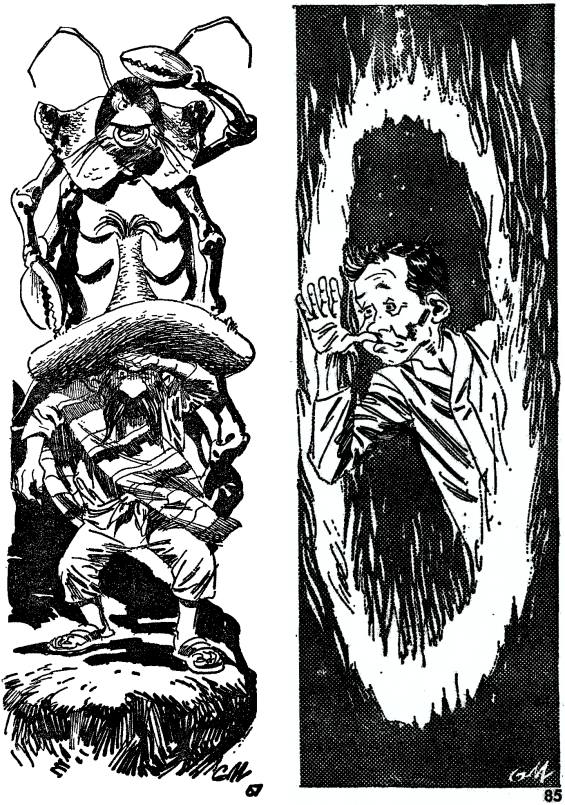
Galaxy June 1965 - MINDSWAP by Robert Sheckley - Pages 67 and 85

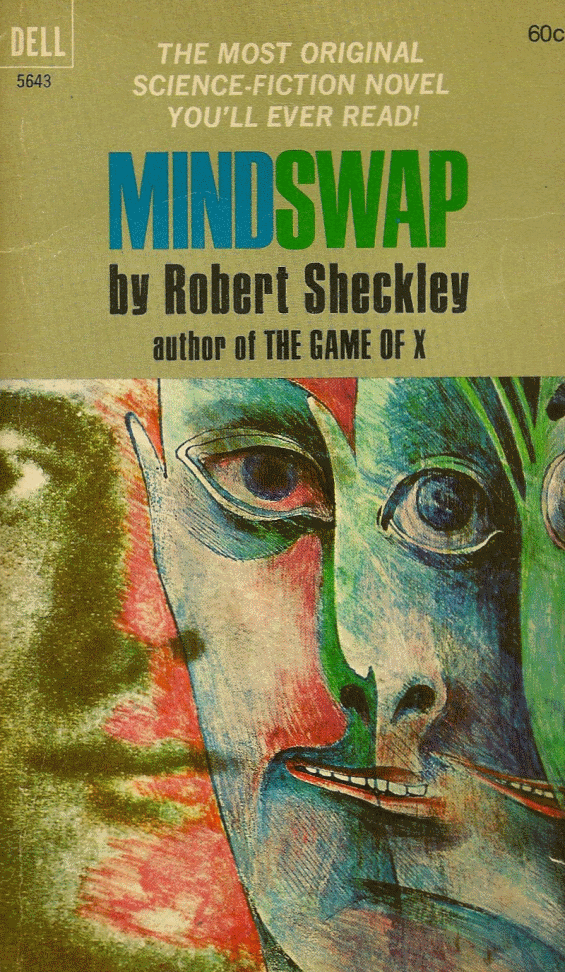
DELL - Mindswap by Robert Sheckley

Posted by Jesse WillisBecome a Patron!