LibriVox: The Horla by Guy de Maupassant

SFFaudio Online Audio

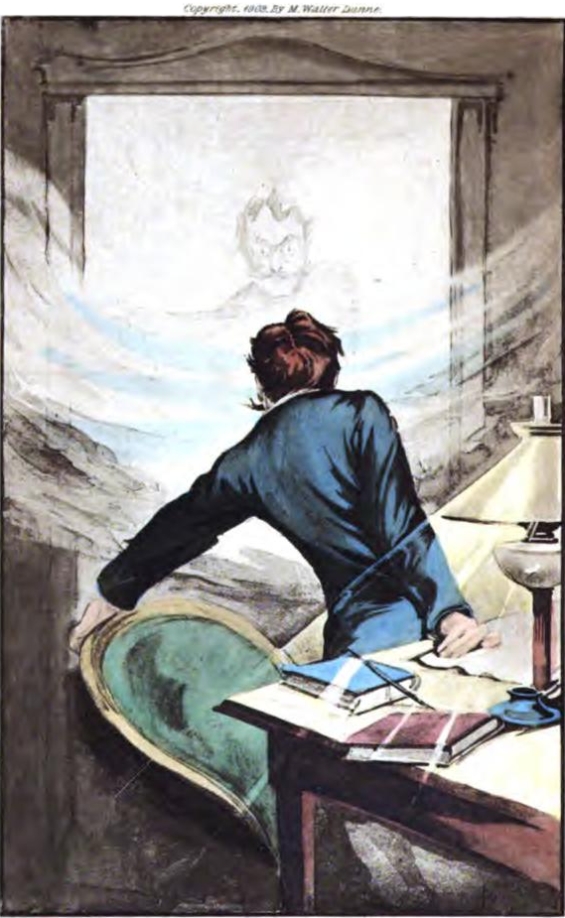
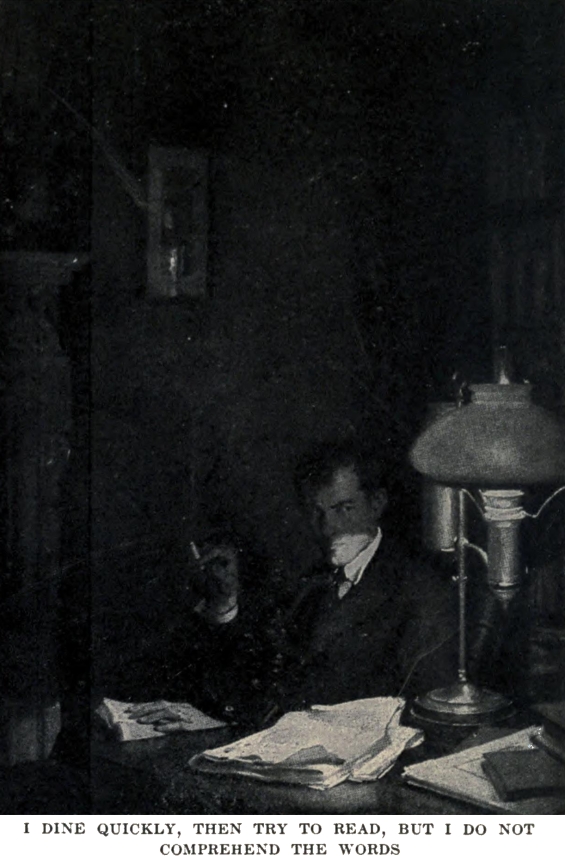
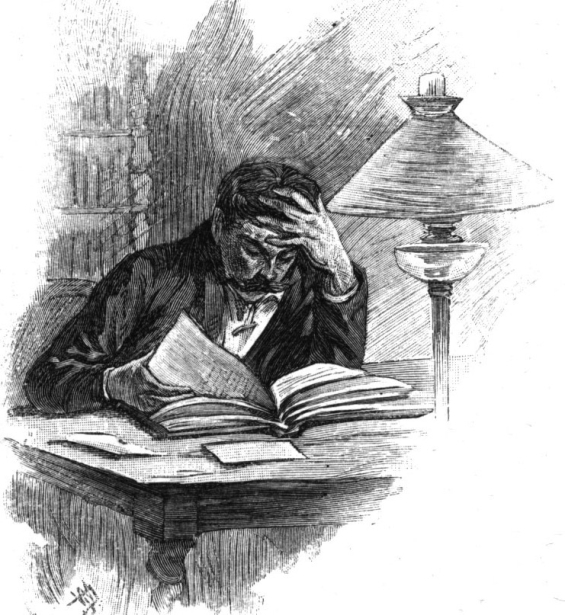
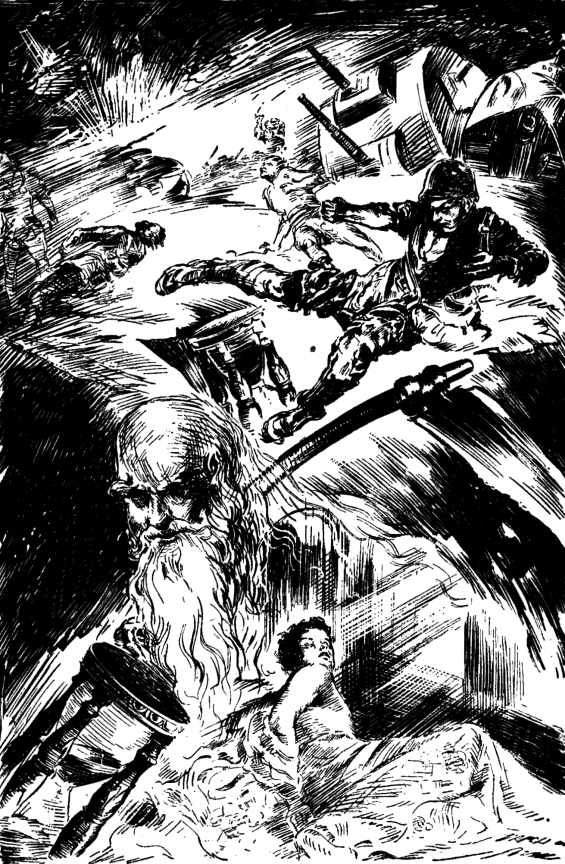
If I had to name the one story that’s influenced my reading, and thinking, most in last couple of years I’d name The Horla by Guy de Maupassant. It possesses my mind like a dark and deep tunnel running through my imaginative landscape – if you haven’t heard it yet you should. Below you’ll find my preferred version, but there are more readings, and adaptations HERE – and we did a whole podcast about it, that’s HERE.

One new thing though is this |PDF| which I made from a scan of an issue of Famous Fantastic Mysteries – it features the 1911 George Allan England translation.

LibriVoxThe Horla
By Guy de Maupassant; Read by Gregg Margarite
1 |MP3| – Approx. 57 Minutes [UNABRIDGED]
Publisher: LibriVox.org
Published: July 11, 2009
First published in Gil Blas; Oct 26, 1886.

The Horla by Guy de Maupassant

The Horla by Guy de Maupassant

The Horla by Guy de Maupassant

Posted by Jesse Willis

LibriVox: The Highwayman by Lord Dunsany (aka The Highwaymen)

SFFaudio Online Audio

The Highwayman by Lord Dunsany

Sometimes titled The Highwayman, sometimes The Highwaymen, Lord Dunsany’s elegant prose poem is an 1,800 word tale about a scabrous gang of bastard highwaymen. And it has something for almost everyone.

I think, despite the sacrilege and desecration in the story, that my Christian friends will like it – it’s got a lot of that redemption stuff they are big on.

I’m confident that fans of capital punishment will like it – because it certainly doesn’t repudiate legalized killing.

And my friend, Gregg Margarite, who didn’t believe in any of the underlying mythology, liked it enough to read it for LibriVox.

And me?

Yep, I like The Highwayman too.

I like the overarching premise, about friendship, I think it’s heartwarming.

Plus it’s got lot of ghoulish shit in it, and I like that stuff too.

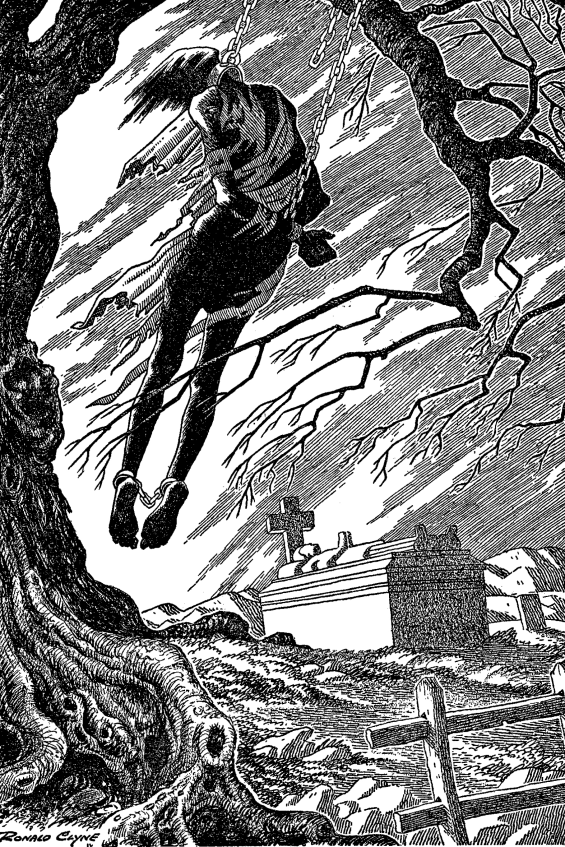
Ronald Clyne illustration of The Highwayman (from Famous Fantastic Mysteries, December 1944)

LibriVoxThe Highwayman
By Lord Dunsany; Read by Gregg Margarite
1 |MP3| – Approx. 12 Minutes [UNABRIDGED]
Publisher: LibriVox.org
Published: January 13, 2010
First published in 1908.

Here’s a |PDF| made from the publication in Famous Fantastic Mysteries, December, 1944.

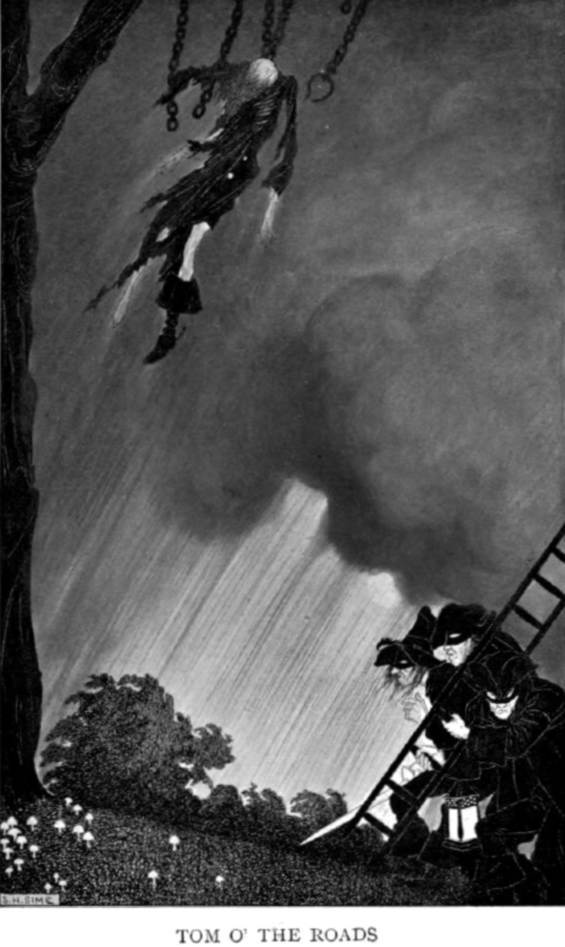
And here’s the Sidney H. Sime illustration from the original 1908 publication in The Sword Of Welleran and Other Stories:
The Highwayman - illustration by Sidney H. Sime (1908)

Posted by Jesse Willis

Time And Time Again by H. Beam Piper

SFFaudio Online Audio

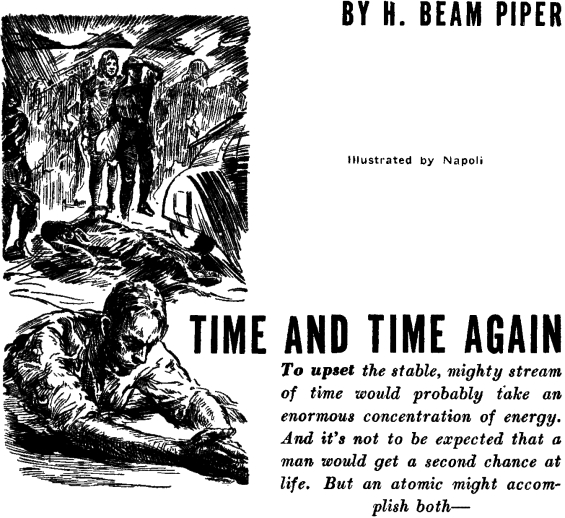
Time And Time Again by H. Beam Piper - illustrated by Vincent Napoli

Time and Time Again was H. Beam Piper’s first published story. It first appeared in the April 1947 issue of Astounding Science Fiction. Time and Time Again features many of the themes of Piper’s later writing, including time travel, evidence of his electric reading habits, and a love of firearms.

Set in part during both WWII and WWIII Time and Time Again features time travel of the type made famous in both Back To The Future and Quantum Leap.

LibriVoxTime And Time Again
By H. Beam Piper; Read by Bellona Times
1 |MP3| – Approx. 45 Minutes [UNABRIDGED]
Publisher: LibriVox.org
Published: August 09, 2010
To upset the stable, mighty stream of time would probably take an enormous concentration of energy. And it’s not to be expected that a man would get a second chance at life. But an atomic might accomplish both— First published in Astounding, April 1947.

For some reason the ending to the X-Minus One version has been changed – to it’s determent in my view.

X-Minus OneX-Minus One – Time And Time Again
Adapted from the story by H. Beam Piper; Performed by a full cast
1 |MP3| – Approx. 30 Minutes [RADIO DRAMA]
Broadcaster: NBC
Broadcast: January 11, 1956
A soldier is wounded in a future war and is transported back to 1945 when he was thirteen years-old with his future memory and past memory intact.

Here’s a |PDF| made from its appearance in Astounding.

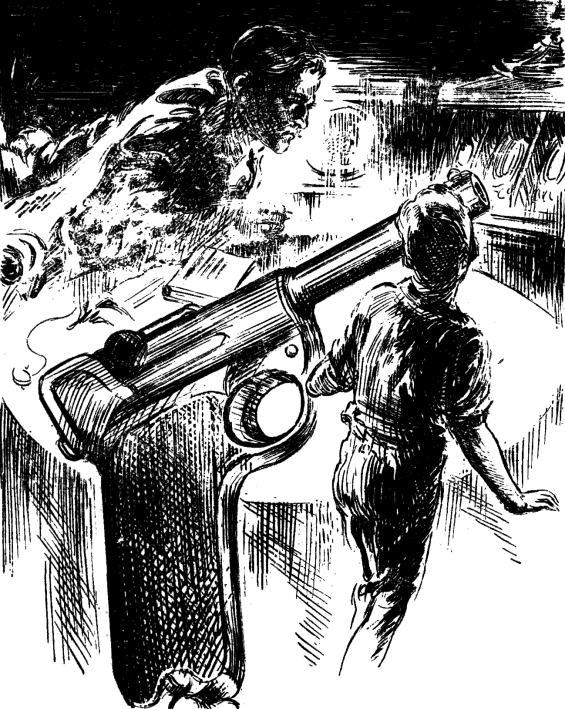
Time And Time Again by H. Beam Piper - illustrated by Vincent Napoli

One other interesting bit from the original story is the mention of a B-25 bomber crash into the Empire State Building, here’s a contemporary newsreel about that:

Posted by Jesse Willis

Tony And The Beetles by Philip K. Dick

SFFaudio Online Audio

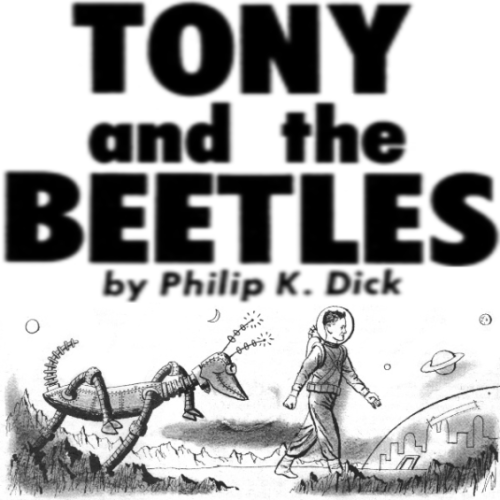
Tony And The Beetles by Philip K. Dick

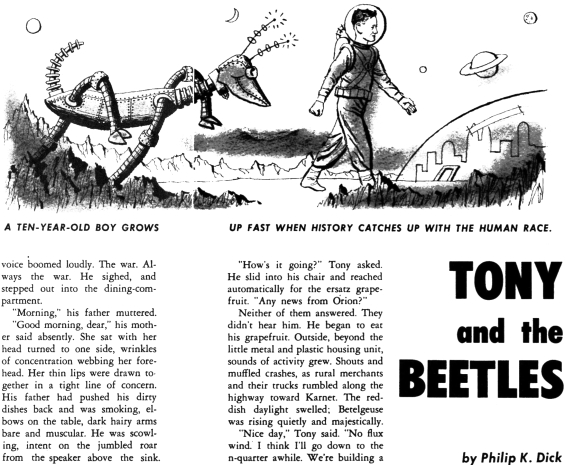
This 4,712 word story may not be among Philip K. Dick’s best, but it is certainly worth looking at, and hearing!

Tony And The Beetles is a bit unusual too, having an almost juvenile or YA feel to it. Maybe that’s because it’s not nearly as horrific as many of Dick’s fantasy tales – there are some frightening elements, but the general tone is that of an ungroundedness. I see Tony And The Beetles as a kind of historical allegory and I’m not the only one. Phil Chevernet, the narrator who recorded it for LibriVox, wrote “I think [Dick] was commenting on imperialism in the 40s and 50s.” I think he’s right, but I think the comment is somewhat ambiguous, rather depressing, and almost wholly unhopeful. Dick grew up during World War II and little PKD was a very sensitive fellow, kind of like Tony.

Here’s the setup:

Young Tony Rossi has grown up on an alien world. As a child he’s known little else than bubble helmets, pressure suits, and robot pets. His playmates and schoolmates have all been the non-human children of the planet, but around him swirl the forces of history and when news of the ongoing war breaks Tony’s parents don’t seem to hold the same opinions of what it all means.

Tony And The Beetles by Philip K. DickTony And The Beetles
By Philip K. Dick; Read by Phil Chevernet
1 |MP3| – Approx. 34 Minutes [UNABRIDGED]
Publisher: LibriVox.org
Published: October 16, 2012
A ten-year-old boy grows up fast when history catches up with the human race. First published in Orbit, volume 1 number 2, 1953.

And here’s a |PDF| made from it’s original publication in Orbit.

Posted by Jesse Willis

The Nameless City by H.P. Lovecraft

SFFaudio Online Audio

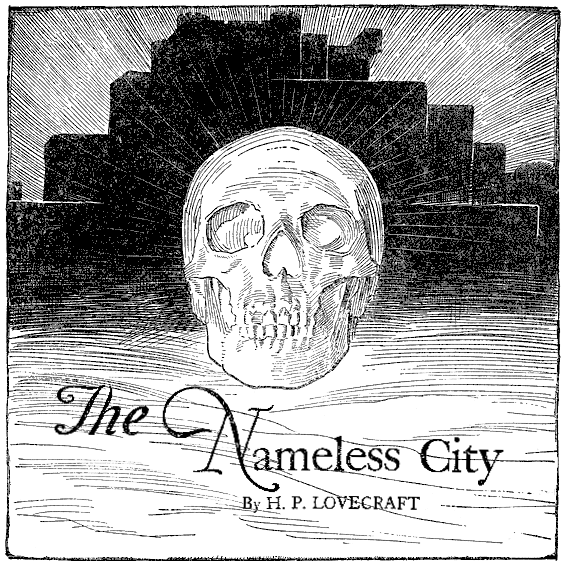
The Nameless City by H.P. Lovecraft (illustration by Jack Binder from Weird Tales, November 1938)

H.P. Lovecraft’s 5,000 word short story, The Nameless City, was based one of his dreams. That dream, in turn, was inspired by the last line of Lord Dunsany’s story The Probable Adventure Of The Three Literary Men, a story from 1911 (itself available as an |MP3| from LibriVox). Indeed, the line is even quoted within the tale:

“the unreverberate blackness of the abyss”

The eponymous, anonymous, city itself seems to have been inspired by “Iram, the City of Pillars” which was a mysterious lost city – a kind of “Atlantis of the Sands” – that is mentioned in the Quran.

And one critic, according to the detailed Wikipedia entry for the story, has it that Lovecraft was inspired by At the Earth’s Core by Edgar Rice Burroughs.

And for all those reasons The Nameless City is certainly worth looking at, if you can find it.

To help I’ve assembled a |PDF| made from a scan of the story, as published in the November 1938 issue of Weird Tales.

And here are several freely available narrations:

LibriVoxThe Nameless City
By H.P. Lovecraft; Read by Mark Nelson
1 |MP3| – Approx. [UNABRIDGED]
Publisher: LibriVox.org
Published: January 23, 2008
It lay silent and dead under the old cold desert moonlight, but what strange race inhabited the abyss beneath those cyclopean ruins?
First published in The Wolverine, No. 11, November 1921.

LibriVoxThe Nameless City
By H.P. Lovecraft; Read by Scott Carpenter
1 |MP3| – Approx. 28 Minutes [UNABRIDGED]
Publisher: LibriVox.org
Published: October 19, 2008
It lay silent and dead under the old cold desert moonlight, but what strange race inhabited the abyss beneath those cyclopean ruins?
First published in The Wolverine, No. 11, November 1921.

LibriVoxThe Nameless City
By H.P. Lovecraft; Read by Rebecca M.L.
1 |MP3| – Approx. 31 Minutes [UNABRIDGED]
Publisher: LibriVox.org
Published: April 14, 2011
It lay silent and dead under the old cold desert moonlight, but what strange race inhabited the abyss beneath those cyclopean ruins?
First published in The Wolverine, No. 11, November 1921.

Yog Radio PodcastThe Nameless City
By H.P. Lovecraft; Read by Michael Scott
1 |MP3| – 28 Minutes [UNABRIDGED]
Podcaster: Yog Radio
Podcast: May 7, 2006
It lay silent and dead under the old cold desert moonlight, but what strange race inhabited the abyss beneath those cyclopean ruins?
First published in The Wolverine, No. 11, November 1921.

Posted by Jesse Willis

LibriVox: Pygmalion’s Spectacles by Stanley G. Weinbaum

SFFaudio Online Audio

Pygmalion’s Spectacles was first published in 1935 in the aptly named Wonder Stories magazine. Four years after it’s first publication it was reprinted in Startling Stories as a “classic” and it was placed in their “Scientifiction Hall Of Fame.” It was reprinted again in Fantastic Story magazine in the Spring 1955 issue. Three magazine publications is a rare occurrence for any SF story. So, what makes this story special?

Well, this tale of utopia, immortality, and romance, is also, most probably, the very first story to feature the concept of virtual reality.

Here’s the description from the Wikipedia entry:

A comprehensive and specific fictional model for virtual reality was published in 1935 in the short story Pygmalion’s Spectacles by Stanley G. Weinbaum. In the story, the main character, Dan Burke, meets an elfin professor, Albert Ludwig, who has invented a pair of goggles which enable “a movie that gives one sight and sound […] taste, smell, and touch. […] You are in the story, you speak to the shadows (characters) and they reply, and instead of being on a screen, the story is all about you, and you are in it.”

And though the ideas may be pioneering, the plot of Pygmalion’s Spectacles is very similar to Fitz-James O’Brien’s The Diamond Lens, itself an excellent SF tale. The tone of their respective endings differs, but their plot, in which a man falls in love with an intangible woman, is straight out of the Greek mythology that Weinbaum alludes to. And they both use science, rather than magic to get to their respective endings.

There is, I should also point out, a LibriVox |MP3| recording of the Metamorphoses by Ovid, a 2,000 year old poem featuring the myth of Pygmalion.
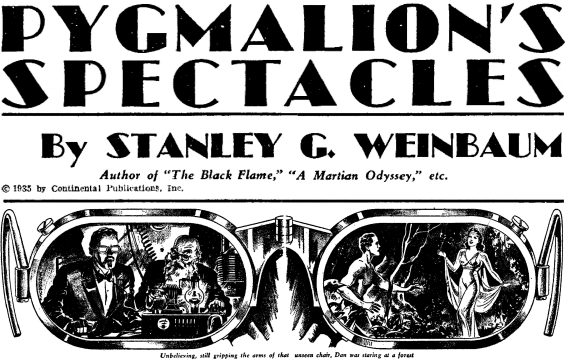
Pygmalion's Spectacles by Stanley G. Weinbaum

Here is a |PDF| made from the Pygmalion’s Spectacles publication in Fantastic Story. And here are two LibriVox versions (my advice, go for the first one):

LibriVoxPygmalion’s Spectacles
By Stanley G. Weinbaum; Read by Gregg Margarite
1 |MP3| – Approx. 43 Minutes [UNABRIDGED]
Publisher: LibriVox.org
Published: January 13,2009
He put on the glasses and fell in love with a dream… First published in Wonder Stories, June 1935.

LibriVoxPygmalion’s Spectacles
By Stanley G. Weinbaum; Read by Chrystal Layton
1 |MP3| – Approx. 45 Minutes [UNABRIDGED]
Publisher: LibriVox.org
Published: November 17, 2007
He put on the glasses and fell in love with a dream… First published in Wonder Stories, June 1935.

Pygmalion’s Spectacles illustration by Lumen Winter (from Wonder Stories, June 1935):
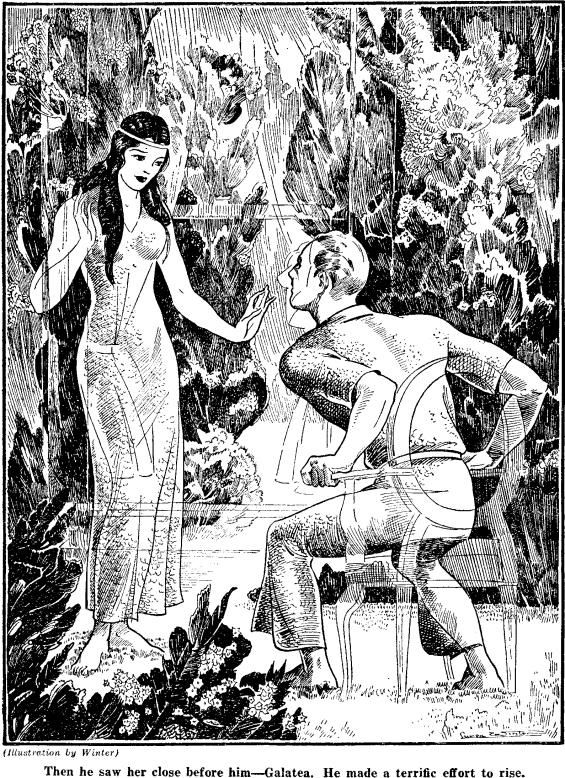
Pygmalion's Spectacles -  illustration by Lumen Winter

Pygmalion’s Spectacles illustration by Virgil Finlay (from Fantastic Story Magazine, Spring 1955):
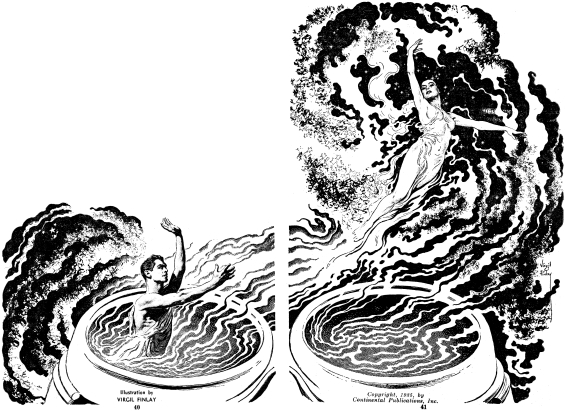
Pygmalion's Spectacles - illustration by Virgil Finlay

Painting of Pygmalion and the statue by Jean-Baptiste Regnault:

Jean-Baptiste Regnault - Pygmalion

[Thanks to Tim at The Drama Pod for the reminder]

Posted by Jesse Willis