
Commentary: A “Top 100 Sci-Fi Audiobooks” List

SFFaudio Commentary

Sci-Fi ListsLast year somebody* pointed out that a list of “The Top 100 Sci-Fi Books” (as organized by the Sci-Fi Lists website) was almost entirely available in audiobook form!

At the time of his or her compiling 95 of the 100 books were available as audiobooks.

Today, it appears, that list is approaching 99% complete!

I’ve read a good number of the books and audiobooks listed, and while some of them are indeed excellent, I’d have to argue that some are merely ok, and that others are utterly 429 Too Many Requests atrocious.

That said, I do think it is interesting that almost all of them are available as audiobooks!

Here’s the list as it stood last year, plus my added notations on the status of the missing five:

01- Ender’s Game – Orson Scott Card – 1985
02- Dune – Frank Herbert – 1965
03- Foundation – Isaac Asimov – 1951
04- Hitchhiker’s Guide To The Galaxy – Douglas Adams – 1979
05- 1984 – George Orwell – 1949
06- Stranger In A Strange Land – Robert A Heinlein – 1961
07- Fahrenheit 451 – Ray Bradbury – 1954
08- 2001: A Space Odyssey – Arthur C Clarke – 1968
09- Starship Troopers – Robert A Heinlein – 1959
10- I, Robot – Isaac Asimov – 1950
11- Neuromancer – William Gibson – 1984
12- Do Androids Dream of Electric Sheep? – Philip K. Dick – 1968
13- Ringworld – Larry Niven – 1970
14- Rendezvous With Rama – Arthur C. Clarke – 1973
15- Hyperion – Dan Simmons – 1989
16- Brave New World – Aldous Huxley – 1932
17- The Time Machine – H.G. Wells – 1895
18- Childhood’s End – Arthur C. Clarke – 1954
19- The Moon Is A Harsh Mistress – Robert A. Heinlein – 1966
20- The War Of The Worlds – H.G. Wells – 1898
21- The Forever War – Joe Haldeman – 1974
22- The Martian Chronicles – Ray Bradbury – 1950
23- Slaughterhouse Five – Kurt Vonnegut – 1969
24- Snow Crash – Neal Stephenson – 1992
25- The Mote In God’s Eye – Larry Niven and Jerry Pournelle – 1975
26- The Left Hand Of Darkness – Ursula K. Le Guin – 1969
27- Speaker For The Dead – Orson Scott Card – 1986
28- Jurassic Park – Michael Crichton – 1990
29- The Man in the High Castle – Philip K. Dick – 1962
30- The Caves Of Steel – Isaac Asimov – 1954
31- The Stars My Destination – Alfred Bester – 1956
32- Gateway – Frederik Pohl – 1977
33- Lord Of Light – Roger Zelazny – 1967
34- Solaris – Stanisław Lem – 1961
35- 20,000 Leagues Under The Sea – Jules Verne – 1870
36- A Wrinkle In Time – Madeleine L’Engle – 1962
37- Cat’s Cradle – Kurt Vonnegut – 1963
38- Contact – Carl Sagan – 1985
39- The Andromeda Strain – Michael Crichton – 1969
40- The Gods Themselves – Isaac Asimov – 1972
41- A Fire ir jordan 4 tour yellow 200 Upon The Deep – Vernor Vinge – 1991
42- Cryptonomicon – Neal Stephenson – 1999
43- The Day of the Triffids – John Wyndham – 1951
44- UBIK – Philip K. Dick – 1969
45- Time Enough For Love – Robert A. Heinlein – 1973
46- A Clockwork Orange – Anthony Burgess – 1962
47- Red Mars – Kim Stanley Robinson – 1992
48- Flowers For Algernon – Daniel Keyes
49- A Canticle For Leibowitz – Walter M. Miller – 1959
50- The End of Eternity – Isaac Asimov – 1955
51- Battlefield Earth – L. Ron Hubbard – 1982
52- Frankenstein – Mary Shelley – 1818
53- Journey To The Center Of The Earth – Jules Verne – 1864
54- The Dispossessed – Ursula K. Le Guin – 1974
55- The Diamond Age – Neal Stephenson – 1995
56- The Player Of Games – Iain M. Banks – 1988
57- The Reality Dysfunction – Peter F. Hamilton – 1996
58- Startide Rising – David Brin – 1983
59- The Sirens Of Titan – Kurt Vonnegut – 1959
60- Eon – Greg Bear – 1985
61- Ender’s Shadow – Orson Scott Card – 1999
62- To Your Scattered Bodies Go – Philip Jose Farmer – 1971
63- A Scanner Darkly – Philip K. Dick – 1977
64- Lucifer’s Hammer – Larry Niven and Jerry Pournelle – 1977
65- The Handmaid’s Tale – Margaret Atwood – 1985
66- The City And The Stars – Arthur C Clark – 1956
67- The Stainless Steel Rat – Harry Harrison – 1961
68- The Demolished Man – Alfred Bester – 1953
69- The Shadow of the Torturer – Gene Wolfe – 1980
70- Sphere – Michael Crichton – 1987
71- The Door Into Summer – Robert .A Heinlein – 1957
72- The Three Stigmata Of Palmer Eldritch – Philip K. Dick – 1964
73- Revelation Space – Alastair Reynolds – 2000
74- Citizen Of The Galaxy – Robert A. Heinlein – 1957
75- Doomsday Book – Connie Willis – 1992
76- Ilium – Dan Simmons – 2003
77- The Invisible Man – H.G. Wells – 1897
78- Have Space-Suit Will Travel – Robert A. Heinlein – 1958
79- The Puppet Masters – Robert A. Heinlein – 1951
80- Out Of The Silent Planet – C.S. Lewis – 1938
81- A Princess of Mars – Edgar Rice Burroughs – 1912
82- The Lathe of Heaven – Ursula K. Le Guin – 1971
83- Use Of Weapons – Iain M. Banks – 1990
84- The Chrysalids – John Wyndham – 1955
85- Way Station – Clifford Simak – 1963
86- Flatland – Edwin A. Abbott – 1884
87- Altered Carbon – Richard Morgan – 2002
88- Old Man’s War – John Scalzi – 2005
89- COMING SOON (October 15, 2012)Roadside Picnic – Arkady and Boris Strugatsky – 1972
90- The Road – Cormac McCarthy – 2006
91- The Postman – David Brin – 1985
92- NEWLY AVAILABLEStand On Zanzibar – John Brunner – 1969
93- VALIS – Philip K. Dick – 1981
94- NEWLY AVAILABLE The Cyberiad: Fables for the Cybernetic Age – Stanisław Lem – 1974
95- NOT AVAILABLE AS AN AUDIOBOOK – Cities In Flight – James Blish – 1955
96- The Lost World – Sir Arthur Conan Doyle – 1912
97- The Many-Colored Land – Julian May – 1981
98- Gray Lensman – E.E. ‘Doc’ Smith – 1940
99- The Uplift War – David Brin – 1987
100- NEWLY AVAILABLEThe Forge Of God – Greg Bear – 1987

In case you were wondering, the list was compiled using the following criteria:

“A statistical survey of sci-fi literary awards, noted critics and popular polls. To qualify a book has to be generally regarded as science fiction by credible sources and/or recognised as having historical significance to the development of the genre. For books that are part of a series (with some notable exceptions) only the first book in the series is listed.”

The “Next 100”, as listed over on Sci-Fi Lists, has a lot of excellent novels and collections in it too, check that out HERE.

[*Thanks to “neil1966hardy” from ThePirateBay]

Posted by Jesse Willis

The SFFaudio Podcast #160 – AUDIOBOOK/READALONG: Red Nails by Robert E. Howard

Podcast

The SFFaudio PodcastThe SFFaudio Podcast #160 – Jesse, Tamahome, and Brian Murphy (of The Silver Key and Black Gate) talk about Red Nails by Robert E. Howard (read by Gregg Margarite for LibriVox). The audiobook runs 3 Hours 21 minutes and the discussion begins after that.

Talked about on today’s show:
Comics, the comic adaptation of Red Nails, Conan Saga, Savage Tales, Barry Windsor-Smith, John Buscema, Storyteller, Wolverine, the REH Comics Yahoo! Group, Beyond The Black River, Tower Of The Elephant, Karl Edward Wagner, Queen Of The Black Coast, grimness, pirates, torture, lesbianism, happy endings, “so much for that decades old gang war”, it’s Red Nails is like a Tom Baker Doctor Who serial, haunted city, a feud culture, Tolkemec’s laser, “if it bleeds we can kill it”, Conan the chauvinist, Valeria kicks ass, is the story told from Valeria’s POV?, it begins like a mystery, the “dragon” is a dinosaur (sort of), Techotl, writer shorthand, Star Trek (Let That Be Your Last Battlefield), Techotl is Gollum-like, Red Nails as a gang war, why didn’t they all get rickets and starve, Howard was the original locavore, a roofed city vs. a domed city, Hatfields vs. McCoys, the black pillar of vengeance, ConanRedNails.com, HBO can do no wrong, copyright vs. trademark, Dark Horse’s Chronicles Of Conan #4, colour and colouring, Howard as a stylist, Book X of The Odyssey, The Land of the Lotus Eaters, The Dark Man: The Journal Of Robert E. Howard Studies, using digital copies to research (control-f), Aztec, Toltecs, cannibalism, Jack London, Harold Lamb, William Morris, J.R.R. Tolkien, H.P. Lovecraft, sword and sorcery, horror, The Black Stone, Worms Of The Earth by Robert E. Howard, Tantor Media’s tantalizing collection Bran Mak Morn: The Last King, condemn Howard’s racism praise his writing, Orson Scott Card, Al Harron of The Blog That Time Forgot, Apparition In The Prize Ring by Robert E. Howard, Ace Jessel, Solomon Kane, what will we do after?, just an average weekend with laser beams, the gonzo ending of Red Nails, BrokenSea’s The Queen Of The Black Coast audio drama, Bill Hollweg, legal trouble, Sherlock Holmes, Disney’s John Carter vs. Dynamite Entertainment‘s Warlord Of Mars.

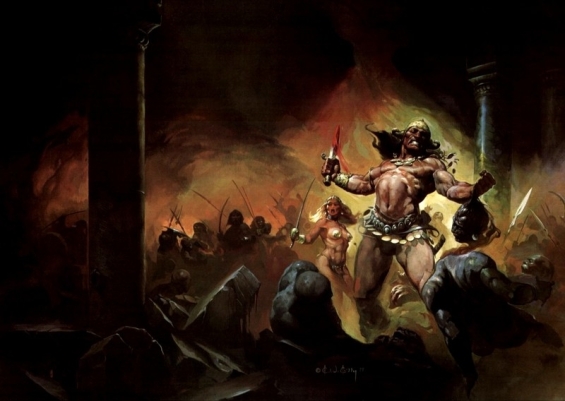
Red Nails - interior fold out art by Ken Kelly

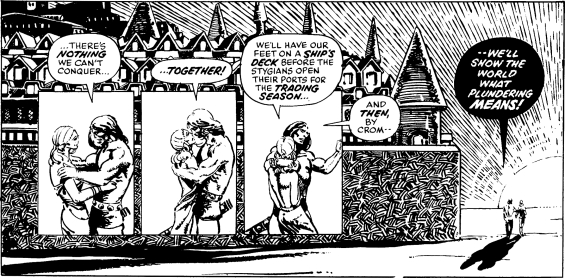
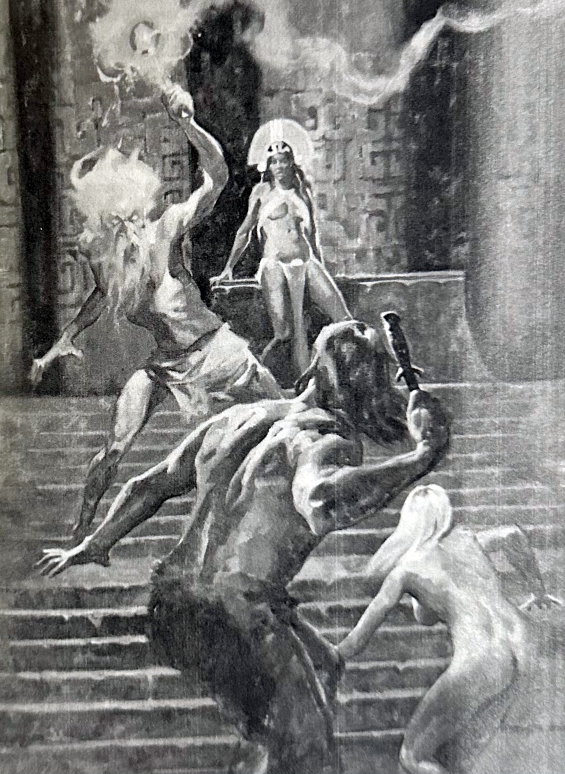
Red Nails - Ending - art by Barry Windsor-Smith

Red Nails by Robert E. Howard

Red Nails illustration by Margaret Brundage from Weird Tales, July 1936

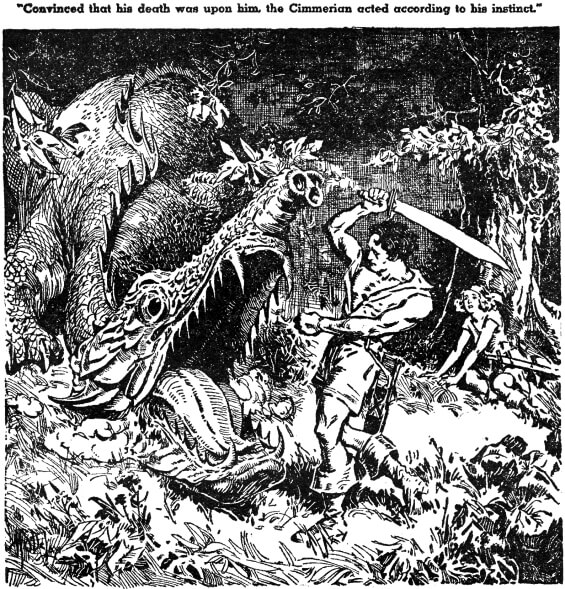
Red Nails illustration by Harold S. De Lay from Weird Tales, July 1936

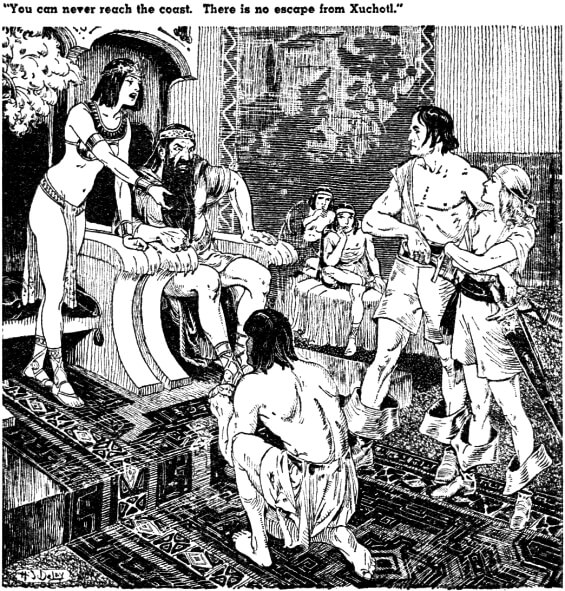
Red Nails illustration by Harold S. De Lay from Weird Tales, August September 1936

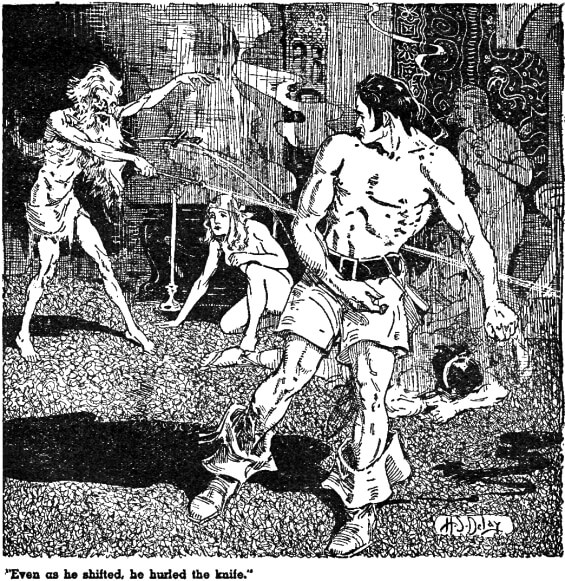
Red Nails illustration by Harold S. De Lay from Weird Tales, October 1936

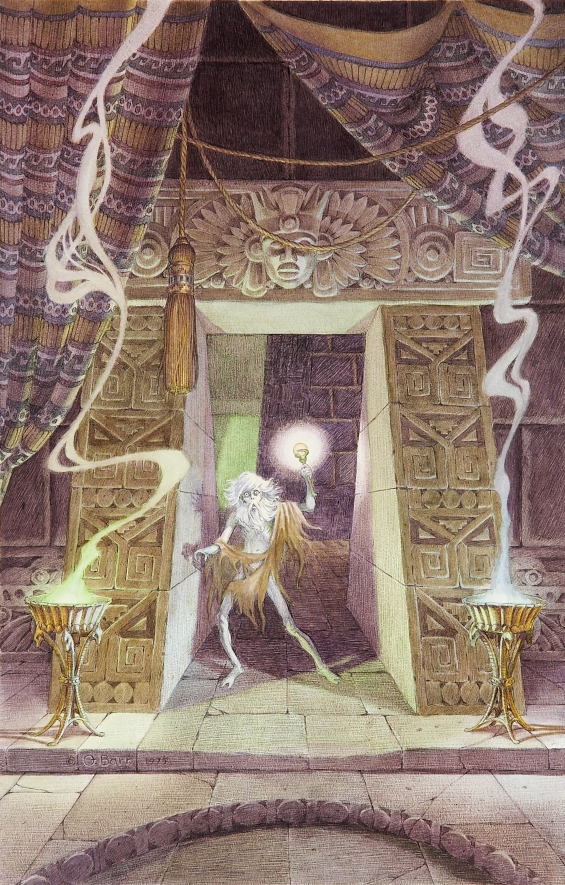
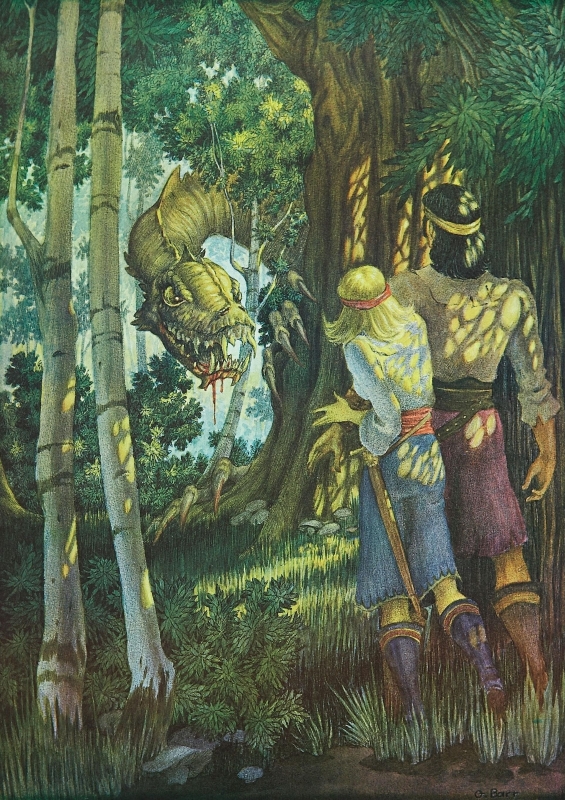
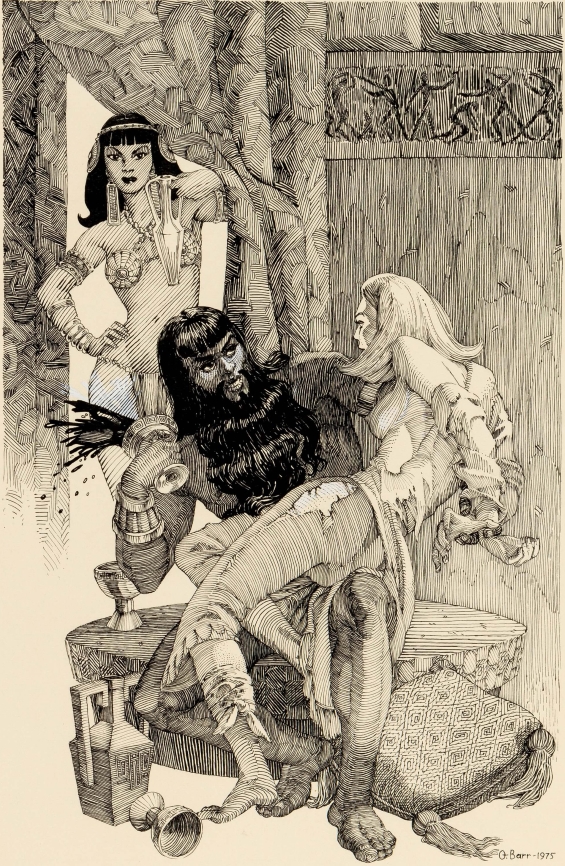
Red Nails by Robert E. Howard - illustration by George Barr

Red Nails - illustration by George Barr

George Barr ILLUSTRATION for Red Nails

Valeria by Geoffrey Isherwood (in the style of Barry Windsor Smith)

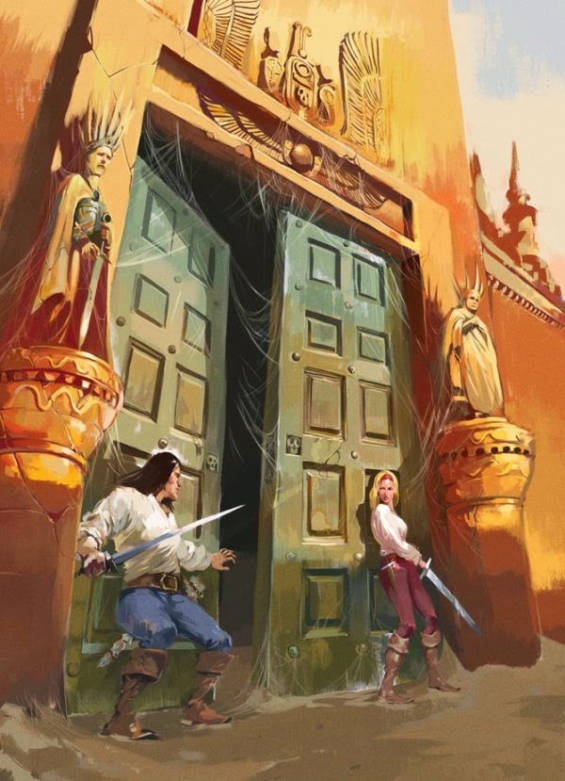
Red Nails - illustrated by Gregory Manchess

Posted by Jesse Willis

National Endowment for the Arts: Big Read: A Wizard Of Earthsea by Ursula K. Le Guin

SFFaudio Online Audio

National Endowment for the Arts: Big ReadThe National Endowment for the Arts presents a complied interview piece on Ursula K. Le Guin’s A Wizard Of Earthsea.

Contributors include Michael Chabon, Kelly Link, Orson Scott Card, Walter Mosley, R.L. Stine and Le Guin herself!

|MP3|

Subscribe via the podcast feed:

http://feeds2.feedburner.com/neabigread

Posted by Jesse Willis

The SFFaudio Podcast #158 – READALONG: The Syndic by C.M. Kornbluth

Podcast

The SFFaudio PodcastThe SFFaudio Podcast #158 – Last week’s podcast was an unabridged reading of The Syndic by C.M. Kornbluth. This week Jesse discusses it with the narrator, Mark Douglas Nelson!

Talked about on today’s show:
SciPodBooks.com, the SciPodCast, The Syndic by C.M. Kornbluth, The City At World’s End by Edmond Hamilton, the virtues of democracy, Oath Of Fealty by Larry Niven and Jerry Pournelle, H. Beam Piper, Space Viking, a wealth of ideas, Frederik Pohl, the story as a straw man, Robert A. Heinlein, telepathy, witches, dystopia, utopia, polo played with jeeps (mounted with 50 caliber machine guns), the syndicate vs. the mob, Ireland, Iceland, libertarianism, the Prometheus Unbound review of The Syndic, polyandry, an economy run on alcohol, sex, and gambling, laissez faire capitalism, monopolies, robber barons, taxes vs. shakedowns, “a real mess of a book”, should a society compromise its ideals to save itself?, is the joke on us?, a velvet gloved invisible hand, The High Crusade by Poul Anderson, the children’s crusade, WWII, rule by mob vs. rule by mobsters, Ron Paul, the sustainability of a war based economy need not much concern the arms manufacturer, Isaac Asimov, The City At World’s End has a real plot, disaster stories, new ideas trump big flaws, “writing by the seat of your pants”, space opera, E.E. “Doc” Smith, respect for science and scientists, Farnham’s Freehold by Robert A. Heinlein, The Green Odyssey by Philip Jose Farmer, LibriVox.org, Riverworld series, rolling ships, Hyperion by Dan Simmons, the problem of endless series, StarShipSofa, The Truth Is A Cave In The Black Mountains by Neil Gaiman, A Princess Of Mars by Edgar Rice Burroughs, A Voyage To Arcturus by David Lindsay, “philosophy, philosophy, philosophy”, it starts with a séance, C.S. Lewis, Right Ho, Jeeves by P.G. Wodehouse, Jeeves And Wooster, Leave It To Jeeves, LibriVox’s new funding (from the Andrew W. Mellon Foundation), Orson Scott Card, Harlan Ellison, Airborn by Kenneth Oppel, Gregg Margarite, Lone Star Planet by H. Beam Piper, Kevin J. Anderson, Principles Of Economics, iambik audio, Wonder Audio, All Or Nothing by Preston L. Allen, The Tattoo Murder Case by Akimitsu Takagi, Toshiro Mifune, Akira Kurosawa, High And Low, Netflix, Sweet And Lowdown, One O’Clock Jump by Lise McClendon, A Is For Alibi by Sue Grafton, Talents Incorporated by Murray Leinster, goofy, the William Woodsworth Microphone Showdown, do expensive mics make great narrators?

Posted by Jesse Willis

William H. Patterson, Jr. talking about Robert A. Heinlein at the Cato Institute in 2010

SFFaudio News

William H. Patterson, Jr., author of Robert A. Heinlein: In Dialogue With His Century a new biography of Robert A. Heinlein, is the speaker in this Cato Institute video from 2010. Here’s the official description:

Robert A. Heinlein is regarded by many as the greatest science fiction writer of the 20th century. He is the author of more than 30 novels, including Starship Troopers, Stranger in a Strange Land, and the libertarian classic The Moon Is a Harsh Mistress. According to biographer William H. Patterson Jr., Heinlein’s writings “galvanized not one, but four social movements of his century: science fiction and its stepchild, the policy think tank; the counterculture; the libertarian movement; and the commercial space movement.” This authorized biography, reviewed enthusiastically by Michael Dirda in the Washington Post, is the first of two volumes, covering Heinlein’s early ambition to become an admiral, his left-wing politics, and his first novels. Heinlein later became strongly libertarian.

The speech itself is short, and isn’t particularity exciting, but Patterson gives some very detailed and interesting answers to audience questions. Some are about the connections between Ayn Rand and Robert A. Heinlein, the philosophy of Heinlein, socialism in the U.S.A., and Heinlein’s mysticism.

But one question asked, about how to rebuff arguments that Heinlein’s ‘Starship Troopers is fascist’, has Patterson point to the compulsory military service in Switzerland. He equates it with being a part of Swiss citizenship. However, military service is only compulsory for Swiss men. In South Korea, where the threat of war is much more pressing, compulsory military service works the same way – only men are compelled. In fact compulsory military service works, and has worked, that way just about everywhere – including in Nazi Germany and Fascist Italy. A much better example of equating military service with citizenship would be Israel, where compulsory military service includes both men and women – and there aren’t very many exemptions. Problem is, this isn’t what the book, or the movie, has. Heinlein has voting rights for veterans – soldiers can’t vote and anybody who doesn’t join the military can’t vote. That’s not fascism. I don’t know what it’s called but it is not fascism.

Posted by Jesse Willis

Short film trailer: The Delivery (starring your favourite audiobook narrators)

SFFaudio News

Worthy of FIVE EXCLAMATION POINTS!!!!! Here’s the trailer for The Delivery (the only movie ever made about audiobooks):

And here’s the description:

“Reading is boring; and audiobooks are worse!”

That’s what Celia thinks. Celia loves to dance, hates to read. She has a book report due on Monday; if she does not deliver, she doesn’t get to be in the Spring Dance Recital. In an effort to secure a pre-written paper, she takes on a delivery to a local audiobook studio.

Simple, no? Not really.

Her delivery catapults her into a journey through a warren of studios which are inhabited by temperamental actors, ghostly apparitions and overtaxed producers. Upon reaching the final studio, her imagination tumbles her headlong into an full blown 1830 enactment of Lewis Carroll’s Mad Tea Party.

Through her wondrous adventure, Celia learns that listening to audiobooks will help her “deliver” her assignment, and open up a whole new part of her imagination!

A short film written and directed by Gabrielle de Cuir. Produced by Stefan Rudnicki

Stars:
Harlan Ellison
John Rubinstein
Orson Scott Card
Sir Michael York
Efrem Zimbalist, Jr.
Stephanie Zimbalist
Scott Brick
Emily Janice Card

The movie is available on DVD as a part of Blackstone Audio’s Lewis Carroll boxed set.

Posted by Jesse Willis